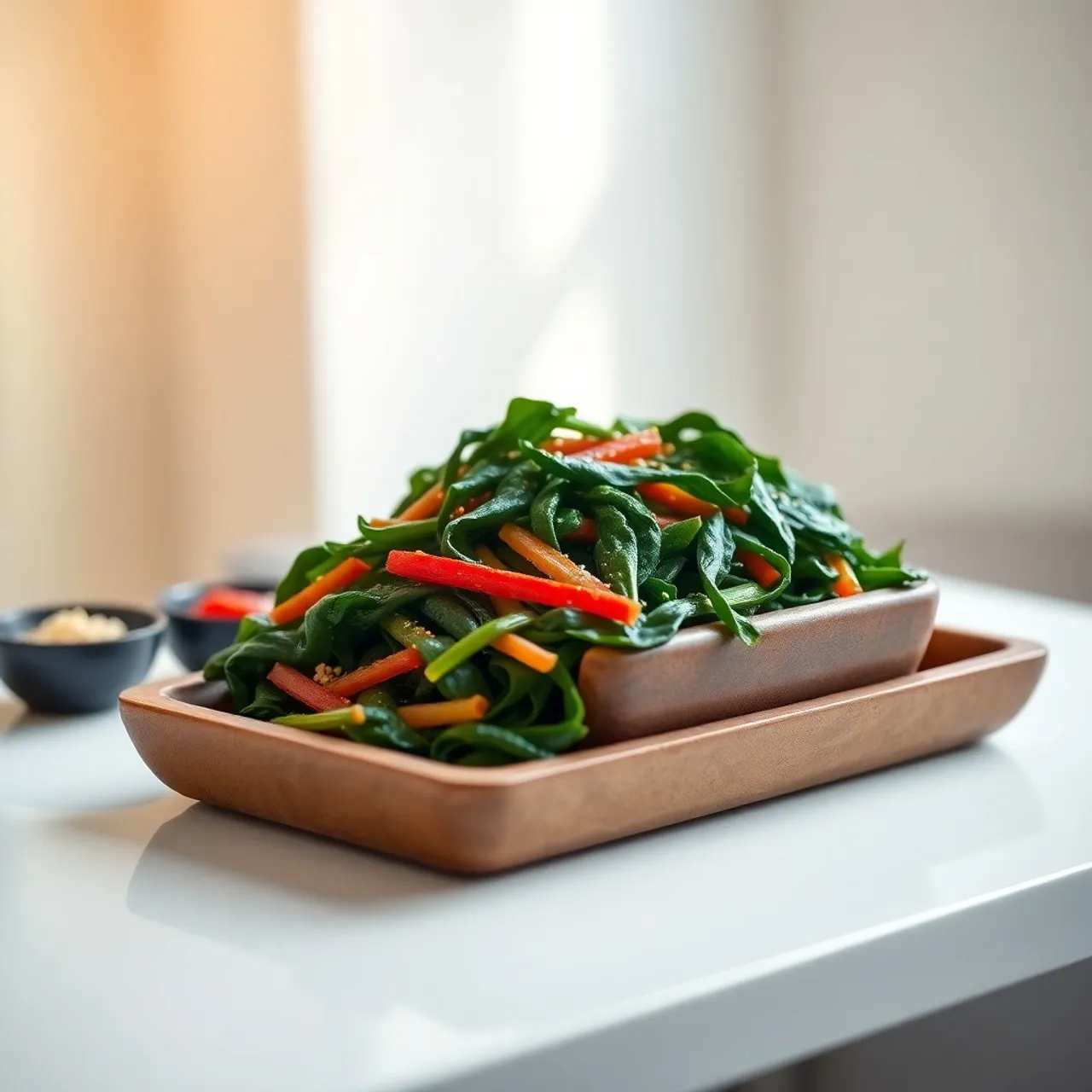
 Korean Images are for illustrative purposes only, may be inaccurate, and do not guarantee the presence or absence of specific ingredients.
 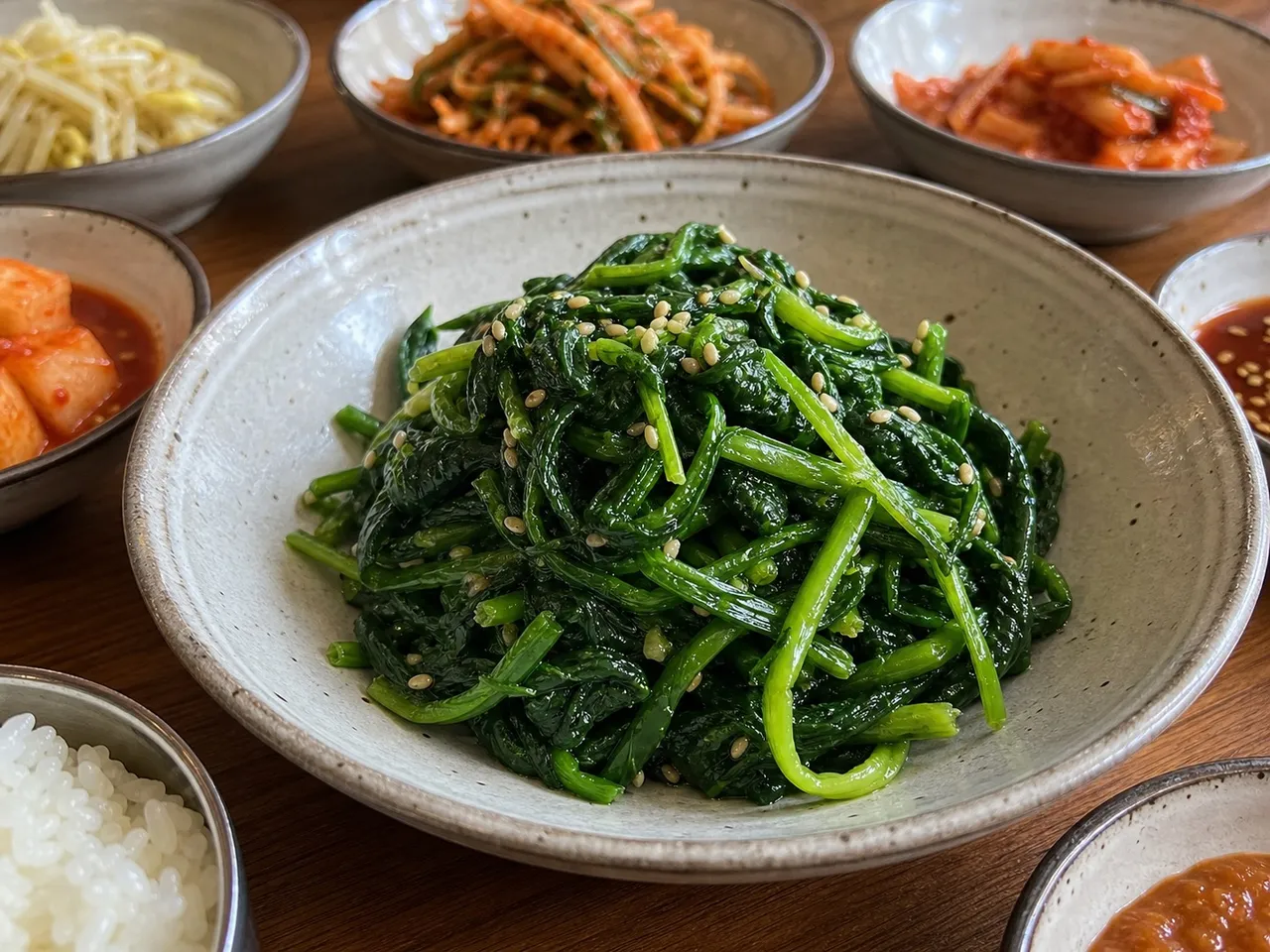 Serving Images are for illustrative purposes only, may be inaccurate, and do not guarantee the presence or absence of specific ingredients.
 Sigeumchi Namul (Seasoned Spinach)
A quick, glossy spinach banchan tossed with sesame oil, garlic, and toasted seeds that brings nutty freshness to any Korean spread.
Contains common allergens
In the app, Listahan checks these against your household automatically.
Good to know
- Ready in under 30 minutes
Matched from this dish's own ingredients and timing. Browse more: 30-minute meals
Instructions
5 steps- 1
Bring a large pot of water to a rolling boil, add 1 tsp salt, and blanch the spinach for just 30 to 45 seconds until the leaves wilt but stay vibrant green.
- 2
Immediately plunge the spinach into a bowl of ice water to stop the cooking and lock in color, then drain.
- 3
Gather the cooled spinach in your hands and squeeze firmly to remove as much water as possible, then loosen the clump into a bowl.
- 4
Add the sesame oil, minced garlic, soy sauce, and salt, then toss gently with your fingertips until every strand is coated.
- 5
Finish with toasted sesame seeds and serve at room temperature as a banchan or as part of a bibimbap bowl.
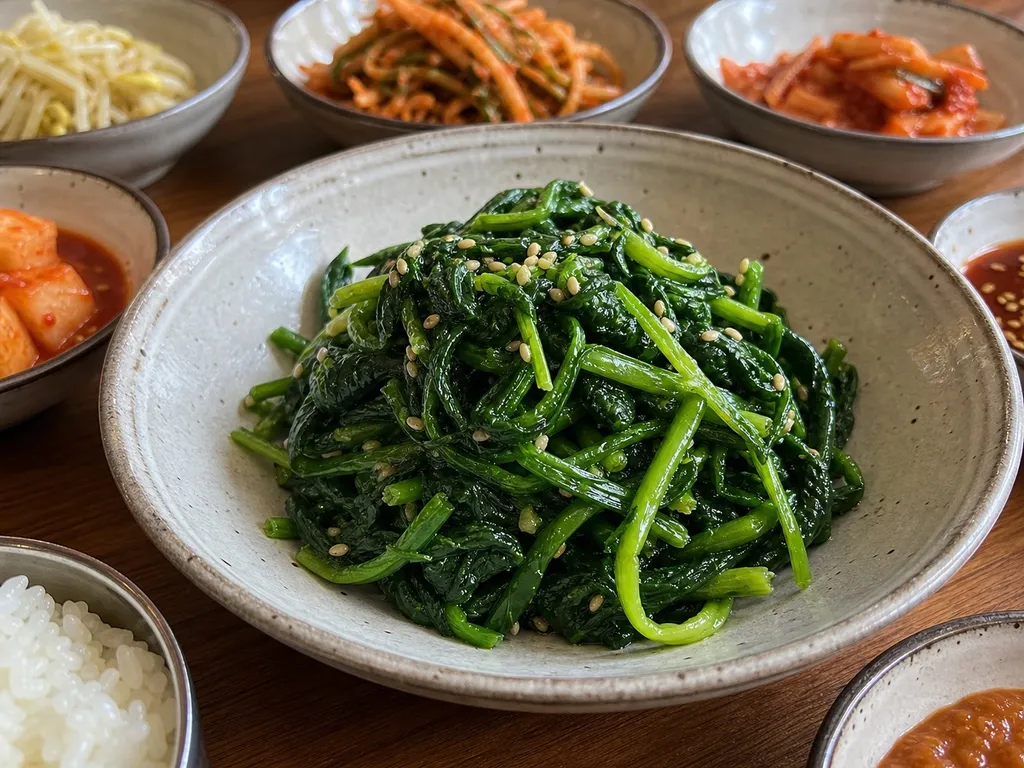 Images are for illustrative purposes only, may be inaccurate, and do not guarantee the presence or absence of specific ingredients.
 Listahan Family Score™
68/100
Works for many families
Score reflects how well this recipe fits a typical busy household. In the app, your Family Score is personalized to your household's allergens, kids, and pantry.
Nutrition
per serving70
Calories
4 g
Protein
5 g
Carbs
5 g
Fat
Estimated per serving. Actual values depend on the brands and portions you use.
Listahan cooking guide
Chef notes & practical guide
Technique notes, ingredient swaps, serve-alongside ideas, storage guidance, and equipment for this recipe.
Cultural context
Sigeumchi Namul is a simple seasoned spinach side dish, blanched greens dressed with sesame oil, garlic, and a little soy or salt. One of the most common banchan, it appears on Korean tables daily and in every bibimbap. Its restraint is the point: it lets the spinach taste like spinach, lifted by sesame.
Listahan note
This version blanches the spinach briefly and squeezes it well, then dresses it lightly so the green flavor leads and the sesame finishes.
Technique cues
- Blanch the spinach only briefly so it stays green and tender.
- Squeeze out as much water as possible so the dressing is not diluted.
- Dress lightly; this banchan should taste clean, not heavy.
Kitchen flow
- Parallel prep
- Blanch the spinach while the rest of the meal cooks.
- Make-ahead
- Make ahead and refrigerate; it keeps a few days as banchan.
- Leftover move
- Fold leftover seasoned spinach into bibimbap or gimbap.
- Cleanup rhythm
- One pot and a bowl; rinse promptly.
Ingredient brief
Role, handling, and swap guidance for each key ingredient.
Fresh spinach
Main
Purpose: The spinach is the entire dish, so its quality matters.
Handling: Blanch briefly, shock in cold water, and squeeze dry.
Adaptation: Other tender greens can be seasoned the same way.
Sesame oil
Dressing base
Purpose: Its nutty aroma is the defining flavor.
Handling: Toss in off the heat so it stays fragrant.
Adaptation: Perilla oil gives an earthier note.
Garlic
Aromatic
Purpose: Adds gentle pungency that lifts the greens.
Handling: Mince finely and toss with the spinach.
Adaptation: Use less for a milder side.
Soy sauce and salt
Seasoning
Purpose: Season the spinach without overwhelming it.
Handling: Add a little of each and taste.
Adaptation: Use salt only for a cleaner, lighter version.
Technique notes
- Do not over-blanch; a quick dip keeps the spinach bright.
- Squeeze thoroughly so the dressing clings.
- Toast the sesame seeds to deepen their aroma before adding.
Ingredient swaps
- Gluten-free direction
- Use tamari or just salt instead of soy sauce.
- Soy-free direction
- Season with salt and sesame only.
- Perilla direction
- Use perilla oil and seeds for a different, earthy banchan.
Serve alongside
- Steamed white rice
- Kimchi
- Seasoned soybean sprouts
- Grilled fish
- Barley tea
- Cold water
- Green tea
Serving suggestions only — check pairings for your household's allergens.
Storage & reheating
- Refrigerate up to 3 days in a sealed container.
- Serve cold or at room temperature; no reheating needed.
- Freezing is not recommended, as the texture turns watery.
Equipment
- Pot for blanching
- Mixing bowl
- Colander
- Cutting board
Make this household-aware
Listahan Pro checks this recipe against your household's allergens, finds pantry-aware swaps, builds the shopping list, and helps you plan the week around it.
Plan it in Listahan
Add Sigeumchi Namul (Seasoned Spinach) to your week, check it against your household's allergens, and build the shopping list automatically.
More Korean recipes
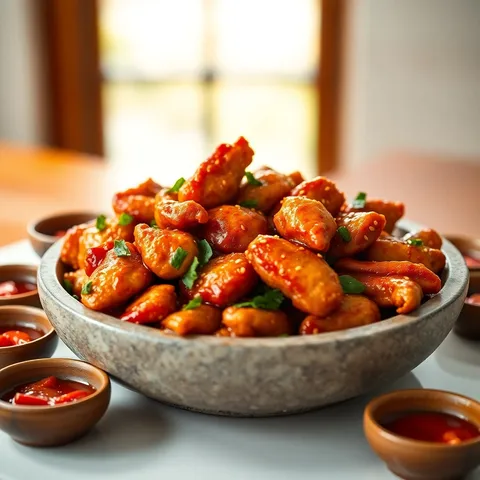 Korean Lens Verified Images are for illustrative purposes only, may be inaccurate, and do not guarantee the presence or absence of specific ingredients.
 Dakgalbi (Spicy Stir-fried Chicken)
Diced chicken marinated in a gochujang-based sauce, stir-fried with sweet potatoes, cabbage, perilla leaves, and tteok.
 Korean Lens Verified Images are for illustrative purposes only, may be inaccurate, and do not guarantee the presence or absence of specific ingredients.
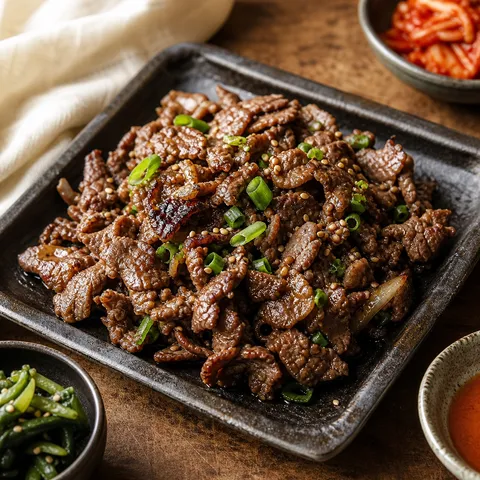
 Bulgogi (Marinated Beef BBQ)
Thinly sliced, marinated beef ribeye or sirloin grilled or stir-fried. Sweet, savory, and tender.
 Korean Lens Verified Images are for illustrative purposes only, may be inaccurate, and do not guarantee the presence or absence of specific ingredients.
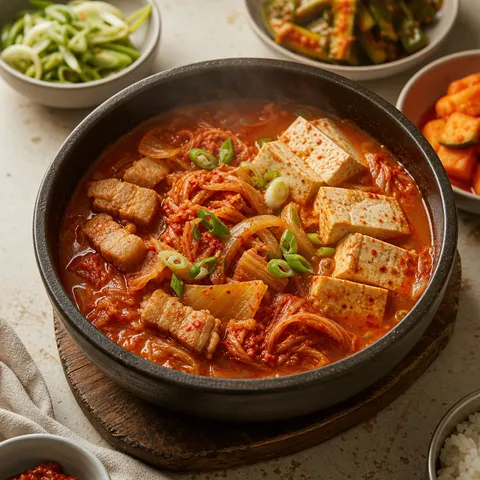
 Kimchi Jjigae (Kimchi Stew)
A classic, comforting stew made with aged kimchi, pork or seafood, scallions, onions, and diced tofu.