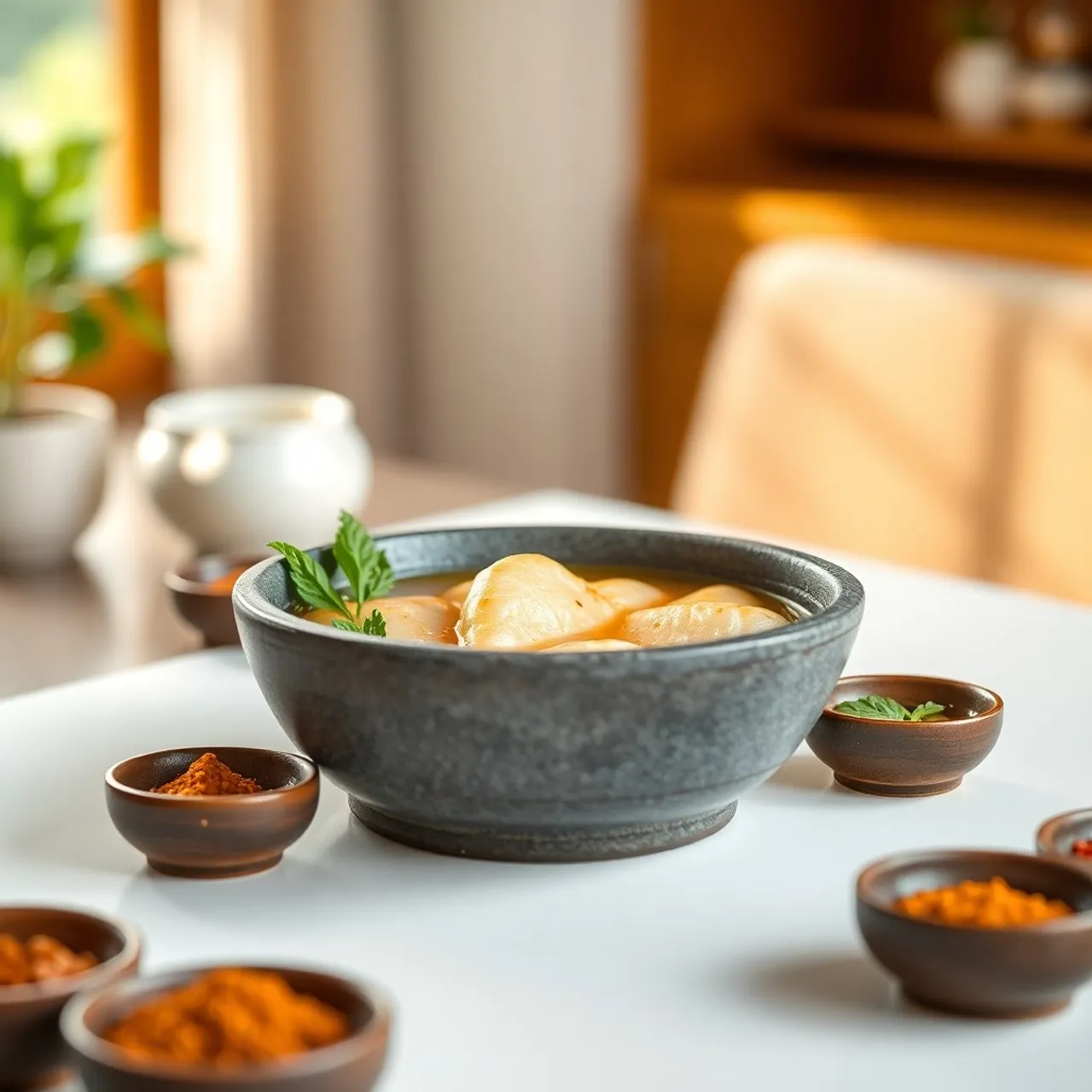
 Korean Images are for illustrative purposes only, may be inaccurate, and do not guarantee the presence or absence of specific ingredients.
 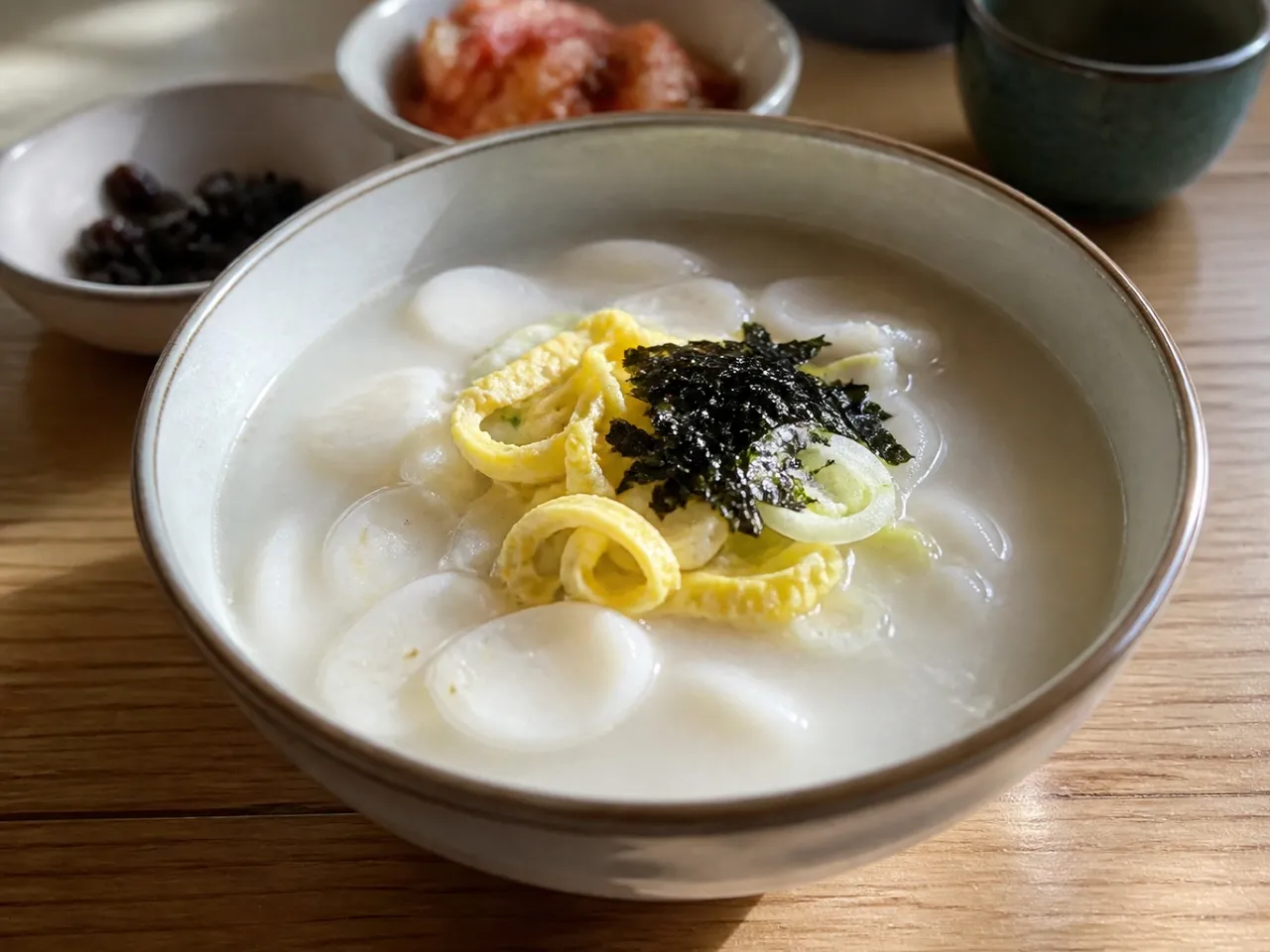 Serving Images are for illustrative purposes only, may be inaccurate, and do not guarantee the presence or absence of specific ingredients.
 Tteokguk (Rice Cake Soup)
A traditional Korean soup eaten during the celebration of the Korean New Year. Consists of a clear broth with sliced rice cakes.
Contains common allergens
In the app, Listahan checks these against your household automatically.
Instructions
6 steps- 1
Submerge the beef brisket in 8 cups of water and bring to a boil. Skim off any brown foam, reduce heat to low, cover, and simmer for 30 minutes to create a clear, flavorful broth.
- 2
Remove the brisket, let it cool slightly, then shred the meat by hand. Toss the shredded meat with a pinch of salt, sesame oil, and minced garlic.
- 3
Bring the clear broth back to a rolling boil and season with soup soy sauce and a pinch of salt to taste.
- 4
Drain the soaked rice cakes and carefully drop them into the boiling broth.
- 5
Cook for 3-5 minutes. The soup is ready exactly when the rice cakes become soft, chewy, and float to the surface.
- 6
Ladle the hot soup into bowls. Top gracefully with the seasoned shredded beef, diamond-cut egg sheets (jidan), chopped scallions, and crumbled roasted seaweed.
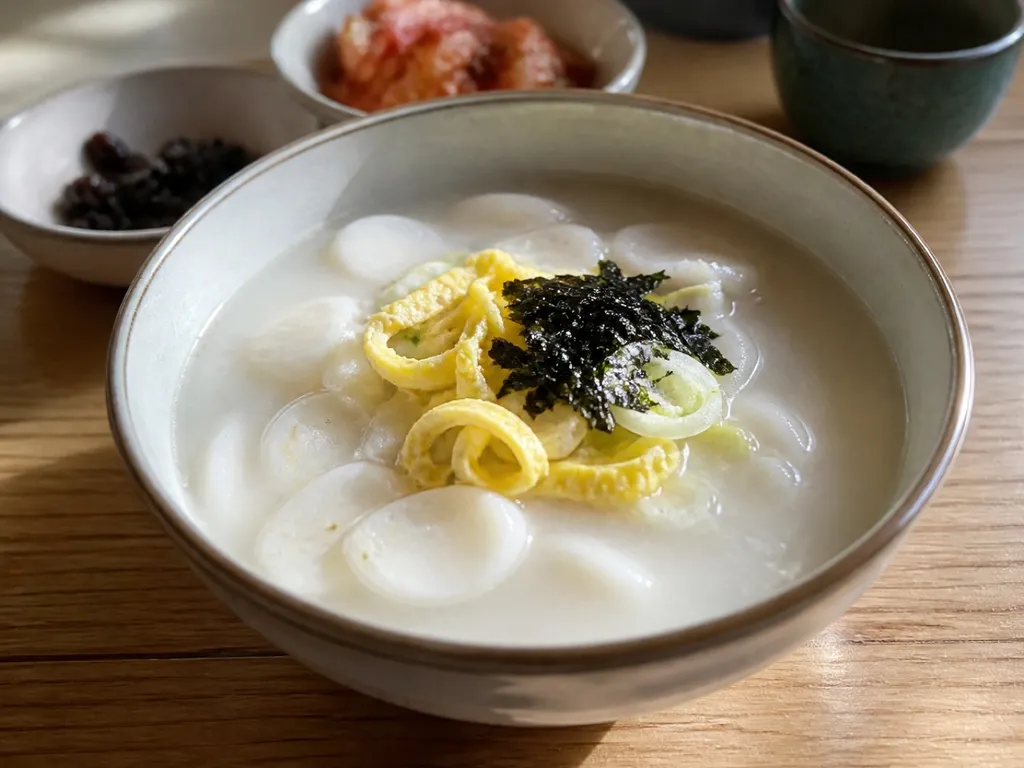 Images are for illustrative purposes only, may be inaccurate, and do not guarantee the presence or absence of specific ingredients.
 Listahan Family Score™
74/100
Good fit for most families
Score reflects how well this recipe fits a typical busy household. In the app, your Family Score is personalized to your household's allergens, kids, and pantry.
Nutrition
per serving530
Calories
24 g
Protein
81 g
Carbs
11 g
Fat
Estimated per serving. Actual values depend on the brands and portions you use.
Listahan cooking guide
Chef notes & practical guide
Technique notes, ingredient swaps, serve-alongside ideas, storage guidance, and equipment for this recipe.
Cultural context
Tteokguk is the rice cake soup eaten on Korean New Year, its oval white slices symbolizing a fresh start and another year of age. The clear, savory beef broth is garnished with egg ribbons, seaweed, and scallion. Eating a bowl is traditionally how Koreans mark turning a year older.
Listahan note
This version builds a clean beef broth, then drops in soaked rice cakes and finishes with egg ribbons and seaweed for the customary New Year bowl.
Technique cues
- Soak the rice cakes so they cook quickly and evenly.
- Skim the beef broth for a clear, clean soup.
- Add the rice cakes near the end so they do not turn mushy.
Kitchen flow
- Parallel prep
- Soak the rice cakes and fry the egg ribbons while the broth simmers.
- Make-ahead
- Make the broth ahead; add rice cakes only when reheating.
- Leftover move
- Add dumplings to leftover broth for tteok-mandu-guk.
- Cleanup rhythm
- One pot; strain the broth for the clearest result.
Ingredient brief
Role, handling, and swap guidance for each key ingredient.
Oval rice cakes
Base
Purpose: Their chewy slices are the symbolic heart of the soup.
Handling: Soak in cold water so they soften and separate.
Adaptation: Frozen rice cakes work after a longer soak.
Beef brisket
Broth and protein
Purpose: Builds the savory broth and adds tender meat.
Handling: Simmer for broth, then shred or slice.
Adaptation: An anchovy-kelp broth makes a lighter version.
Egg
Garnish
Purpose: Thin egg ribbons add color and richness on top.
Handling: Separate, pan-fry into thin sheets, and slice into strips.
Adaptation: A beaten egg swirled in works more simply.
Soup soy sauce (guk-ganjang)
Seasoning
Purpose: Seasons the broth without darkening it.
Handling: Season to taste, keeping the broth pale.
Adaptation: Regular soy sauce works but darkens the soup.
Technique notes
- Add the rice cakes at the last minute so they stay chewy.
- Keep the broth pale by using soup soy sauce.
- Garnish generously with egg, seaweed, and scallion for the festive look.
Ingredient swaps
- Vegetarian direction
- Use kelp-mushroom broth and skip the beef.
- Add-dumpling direction
- Drop in mandu for the heartier tteok-mandu-guk.
- Gluten-free direction
- Use tamari-style soup soy and confirm the rice cakes are pure rice.
Serve alongside
- Mandu
- Kimchi
- Japchae
- Seasoned spinach
- Barley tea
- Cold water
- Soju
Serving suggestions only — check pairings for your household's allergens.
Storage & reheating
- Refrigerate the broth up to 3 days; add fresh rice cakes when serving.
- Reheat the broth and add soaked rice cakes, as cooked ones get mushy.
- Freeze the broth up to 2 months; rice cakes are best added fresh.
Equipment
- Soup pot
- Skillet for egg ribbons
- Ladle
- Fine strainer
Make this household-aware
Listahan Pro checks this recipe against your household's allergens, finds pantry-aware swaps, builds the shopping list, and helps you plan the week around it.
Plan it in Listahan
Add Tteokguk (Rice Cake Soup) to your week, check it against your household's allergens, and build the shopping list automatically.
More Korean recipes
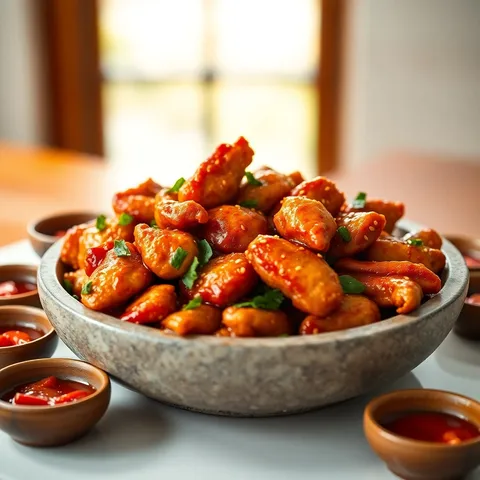 Korean Lens Verified Images are for illustrative purposes only, may be inaccurate, and do not guarantee the presence or absence of specific ingredients.
 Dakgalbi (Spicy Stir-fried Chicken)
Diced chicken marinated in a gochujang-based sauce, stir-fried with sweet potatoes, cabbage, perilla leaves, and tteok.
 Korean Lens Verified Images are for illustrative purposes only, may be inaccurate, and do not guarantee the presence or absence of specific ingredients.
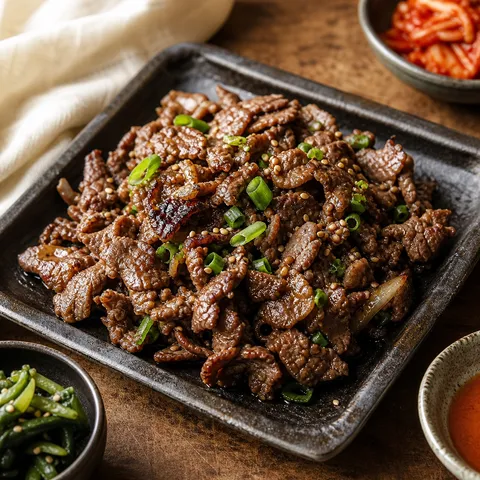
 Bulgogi (Marinated Beef BBQ)
Thinly sliced, marinated beef ribeye or sirloin grilled or stir-fried. Sweet, savory, and tender.
 Korean Lens Verified Images are for illustrative purposes only, may be inaccurate, and do not guarantee the presence or absence of specific ingredients.
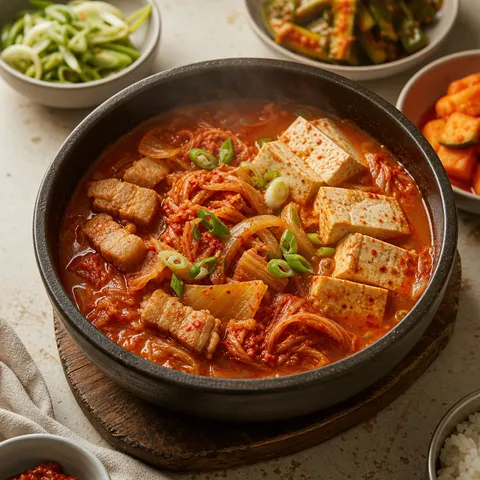
 Kimchi Jjigae (Kimchi Stew)
A classic, comforting stew made with aged kimchi, pork or seafood, scallions, onions, and diced tofu.