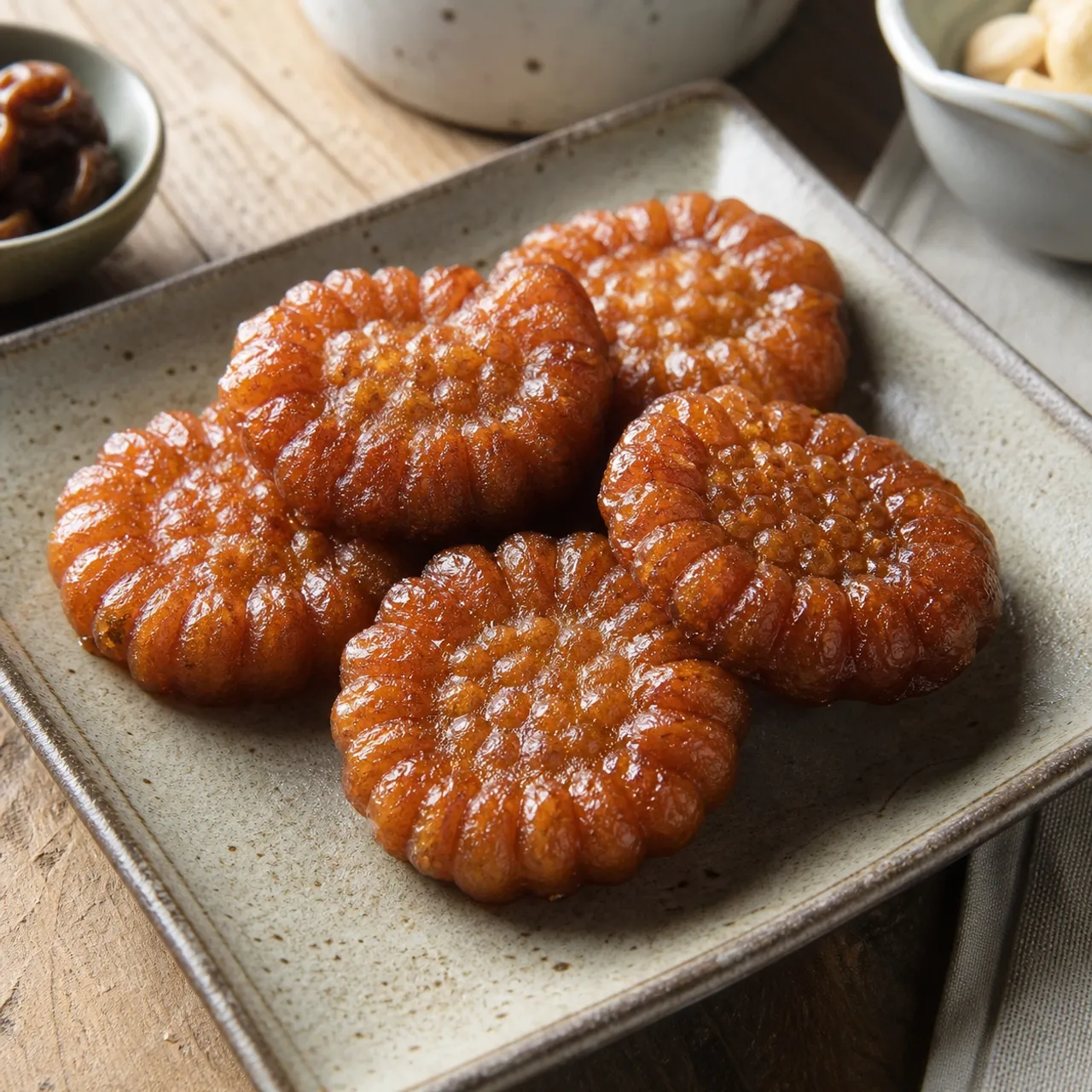
 Korean Images are for illustrative purposes only, may be inaccurate, and do not guarantee the presence or absence of specific ingredients.
 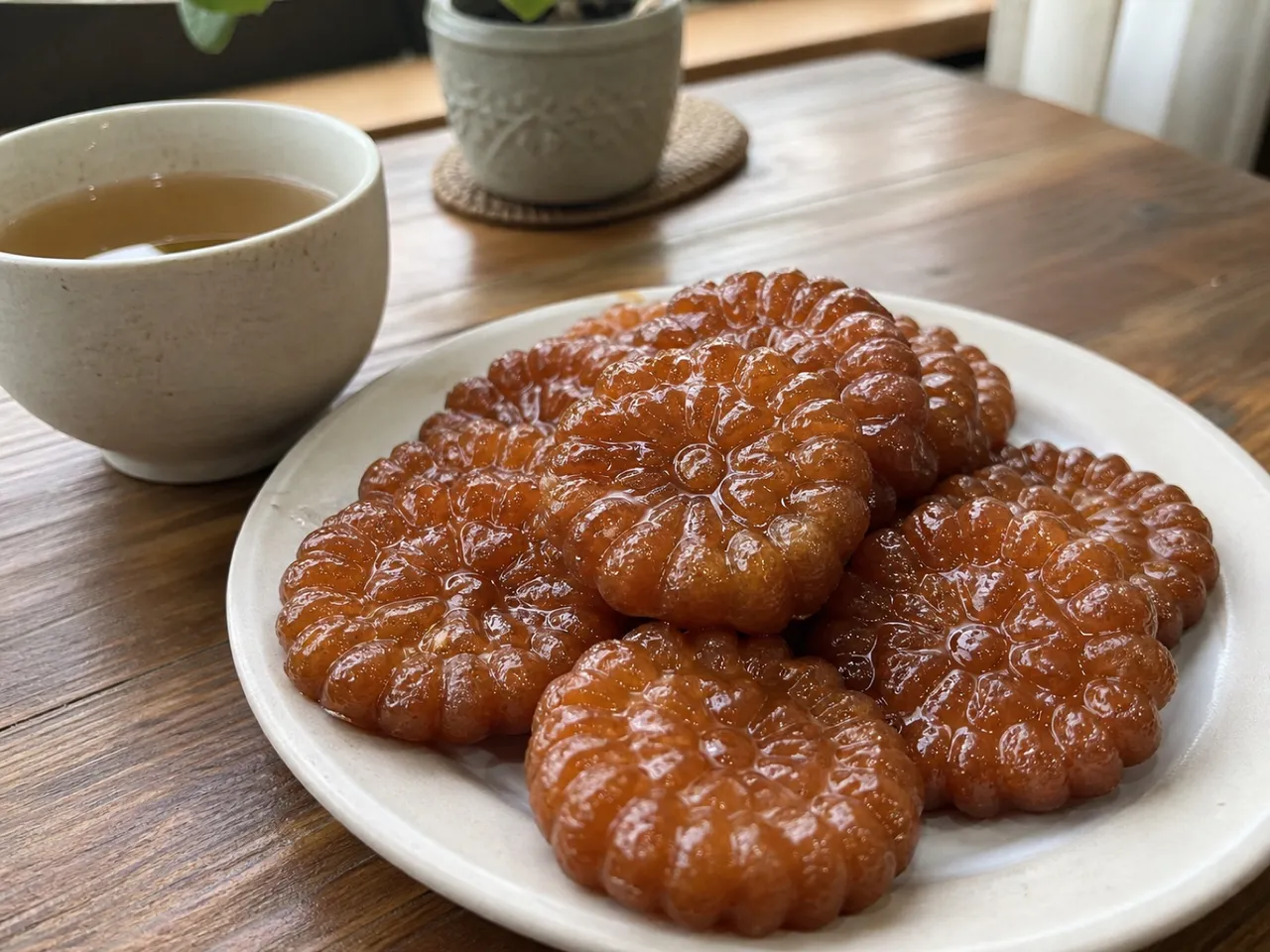 Serving Images are for illustrative purposes only, may be inaccurate, and do not guarantee the presence or absence of specific ingredients.
 Yakgwa (Honey Pastry)
A traditional Korean sweet pastry shaped like a flower, deep-fried and soaked in a honey-ginger syrup.
Contains common allergens
In the app, Listahan checks these against your household automatically.
Instructions
6 steps- 1
Prepare the syrup by boiling the honey, rice syrup, water, and grated ginger for 10 minutes. Turn off the heat and let it cool slightly.
- 2
Sift the flour, salt, and white pepper. Vigorously rub the sesame oil into the flour by hand until it resembles fine crumbs.
- 3
Gently mix in the honey and rice wine, folding the dough just until it comes together (do not over-knead, or it will be tough).
- 4
Roll the dough out to 1/2-inch thickness. Press into traditional wooden Yakgwa flower molds, or cut into 1.5-inch squares and poke a few holes in each with a fork.
- 5
Heat oil to a very low 210°F (100°C). Fry the dough slowly for 10-12 minutes so the insides cook and expand. Then increase the heat to 300°F (150°C) and fry until deep golden brown.
- 6
Immediately transfer the hot, fried pastries directly into the warm ginger-honey syrup. Let them soak for at least 2 hours (or overnight) to become sweet, moist, and slightly chewy.
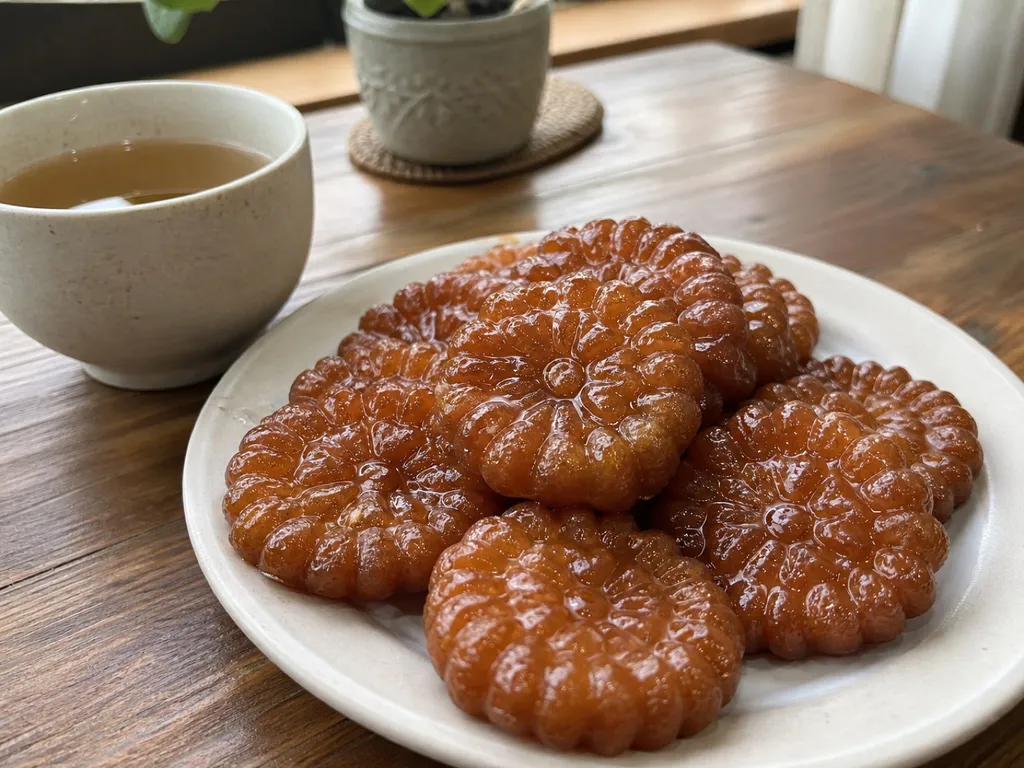 Images are for illustrative purposes only, may be inaccurate, and do not guarantee the presence or absence of specific ingredients.
 Listahan Family Score™
70/100
Good fit for most families
Score reflects how well this recipe fits a typical busy household. In the app, your Family Score is personalized to your household's allergens, kids, and pantry.
Nutrition
per serving160
Calories
2 g
Protein
25 g
Carbs
5 g
Fat
Estimated per serving. Actual values depend on the brands and portions you use.
Listahan cooking guide
Chef notes & practical guide
Technique notes, ingredient swaps, serve-alongside ideas, storage guidance, and equipment for this recipe.
Cultural context
Yakgwa is a deep-fried honey pastry, a refined Korean confection once reserved for royal courts and ceremonies. Wheat dough enriched with sesame oil and honey is fried, then steeped in a honey-ginger syrup until rich and chewy. The name means medicine sweet, a nod to honey's prized status.
Listahan note
This version keeps the dough tender with sesame oil and honey, then soaks the fried pastries in a ginger-honey syrup so they turn moist and deeply sweet.
Technique cues
- Do not overwork the dough; gentle handling keeps the pastry tender.
- Fry slowly at a moderate temperature so the inside cooks before the outside darkens.
- Soak the hot pastries in syrup so they absorb it fully.
Kitchen flow
- Parallel prep
- Make the syrup while the dough rests, so it is ready when the pastries fry.
- Make-ahead
- Yakgwa keeps for days and even improves as the syrup sets in.
- Leftover move
- Serve leftover yakgwa with tea as a make-ahead sweet.
- Cleanup rhythm
- Strain the frying oil; soak the sticky syrup pot in hot water.
Ingredient brief
Role, handling, and swap guidance for each key ingredient.
All-purpose flour
Dough base
Purpose: Forms the structure of the pastry.
Handling: Mix gently with the wet ingredients; do not knead hard.
Adaptation: A little cake flour makes it more tender.
Sesame oil and honey
Dough enrichment
Purpose: Give the dough its signature nutty, sweet richness.
Handling: Rub the sesame oil into the flour and add honey.
Adaptation: Use a neutral oil plus more honey if needed.
Honey-ginger syrup
Soaking syrup
Purpose: Steeping makes the pastries moist, chewy, and deeply flavored.
Handling: Simmer honey, syrup, water, and ginger, then soak the fried pastries.
Adaptation: Rice syrup balances the honey for less cloying sweetness.
Rice wine (cheongju)
Dough liquid
Purpose: Adds tenderness and a subtle aroma to the dough.
Handling: Mix into the dough.
Adaptation: A splash of water with a little vinegar works.
Technique notes
- Fry at a moderate temperature so the centers cook through.
- Soak the pastries while hot so they drink in the syrup.
- Let them drain and set so they are chewy, not greasy.
Ingredient swaps
- Less-sweet direction
- Use more rice syrup and less honey in the soak.
- Sesame-allergy note
- Sesame oil is central here; for a sesame allergy this dish is not suitable as written.
- Ginger-forward direction
- Add extra grated ginger to the syrup for more warmth.
Serve alongside
- Fresh fruit
- Sujeonggwa (cinnamon punch)
- Roasted nuts
- Tea cookies
- Hot tea
- Barley tea
- Coffee
Serving suggestions only — check pairings for your household's allergens.
Storage & reheating
- Store airtight at room temperature for up to a week.
- No reheating needed; serve at room temperature.
- Freeze up to 1 month; thaw at room temperature.
Equipment
- Deep heavy pot for frying
- Saucepan for syrup
- Slotted spoon
- Cutting board
Make this household-aware
Listahan Pro checks this recipe against your household's allergens, finds pantry-aware swaps, builds the shopping list, and helps you plan the week around it.
Plan it in Listahan
Add Yakgwa (Honey Pastry) to your week, check it against your household's allergens, and build the shopping list automatically.
More Korean recipes
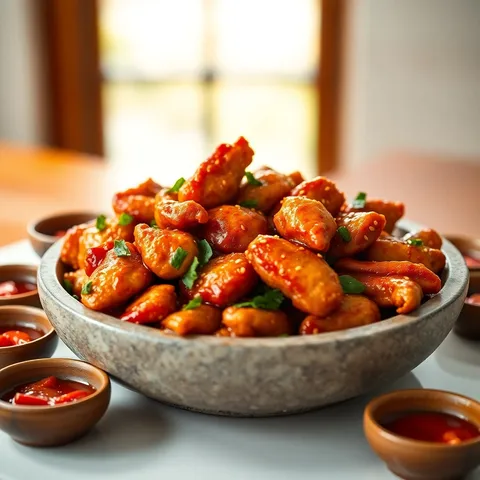 Korean Lens Verified Images are for illustrative purposes only, may be inaccurate, and do not guarantee the presence or absence of specific ingredients.
 Dakgalbi (Spicy Stir-fried Chicken)
Diced chicken marinated in a gochujang-based sauce, stir-fried with sweet potatoes, cabbage, perilla leaves, and tteok.
 Korean Lens Verified Images are for illustrative purposes only, may be inaccurate, and do not guarantee the presence or absence of specific ingredients.
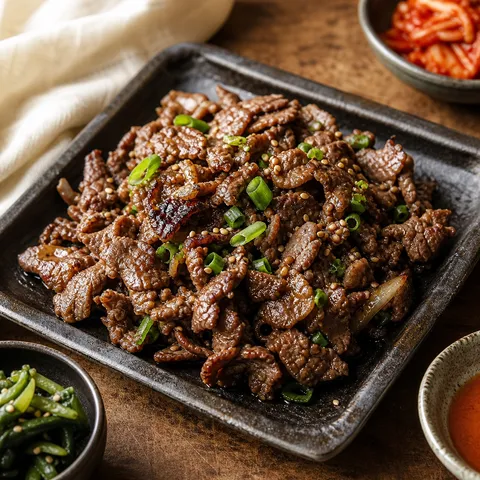
 Bulgogi (Marinated Beef BBQ)
Thinly sliced, marinated beef ribeye or sirloin grilled or stir-fried. Sweet, savory, and tender.
 Korean Lens Verified Images are for illustrative purposes only, may be inaccurate, and do not guarantee the presence or absence of specific ingredients.
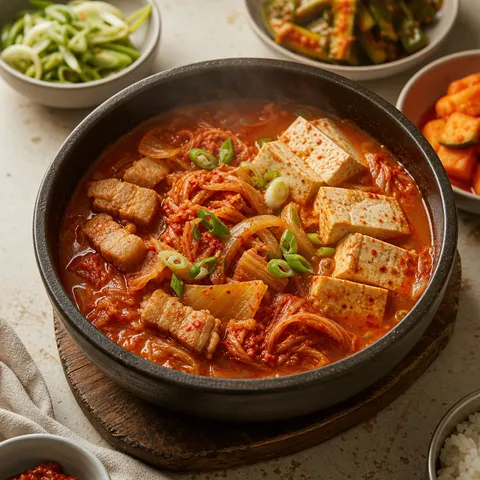
 Kimchi Jjigae (Kimchi Stew)
A classic, comforting stew made with aged kimchi, pork or seafood, scallions, onions, and diced tofu.