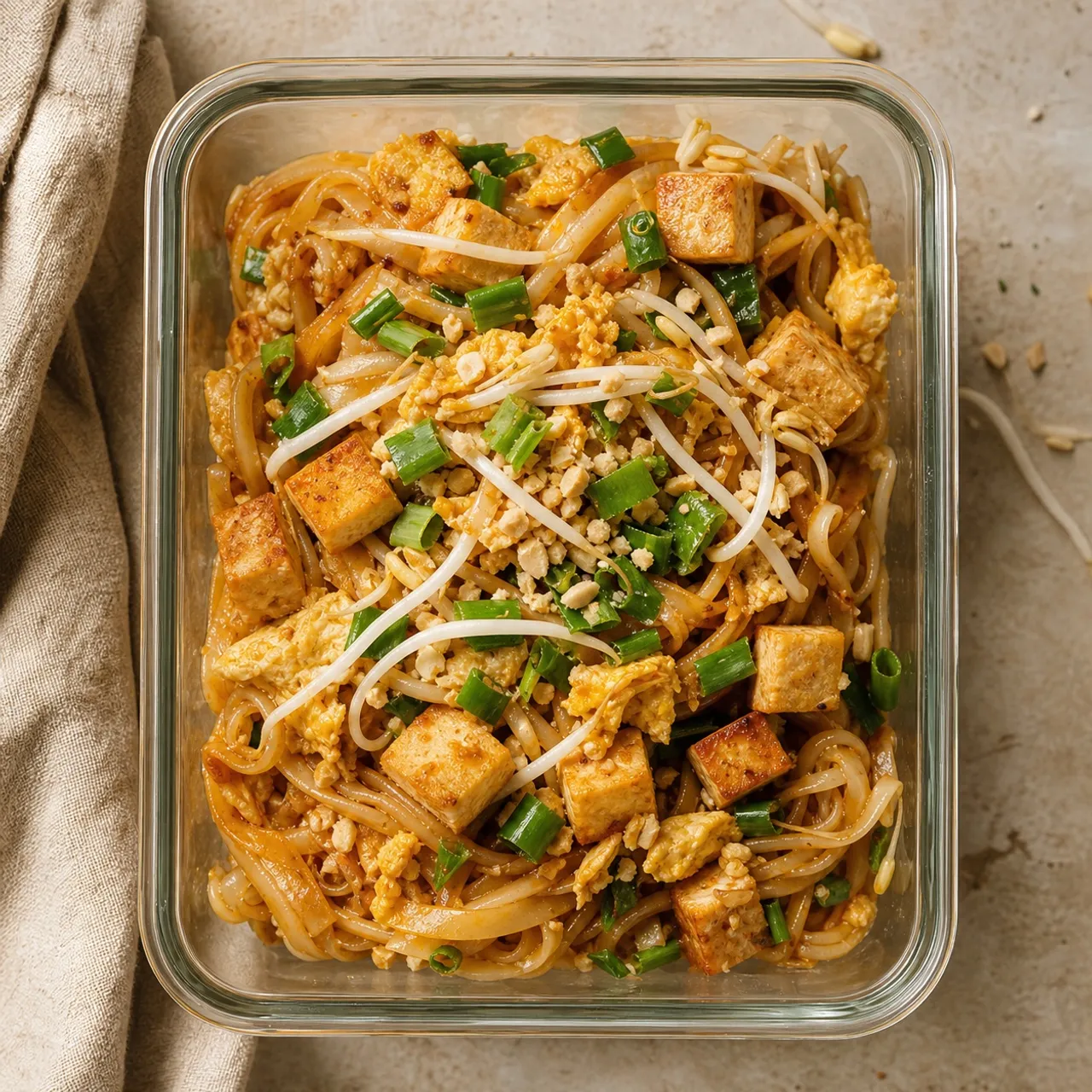
 Meal Prep Images are for illustrative purposes only, may be inaccurate, and do not guarantee the presence or absence of specific ingredients.
 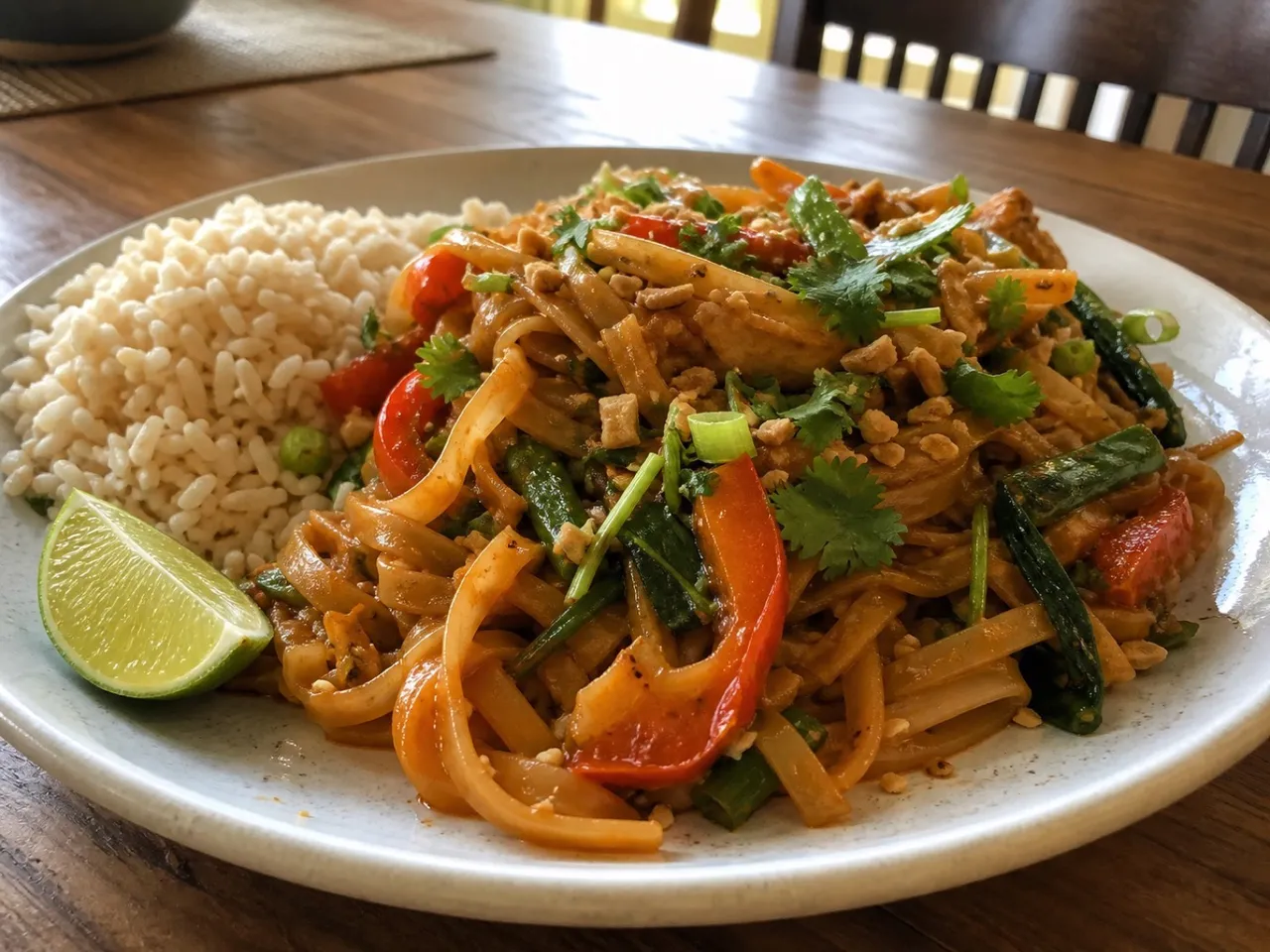 Serving Images are for illustrative purposes only, may be inaccurate, and do not guarantee the presence or absence of specific ingredients.
 30-Minute Veggie Pad Thai
A vibrant, tangy, and slightly sweet noodle dish loaded with fresh crunch and a punchy tamarind-peanut sauce.
Contains common allergens
In the app, Listahan checks these against your household automatically.
Good to know
- Ready in under 30 minutes
Matched from this dish's own ingredients and timing. Browse more: 30-minute meals
Instructions
6 steps- 1
Place the rice noodles in a large bowl and cover with boiling water. Let them soak for 8-10 minutes until tender but slightly chewy. Drain and rinse with cold water.
- 2
In a small bowl, whisk the soy sauce, fresh lime juice, and brown sugar until the sugar dissolves to form the Pad Thai sauce.
- 3
Heat 1 tbsp of oil in a wok or large skillet over medium-high heat. Add the cubed tofu and pan-fry for 5 minutes until golden. Push the tofu to one side of the pan.
- 4
Pour the beaten eggs onto the empty side of the skillet and scramble quickly until just set.
- 5
Add the drained noodles and the prepared sauce to the wok. Toss vigorously using tongs for 2-3 minutes until the noodles absorb the sauce.
- 6
Remove from heat. Fold in the bean sprouts and chopped green onions. Divide into containers and top generously with crushed peanuts.
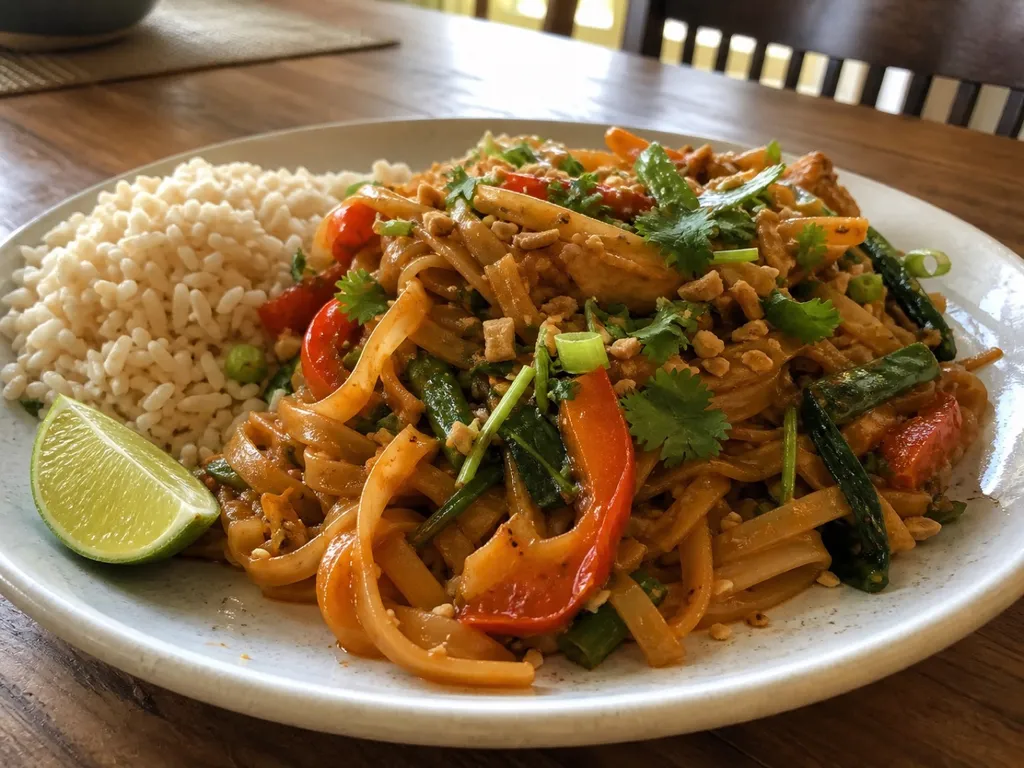 Images are for illustrative purposes only, may be inaccurate, and do not guarantee the presence or absence of specific ingredients.
 Listahan Family Score™
77/100
Good fit for most families
Score reflects how well this recipe fits a typical busy household. In the app, your Family Score is personalized to your household's allergens, kids, and pantry.
Nutrition
per serving450
Calories
8 g
Protein
99 g
Carbs
1 g
Fat
Estimated per serving. Actual values depend on the brands and portions you use.
Listahan cooking guide
Chef notes & practical guide
Technique notes, ingredient swaps, serve-alongside ideas, storage guidance, and equipment for this recipe.
Cultural context
Pad Thai was formalized as a dish during a Thai government campaign in the 1930s and 1940s that promoted rice noodles as a way to reduce rice grain consumption and foster national identity around a single, unifying dish. It became Thailand's most internationally recognized food, partly because its balance of sweet, salty, sour, and funky flavors translates across culinary borders without alienating unfamiliar palates. The vegetable-only version replaces the traditional shrimp and dried shrimp with tofu and extra vegetables, making it more accessible for plant-based eaters while keeping the essential noodle-and-sauce structure that defines the dish. The 30-minute adaptation focuses on getting the sauce right first because sauce quality is the single largest predictor of how good a Pad Thai tastes.
Listahan note
This version makes the sauce from scratch rather than from a packet so the sweet-sour-salty balance can be adjusted to the family's preference, and keeps the portions slightly dry at packaging so the noodles do not absorb all the sauce before the container is opened.
Technique cues
- Soak rice noodles in room-temperature water for 30 minutes rather than boiling them; this partial hydration leaves the noodles firm enough to finish cooking in the hot wok without turning mushy, which boiling does not allow.
- Cook everything in batches in a very hot wok, starting with tofu, then egg, then vegetables, then noodles; adding everything together at once drops the pan temperature dramatically and produces steamed rather than stir-fried food.
- Taste and adjust the sauce before serving with a squeeze of lime and a pinch of sugar or a drop of fish sauce equivalent; the balance shifts slightly during cooking and a 15-second recalibration at the end makes the difference between good and excellent.
Kitchen flow
- Parallel prep
- Set noodles to soak while you press the tofu, prep the vegetables, and make the sauce so everything is ready before the wok goes on and you need to move quickly.
- Make-ahead
- The Pad Thai sauce can be made and refrigerated for up to 2 weeks; having the sauce ready is the biggest time-saver since it is the only component that requires measuring and balancing.
- Leftover move
- Add a cup of warm broth to cold Pad Thai and simmer briefly for a loose, noodle-soup style dish that transforms the leftovers without any additional prep.
- Cleanup rhythm
- Use the same wok for every component in sequence without washing between batches; the residual flavors from tofu and eggs layer into the noodles and improve the final dish.
Ingredient brief
Role, handling, and swap guidance for each key ingredient.
rice noodles (medium width)
chewy, gluten-free noodle base
Purpose: Rice noodles are the non-negotiable foundation of Pad Thai; their neutral flavor takes on the sauce completely.
Handling: Soak in cold water for 30 minutes to soften, then drain and cook directly in the hot wok for 2 to 3 minutes; do not boil before adding to the wok.
Adaptation: Thin rice vermicelli cooks faster but loses texture; zucchini noodles give a low-carb option but fundamentally change the character of the dish.
firm tofu
vegetarian protein
Purpose: Provides chewiness and absorbs the sauce flavors while adding protein that keeps the dish filling without meat.
Handling: Press for 15 minutes, cube, and cook first in a very hot oiled wok until golden on all sides before any sauce or vegetables are added.
Adaptation: Scrambled egg provides protein and a different textural element in a non-vegan version; tempeh crumbles offer a nuttier flavor and firmer texture.
tamarind paste
sour backbone of the sauce
Purpose: Provides the deep, fruity sourness that is irreplaceable in an authentic Pad Thai sauce and cannot be replicated by lime juice alone.
Handling: Use tamarind concentrate for convenience; if using a tamarind block, soak in warm water and strain through a sieve to remove seeds and fibers.
Adaptation: A mixture of rice vinegar and a pinch of Worcestershire sauce approximates the tartness in a pinch; the flavor will be less complex but functional.
fish sauce or soy sauce
salty umami depth
Purpose: The fermented fish flavor of fish sauce is the characteristic funk that most people associate with authentic Pad Thai; soy sauce keeps it fully vegetarian.
Handling: Add fish sauce or soy sauce to the combined sauce mixture before tasting so you control the saltiness of the final dish.
Adaptation: Soy sauce or tamari keeps the dish vegan; coconut aminos provide a milder, less pungent alternative with lower sodium.
bean sprouts
fresh crunch and hydration
Purpose: Added at the very end of cooking, they retain their snap and provide a fresh, cool counterpoint to the hot, saucy noodles.
Handling: Add in the final 30 seconds of cooking only; longer exposure to heat collapses them into limp, watery strands.
Adaptation: Thinly sliced cabbage gives a similar crunch with better durability in stored containers; julienned daikon radish adds a peppery note.
Technique notes
- A second pass of fresh lime juice directly onto each portioned container just before sealing serves as both a flavor brightener and a natural preservative that helps the noodles stay vibrant in color.
- Portion the crushed peanuts separately in a small bag rather than mixed into the container; peanuts absorb moisture and turn soft within hours, and a crunchy garnish applied at eating time makes a significant difference in the overall experience.
- If the noodles stick together in the container, a teaspoon of sesame oil stirred through the cold noodles before reheating loosens them instantly.
Ingredient swaps
- Gluten-free direction
- Use tamari instead of soy sauce and verify that your tamarind paste contains no wheat-based additives; rice noodles are naturally gluten-free.
- Nut-free direction
- Replace crushed peanuts with toasted pumpkin seeds or sunflower seeds for a similar crunch without tree nut or peanut allergens.
- Lower-sodium direction
- Use coconut aminos in place of soy sauce or fish sauce and reduce the total sauce volume by a quarter, balancing with extra lime juice for sourness.
- Vegan option
- Use soy sauce instead of fish sauce and ensure the sugar used in the sauce is certified vegan; the rest of the recipe is naturally plant-based.
Serve alongside
- Thai cucumber salad with rice vinegar and chili
- miso soup with silken tofu
- fresh spring rolls with peanut dipping sauce
- Thai iced tea (sweetened, over ice)
- sparkling water with a splash of coconut water and lime
Serving suggestions only — check pairings for your household's allergens.
Storage & reheating
- Refrigerate Pad Thai in airtight containers for up to 3 days; rice noodles soften and absorb sauce during storage, so the dish is slightly saucier on day 1 and thicker by day 3.
- Pad Thai does not freeze well because the rice noodles turn mushy and grainy on thawing; prepare only the quantity you plan to eat within 3 days and make fresh batches as needed.
Equipment
- large wok or wide carbon steel skillet
- tofu press or weight setup for pressing tofu
- wide shallow bowls for soaking noodles
- 4 airtight containers with small peanut portion bags
Make this household-aware
Listahan Pro checks this recipe against your household's allergens, finds pantry-aware swaps, builds the shopping list, and helps you plan the week around it.
Plan it in Listahan
Add 30-Minute Veggie Pad Thai to your week, check it against your household's allergens, and build the shopping list automatically.
More Meal Prep recipes
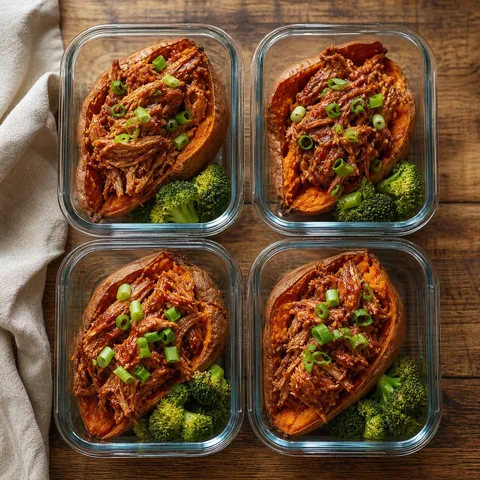 Meal Prep Lens Verified Images are for illustrative purposes only, may be inaccurate, and do not guarantee the presence or absence of specific ingredients.
 BBQ Pulled Pork Stuffed Sweet Potatoes
A hearty, smoky, and sweet combination that balances protein and complex carbohydrates perfectly.
 Meal Prep Lens Verified Images are for illustrative purposes only, may be inaccurate, and do not guarantee the presence or absence of specific ingredients.
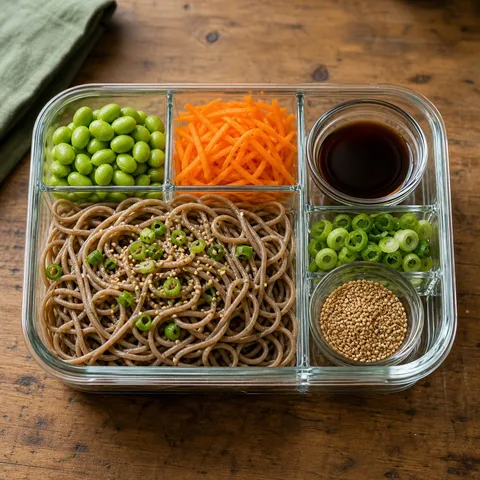
 Soba Noodle Salad
Buckwheat soba noodles tossed in a sesame-ginger dressing with edamame, shredded carrots, and scallions — nutty, refreshing, and endlessly satisfying served cold.
 Meal Prep Lens Verified Images are for illustrative purposes only, may be inaccurate, and do not guarantee the presence or absence of specific ingredients.
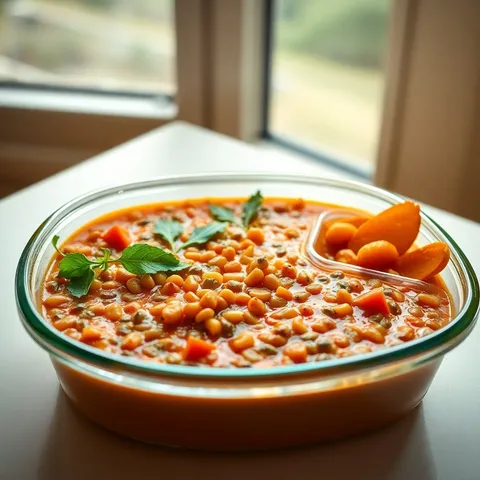
 Rustic French Lentil Soup
A deeply nourishing and earthy soup that is rich in plant-based protein and freezes exceptionally well.