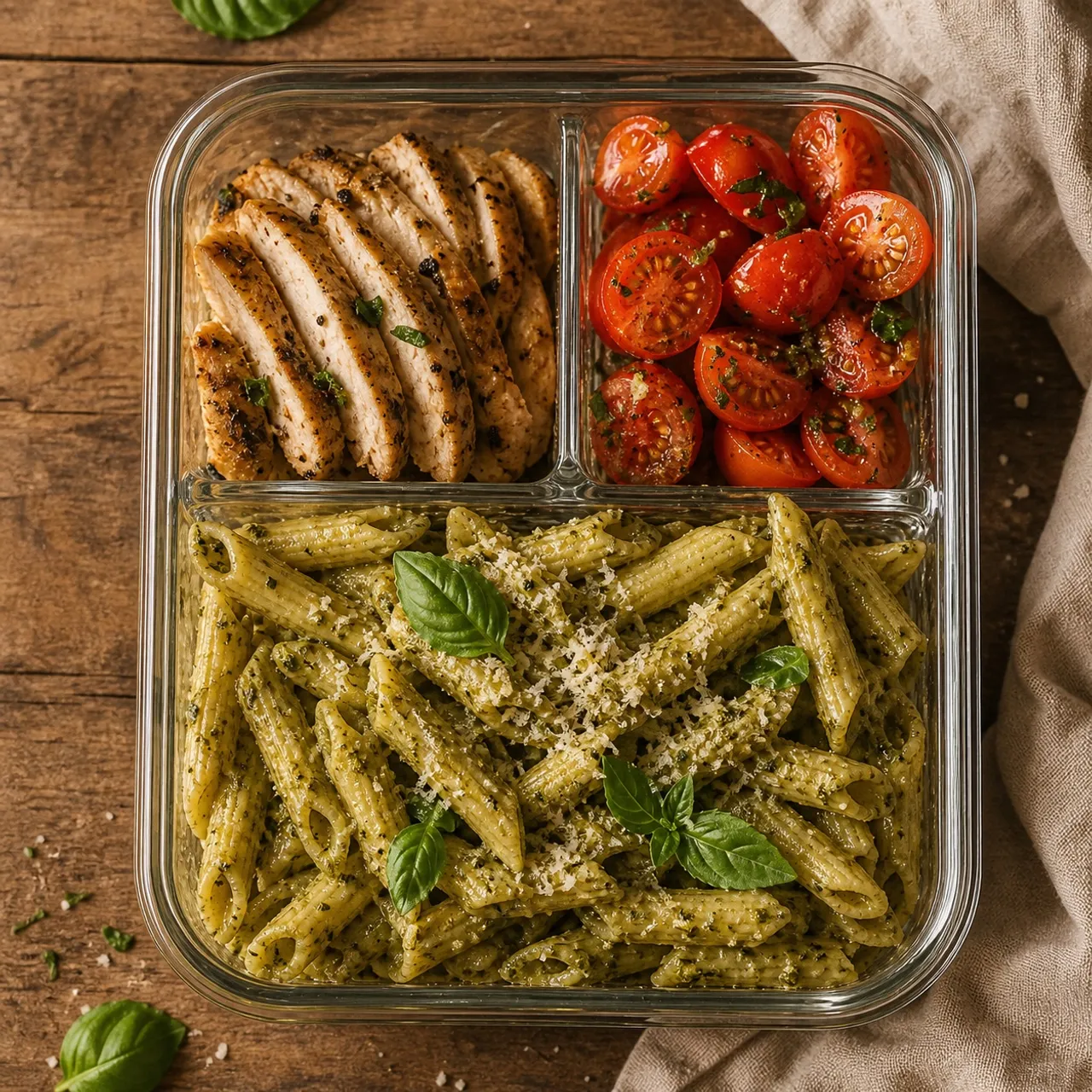
 Meal Prep Images are for illustrative purposes only, may be inaccurate, and do not guarantee the presence or absence of specific ingredients.
 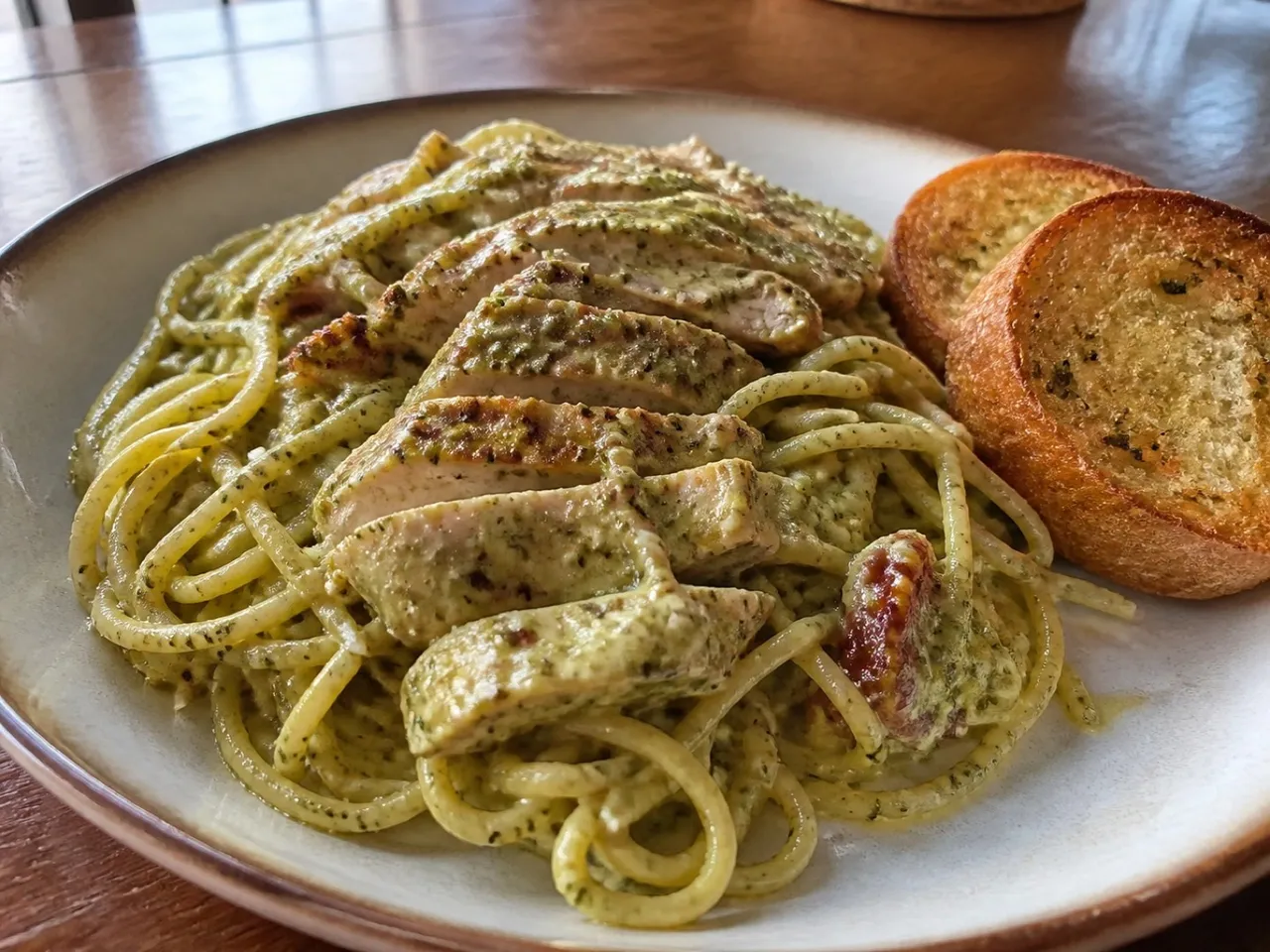 Serving Images are for illustrative purposes only, may be inaccurate, and do not guarantee the presence or absence of specific ingredients.
 Creamy Basil Pesto Chicken Pasta
A vibrant, herbaceous pasta dish made with lean chicken breast and whole grain pasta.
Contains common allergens
In the app, Listahan checks these against your household automatically.
Good to know
- Ready in under 30 minutes
Matched from this dish's own ingredients and timing. Browse more: 30-minute meals
Instructions
6 steps- 1
Bring a large pot of heavily salted water to a rolling boil. Add the whole wheat pasta and cook until al dente (about 9-11 minutes).
- 2
Before draining the pasta, reserve 1/4 cup of the starchy pasta water. Drain the pasta and set aside.
- 3
Heat 1 tbsp of olive oil in a large skillet over medium-high heat. Season the chicken strips with salt, pepper, and garlic powder.
- 4
Sauté the chicken for 5-7 minutes until thoroughly cooked (internal temp 165°F) and lightly golden brown on the edges.
- 5
Reduce the heat to low. Add the cooked pasta and the halved cherry tomatoes to the skillet with the chicken.
- 6
Stir in the pesto and a splash of the reserved pasta water. Toss gently until everything is evenly coated in a creamy pesto sauce. Divide into 4 containers and top with Parmesan.
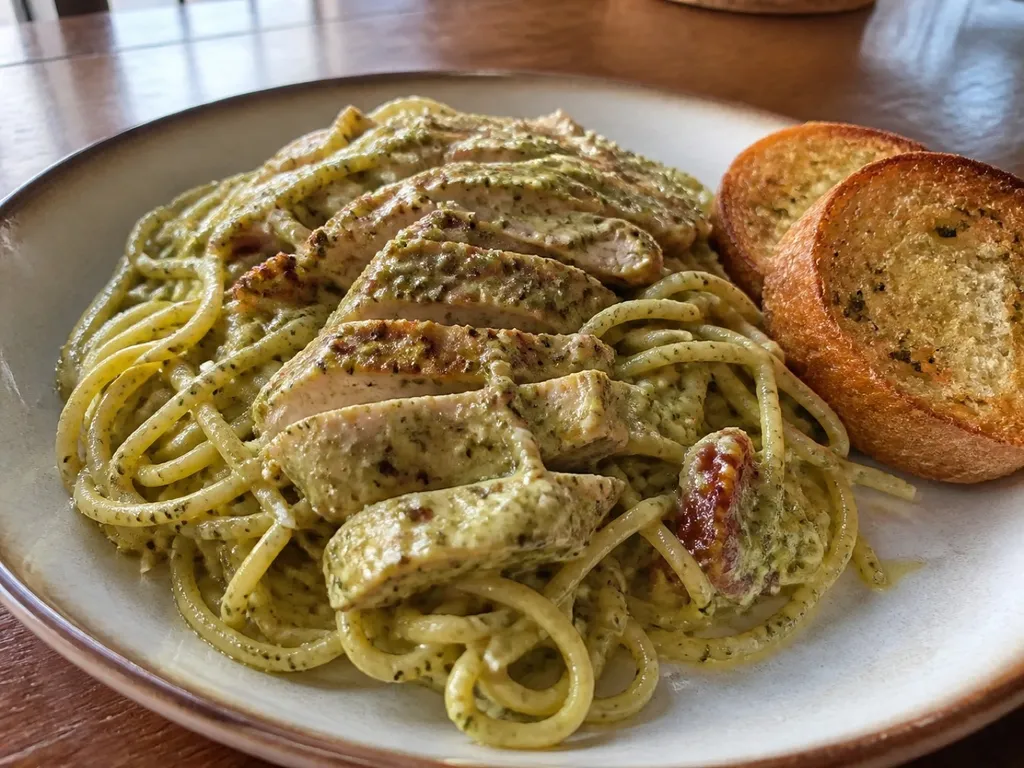 Images are for illustrative purposes only, may be inaccurate, and do not guarantee the presence or absence of specific ingredients.
 Listahan Family Score™
69/100
Works for many families
Score reflects how well this recipe fits a typical busy household. In the app, your Family Score is personalized to your household's allergens, kids, and pantry.
Nutrition
per serving575
Calories
60 g
Protein
59 g
Carbs
9 g
Fat
Estimated per serving. Actual values depend on the brands and portions you use.
Listahan cooking guide
Chef notes & practical guide
Technique notes, ingredient swaps, serve-alongside ideas, storage guidance, and equipment for this recipe.
Cultural context
Pesto has roots in Genoa, Italy, where fresh basil, pine nuts, garlic, Parmesan, and olive oil were traditionally ground by hand using a mortar and pestle, a technique whose name the sauce borrows directly. The addition of cream to create a richer, more stable sauce is an Italian-American adaptation that became popular in the United States during the 1980s restaurant boom and found a natural home in meal prep because the cream prevents the pesto from darkening and turning bitter during refrigerated storage. Chicken pasta in pesto sauce is now one of the most searched meal prep recipes in North America because it eats satisfyingly cold, warm, or at room temperature.
Listahan note
This version blanches the basil for 5 seconds before blending the pesto so the chlorophyll stabilizes and the sauce stays a vivid green in the container all week instead of oxidizing to brown.
Technique cues
- Add the cream to the pesto off heat and stir rather than cooking it in the pan, which preserves the bright flavor of the basil and prevents the dairy proteins from breaking and making the sauce grainy.
- Toss the pasta with pesto while it is still slightly warm so the sauce clings evenly; cold pasta repels oil-based sauces and produces uneven coating.
- Cook the chicken to 165 degrees Fahrenheit and slice across the grain before portioning; cutting with the grain produces long stringy pieces that fall apart in the container.
Kitchen flow
- Parallel prep
- Cook the chicken in a skillet while the pasta boils; blend the pesto while the pasta cooks so everything is ready to combine at the same time.
- Make-ahead
- Pesto can be made and refrigerated for up to 5 days or frozen in an ice cube tray for up to 3 months; freeze without the cream and add it fresh when combining with pasta.
- Leftover move
- Thin the last container with a splash of pasta water or cream and toss with extra vegetables for a quick one-pan pasta dinner rather than reheating it as a bowl.
- Cleanup rhythm
- Blend the pesto in a small food processor or with an immersion blender directly in the measuring cup to avoid washing a full blender; wipe the pasta pot before using it for anything else.
Ingredient brief
Role, handling, and swap guidance for each key ingredient.
chicken breast
protein filler
Purpose: Its mild flavor does not compete with the fragrant basil pesto and it slices cleanly for even distribution across four containers.
Handling: Season simply with salt and pepper, cook in a lightly oiled pan over medium-high heat, and rest before slicing to prevent moisture loss.
Adaptation: Chicken thighs stay moister after refrigeration and are more forgiving during reheating; Italian chicken sausage gives a more intense flavor dimension.
fresh basil
aromatic base of the pesto
Purpose: Basil is the defining ingredient; it provides the perfumed herbal quality that no dried substitute can replicate.
Handling: Remove stems before blanching or blending; stems taste bitter and introduce green water that dilutes the sauce.
Adaptation: A half-and-half blend of basil and baby spinach reduces the cost and oxidation while keeping a green color; arugula pesto creates a peppery, sharper sauce.
pasta (penne or rotini)
textured carbohydrate base
Purpose: Short pasta with ridges or twists captures the creamy pesto in the grooves so each bite is coated rather than just coated on the surface.
Handling: Cook to just under al dente and rinse under cold water immediately after draining to stop cooking and prevent the pasta from absorbing all the sauce before portioning.
Adaptation: Whole wheat pasta adds fiber; gluten-free chickpea pasta provides extra protein and holds up well in pesto applications.
heavy cream or half-and-half
stability agent and richness
Purpose: The fat in cream binds with the olive oil in the pesto, creating a more cohesive sauce that coats pasta evenly and does not separate during refrigeration.
Handling: Use at room temperature rather than straight from the refrigerator so it emulsifies into the pesto without shocking the cold sauce.
Adaptation: Full-fat coconut cream delivers richness without dairy, though it adds a faint coconut note that changes the flavor profile of the dish.
Parmesan cheese
umami backbone
Purpose: Parmesan provides the sharp, savory depth that makes pesto sauce taste complete rather than just herbal.
Handling: Use freshly grated Parmesan rather than pre-grated for better melting and a cleaner flavor without anti-caking agents.
Adaptation: Pecorino Romano is saltier and more pungent; nutritional yeast provides a dairy-free umami substitute that works well in blended pesto.
Technique notes
- A squeeze of lemon juice in the pesto acts as both a brightener and an antioxidant that slows the browning process, doubling the window during which the sauce looks vibrant.
- Toast the pine nuts in a dry pan until golden before blending; this takes 3 minutes and adds a layer of nuttiness that makes a homemade pesto taste meaningfully better than store-bought.
- Drizzle a thin layer of extra-virgin olive oil over the surface of the portioned pasta before sealing the containers; it acts as a barrier that prevents the top layer from drying out.
Ingredient swaps
- Dairy-free direction
- Use nutritional yeast for the Parmesan, coconut cream for the heavy cream, and a quality vegan pesto or make pesto without cheese; the result is lighter and still satisfying.
- Nut-free direction
- Replace pine nuts in the pesto with sunflower seeds or pumpkin seeds; the flavor is slightly different but the texture and richness are comparable.
- Gluten-free direction
- Use certified gluten-free chickpea or brown rice pasta; most other ingredients in this recipe are naturally gluten-free.
Serve alongside
- halved cherry tomatoes with balsamic drizzle
- simple arugula salad with shaved Parmesan
- roasted asparagus with lemon
- cold sparkling water with a basil leaf
- a glass of light Pinot Grigio for an evening serving
Serving suggestions only — check pairings for your household's allergens.
Storage & reheating
- Refrigerate in airtight containers for up to 4 days; the pesto color may darken slightly by day 3 but the flavor remains excellent.
- Freeze individual portions before adding cream for up to 2 months; thaw overnight, then stir in the cream when reheating on the stovetop over gentle heat.
Equipment
- food processor or immersion blender for pesto
- large pot for pasta
- medium skillet for chicken
- fine grater for Parmesan
Make this household-aware
Listahan Pro checks this recipe against your household's allergens, finds pantry-aware swaps, builds the shopping list, and helps you plan the week around it.
Plan it in Listahan
Add Creamy Basil Pesto Chicken Pasta to your week, check it against your household's allergens, and build the shopping list automatically.
More Meal Prep recipes
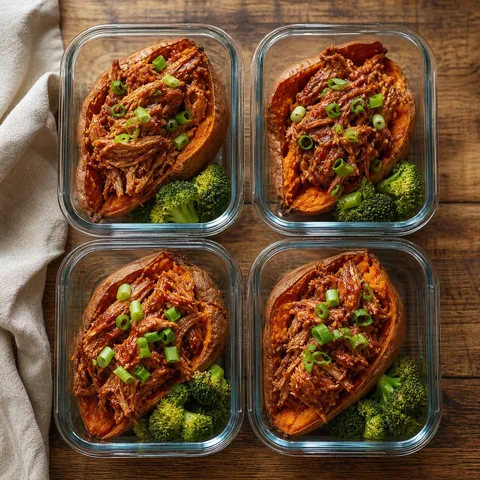 Meal Prep Lens Verified Images are for illustrative purposes only, may be inaccurate, and do not guarantee the presence or absence of specific ingredients.
 BBQ Pulled Pork Stuffed Sweet Potatoes
A hearty, smoky, and sweet combination that balances protein and complex carbohydrates perfectly.
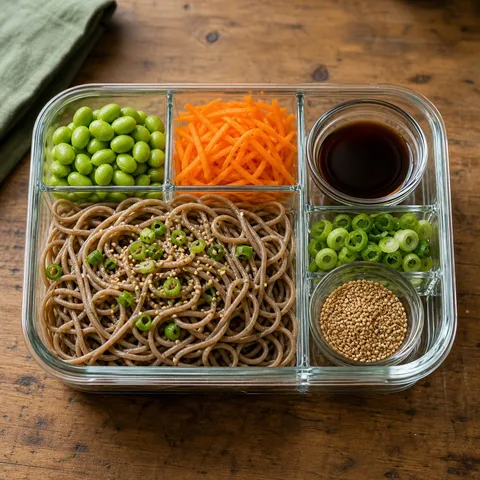 Meal Prep Lens Verified Images are for illustrative purposes only, may be inaccurate, and do not guarantee the presence or absence of specific ingredients.
 Soba Noodle Salad
Buckwheat soba noodles tossed in a sesame-ginger dressing with edamame, shredded carrots, and scallions — nutty, refreshing, and endlessly satisfying served cold.
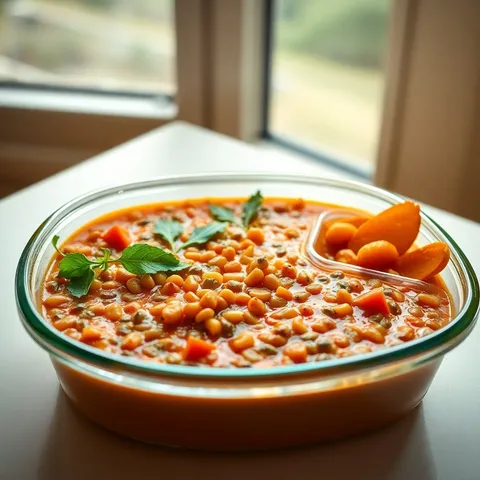 Meal Prep Lens Verified Images are for illustrative purposes only, may be inaccurate, and do not guarantee the presence or absence of specific ingredients.
 Rustic French Lentil Soup
A deeply nourishing and earthy soup that is rich in plant-based protein and freezes exceptionally well.