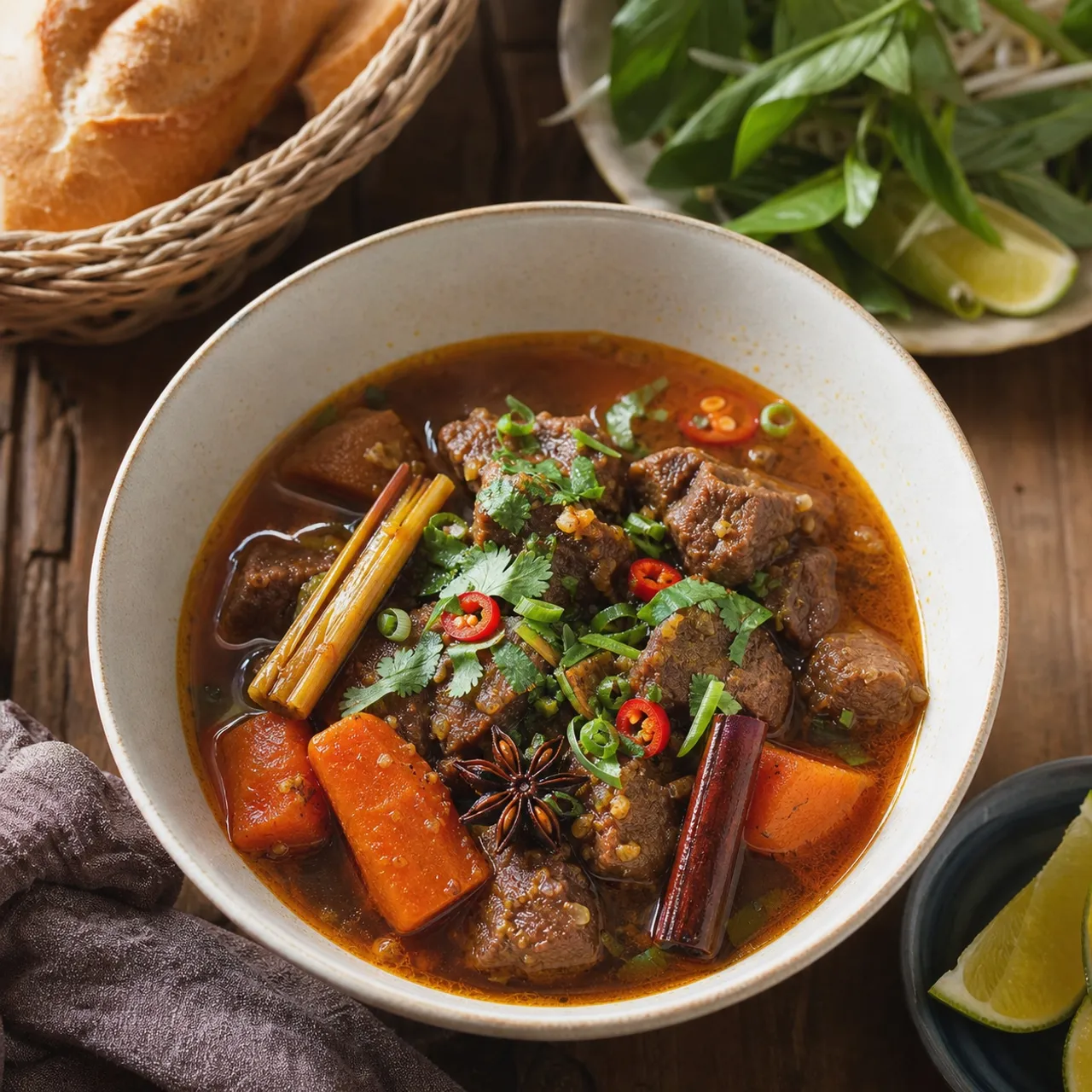
 Vietnamese Images are for illustrative purposes only, may be inaccurate, and do not guarantee the presence or absence of specific ingredients.
 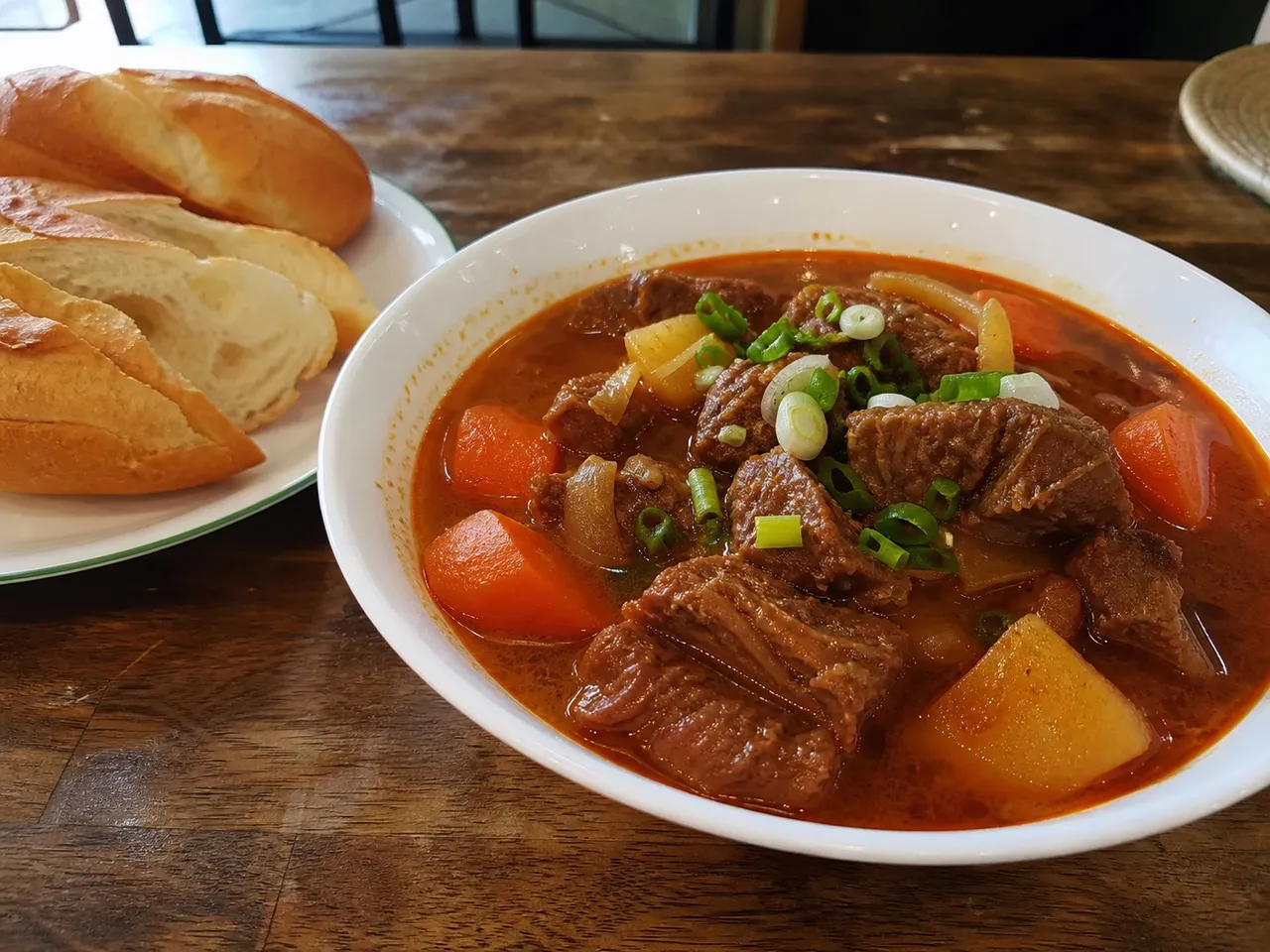 Serving Images are for illustrative purposes only, may be inaccurate, and do not guarantee the presence or absence of specific ingredients.
 Bò Kho (Beef Stew)
Vietnamese beef stew infused with lemongrass, star anise, and cinnamon.
Contains common allergens
In the app, Listahan checks these against your household automatically.
Good to know
- One-pot
Matched from this dish's own ingredients and timing. Browse more: one-pot dinners
Instructions
6 steps- 1
Marinate Beef: Toss the beef cubes with fish sauce, soy sauce, sugar, five-spice powder, and half of the minced garlic/shallot. Marinate for 30 minutes.
- 2
Sauté Aromatics: In a large heavy-bottomed pot, heat oil and bloom the annatto powder for a red color. Sauté the remaining garlic, shallot, onion, and bruised lemongrass until fragrant.
- 3
Sear Beef: Add the marinated beef and brown deeply on all sides. Add the star anise and cinnamon stick.
- 4
Simmer: Pour in the coconut water and enough regular water to just cover the beef. Bring to a boil, then reduce to a low simmer. Cover and braise for 1.5 hours until the beef is mostly tender.
- 5
Add Carrots: Stir in the carrot chunks. Continue to simmer uncovered for another 30-40 minutes until the carrots are soft and the beef is melt-in-your-mouth tender. The broth should reduce and thicken slightly.
- 6
Serve: Garnish with Thai basil and cilantro. Serve piping hot with toasted baguettes (Bánh Mì) for dipping, or over rice noodles.
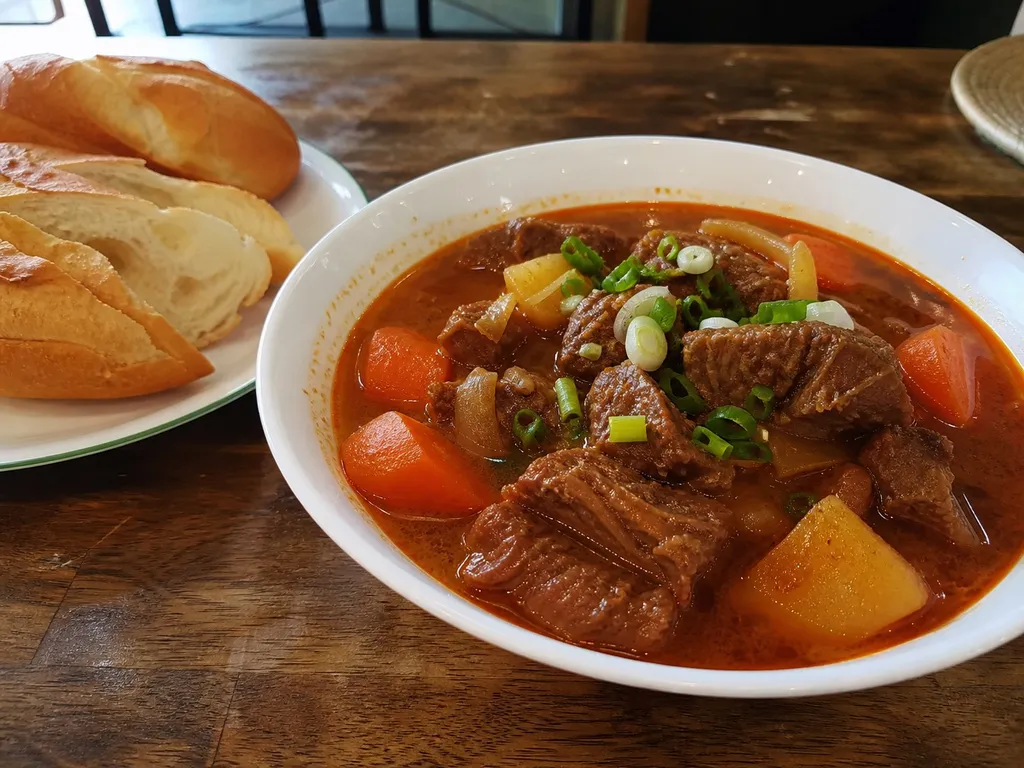 Images are for illustrative purposes only, may be inaccurate, and do not guarantee the presence or absence of specific ingredients.
 Listahan Family Score™
64/100
Works for many families
Score reflects how well this recipe fits a typical busy household. In the app, your Family Score is personalized to your household's allergens, kids, and pantry.
Nutrition
per serving615
Calories
50 g
Protein
16 g
Carbs
38 g
Fat
Estimated per serving. Actual values depend on the brands and portions you use.
Listahan cooking guide
Chef notes & practical guide
Technique notes, ingredient swaps, serve-alongside ideas, storage guidance, and equipment for this recipe.
Cultural context
Bo kho is a slow-braised beef stew that reflects the layered cultural history of southern Vietnam, where French pot-au-feu technique met Chinese five-spice aromatics and Southeast Asian pantry staples like fish sauce and lemongrass. It became a fixture of southern Vietnamese street breakfasts, often served with a crusty baguette or egg noodles from carts opening before dawn. The use of annatto powder for its orange color and coconut water for subtle sweetness are distinctly Vietnamese adaptations not found in its Chinese or French counterparts.
Listahan note
This version builds the stew's signature red-orange color from annatto powder and layers aromatics in stages — browning the beef first, then blooming the spices — so the broth develops depth without requiring a long overnight process.
Technique cues
- Sear the beef cubes in batches in a hot, lightly oiled pot; crowding causes steaming instead of browning, and the Maillard crust formed on each cube is a primary flavor source for the entire broth.
- Annatto powder dissolves best when briefly fried in the oil before liquids are added — 30 seconds in the aromatics step turns it from a dusty additive into a deeply colored, slightly earthy flavor note throughout the stew.
- Coconut water rather than plain water or stock is a deliberate Southern Vietnamese touch: its natural sugars caramelize gently during the long braise, rounding the fish-sauce salinity without making the stew taste sweet.
Kitchen flow
- Parallel prep
- While the beef sears in batches, peel and chunk the carrots, bruise and cut the lemongrass, and measure out the dried spices so everything is ready to add without gaps.
- Make-ahead
- Bo kho tastes significantly better the next day; make it fully a day ahead, cool, and refrigerate overnight — the fat solidifies on top for easy removal, and the flavors deepen.
- Leftover move
- Leftover stew reheats beautifully over rice noodles for a weeknight pho-adjacent bowl; add a handful of fresh herbs and a squeeze of lime to brighten the reheated broth.
- Cleanup rhythm
- Deglaze the searing pot with a splash of water immediately after browning each batch to lift the fond before it burns; this also deepens the broth and means only one pot to clean.
Ingredient brief
Role, handling, and swap guidance for each key ingredient.
2 lbs beef chuck roast, cut into 1.5-inch cubes
main protein
Purpose: Chuck has enough intramuscular fat and connective tissue to become tender and silky after 1.5-2 hours of braising without disintegrating.
Handling: Pat the cubes completely dry before searing; any surface moisture steams the meat and prevents browning.
Adaptation: Beef brisket works well; short ribs add extra richness but require skimming more fat from the broth.
4 stalks lemongrass, bruised and cut into 3-inch lengths
aromatic backbone
Purpose: Lemongrass releases citrusy, floral volatile oils during the long braise, giving bo kho its distinctly Southeast Asian character.
Handling: Peel away the tough outer layers and smash the stalks firmly with the back of a knife before cutting; this fractures the cell walls and releases more aroma.
Adaptation: Lemon zest strips (from 2 lemons) approximate the citrus note but lack the depth; increase to 6 strips.
1 tbsp annatto powder
color and mild flavor
Purpose: Annatto gives bo kho its signature brick-orange color and adds a very subtle earthy note that distinguishes it from plain brown beef stew.
Handling: Bloom it in 1 tablespoon of oil in the pot for 30 seconds before adding onion and garlic; stirring constantly prevents burning.
Adaptation: A combination of sweet paprika (2 tsp) and a pinch of turmeric approximates the color if annatto is unavailable.
3 tbsp fish sauce
primary seasoning
Purpose: Fish sauce provides deep umami salinity that integrates with the spices in a way that soy sauce alone cannot replicate.
Handling: Add half during braising and taste before adding the rest near the end; salt concentrates as the liquid reduces.
Adaptation: For a gluten-free or soy-free option, fish sauce is naturally both; a soy-free version can use coconut aminos plus a pinch of salt.
2 cups coconut water
braising liquid and subtle sweetener
Purpose: Coconut water adds a gentle background sweetness and electrolyte minerals that round the broth without overt coconut flavor.
Handling: Use unsweetened, natural coconut water; sweetened or flavored varieties will make the broth cloying.
Adaptation: Plain water or low-sodium beef stock works, but add 1 teaspoon of sugar to approximate the coconut water's sweetness.
Technique notes
- Skim the foam and fat that rises to the surface in the first 20 minutes of simmering — this step produces a cleaner, less greasy broth without sacrificing any depth from the meat.
- Add the carrot chunks in the last 30-40 minutes of braising, not at the beginning; carrots added too early become mushy and lose their sweetness into the liquid.
- Taste the broth before serving and adjust with fish sauce for salt and a few drops of lime juice for brightness — the spices are bold and can make the broth taste flat if not balanced with acid at the end.
Ingredient swaps
- Gluten-free direction
- Fish sauce and the spice blend are naturally gluten-free; confirm your soy sauce is tamari or use coconut aminos instead.
- Slow cooker option
- Sear the beef and bloom the spices on the stovetop, then transfer everything to a slow cooker and cook on low for 7-8 hours; add carrots in the last 2 hours.
- Lower-fat direction
- Refrigerate the finished stew overnight and lift off the solidified fat cap before reheating — removes most of the saturated fat without compromising flavor.
Serve alongside
- Vietnamese baguette (banh mi) for dipping into the broth
- fresh rice vermicelli noodles as a base
- quick-pickled bean sprouts with rice vinegar and chili
- hot jasmine tea to cut the richness
- Vietnamese iced coffee with condensed milk
Serving suggestions only — check pairings for your household's allergens.
Storage & reheating
- Refrigerate cooled stew in an airtight container for up to 4 days; the flavor improves after the first day.
- Reheat gently on the stovetop over medium-low heat with a splash of water to loosen the thickened broth; avoid boiling, which can toughen the beef.
- Freeze without the carrots (they become watery) for up to 2 months; thaw overnight in the refrigerator and add freshly cooked carrots when reheating.
Equipment
- large heavy-bottomed Dutch oven or braiser
- tongs for searing and turning beef
- fine mesh skimmer or large spoon for skimming foam
- chef knife and cutting board for prep
Make this household-aware
Listahan Pro checks this recipe against your household's allergens, finds pantry-aware swaps, builds the shopping list, and helps you plan the week around it.
Plan it in Listahan
Add Bò Kho (Beef Stew) to your week, check it against your household's allergens, and build the shopping list automatically.
More Vietnamese recipes
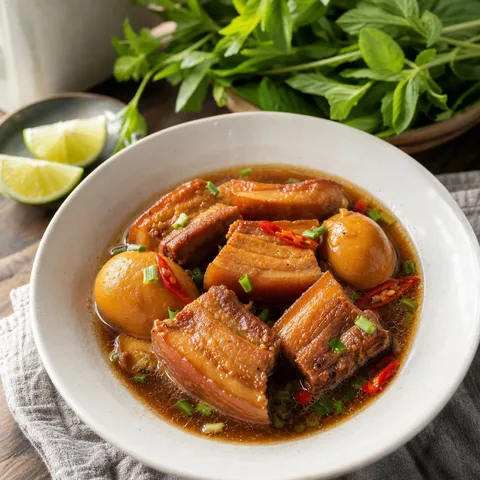 Vietnamese Lens Verified Images are for illustrative purposes only, may be inaccurate, and do not guarantee the presence or absence of specific ingredients.
 Thịt Kho Tàu (Caramelized Pork and Eggs)
Meltingly tender pork belly and hard-boiled eggs braised in a rich, sweet, and savory coconut juice caramel, perfect over steamed rice.
 Vietnamese Lens Verified Images are for illustrative purposes only, may be inaccurate, and do not guarantee the presence or absence of specific ingredients.
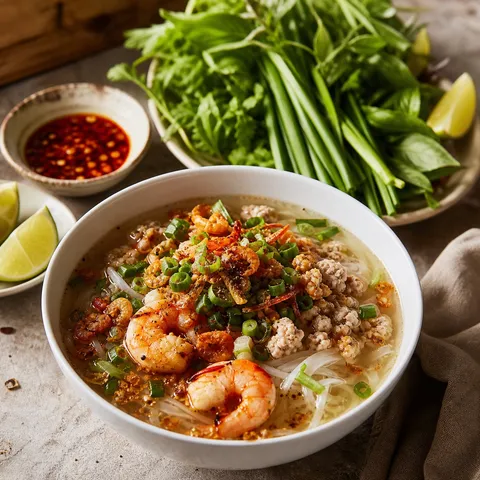
 Hủ Tiếu (Pork and Seafood Noodle Soup)
A Vietnamese pork-bone broth noodle soup loaded with ground pork, shrimp, and dried shrimp over chewy tapioca noodles, finished with garlic chives and fried garlic.
 Vietnamese Lens Verified Images are for illustrative purposes only, may be inaccurate, and do not guarantee the presence or absence of specific ingredients.
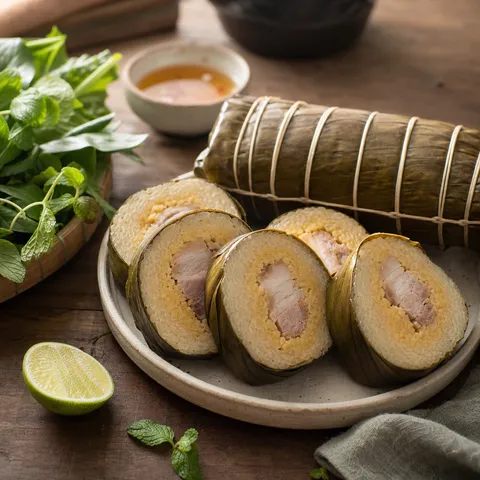
 Bánh Tét (Cylindrical Sticky Rice Cake)
The Southern equivalent of Bánh Chưng, rolled into a cylinder.