 Vietnamese Images are for illustrative purposes only, may be inaccurate, and do not guarantee the presence or absence of specific ingredients.
  Serving Images are for illustrative purposes only, may be inaccurate, and do not guarantee the presence or absence of specific ingredients.
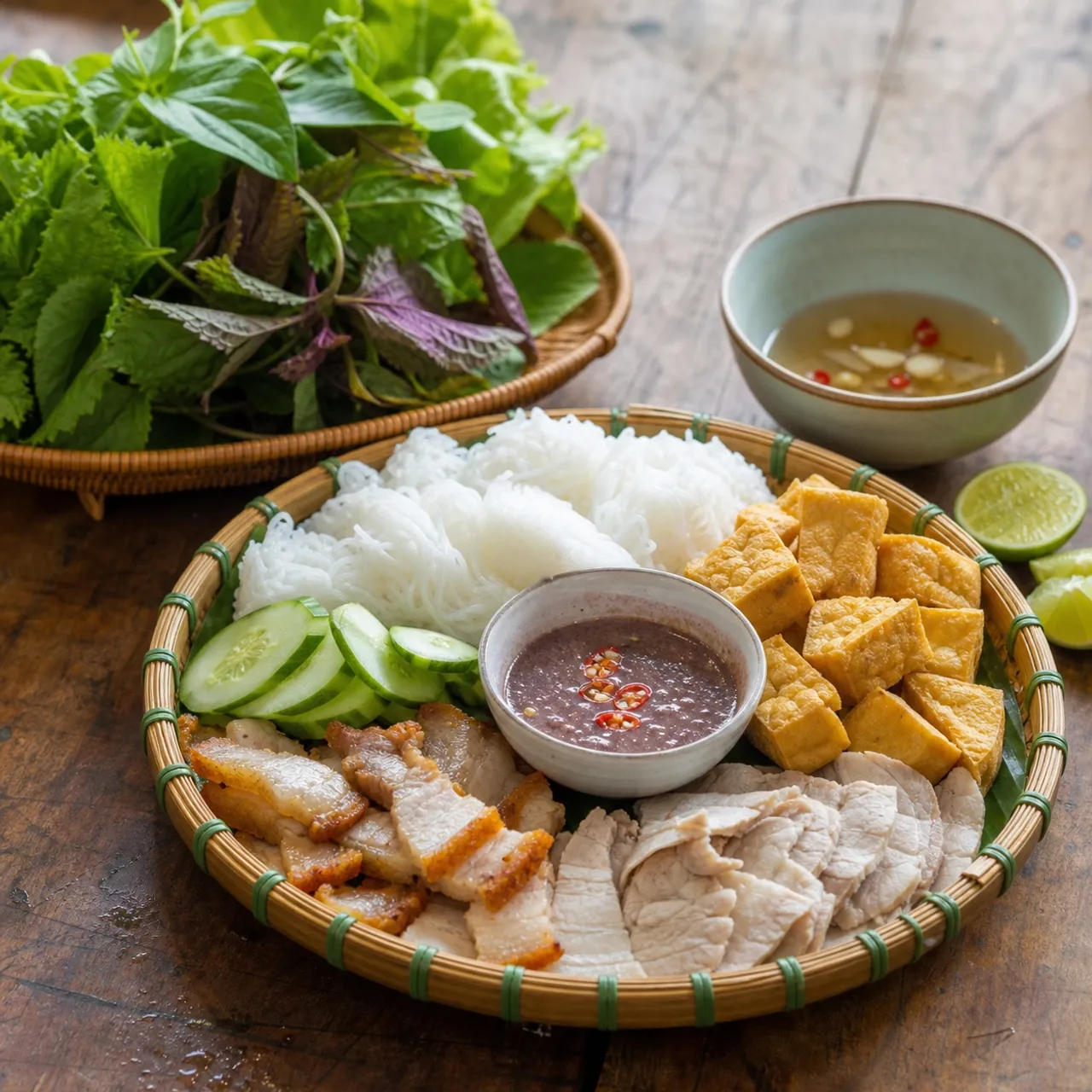
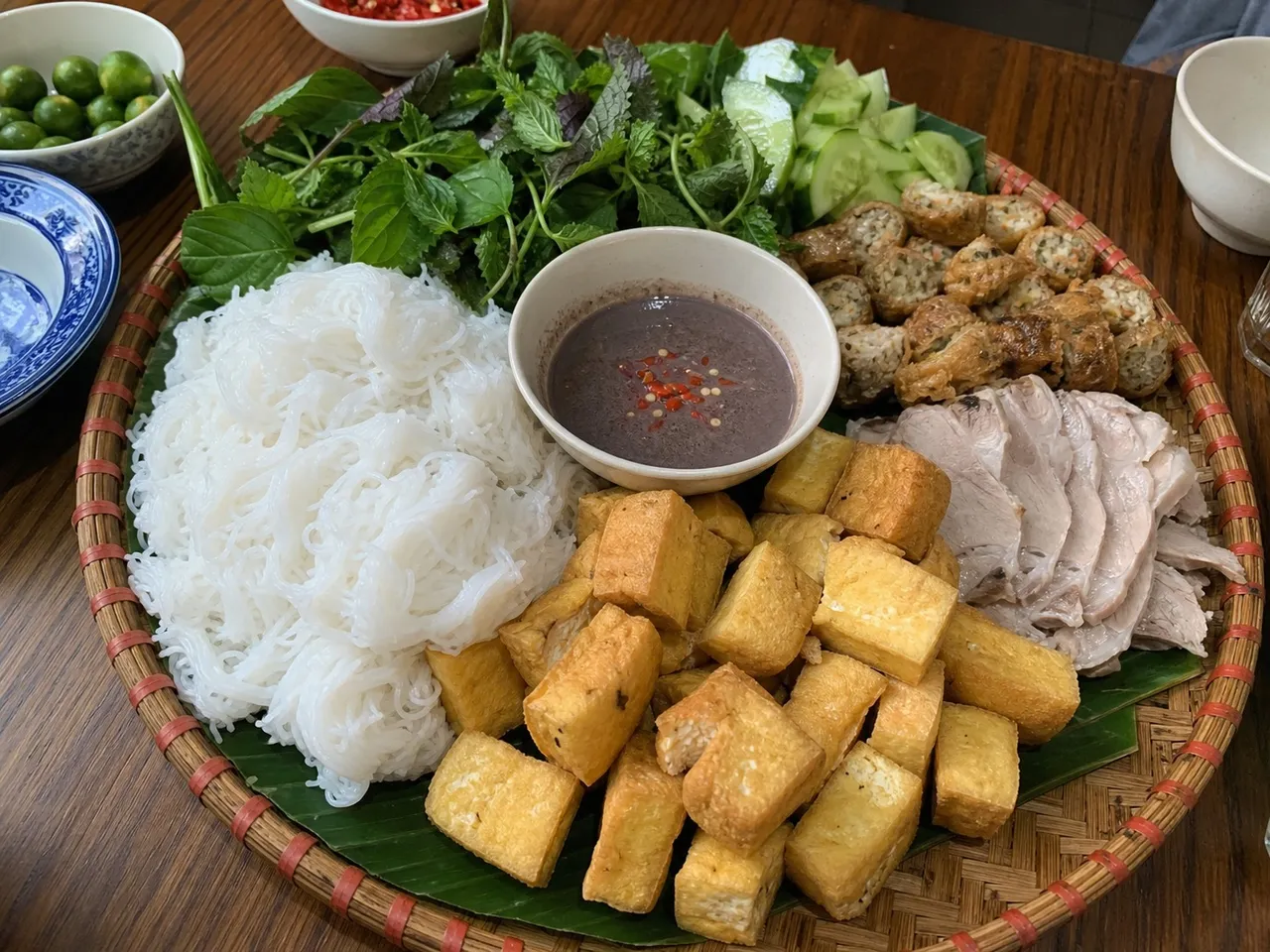
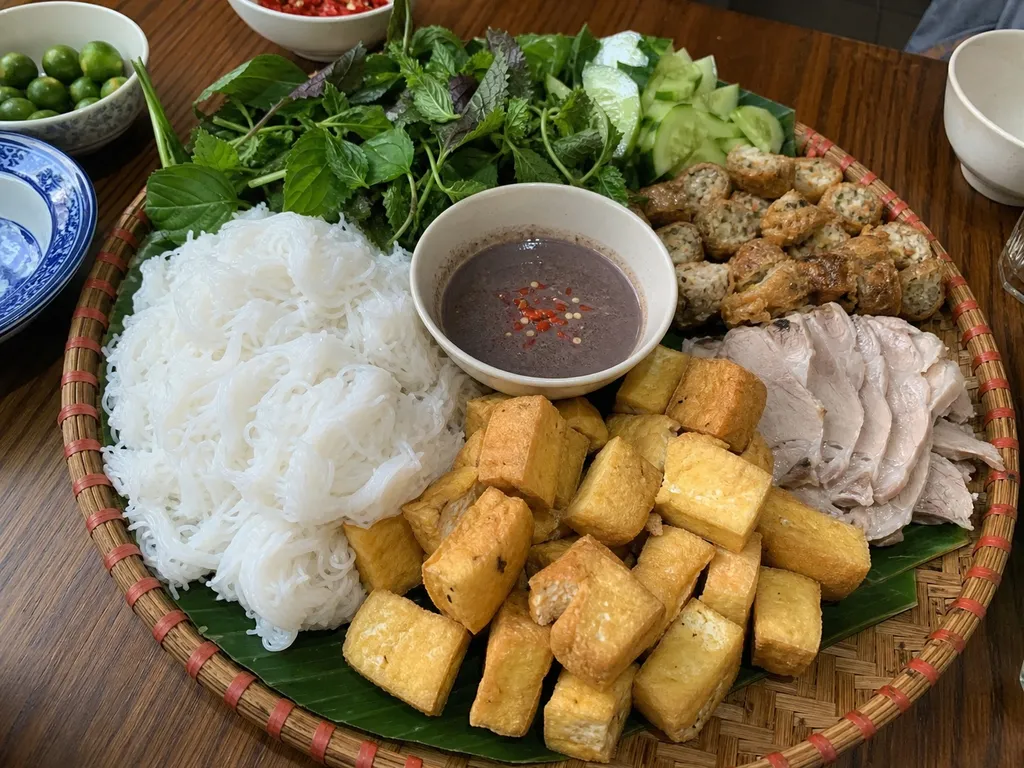
 Bún Đậu Mắm Tôm (Noodles with Tofu and Shrimp Paste)
Fried tofu and rice noodles served with pungent fermented shrimp paste.
Contains common allergens
In the app, Listahan checks these against your household automatically.
Good to know
- Crispy
- Ready in under 30 minutes
Matched from this dish's own ingredients and timing. Browse more: crispy recipes30-minute meals
Instructions
6 steps- 1
Fry Tofu: Heat a generous amount of oil in a pan. Fry the tofu cubes over medium-high heat until they are deeply golden and intensely crispy on all sides. Drain on paper towels.
- 2
Prepare Meats: Boil the pork belly until tender, cool, and slice thinly. Fry the Chả Cốm until golden and slice it.
- 3
Prepare Dipping Sauce (Crucial Step): In a small bowl, combine the pungent shrimp paste with sugar, lime juice, and minced chili. Whisk vigorously.
- 4
Temper the Sauce: Heat 2 tbsp of oil in a pan until shimmering. Pour the hot oil directly into the shrimp paste mixture. It will bubble up and cook the paste slightly, mellowing the smell and enhancing the flavor. Whisk again until frothy.
- 5
Arrange Platter: Use a flat bamboo tray lined with banana leaves if available. Arrange the crispy tofu, sliced pork, sausage, and blocks of pressed rice noodles neatly.
- 6
Serve: Pile the fresh herbs and cucumbers on the side. To eat, dip a piece of tofu, meat, or noodle into the frothy shrimp paste.
 Images are for illustrative purposes only, may be inaccurate, and do not guarantee the presence or absence of specific ingredients.
 Listahan Family Score™
58/100
Works for many families
Score reflects how well this recipe fits a typical busy household. In the app, your Family Score is personalized to your household's allergens, kids, and pantry.
Nutrition
per serving650
Calories
32 g
Protein
91 g
Carbs
16 g
Fat
Estimated per serving. Actual values depend on the brands and portions you use.
Listahan cooking guide
Chef notes & practical guide
Technique notes, ingredient swaps, serve-alongside ideas, storage guidance, and equipment for this recipe.
Cultural context
Bun dau mam tom is a Hanoi specialty that became one of the most recognizable northern Vietnamese street foods, built around mam tom — fermented shrimp paste — which is the dominant flavor of northern Vietnamese cuisine in a way that fish sauce is to the south. The dish is deceptively simple: fried tofu, fresh rice vermicelli pressed into flat squares, boiled pork belly, and an intensely pungent dipping sauce made aromatic with lime juice, chili, and hot oil bloomed directly on the paste. It gained national and international visibility in part because of its polarizing sauce, which is considered a marker of culinary adventurousness.
Listahan note
This version prepares the mam tom sauce properly — blooming the paste with hot oil and adding sugar and lime to round its intensity — so the dish is approachable without losing the authentic fermented depth that defines it.
Technique cues
- The key step in the mam tom dipping sauce is drizzling very hot cooking oil over the paste before stirring in the lime juice and sugar; the hot oil cooks off some of the raw, aggressive fermented volatile compounds, transforming the sauce from overwhelming to complex and deeply savory.
- Fry the tofu in enough oil to cover the sides, and do not move it for the first 2 minutes — letting the crust set fully before flipping produces a golden, crispy exterior that stays crunchy even after contact with the dipping sauce.
- Bun la (flat pressed rice vermicelli) has a firmer, denser texture than loose strands; if using strand vermicelli instead, serve it in small nests to mimic the portioning of the flat squares, and slightly undercook it so it holds up against the sauce.
Kitchen flow
- Parallel prep
- Boil the pork belly (20-25 minutes) and press the tofu simultaneously; make the sauce while the tofu drains, so everything is ready to assemble when the tofu finishes frying.
- Make-ahead
- The pork belly can be boiled and sliced up to 2 days ahead and refrigerated; bring to room temperature before serving, as cold pork fat turns unpleasantly waxy.
- Leftover move
- Leftover fried tofu re-crisps excellently in a 375F oven for 8 minutes; serve with leftover mam tom sauce for a quick next-day snack.
- Cleanup rhythm
- Dispose of frying oil carefully after cooling completely; the mam tom sauce bowl should be soaked in soapy warm water immediately, as fermented shrimp paste odor sets into cookware if left to dry.
Ingredient brief
Role, handling, and swap guidance for each key ingredient.
1 block firm tofu, cut into cubes
main protein and textural centerpiece
Purpose: Fried firm tofu provides a crispy exterior and custardy interior that absorbs the mam tom sauce without falling apart.
Handling: Press the tofu under a weighted plate for 20 minutes before cutting to remove excess water; wet tofu spits aggressively in hot oil and never achieves a proper crust.
Adaptation: Extra-firm tofu gives an even drier, crunchier result; silken tofu cannot be fried to this application.
3 tbsp fine fermented shrimp paste (mắm tôm)
defining sauce flavor
Purpose: Mam tom is the flavor identity of this dish — intensely fermented, pungent, and umami-rich in a way that nothing else replicates.
Handling: Use finely ground (smooth) mam tom for the sauce, not chunky; the smooth paste blooms more evenly when the hot oil is added.
Adaptation: There is no direct substitute for mam tom; shrimp paste (belacan) from other Southeast Asian cuisines is similar but milder — use 2 tablespoons and taste.
1 lb fresh rice vermicelli noodles, pressed into flat squares (bún lá)
noodle base
Purpose: The flat pressed squares have a firmer, chewier texture than loose noodle strands, and their shape allows them to be dipped into the sauce as a single unit.
Handling: Rice vermicelli squares can be served at room temperature or briefly microwaved in their packaging for 30 seconds to warm them.
Adaptation: Dried rice vermicelli cooked and cooled to room temperature works as a substitute; serve in loosely bundled portions.
1/2 lb boiled pork belly, thinly sliced
secondary protein
Purpose: Boiled pork belly provides a rich, fatty counterpart to the tofu and a neutral canvas for the pungent sauce.
Handling: Boil the pork belly with a pinch of salt and a slice of ginger for 20-25 minutes until just cooked through, then cool before slicing thinly.
Adaptation: Boiled pork shoulder can substitute for a leaner option; skip the pork entirely and double the tofu for a vegetarian version.
2 tbsp hot cooking oil
sauce activator
Purpose: Hot oil bloomed over the fermented paste neutralizes some of its harshest volatile compounds and carries the aroma throughout the sauce.
Handling: Heat the oil in a small pan until it just begins to shimmer, then drizzle it directly over the mam tom in a small bowl and stir immediately.
Adaptation: Any neutral high-smoke-point oil works; do not use olive oil, which adds a competing flavor.
Technique notes
- Serve all components at the table simultaneously in a deconstructed arrangement — each diner builds each bite by wrapping tofu, pork, and noodle in a perilla leaf or herb bundle before dipping; the ratio of components in each bite is entirely personal.
- The chili in the sauce is non-negotiable for flavor balance — even diners who cannot eat spicy food should have a small amount; it cuts through the richness of the pork fat and the intensity of the fermented paste.
- Mam tom sauce separates as it sits; give it a quick stir before each dip and make sure each diner has their own small bowl rather than sharing one, as the sauce is strong enough that sharing encourages over-use.
Ingredient swaps
- Shellfish allergy note
- Mam tom is made from fermented shrimp and is not safe for shellfish allergies; no substitute removes the shellfish while still replicating the dish, since it fundamentally requires this ingredient.
- Pork-free option
- Double the tofu and add sliced boiled chicken thigh as an alternative protein; the mam tom sauce pairs well with chicken.
- Gluten-free direction
- Rice vermicelli and firm tofu are naturally gluten-free; confirm your mam tom brand contains no wheat-based additives.
Serve alongside
- perilla (shiso) leaves and Thai basil for wrapping
- sliced cucumber as a cooling element between bites
- cha com (green rice pork sausage) as an additional protein if available
- iced green tea (tra xanh da) to neutralize the fermented intensity between bites
- cold Bia Saigon or Hanoi beer
Serving suggestions only — check pairings for your household's allergens.
Storage & reheating
- Components store separately: fried tofu in an airtight container in the refrigerator for up to 2 days; pork belly wrapped and refrigerated for up to 3 days.
- Mam tom sauce keeps refrigerated for up to 1 week in a tightly sealed container.
- Do not store the assembled dish — it must be built fresh each time.
Equipment
- deep skillet or small pot with enough oil for pan-frying tofu
- small saucepan for boiling pork belly
- small bowl for preparing and serving the mam tom sauce
- large plate for the deconstructed assembly spread
Make this household-aware
Listahan Pro checks this recipe against your household's allergens, finds pantry-aware swaps, builds the shopping list, and helps you plan the week around it.
Plan it in Listahan
Add Bún Đậu Mắm Tôm (Noodles with Tofu and Shrimp Paste) to your week, check it against your household's allergens, and build the shopping list automatically.
More Vietnamese recipes
 Vietnamese Lens Verified Images are for illustrative purposes only, may be inaccurate, and do not guarantee the presence or absence of specific ingredients.
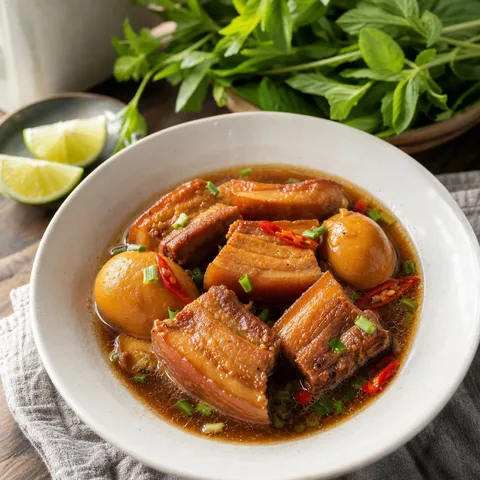
 Thịt Kho Tàu (Caramelized Pork and Eggs)
Meltingly tender pork belly and hard-boiled eggs braised in a rich, sweet, and savory coconut juice caramel, perfect over steamed rice.
 Vietnamese Lens Verified Images are for illustrative purposes only, may be inaccurate, and do not guarantee the presence or absence of specific ingredients.
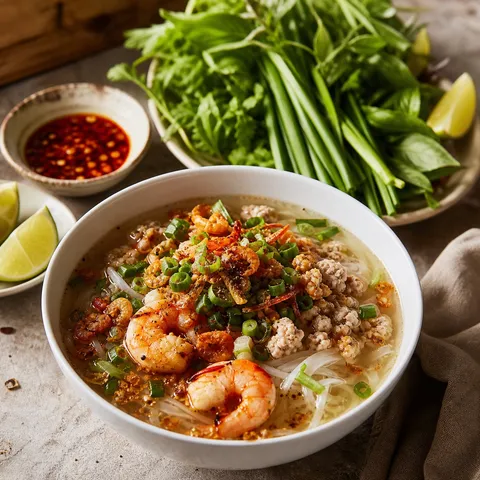
 Hủ Tiếu (Pork and Seafood Noodle Soup)
A Vietnamese pork-bone broth noodle soup loaded with ground pork, shrimp, and dried shrimp over chewy tapioca noodles, finished with garlic chives and fried garlic.
 Vietnamese Lens Verified Images are for illustrative purposes only, may be inaccurate, and do not guarantee the presence or absence of specific ingredients.
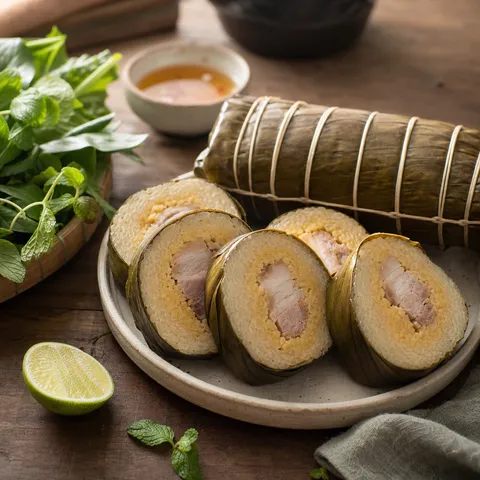
 Bánh Tét (Cylindrical Sticky Rice Cake)
The Southern equivalent of Bánh Chưng, rolled into a cylinder.