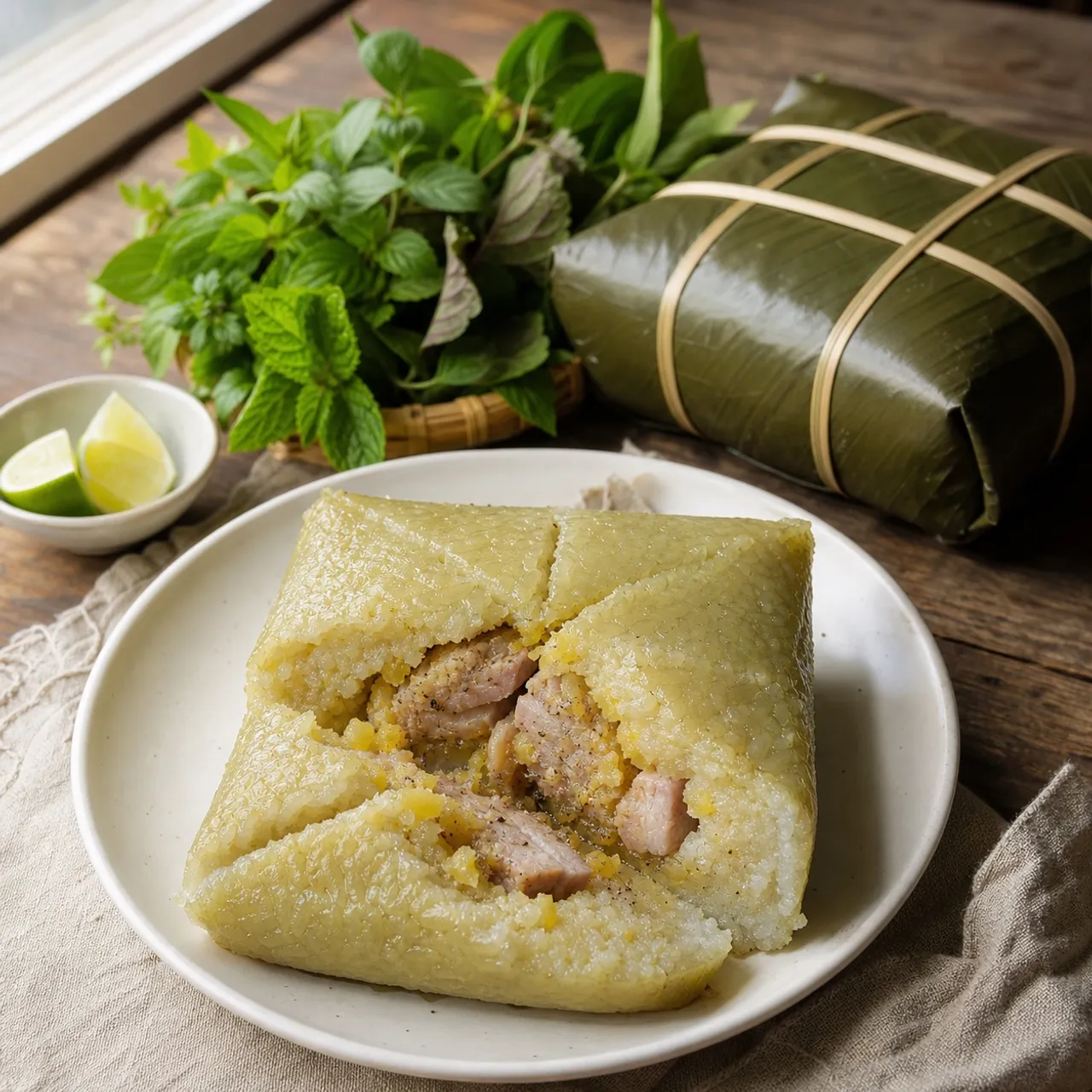
 Vietnamese Images are for illustrative purposes only, may be inaccurate, and do not guarantee the presence or absence of specific ingredients.
 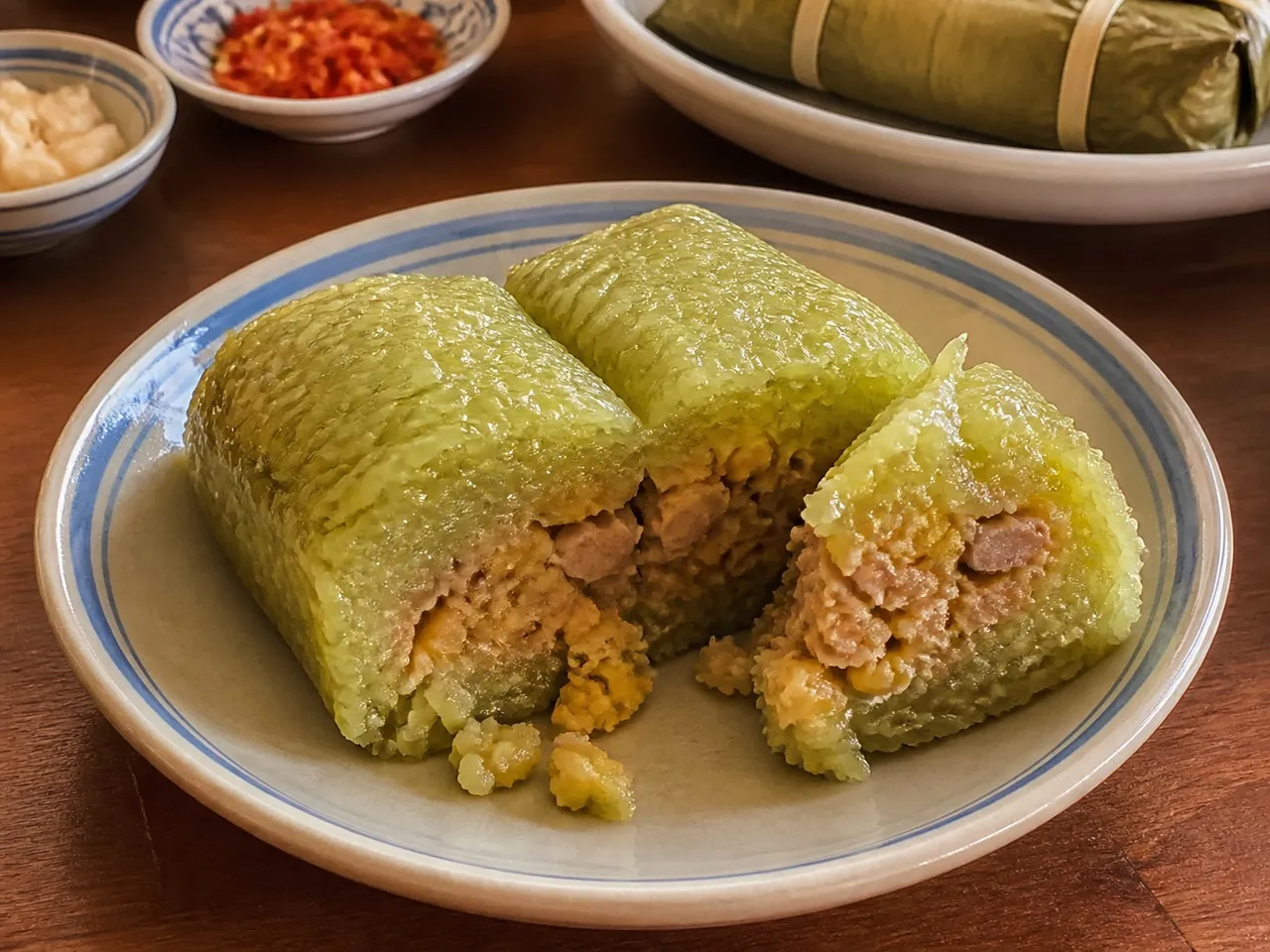 Serving Images are for illustrative purposes only, may be inaccurate, and do not guarantee the presence or absence of specific ingredients.
 Bánh Chưng (Sticky Rice Cake)
Traditional square sticky rice cake filled with mung bean and pork, wrapped in banana leaves.
Contains common allergens
In the app, Listahan checks these against your household automatically.
Good to know
- One-pot
Matched from this dish's own ingredients and timing. Browse more: one-pot dinners
Instructions
6 steps- 1
Prepare Ingredients: Drain the rice and mix with 1 tbsp salt. Drain the mung beans, steam until soft, mash lightly, and season with salt. Marinate the pork belly heavily with fish sauce and black pepper.
- 2
Prepare Mold: Fold the cleaned leaves and arrange them in a square wooden Bánh Chưng mold, ensuring the glossy side faces inward.
- 3
Layering: Pour a layer of sticky rice into the bottom of the mold. Add a layer of mashed mung beans. Place the marinated pork belly strips in the center. Cover with another layer of mung beans, and finally, top with a thick layer of sticky rice to completely encase the filling.
- 4
Wrap and Tie: Fold the leaves tightly over the top of the rice to form a perfect, watertight square. Remove from the mold and tie securely with bamboo strings, creating a grid pattern.
- 5
Boil: Place the cakes in a very large pot and cover completely with water. Bring to a boil, then simmer continuously for 10-12 hours. You must add boiling water periodically to keep the cakes fully submerged.
- 6
Press and Cool: Remove the cakes and plunge them into cold water to wash off the starch. Place a heavy wooden board on top of the cakes for a few hours to press out excess water and compress the rice. Slice with a string to serve.
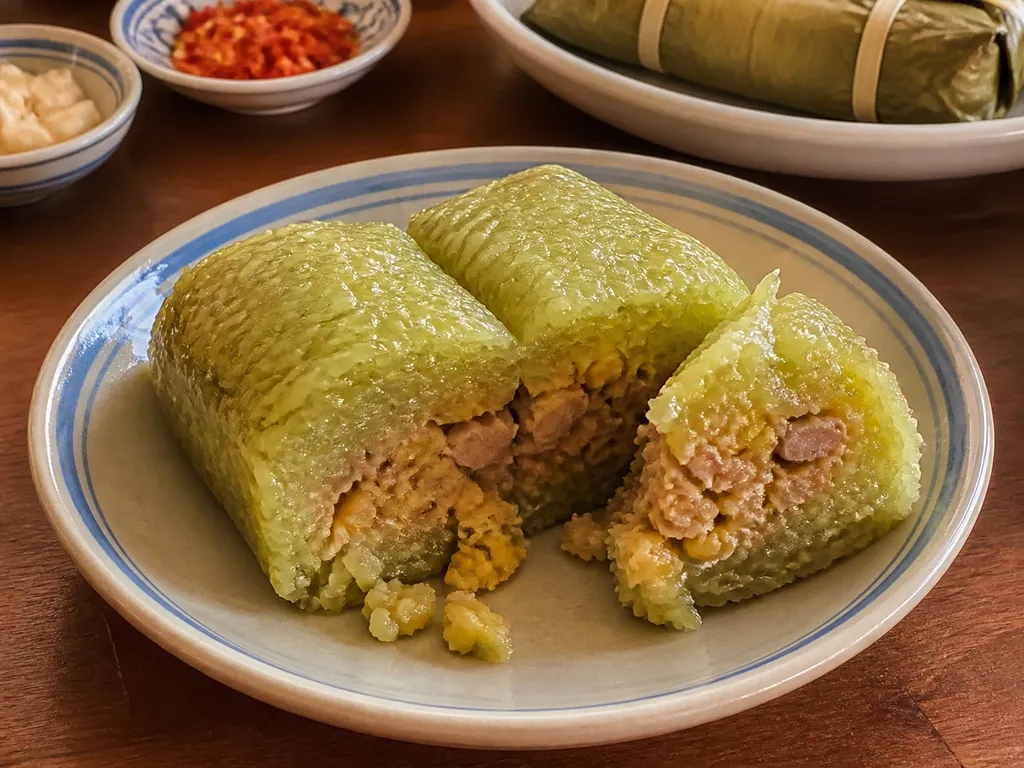 Images are for illustrative purposes only, may be inaccurate, and do not guarantee the presence or absence of specific ingredients.
 Listahan Family Score™
68/100
Works for many families
Score reflects how well this recipe fits a typical busy household. In the app, your Family Score is personalized to your household's allergens, kids, and pantry.
Nutrition
per serving755
Calories
31 g
Protein
133 g
Carbs
9 g
Fat
Estimated per serving. Actual values depend on the brands and portions you use.
Listahan cooking guide
Chef notes & practical guide
Technique notes, ingredient swaps, serve-alongside ideas, storage guidance, and equipment for this recipe.
Cultural context
Bánh Chưng is closely tied to Tết, the Vietnamese Lunar New Year, especially in northern Vietnam. Its square shape is traditionally read as a symbol of the earth, and the long boiling time turns a few staple ingredients into a dense, sliceable cake made for sharing over several days.
Listahan note
This version keeps the classic structure: sticky rice outside, mung bean and pork in the center, leaves doing both the shaping and the seasoning. The recipe prioritizes a tight wrap, steady simmer, and firm pressing so the finished cake slices cleanly instead of falling apart.
Technique cues
- Soaking the sticky rice and mung beans overnight is not a shortcut step; it helps the grains cook evenly during the long boil and keeps the center from staying hard.
- The glossy side of the leaf should face inward because it gives the rice a smoother surface and helps the finished cake release more cleanly.
- Keep the cakes fully submerged for the whole simmer. Any exposed corner can cook unevenly and leave the rice tough or dry there.
Kitchen flow
- Parallel prep
- Steam and mash the mung beans while the pork marinates, then set up the leaves, mold, and bamboo strings before you start layering.
- Make-ahead
- Plan this as a day-before project. The cakes need a long simmer, then several hours under weight to firm up before slicing.
- Leftover move
- Pan-fry slices until the edges crisp, then serve with pickled vegetables or a small bowl of dipping sauce.
- Cleanup rhythm
- Wipe leaf scraps and stray rice from the counter before the boil starts, then wash the large pot soon after pressing because sticky starch sets firmly as it dries.
Ingredient brief
Role, handling, and swap guidance for each key ingredient.
Glutinous sticky rice
Outer structure
Purpose: It forms the chewy white shell that holds the filling and gives Bánh Chưng its dense, sliceable texture.
Handling: Soak overnight, drain well, then season with salt before layering so the rice is not bland.
Adaptation: Do not use regular long-grain rice here; sweet rice or glutinous rice is the grain that gives the cake its structure.
Split mung beans
Creamy filling layer
Purpose: Mashed mung beans create a soft yellow cushion around the pork and balance the richness of the belly.
Handling: Soak overnight, steam until tender, then mash lightly so the filling holds together but still has some texture.
Adaptation: Whole peeled mung beans can work if soaked and cooked thoroughly, but they may take longer to soften.
Fatty pork belly
Rich center filling
Purpose: The fat renders slowly during the boil and seasons the mung bean and rice from the inside.
Handling: Cut into thick strips and marinate heavily with fish sauce and black pepper so the center has enough seasoning after hours in rice.
Adaptation: Pork shoulder gives a meatier bite with less richness; choose a well-marbled piece so the filling does not eat dry.
Fish sauce
Primary seasoning
Purpose: It seasons the pork deeply and brings the savory note that carries through the mild rice and beans.
Handling: Use it in the marinade rather than sprinkling it into the rice, where it can discolor the outer layer.
Adaptation: A light soy-based seasoning changes the flavor toward a darker, less traditional profile but can still season the pork.
Black pepper
Warm spice
Purpose: A generous amount gives the pork filling a clear peppery lift against the plain sticky rice.
Handling: Coarsely ground pepper gives better presence than a very fine powder after the long cooking time.
Adaptation: White pepper makes the filling sharper and more aromatic, but use a little less because it reads stronger.
Banana leaves or Phrynium leaves (lá dong)
Wrapper and aroma
Purpose: The leaves shape the cake, protect the rice during boiling, and give the outside a subtle green, grassy aroma.
Handling: Wash, wipe dry, and fold carefully so there are no gaps where rice can leak out.
Adaptation: Banana leaves are easier to find in many North American stores; lá dong gives the more traditional square shape and aroma when available.
Technique notes
- Tie the bamboo strings snugly in a grid, but do not crush the package. The rice expands as it cooks and needs enough room to settle into a compact block.
- Use boiling water when topping up the pot. Adding cold water repeatedly drops the simmer and can stretch the cooking time.
- After boiling, the cold-water rinse removes loose surface starch before pressing, which helps the leaves come off cleaner and gives the cake a neater finish.
Ingredient swaps
- Leaf backup
- Use banana leaves when lá dong is unavailable; overlap extra layers because banana leaves tear more easily around corners.
- No mold path
- Build the cake freehand with folded leaves and a flat-sided container as a guide, then tie it firmly before lifting it away.
- Smaller batch direction
- Make two or three smaller cakes instead of one very large cake; they are easier to submerge, turn, press, and store.
- Crisped serving style
- Slice chilled cake and pan-fry it in a thin layer of oil for a browned crust and softer center.
Serve alongside
- Dua hanh pickled onions
- Vietnamese pickled daikon and carrot
- Gio lua slices
- Canh mang dried bamboo shoot soup
- Hot green tea
- Iced jasmine tea
- Sparkling lime water
Serving suggestions only — check pairings for your household's allergens.
Storage & reheating
- Refrigerate the pressed cake whole or sliced, wrapped tightly so the rice does not dry at the edges.
- Reheat slices by steaming until soft, or pan-fry them for a crisp outside and chewy center.
- Freeze well-wrapped portions, thaw in the refrigerator, then steam before serving to bring back the sticky texture.
Equipment
- Square wooden Bánh Chưng mold
- Very large stockpot
- Bamboo strings
- Heavy wooden board for pressing
Make this household-aware
Listahan Pro checks this recipe against your household's allergens, finds pantry-aware swaps, builds the shopping list, and helps you plan the week around it.
Plan it in Listahan
Add Bánh Chưng (Sticky Rice Cake) to your week, check it against your household's allergens, and build the shopping list automatically.
More Vietnamese recipes
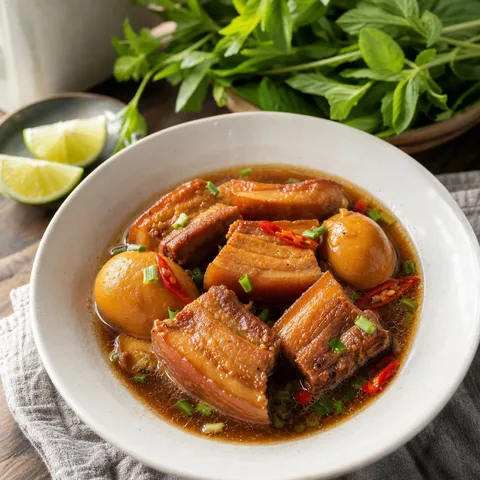 Vietnamese Lens Verified Images are for illustrative purposes only, may be inaccurate, and do not guarantee the presence or absence of specific ingredients.
 Thịt Kho Tàu (Caramelized Pork and Eggs)
Meltingly tender pork belly and hard-boiled eggs braised in a rich, sweet, and savory coconut juice caramel, perfect over steamed rice.
 Vietnamese Lens Verified Images are for illustrative purposes only, may be inaccurate, and do not guarantee the presence or absence of specific ingredients.
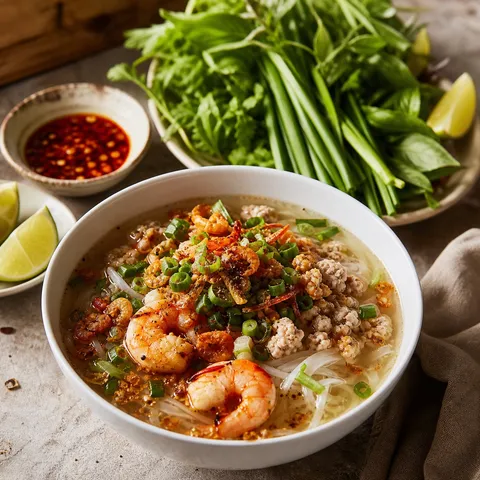
 Hủ Tiếu (Pork and Seafood Noodle Soup)
A Vietnamese pork-bone broth noodle soup loaded with ground pork, shrimp, and dried shrimp over chewy tapioca noodles, finished with garlic chives and fried garlic.
 Vietnamese Lens Verified Images are for illustrative purposes only, may be inaccurate, and do not guarantee the presence or absence of specific ingredients.
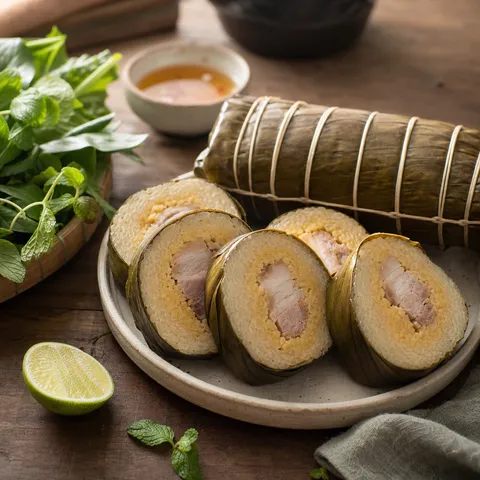
 Bánh Tét (Cylindrical Sticky Rice Cake)
The Southern equivalent of Bánh Chưng, rolled into a cylinder.