 Vietnamese Images are for illustrative purposes only, may be inaccurate, and do not guarantee the presence or absence of specific ingredients.
  Serving Images are for illustrative purposes only, may be inaccurate, and do not guarantee the presence or absence of specific ingredients.
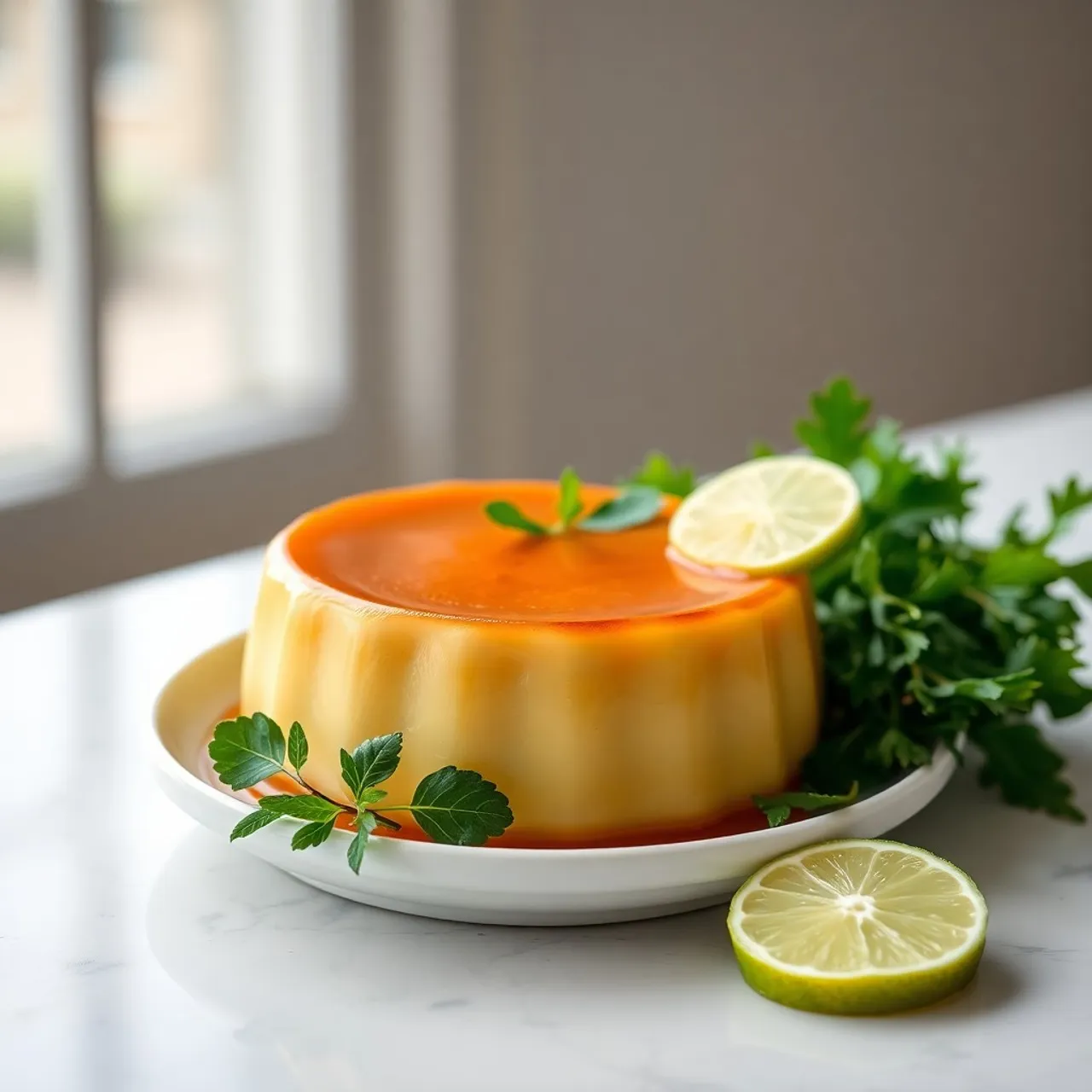
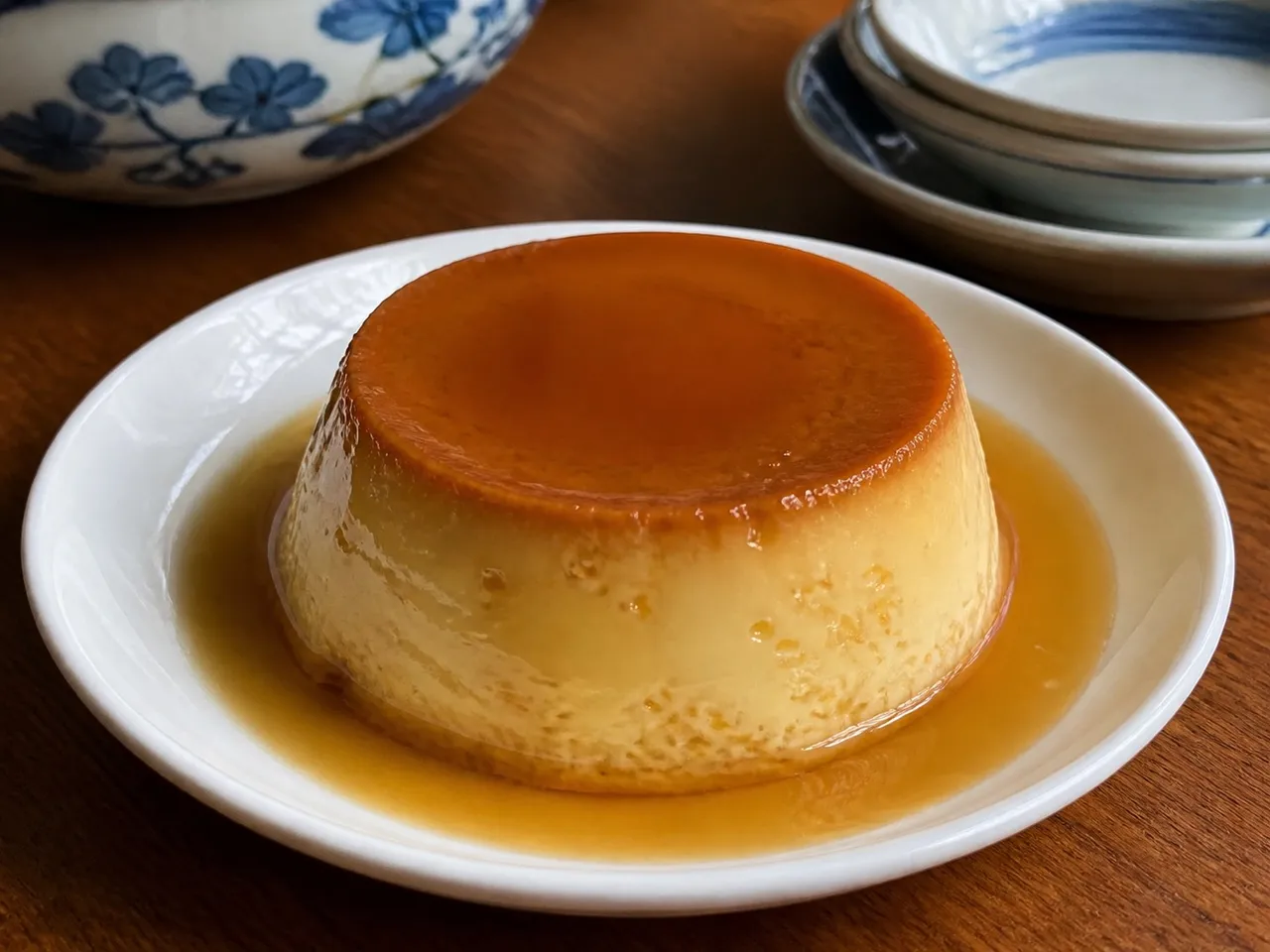
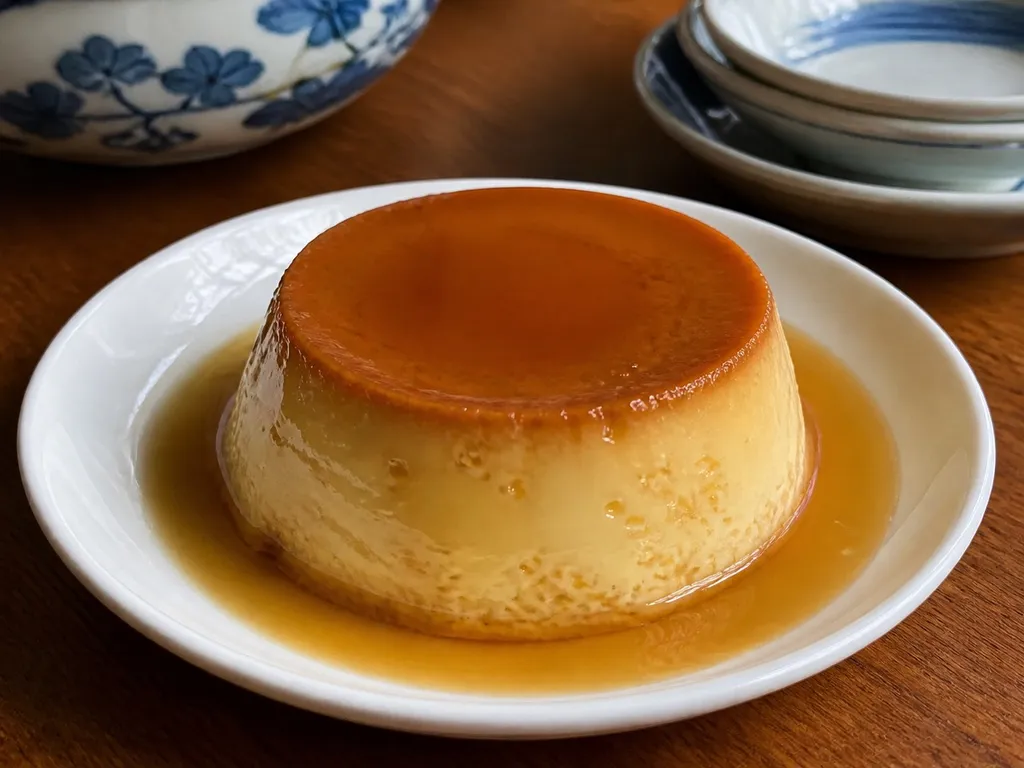
 Bánh Flan (Vietnamese Caramel Custard)
A silky French-influenced caramel custard with a bittersweet burnt-sugar topping, beloved as a chilled Vietnamese street dessert.
Contains common allergens
In the app, Listahan checks these against your household automatically.
Instructions
6 steps- 1
Heat 1/2 cup of the sugar in a dry saucepan over medium heat, swirling occasionally, until it melts into a deep amber caramel, about 6 minutes, then quickly pour it into the bottoms of 6 ramekins, tilting to coat.
- 2
Whisk the eggs, egg yolks, and remaining 1/4 cup sugar together gently until just combined, taking care not to create too many bubbles.
- 3
Warm the condensed milk and whole milk together until steaming but not boiling, then slowly stream it into the eggs while whisking, and stir in the vanilla and optional coffee.
- 4
Strain the custard through a fine sieve into the caramel-lined ramekins to ensure a perfectly smooth texture.
- 5
Set the ramekins in a baking dish, pour hot water halfway up their sides, and bake at 325°F for 40 to 45 minutes until the centers are just set with a slight jiggle.
- 6
Cool to room temperature, then refrigerate at least 4 hours; to serve, run a knife around the edge and invert each onto a plate so the caramel flows over the top.
 Images are for illustrative purposes only, may be inaccurate, and do not guarantee the presence or absence of specific ingredients.
 Listahan Family Score™
78/100
Good fit for most families
Score reflects how well this recipe fits a typical busy household. In the app, your Family Score is personalized to your household's allergens, kids, and pantry.
Nutrition
per serving140
Calories
5 g
Protein
21 g
Carbs
5 g
Fat
Estimated per serving. Actual values depend on the brands and portions you use.
Listahan cooking guide
Chef notes & practical guide
Technique notes, ingredient swaps, serve-alongside ideas, storage guidance, and equipment for this recipe.
Cultural context
Banh flan arrived in Vietnam during the French colonial period of the 19th and early 20th centuries, introduced as creme caramel by French administrators and quickly adopted into the Vietnamese dessert canon — though Vietnamese cooks made it richer and more concentrated by substituting sweetened condensed milk for the fresh cream and sugar of the French original. The Vietnamese version became a fixture of southern Vietnamese dessert stalls (quan che) and is sold cold from vendors across Ho Chi Minh City, often served over crushed ice with a spoonful of coffee syrup on top. The addition of espresso or brewed coffee is a distinctly Vietnamese innovation that nods to the country's deep ca phe culture.
Listahan note
This version uses the condensed milk ratio that produces a dense, custardy set — firmer and richer than French creme caramel — with optional coffee for the layer of bitterness that balances the sweet caramel and makes it unmistakably Vietnamese.
Technique cues
- The caramel must be cooked to a deep amber before adding water — a light golden caramel tastes primarily of sugar; the Maillard compounds that develop at deeper amber produce the slightly bitter complexity that balances the intensely sweet condensed milk custard.
- Strain the custard mixture through a fine-mesh sieve before pouring into molds to remove any chalaza (egg white threads) that would produce an uneven, stringy texture in the set flan — this single step separates a smooth, professional-quality result from a home-style one.
- Steam-bake in a bain-marie (water bath) and cover the top of the pan tightly with foil to prevent the surface from puffing or browning; Vietnamese banh flan has a smooth, uniformly pale surface rather than a baked-custard skin.
Kitchen flow
- Parallel prep
- Make the caramel and coat the ramekins first (it needs to set before the custard goes in); while it cools and hardens, prepare and strain the custard mixture so it is ready to pour immediately.
- Make-ahead
- Banh flan is best made the day before serving; overnight refrigeration allows the custard to fully set and the caramel to partially liquefy and pool around the base for a cleaner unmolding.
- Leftover move
- Leftover individual flans keep covered in the fridge for up to 4 days; serve cold over crushed ice with a drizzle of additional coffee for a Vietnamese street-food presentation.
- Cleanup rhythm
- The caramel pan is the only difficult cleanup — fill immediately with water and heat over low until the hardened caramel dissolves; do not try to scrub hardened caramel from a cold pan.
Ingredient brief
Role, handling, and swap guidance for each key ingredient.
sweetened condensed milk
sweetener and richness base
Purpose: Condensed milk is the ingredient that makes banh flan distinctively Vietnamese rather than simply French creme caramel — its concentrated sweetness and caramelized milk notes create a richer, denser custard than fresh cream and sugar.
Handling: Use at room temperature so it blends smoothly with eggs without shocking the eggs into premature coagulation.
Adaptation: Full-fat coconut condensed milk (available in Asian grocery stores) makes this dairy-free while preserving the concentrated sweetness; the flavor acquires a coconut note that many find complementary.
granulated sugar (divided)
caramel base and primary sweetener
Purpose: The caramel uses part of the sugar allocation and must be made from dry or wet caramelization with careful attention to color, as it provides the entire bitter-sweet counterpoint at the base of each ramekin.
Handling: For the caramel, cook sugar in a dry pan over medium heat without stirring until it melts and begins to darken; swirl the pan rather than using a spoon to ensure even coloring.
Adaptation: Coconut sugar makes a slightly more complex, molasses-forward caramel that works well; palm sugar (used in Southeast Asian kitchens) is the most traditional substitute.
large eggs and egg yolks
structural set
Purpose: The combination of whole eggs and extra yolks gives banh flan its characteristic dense, rich set — more yolks equal a creamier, less jiggly texture than an all-whole-egg custard.
Handling: Whisk eggs gently rather than vigorously to avoid incorporating air, which creates bubbles in the finished custard; use room-temperature eggs for smoother blending.
Adaptation: All whole eggs (6-7 large) can replace the mixed whole egg plus yolk formula for a slightly firmer, more economical version.
whole milk
liquid ratio and texture lightener
Purpose: Whole milk dilutes the condensed milk to the right custard consistency; too little liquid and the flan sets rubbery, too much and it will not hold its shape when unmolded.
Handling: Warm the whole milk slightly (not hot) before combining with the condensed milk and eggs so the mixture blends smoothly without streaks.
Adaptation: Full-fat oat milk or soy milk can substitute for a dairy-free version when used with coconut condensed milk; the set may be slightly softer.
brewed strong coffee (optional)
bitter complexity layer
Purpose: A tablespoon of strong coffee stirred into the custard adds the bitter-roasty note that distinguishes Vietnamese banh flan from generic creme caramel and nods to the coffee culture that defines the country's dessert tradition.
Handling: Use cooled espresso or Vietnamese drip coffee (ca phe) rather than instant coffee, which can impart a metallic off-note.
Adaptation: A half teaspoon of cocoa powder dissolved in the warm milk approximates the bitter note for those avoiding caffeine.
Technique notes
- Run a thin knife around the edge of each ramekin before unmolding and place the serving plate on top, then invert with a single decisive motion — hesitation results in the custard sliding to one side rather than dropping cleanly.
- The water bath temperature should never exceed a gentle simmer during baking; if the water is boiling, the custard's edges will puff, curdle slightly, and set with a grainy texture — reduce oven temperature immediately if the water is actively bubbling.
- A slight jiggle in the center when gently shaken is correct — the custard is done when the center 2 inches are still wobbly and the outer ring is set; residual heat will finish the center during cooling, and overcooking produces a weepy, curdled result.
Ingredient swaps
- Dairy-free direction
- Use coconut sweetened condensed milk and full-fat coconut milk in place of regular condensed milk and whole milk; the result is richer and slightly more tropical in flavor.
- Lower-sugar caramel
- Reduce the caramel portion by a third and add a pinch of fleur de sel to the caramel to intensify the flavor with less overall sweetness.
- Coffee-free version
- Omit the coffee entirely and add 1 additional teaspoon of vanilla extract and a pinch of cinnamon for a warming, aromatic custard without caffeine.
Serve alongside
- crushed ice spooned alongside or under the flan for the classic street vendor presentation
- fresh strawberries or mandarin segments for fruit contrast
- Vietnamese sticky rice desserts (che) for a spread of traditional sweets
- Vietnamese iced coffee (ca phe sua da) — the dessert's natural companion
- jasmine or lotus tea served hot to contrast the cold custard
- fresh young coconut water, lightly sweet and neutral
Serving suggestions only — check pairings for your household's allergens.
Storage & reheating
- Store individual ramekins covered with plastic wrap in the fridge for up to 4 days; do not unmold until ready to serve as the caramel continues to slowly pool and the custard keeps its shape better unmolded just before eating.
- Banh flan should always be served cold; it cannot be reheated once set without breaking the custard structure.
- Do not freeze — the egg-based custard will break and become grainy upon thawing.
Equipment
- 6-8 individual ramekins (6 oz) or one 9-inch round baking pan
- fine-mesh strainer for straining the custard mixture
- deep roasting pan or baking dish for the bain-marie water bath
- small heavy saucepan for making the dry caramel
Make this household-aware
Listahan Pro checks this recipe against your household's allergens, finds pantry-aware swaps, builds the shopping list, and helps you plan the week around it.
Plan it in Listahan
Add Bánh Flan (Vietnamese Caramel Custard) to your week, check it against your household's allergens, and build the shopping list automatically.
More Vietnamese recipes
 Vietnamese Lens Verified Images are for illustrative purposes only, may be inaccurate, and do not guarantee the presence or absence of specific ingredients.
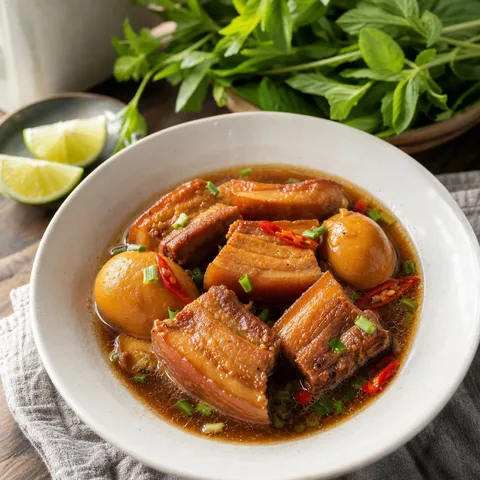
 Thịt Kho Tàu (Caramelized Pork and Eggs)
Meltingly tender pork belly and hard-boiled eggs braised in a rich, sweet, and savory coconut juice caramel, perfect over steamed rice.
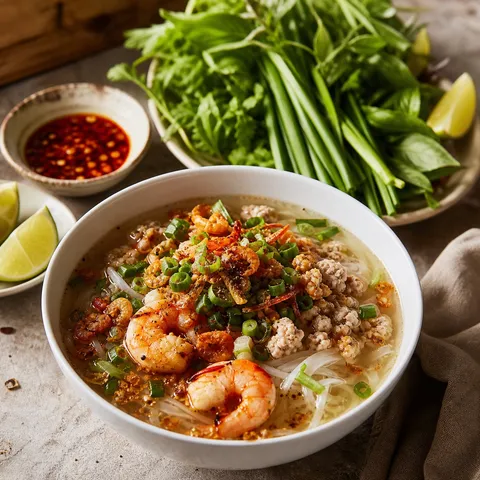 Vietnamese Lens Verified Images are for illustrative purposes only, may be inaccurate, and do not guarantee the presence or absence of specific ingredients.
 Hủ Tiếu (Pork and Seafood Noodle Soup)
A Vietnamese pork-bone broth noodle soup loaded with ground pork, shrimp, and dried shrimp over chewy tapioca noodles, finished with garlic chives and fried garlic.
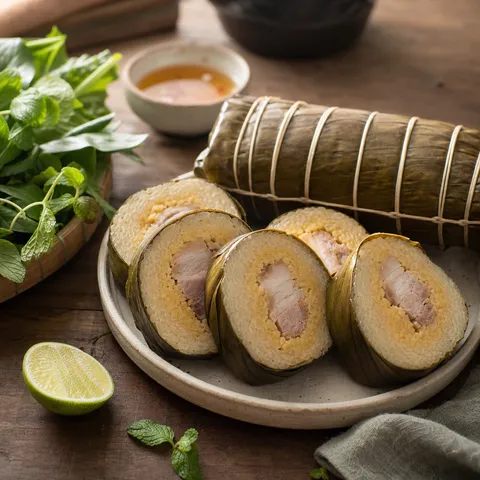 Vietnamese Lens Verified Images are for illustrative purposes only, may be inaccurate, and do not guarantee the presence or absence of specific ingredients.
 Bánh Tét (Cylindrical Sticky Rice Cake)
The Southern equivalent of Bánh Chưng, rolled into a cylinder.