 Vietnamese Images are for illustrative purposes only, may be inaccurate, and do not guarantee the presence or absence of specific ingredients.
  Serving Images are for illustrative purposes only, may be inaccurate, and do not guarantee the presence or absence of specific ingredients.
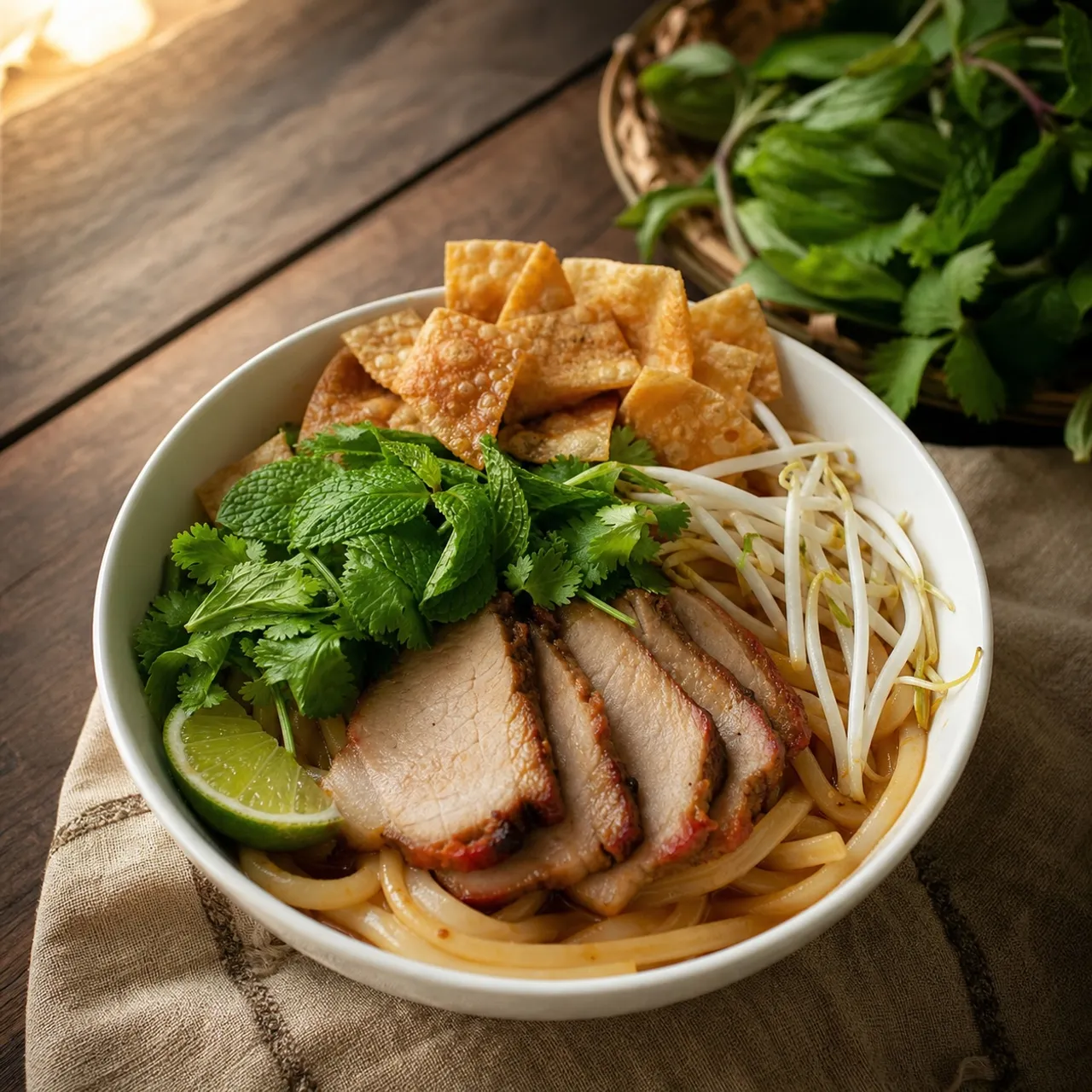
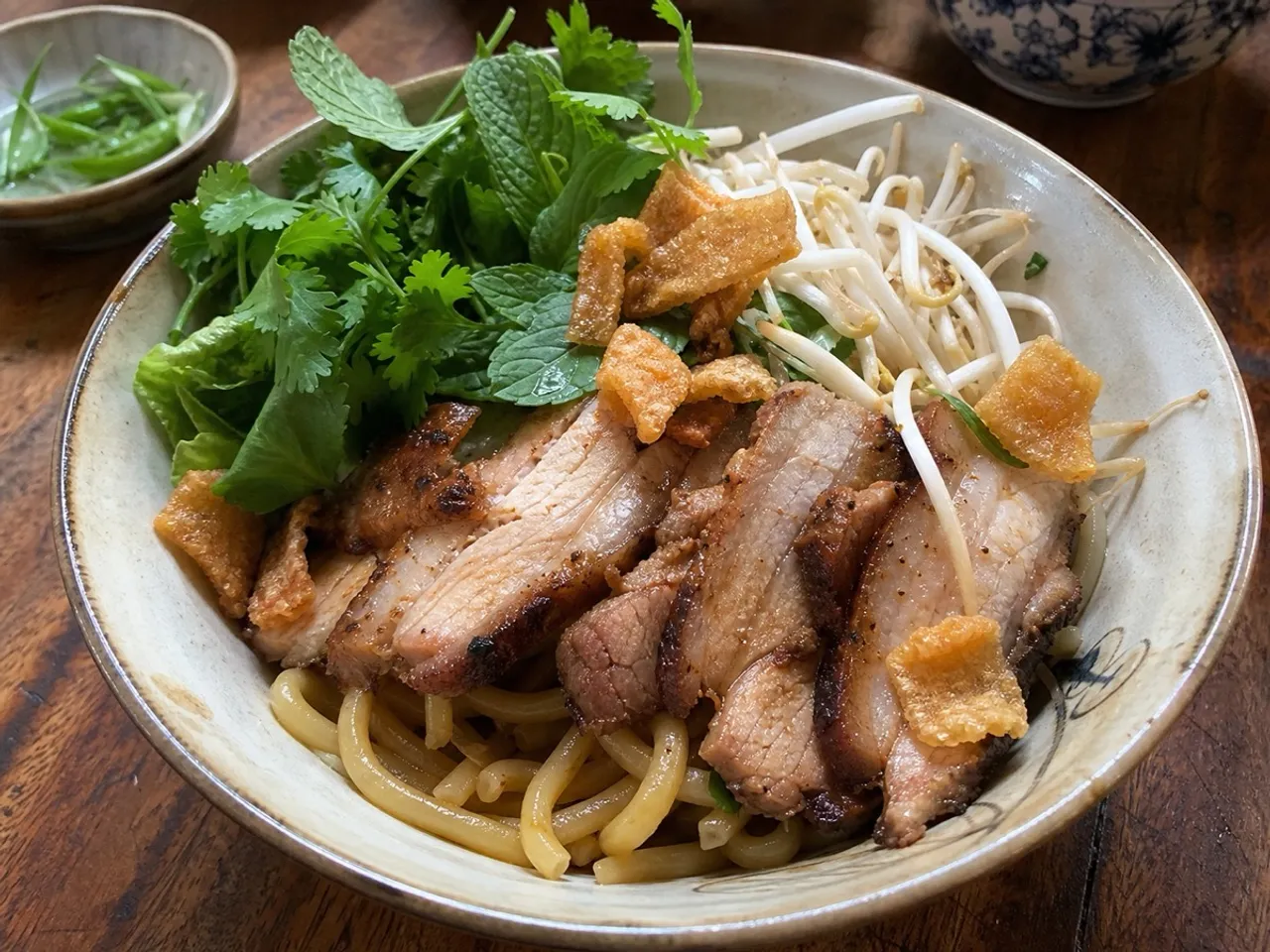
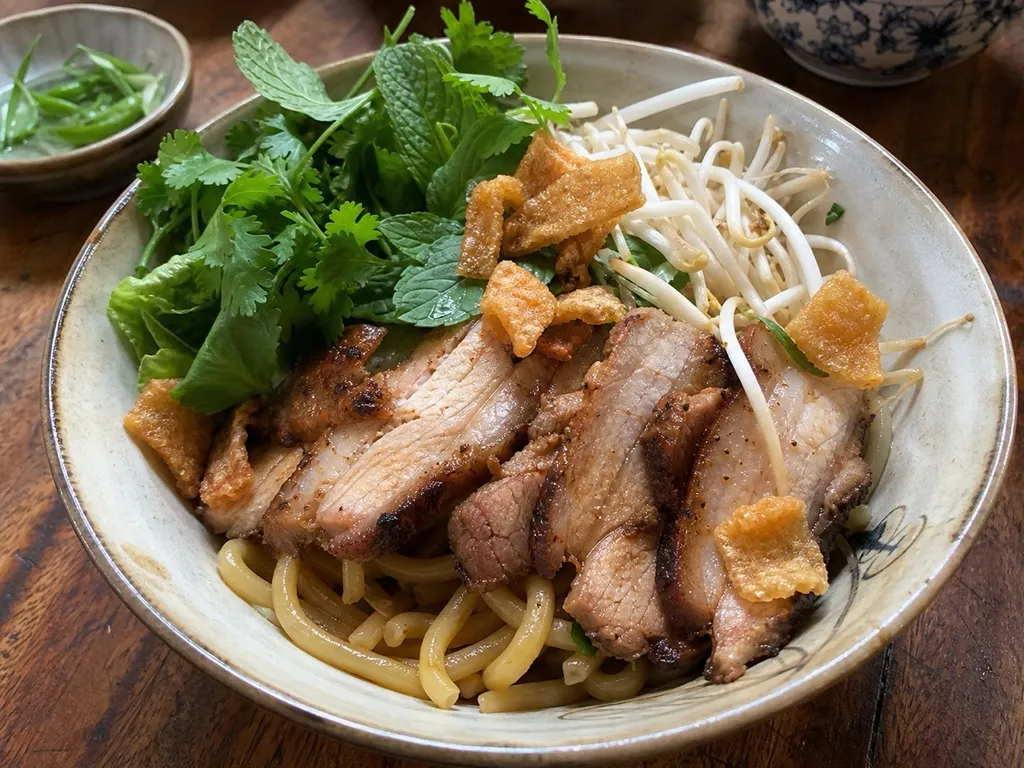
 Cao Lầu (Hội An Noodle Bowl)
A beloved Hội An specialty of chewy lye-treated noodles topped with sliced char siu pork, fresh herbs, and crunchy fried croutons.
Contains common allergens
In the app, Listahan checks these against your household automatically.
Instructions
6 steps- 1
Rub the pork shoulder all over with 2 tablespoons soy sauce and the five-spice powder, then marinate at room temperature for 30 minutes so the spices penetrate the meat.
- 2
Sear the pork in a hot oiled pan over medium-high heat until deeply browned on all sides, about 8 minutes, then transfer to a small pot, add 1 cup water and the remaining 1 tablespoon soy sauce, cover, and simmer gently for 45 minutes until fork-tender.
- 3
Remove the pork, let it rest 10 minutes, then slice thinly against the grain and reserve the cooking liquid as a concentrated sauce.
- 4
Blanch the fresh noodles in boiling water for 1 to 2 minutes until just heated through, then drain well and divide among serving bowls.
- 5
Top each bowl with sliced pork, a handful of bean sprouts, and a generous pile of fresh herbs, then spoon over 2 to 3 tablespoons of the reserved pork sauce.
- 6
Finish with a scattering of crunchy pork cracklings or fried croutons and serve immediately while the noodles are warm and the toppings are fresh.
 Images are for illustrative purposes only, may be inaccurate, and do not guarantee the presence or absence of specific ingredients.
 Listahan Family Score™
75/100
Good fit for most families
Score reflects how well this recipe fits a typical busy household. In the app, your Family Score is personalized to your household's allergens, kids, and pantry.
Nutrition
per serving885
Calories
66 g
Protein
91 g
Carbs
27 g
Fat
Estimated per serving. Actual values depend on the brands and portions you use.
Listahan cooking guide
Chef notes & practical guide
Technique notes, ingredient swaps, serve-alongside ideas, storage guidance, and equipment for this recipe.
Cultural context
Cao lầu is one of Vietnamese cuisine's most place-bound dishes, believed to have originated in the ancient trading port of Hội An in central Vietnam, where centuries of Japanese, Chinese, and indigenous Cham influence converged. Local legend insists the noodles can only be made authentically using water drawn from a specific Ba Le well in the old town and ash lye sourced from trees on the Cham Islands, which gives the thick chewy noodles their yellow color and alkaline bite. The dish arrived in its current form during the 17th-century Nguyễn-era trading boom when Hội An served as a regional entrepôt, and its layered textures still reflect that multicultural port heritage.
Listahan note
This version uses widely available thick udon-style noodles as a practical stand-in and builds the savory pork topping with five-spice and soy, keeping the essential contrast of chewy noodle, tender pork, crunchy cracklings, and a generous pile of fresh herbs.
Technique cues
- Cao lầu is a dry noodle dish, meaning the pork and its braising liquid serve as sauce rather than broth — toss the drained noodles directly with the reduced cooking liquid so every strand is glossy and seasoned before the toppings go on.
- The textural split between soft noodles, tender pork, and aggressively crunchy cracklings or wonton croutons is the whole point; do not skip or reduce the crunchy element, as it anchors the dish the same way croutons anchor a Caesar salad.
- Fresh herbs are not garnish here — mint, Thai basil, and cilantro are piled on thick and eaten as equal components; Vietnamese cooks treat them as a second salad course embedded in the bowl, so be genuinely generous.
Kitchen flow
- Parallel prep
- While the pork braises, cook the noodles, prepare the herb plate, and set up the crackling topping so everything is ready to assemble the moment the pork is done.
- Make-ahead
- Braise the pork up to 2 days ahead and refrigerate in its liquid; the flavors deepen overnight. Reheat gently and boil noodles fresh to order.
- Leftover move
- Slice leftover pork thin and pan-fry in the reduced braising liquid until caramelized, then serve over steamed rice with a fried egg for a quick weeknight meal.
- Cleanup rhythm
- Use one pot for braising and one pot for noodles; clean the braising pot while the noodles cook, so the only active mess during assembly is the cutting board for herbs.
Ingredient brief
Role, handling, and swap guidance for each key ingredient.
fresh thick udon-style or cao lầu noodles
structural base
Purpose: The thick, chewy noodle is the dish's identity, providing substance that holds up to the braised pork and its glossy sauce without going limp.
Handling: Cook just to al dente, drain thoroughly, and toss immediately with a splash of the pork cooking liquid to prevent clumping.
Adaptation: Fresh thick udon noodles are the closest substitute; dried udon can work but reduce cooking time to keep them firm.
pork shoulder
primary protein and sauce source
Purpose: Pork shoulder braises to tender, pull-apart slices and releases enough collagen to reduce into a glossy, clingy sauce that coats the noodles.
Handling: Marinate in soy and five-spice for at least 30 minutes, then sear on all sides before braising to develop a mahogany crust that enriches the sauce.
Adaptation: Pork belly can replace shoulder for a richer, fattier result; chicken thighs work but will produce a lighter sauce.
five-spice powder
aromatic backbone
Purpose: Five-spice ties the dish to its Chinese trading-port influence, delivering star anise, clove, and cinnamon warmth that distinguishes cao lầu from other Vietnamese noodle bowls.
Handling: Rub directly into the pork before searing so it toasts against the hot pan surface and blooms into the fat.
Adaptation: A blend of ground star anise, cinnamon, and a pinch of clove approximates five-spice if the blend is unavailable.
soy sauce
seasoning and color
Purpose: Divided between the marinade and the braising liquid, soy sauce provides the umami depth and dark color that differentiates cao lầu's braised pork from the lighter proteins in pho or bun bo hue.
Handling: Use the first portion in the marinade for penetration and add the remainder when braising so it reduces and concentrates without burning.
Adaptation: Tamari delivers the same flavor and makes the dish gluten-free when paired with gluten-free noodles.
pork cracklings or fried wonton croutons
crunchy textural contrast
Purpose: This element is unique to cao lầu and gives every bite an audible crunch that plays against the soft noodle and tender pork, making it structurally distinct from other Vietnamese noodle bowls.
Handling: Add cracklings at the last second, right before serving, so they stay crisp against the moist noodles.
Adaptation: Fried shallots or toasted panko pressed into small clusters approximate the crunch if cracklings are unavailable.
mixed mint, Thai basil, and cilantro leaves
fresh aromatic counterbalance
Purpose: The herb pile provides cooling brightness that cuts the rich, soy-braised pork and ties the bowl back to central Vietnam's emphasis on fresh accompaniments.
Handling: Strip leaves from stems just before serving and keep them whole rather than chopped to preserve their texture and perfume.
Adaptation: Vietnamese perilla (tia to) and shiso are traditional additions; if Thai basil is unavailable, regular basil with extra mint works.
Technique notes
- Reduce the braising liquid aggressively after removing the pork — it should be thick enough to coat the back of a spoon before you toss in the noodles, which is what gives cao lầu its characteristic glossy finish rather than the soupy quality of other noodle bowls.
- Sear the pork in a single large piece rather than pre-cut cubes so the exterior develops a proper crust; slice only after braising so the slices hold their shape and absorb the reduced sauce when tossed.
- Bean sprouts should be used raw, added at the last moment at room temperature — blanching them removes the fresh crunch that balances the richness of the braised elements.
Ingredient swaps
- Gluten-free direction
- Use tamari instead of soy sauce and ensure noodles are 100% rice-based; rice vermicelli or fresh rice noodle sheets can substitute for the udon-style noodles.
- Leaner protein
- Pork tenderloin can replace shoulder; reduce braising time significantly (20 minutes vs 60+) and slice thin against the grain to keep it tender.
- Vegetarian direction
- Substitute firm tofu slabs (pressed and pan-fried) for pork and use vegetarian oyster sauce plus soy sauce for the braising liquid; shiitake mushroom broth deepens the umami.
Serve alongside
- pickled daikon and carrot (do chua) for acidity
- clear Vietnamese broth with scallions served alongside for sipping
- fresh rice paper rolls with shrimp and lettuce
- iced Vietnamese iced coffee (ca phe sua da) for a bitter contrast
- fresh young coconut water
- light jasmine green tea served hot
Serving suggestions only — check pairings for your household's allergens.
Storage & reheating
- Store braised pork and noodles separately in the fridge for up to 3 days; combined they become waterlogged and the noodles absorb all the sauce.
- Reheat pork in its braising liquid in a covered skillet over low heat with a splash of water to loosen; recook noodles fresh or soak refrigerated noodles in hot water for 2 minutes.
- Pork (without noodles) freezes well for up to 2 months; thaw overnight in the fridge and reheat gently.
Equipment
- heavy-bottomed Dutch oven or braising pot for the pork
- large pot for boiling noodles
- tongs for tossing noodles with braising liquid
- sharp slicing knife for portioning pork after braising
Make this household-aware
Listahan Pro checks this recipe against your household's allergens, finds pantry-aware swaps, builds the shopping list, and helps you plan the week around it.
Plan it in Listahan
Add Cao Lầu (Hội An Noodle Bowl) to your week, check it against your household's allergens, and build the shopping list automatically.
More Vietnamese recipes
 Vietnamese Lens Verified Images are for illustrative purposes only, may be inaccurate, and do not guarantee the presence or absence of specific ingredients.
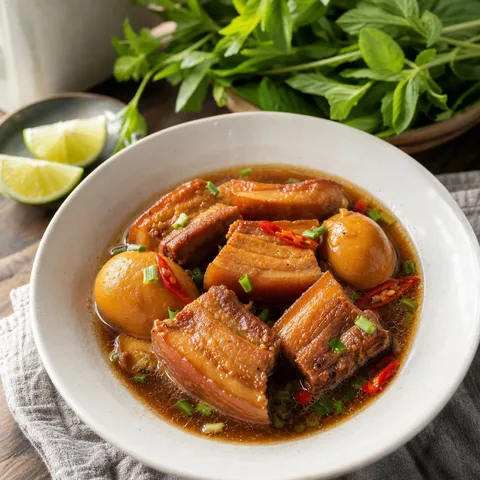
 Thịt Kho Tàu (Caramelized Pork and Eggs)
Meltingly tender pork belly and hard-boiled eggs braised in a rich, sweet, and savory coconut juice caramel, perfect over steamed rice.
 Vietnamese Lens Verified Images are for illustrative purposes only, may be inaccurate, and do not guarantee the presence or absence of specific ingredients.
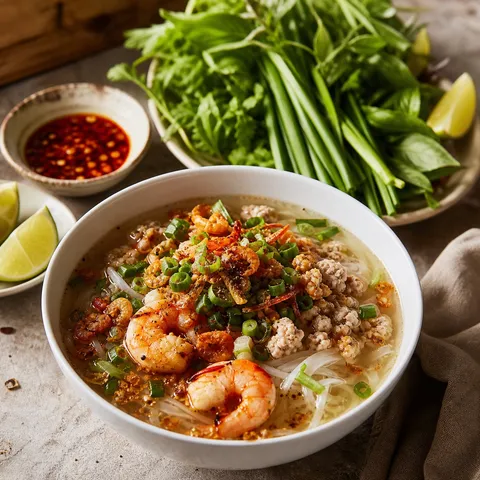
 Hủ Tiếu (Pork and Seafood Noodle Soup)
A Vietnamese pork-bone broth noodle soup loaded with ground pork, shrimp, and dried shrimp over chewy tapioca noodles, finished with garlic chives and fried garlic.
 Vietnamese Lens Verified Images are for illustrative purposes only, may be inaccurate, and do not guarantee the presence or absence of specific ingredients.
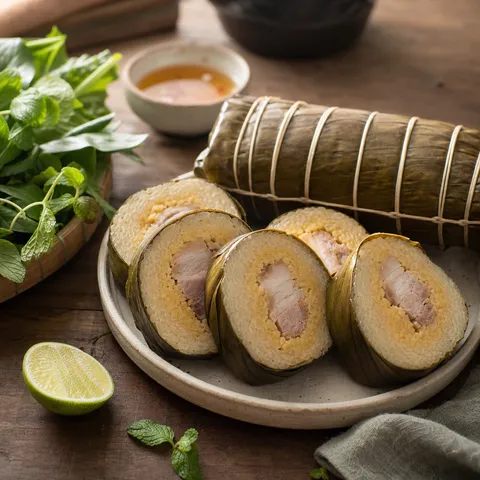
 Bánh Tét (Cylindrical Sticky Rice Cake)
The Southern equivalent of Bánh Chưng, rolled into a cylinder.