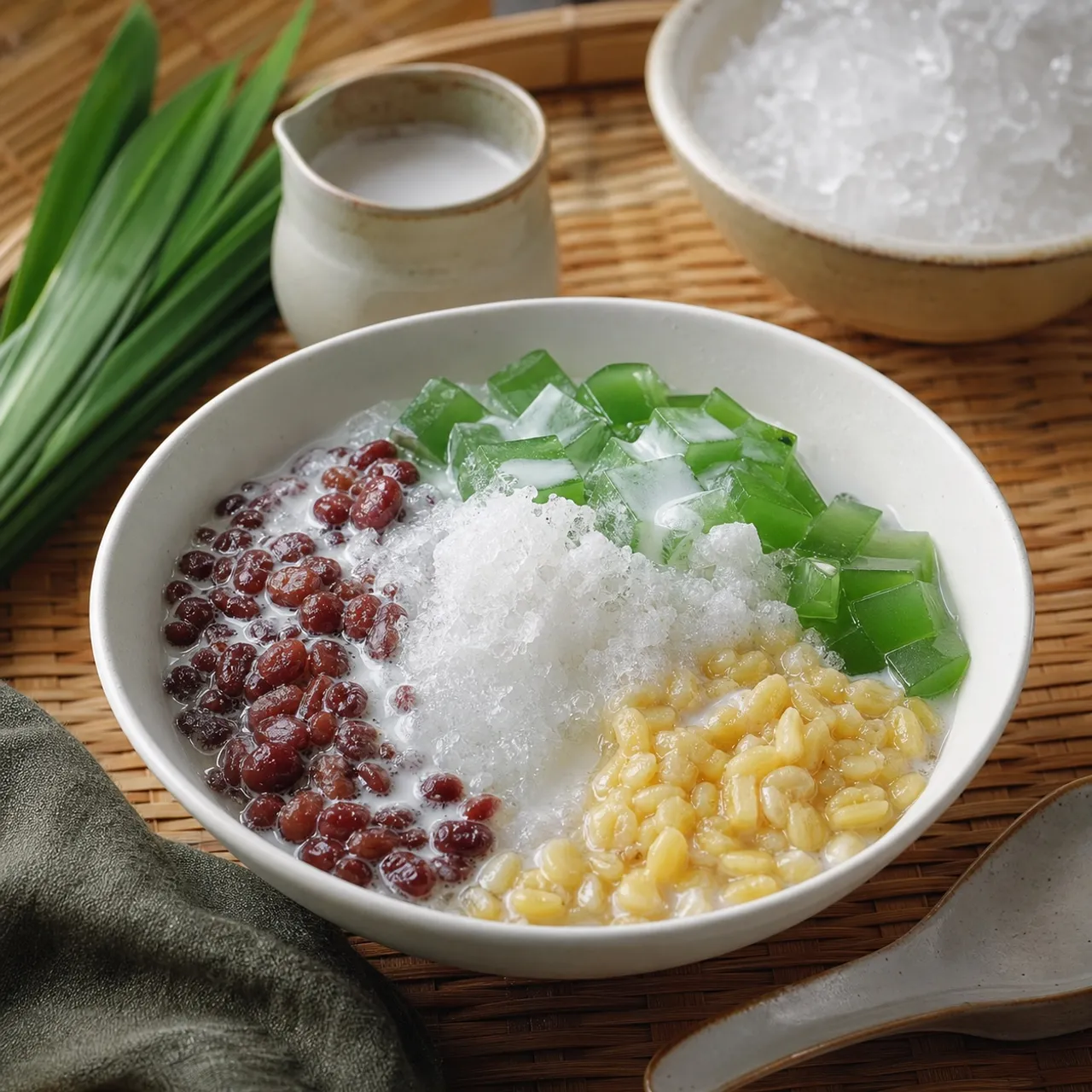
 Vietnamese Images are for illustrative purposes only, may be inaccurate, and do not guarantee the presence or absence of specific ingredients.
 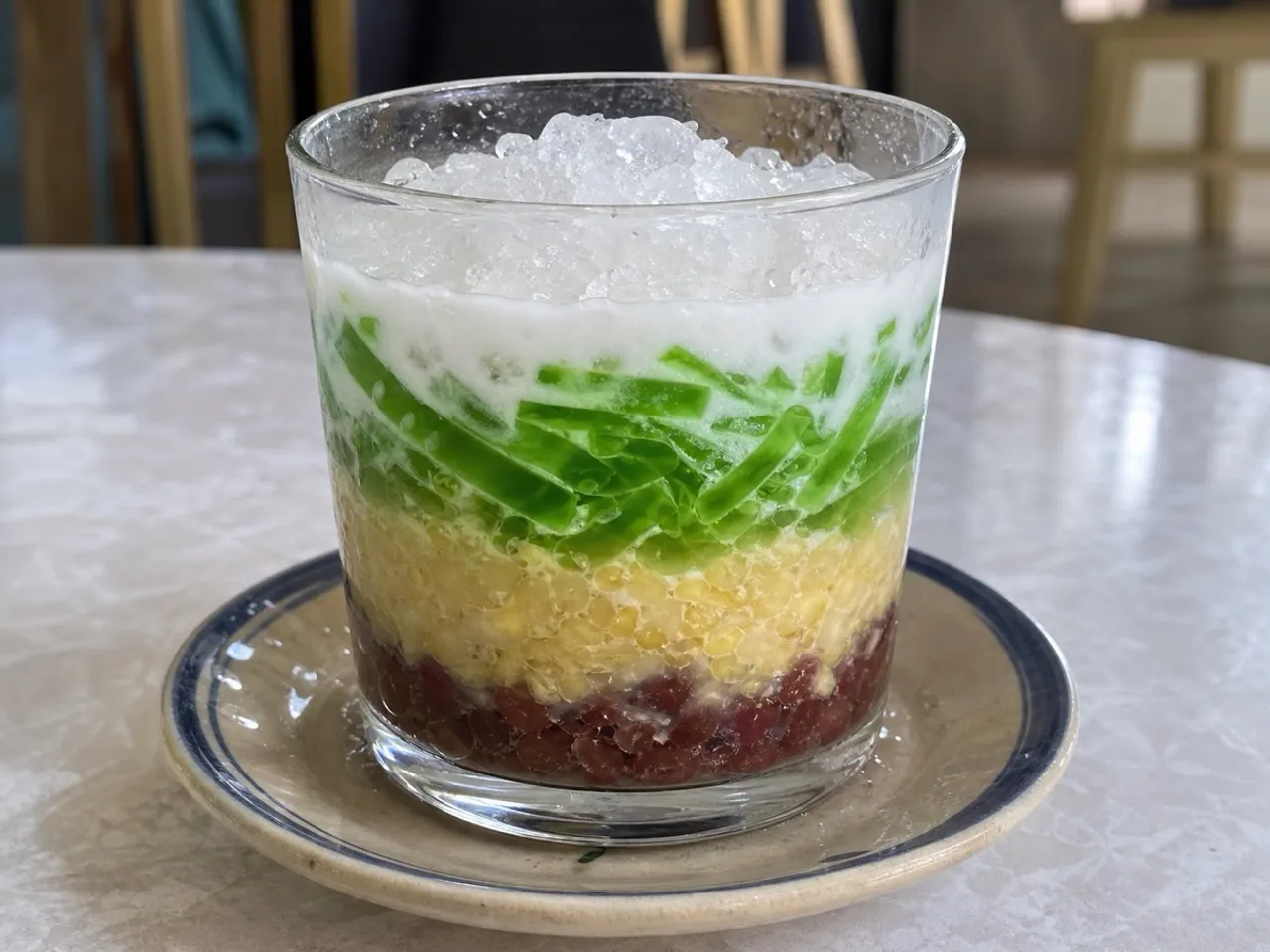 Serving Images are for illustrative purposes only, may be inaccurate, and do not guarantee the presence or absence of specific ingredients.
 Chè Ba Màu (Three Color Dessert)
Layered dessert of red beans, mung beans, and pandan jelly with coconut milk.
No common allergens detected
Based on this recipe's ingredient list. Always verify with your own brands and labels.
Instructions
6 steps- 1
Red Bean Layer: Soak red beans overnight. Boil until tender (about 1 hour). Drain, reserving 1/4 cup liquid. Mash slightly with 1/3 cup sugar. Cook over low heat until a thick paste forms. Let cool.
- 2
Mung Bean Layer: Soak mung beans for 2 hours. Steam until very soft (20 mins). Mash or blend into a smooth paste with 1/3 cup sugar and a splash of water. Let cool.
- 3
Pandan Jelly Layer: Dissolve agar-agar powder in 3 cups water with 1/3 cup sugar. Bring to a boil. Stir in pandan extract. Pour into a flat dish, refrigerate until firm, then cut into long thin strips.
- 4
Coconut Sauce: In a small saucepan, gently heat coconut milk with a pinch of salt and 1 tbsp sugar until warm. Do not boil. Let cool.
- 5
Assemble: In a tall glass, layer the ingredients: a thick bottom layer of red beans, a middle layer of yellow mung bean paste, and a top layer of green pandan jelly strips.
- 6
Serve: Fill the rest of the glass with crushed ice and pour a generous amount of the rich coconut sauce over the top. Mix well with a long spoon before eating.
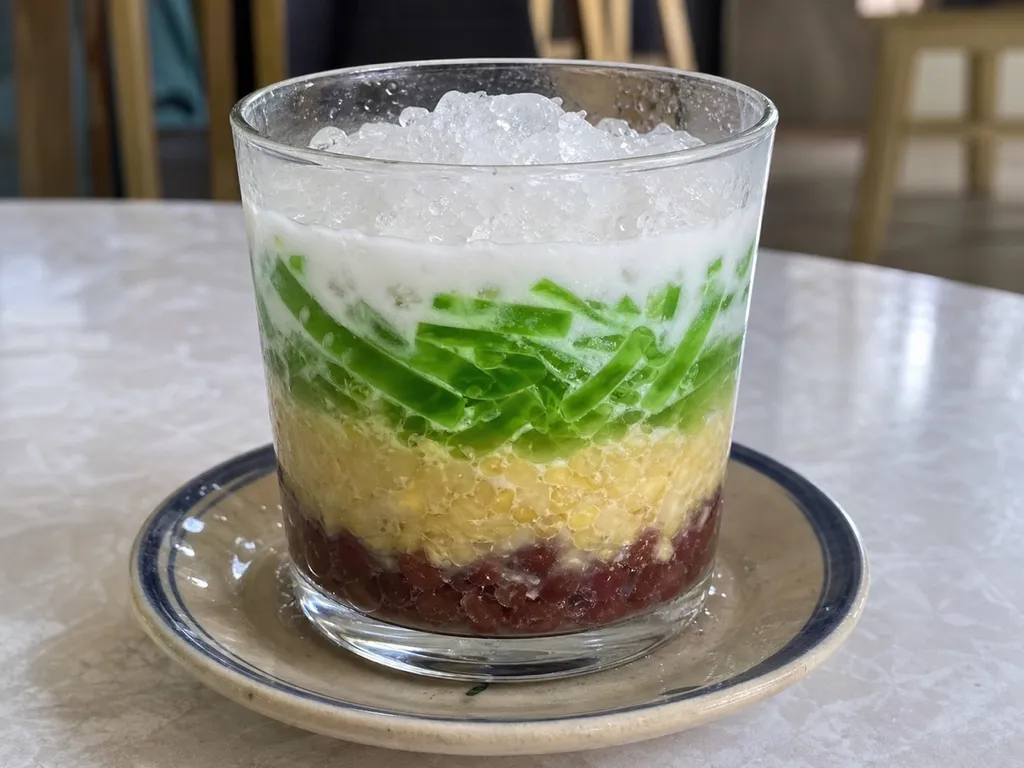 Images are for illustrative purposes only, may be inaccurate, and do not guarantee the presence or absence of specific ingredients.
 Listahan Family Score™
73/100
Good fit for most families
Score reflects how well this recipe fits a typical busy household. In the app, your Family Score is personalized to your household's allergens, kids, and pantry.
Nutrition
per serving125
Calories
2 g
Protein
30 g
Carbs
0 g
Fat
Estimated per serving. Actual values depend on the brands and portions you use.
Listahan cooking guide
Chef notes & practical guide
Technique notes, ingredient swaps, serve-alongside ideas, storage guidance, and equipment for this recipe.
Cultural context
Chè is a broad Vietnamese category of sweet soups, puddings, and iced desserts, often built from beans, jellies, fruit, and coconut. Chè ba màu means three-color chè, and the pleasure is in the layers: earthy beans, soft yellow mung bean paste, springy green pandan jelly, crushed ice, and coconut milk mixed together at the table.
Listahan note
This version keeps the classic glass-by-glass assembly and focuses on getting each layer distinct before serving. The beans should be tender and thick, the jelly should cut cleanly, and the coconut sauce should be rich enough to tie everything together once stirred with ice.
Technique cues
- Cool every component before layering. Warm beans or jelly will melt the ice too quickly and make the glass watery before anyone starts eating.
- Mash the red beans only partly if you want the bottom layer to have texture. The mung beans can be smoother because they act almost like a soft custard layer.
- Cut the pandan jelly into thin strips instead of cubes. Strips are easier to pull up with a long spoon and give the dessert its familiar chewy contrast.
Kitchen flow
- Parallel prep
- Soak the red beans overnight, then start them first; while they simmer, soak and steam the mung beans and make the pandan jelly.
- Make-ahead
- Make the beans, mung bean paste, jelly, and coconut sauce a day ahead, then keep them separate until assembly.
- Leftover move
- Layer extra beans and mung paste in a small bowl with sliced pandan jelly, coconut sauce, and a spoonful of crushed ice for a quick dessert cup.
- Cleanup rhythm
- Rinse the agar pot as soon as the jelly is poured, then soak the bean pans before the sweet starches dry onto the sides.
Ingredient brief
Role, handling, and swap guidance for each key ingredient.
Dried red kidney beans or adzuki beans
Sweet bean base
Purpose: They give the dessert its bottom layer, earthy flavor, and heavier texture that stands up to coconut milk and ice.
Handling: Soak overnight, cook until fully tender, then mash lightly with sugar and a little reserved cooking liquid.
Adaptation: Adzuki beans make a smaller, softer, slightly nuttier layer; red kidney beans give a heartier bite.
Peeled split mung beans
Yellow creamy layer
Purpose: Mung beans cook down into a smooth, dense paste that contrasts with the red beans and pandan jelly.
Handling: Soak, steam until very soft, then mash or blend while still warm so the paste turns even and spreadable.
Adaptation: If the paste is too thick, loosen it with a spoonful of water; if it is too loose, cook it briefly over low heat.
Agar-agar powder
Jelly setter
Purpose: Agar sets the pandan layer firm enough to slice into strips that hold their shape in the glass.
Handling: Bring the agar mixture fully to a boil so it dissolves properly before chilling.
Adaptation: Agar flakes can work, but they usually need longer simmering and measuring by package directions.
Pandan extract
Green aroma and color
Purpose: Pandan gives the jelly its grassy, vanilla-like fragrance and the recognizable green layer.
Handling: Stir it in after the agar mixture has boiled so the aroma stays clearer.
Adaptation: Use a little less if your extract is very dark or strong; the jelly should taste fragrant, not perfume-like.
Coconut milk
Finishing sauce
Purpose: Coconut milk softens the sweetness of the beans and turns the layered dessert into something spoonable and creamy.
Handling: Warm it gently with sugar and a pinch of salt, but do not boil it hard or it can taste flat and separate.
Adaptation: Coconut cream makes a thicker sauce; thin it with a splash of water if it coats the spoon too heavily.
Crushed ice
Serving texture
Purpose: The ice chills the dessert, loosens the sweet pastes, and makes the final glass refreshing instead of heavy.
Handling: Add it only at serving time, after the layers are already in the glass.
Adaptation: Small ice cubes work if crushed ice is not available, but the dessert will take longer to mix evenly.
Technique notes
- Cook the red beans until they are tender all the way through before adding the sugar; sugar added too early can make the skins seem firmer.
- Steam the mung beans rather than boiling them when possible. They absorb less water, so the paste stays thick and clean-tasting.
- Pour the agar into a shallow dish for faster setting and easier slicing. A deep container makes short, chunky pieces instead of long strands.
Ingredient swaps
- Bean choice
- Use adzuki beans for a softer, smaller bean layer or red kidney beans for a more substantial texture.
- Weeknight shortcut
- Cook the beans and mung bean paste the day before, then only cut jelly, crush ice, and assemble when serving.
- Coconut sauce texture
- Use coconut cream for a richer finish or loosen canned coconut milk with a splash of water for a lighter pour.
- Pandan level
- Start with a modest amount of pandan extract, then adjust the next batch if you want a deeper green color or stronger aroma.
Serve alongside
- Goi cuon with shrimp and herbs
- Banh mi thit
- Bun thit nuong
- Com tam suon nuong
- Ca phe sua da
- Unsweetened jasmine iced tea
- Lime soda with salted plum
Serving suggestions only — check pairings for your household's allergens.
Storage & reheating
- Refrigerate the red bean layer, mung bean paste, pandan jelly, and coconut sauce in separate sealed containers for up to 3 days.
- Reheat only the coconut sauce gently if it has thickened, then cool it again before pouring over the assembled dessert.
- Freeze the bean layers in small portions for up to 1 month; thaw overnight in the refrigerator and stir smooth before layering.
Equipment
- Medium saucepan for red beans
- Steamer basket or insert for mung beans
- Shallow dish for setting pandan jelly
- Tall glasses and long spoons
Make this household-aware
Listahan Pro checks this recipe against your household's allergens, finds pantry-aware swaps, builds the shopping list, and helps you plan the week around it.
Plan it in Listahan
Add Chè Ba Màu (Three Color Dessert) to your week, check it against your household's allergens, and build the shopping list automatically.
More Vietnamese recipes
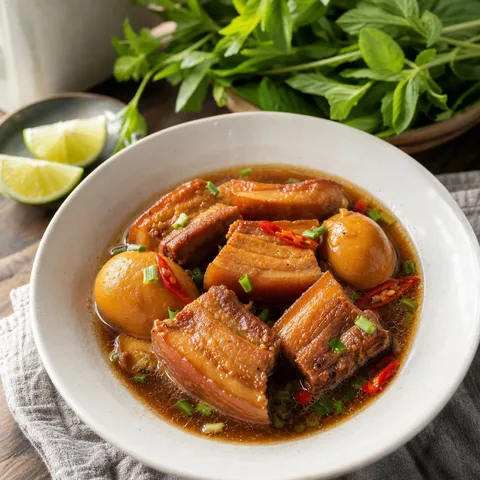 Vietnamese Lens Verified Images are for illustrative purposes only, may be inaccurate, and do not guarantee the presence or absence of specific ingredients.
 Thịt Kho Tàu (Caramelized Pork and Eggs)
Meltingly tender pork belly and hard-boiled eggs braised in a rich, sweet, and savory coconut juice caramel, perfect over steamed rice.
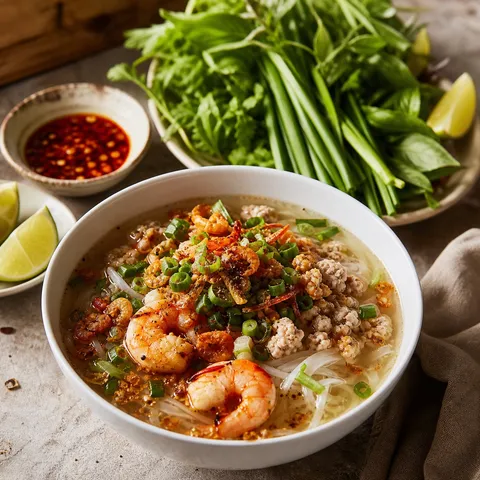 Vietnamese Lens Verified Images are for illustrative purposes only, may be inaccurate, and do not guarantee the presence or absence of specific ingredients.
 Hủ Tiếu (Pork and Seafood Noodle Soup)
A Vietnamese pork-bone broth noodle soup loaded with ground pork, shrimp, and dried shrimp over chewy tapioca noodles, finished with garlic chives and fried garlic.
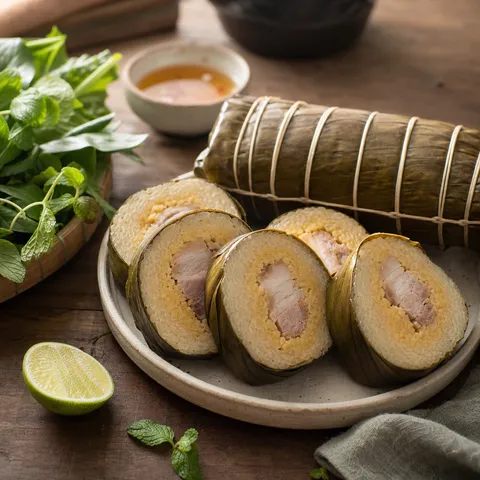 Vietnamese Lens Verified Images are for illustrative purposes only, may be inaccurate, and do not guarantee the presence or absence of specific ingredients.
 Bánh Tét (Cylindrical Sticky Rice Cake)
The Southern equivalent of Bánh Chưng, rolled into a cylinder.