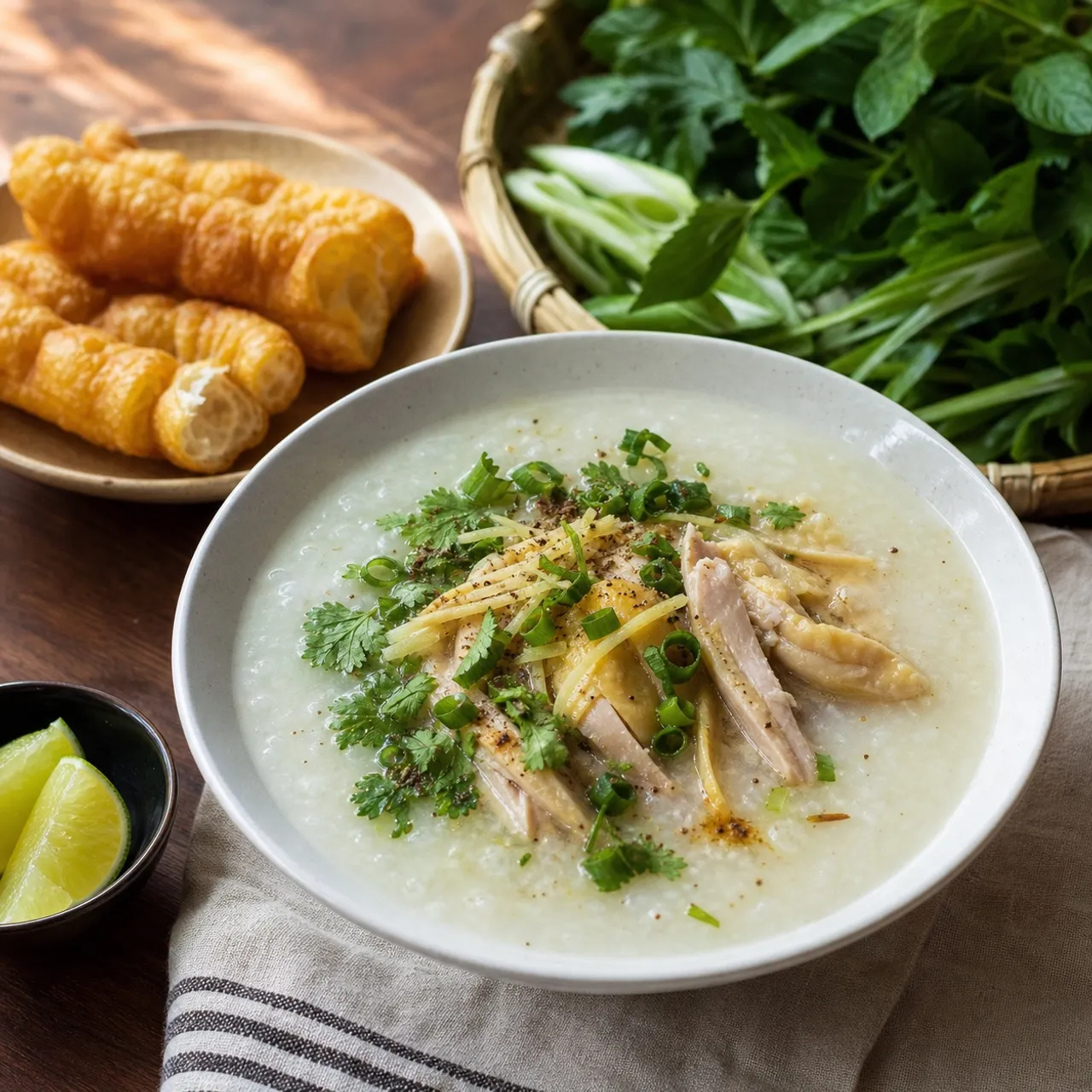
 Vietnamese Images are for illustrative purposes only, may be inaccurate, and do not guarantee the presence or absence of specific ingredients.
 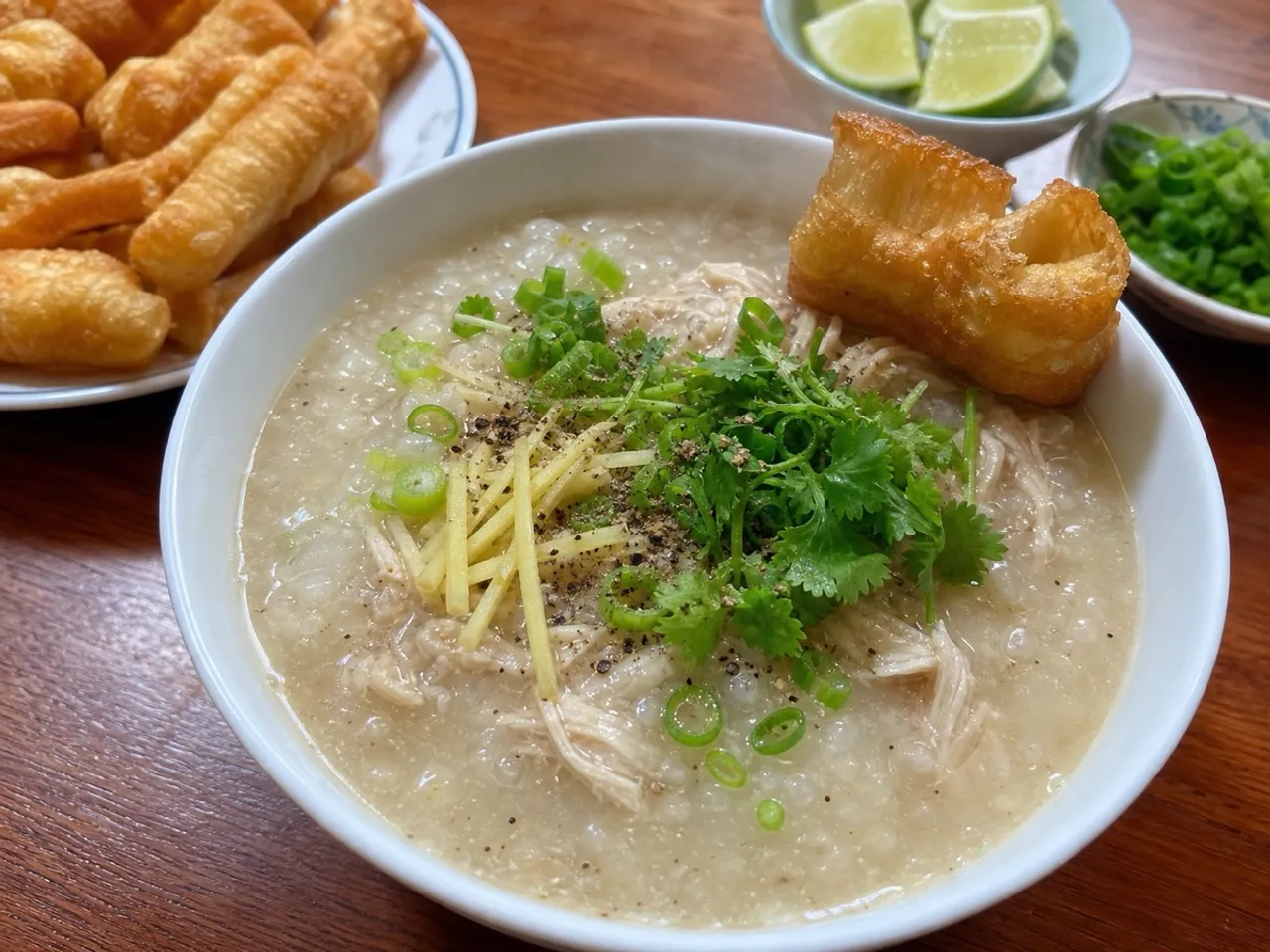 Serving Images are for illustrative purposes only, may be inaccurate, and do not guarantee the presence or absence of specific ingredients.
 Cháo Gà (Chicken Rice Porridge)
Comforting chicken congee often eaten for breakfast or when sick.
Contains common allergens
In the app, Listahan checks these against your household automatically.
Instructions
6 steps- 1
Toast Rice: Rinse both types of rice. In a dry pan, lightly toast the rice over medium heat until fragrant and slightly golden. This adds a nutty flavor and helps the rice break down nicely.
- 2
Boil Chicken: In a large pot, bring 8 cups of water to a boil. Add the chicken, charred shallots, and half of the julienned ginger. Simmer for 45 minutes until the chicken is tender.
- 3
Shred Chicken: Remove the chicken from the broth. Let it cool, then discard the bones and skin. Shred the meat by hand and set aside.
- 4
Cook Porridge: Add the toasted rice directly to the chicken broth. Bring to a boil, then reduce heat to low. Simmer uncovered, stirring occasionally to prevent sticking, for 45-60 minutes until the rice breaks down into a creamy, thick porridge.
- 5
Season: Stir the shredded chicken back into the porridge. Season with fish sauce and a generous amount of black pepper. Adjust consistency with hot water if it's too thick.
- 6
Serve: Ladle into bowls. Garnish heavily with scallions, cilantro, and the remaining fresh ginger. Serve with lime wedges and fried dough sticks.
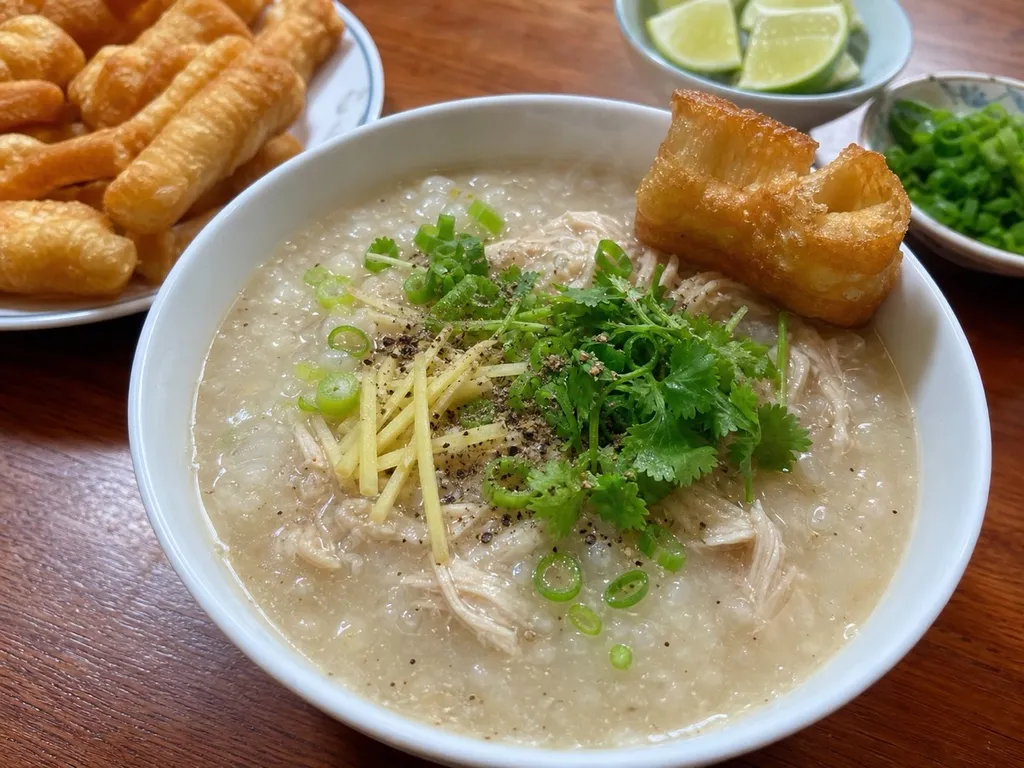 Images are for illustrative purposes only, may be inaccurate, and do not guarantee the presence or absence of specific ingredients.
 Listahan Family Score™
74/100
Good fit for most families
Score reflects how well this recipe fits a typical busy household. In the app, your Family Score is personalized to your household's allergens, kids, and pantry.
Nutrition
per serving225
Calories
5 g
Protein
50 g
Carbs
0 g
Fat
Estimated per serving. Actual values depend on the brands and portions you use.
Listahan cooking guide
Chef notes & practical guide
Technique notes, ingredient swaps, serve-alongside ideas, storage guidance, and equipment for this recipe.
Cultural context
Chao ga is Vietnam's equivalent of the Chinese congee tradition, which spread throughout Southeast Asia via centuries of trade and migration. In Vietnam it developed its own identity through the use of charred ginger and shallots — a technique shared with pho broth-building — and the blend of jasmine and glutinous rice that gives the porridge a creamier, stickier body than purely jasmine-rice versions. It is eaten across Vietnam as a breakfast, a sick-day remedy, and a late-night street food, sold from small carts until the early morning hours.
Listahan note
This version uses a whole bone-in chicken half for maximum broth flavor, and the blend of jasmine and glutinous rice produces a porridge thick enough to coat a spoon without becoming gluey — the key ratio that separates a satisfying bowl from a watery or heavy one.
Technique cues
- Charring the ginger and shallots directly over a gas flame or under a broiler until the skin is blackened and aromatic transforms them from raw alliums into a sweet, smoke-tinged flavor base — this single step is what gives Vietnamese-style chao ga its depth and lifts it far above plain ginger broth.
- The glutinous rice fraction (about 20% of the total) is what makes Vietnamese chao richer and creamier than plain jasmine-only congee; as it cooks, it releases sticky starches that thicken the porridge naturally without needing to blend or add starch.
- Pull the chicken out of the simmering broth as soon as it is just cooked through (internal temperature 165F), before the porridge rice goes in; cooking the chicken the entire time the rice simmers produces dry, stringy meat — shred it off the bone and return it at the end.
Kitchen flow
- Parallel prep
- While the chicken blanches and the initial broth simmers, char the ginger and shallots over the other burner, and slice the scallions and cilantro for garnish.
- Make-ahead
- The broth can be made 2 days ahead and refrigerated; cook the rice and add the shredded chicken only when ready to serve, as rice continues to absorb liquid and thickens further in storage.
- Leftover move
- Leftover chao thickens considerably in the refrigerator; reheat with a splash of water or broth stirred in over low heat to return it to the right consistency.
- Cleanup rhythm
- The porridge pot needs only a quick soak in hot water — the starch releases easily when the pot is still warm; a cold dried pot requires much more scrubbing.
Ingredient brief
Role, handling, and swap guidance for each key ingredient.
1 cup jasmine rice
porridge body
Purpose: Jasmine rice provides the slightly floral, neutral starch base that absorbs the chicken broth and swells into a creamy porridge.
Handling: Rinse once to remove excess surface starch, but do not rinse repeatedly — some surface starch contributes to the porridge's body.
Adaptation: Long-grain white rice works; short-grain rice (like Japanese sushi rice) produces a stickier, denser porridge.
1/4 cup glutinous (sticky) rice
thickener and creaminess
Purpose: Glutinous rice releases higher concentrations of amylopectin starch as it cooks, giving chao ga its characteristic creamy, coating texture.
Handling: Add directly with the jasmine rice without pre-soaking for this porridge application.
Adaptation: Skip it and use 1.25 cups of jasmine rice alone for a thinner porridge; or add 1 teaspoon of rice flour stirred into cold water if glutinous rice is unavailable.
1 half chicken (bone-in, skin-on)
broth and protein
Purpose: Bone-in chicken produces a richer, more gelatinous broth than boneless breast; the skin adds fat that gives the broth body.
Handling: Blanch the chicken in boiling water for 1 minute and discard the water to remove impurities before adding to the clean simmering liquid.
Adaptation: Two chicken drumsticks and two thighs work equally well and are easier to portion.
2 inches ginger, peeled and julienned
aromatic
Purpose: Ginger used two ways — charred for depth in the broth and fresh julienned as garnish — provides both a background warmth and a bright finishing bite.
Handling: Reserve a few fresh julienned strips as garnish; char the remaining ginger piece whole and add it to the broth during cooking.
Adaptation: Galangal can substitute part of the ginger for a more complex, floral heat.
2 shallots, charred
sweetness and smokiness in broth
Purpose: Charring shallots caramelizes their sugars and adds a smoky sweetness that is fundamental to the broth's Vietnamese character.
Handling: Hold directly over a gas flame with tongs or place under a broiler; char until the papery skins are fully blackened, then peel and add to the pot.
Adaptation: Half a small onion, charred the same way, works if shallots are unavailable.
Technique notes
- Season the porridge with fish sauce at the end of cooking, not the beginning — fish sauce added too early can make the porridge taste aggressively fishy as the liquid reduces and concentrates.
- The quay (fried dough sticks) should be torn and added right at the table so each diner dunks fresh pieces into their hot bowl; pre-torn quay sitting in the porridge become soft and lose their textural contrast.
- If the porridge thickens too much before serving, add hot water or broth in small amounts and stir gently — adding cold liquid drops the temperature of the whole pot and can make the starches seize.
Ingredient swaps
- Gluten-free direction
- Chao ga is naturally gluten-free; confirm your fish sauce is gluten-free and skip the quay (fried dough sticks) or use gluten-free rice crackers alongside.
- Faster weeknight option
- Use a store-bought rotisserie chicken: skip the broth-simmering step and use low-sodium chicken stock instead; add the charred ginger and shallots to the stock and simmer 20 minutes before adding rice.
- Dairy-free and egg-free note
- This recipe is naturally dairy-free and egg-free as written.
Serve alongside
- quay (Vietnamese fried dough sticks) for dipping
- simple quick-pickled mustard greens
- sliced fresh chili in fish sauce as a condiment
- hot jasmine tea
- plain warm water with lime — the classic Vietnamese sick-day accompaniment
Serving suggestions only — check pairings for your household's allergens.
Storage & reheating
- Refrigerate cooled chao ga in an airtight container for up to 3 days; the porridge will thicken to near-solid when cold.
- Reheat on the stovetop with added water or stock, stirring constantly over medium-low heat until it returns to a pourable consistency.
- The porridge can be frozen in portions for up to 1 month; thaw overnight in the refrigerator and reheat with extra liquid.
Equipment
- large heavy-bottomed pot (at least 5-quart)
- tongs for charring ginger and shallots
- fine mesh strainer for clarifying broth
- ladle for serving
Make this household-aware
Listahan Pro checks this recipe against your household's allergens, finds pantry-aware swaps, builds the shopping list, and helps you plan the week around it.
Plan it in Listahan
Add Cháo Gà (Chicken Rice Porridge) to your week, check it against your household's allergens, and build the shopping list automatically.
More Vietnamese recipes
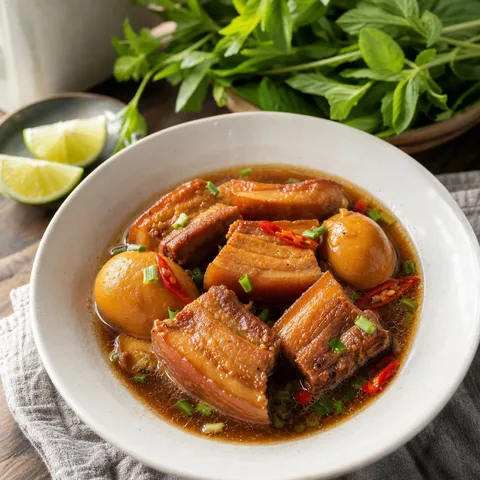 Vietnamese Lens Verified Images are for illustrative purposes only, may be inaccurate, and do not guarantee the presence or absence of specific ingredients.
 Thịt Kho Tàu (Caramelized Pork and Eggs)
Meltingly tender pork belly and hard-boiled eggs braised in a rich, sweet, and savory coconut juice caramel, perfect over steamed rice.
 Vietnamese Lens Verified Images are for illustrative purposes only, may be inaccurate, and do not guarantee the presence or absence of specific ingredients.
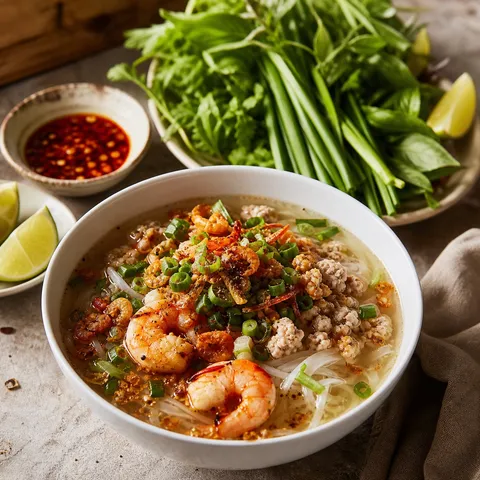
 Hủ Tiếu (Pork and Seafood Noodle Soup)
A Vietnamese pork-bone broth noodle soup loaded with ground pork, shrimp, and dried shrimp over chewy tapioca noodles, finished with garlic chives and fried garlic.
 Vietnamese Lens Verified Images are for illustrative purposes only, may be inaccurate, and do not guarantee the presence or absence of specific ingredients.
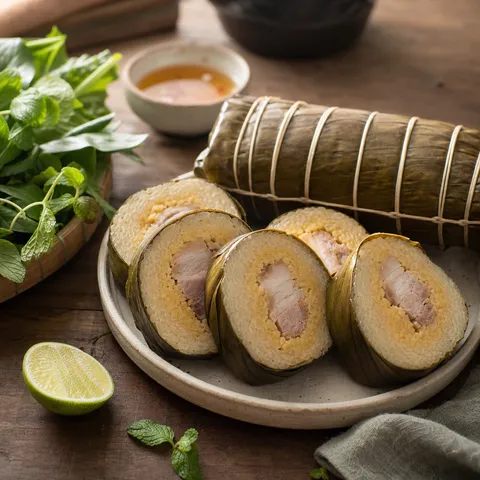
 Bánh Tét (Cylindrical Sticky Rice Cake)
The Southern equivalent of Bánh Chưng, rolled into a cylinder.