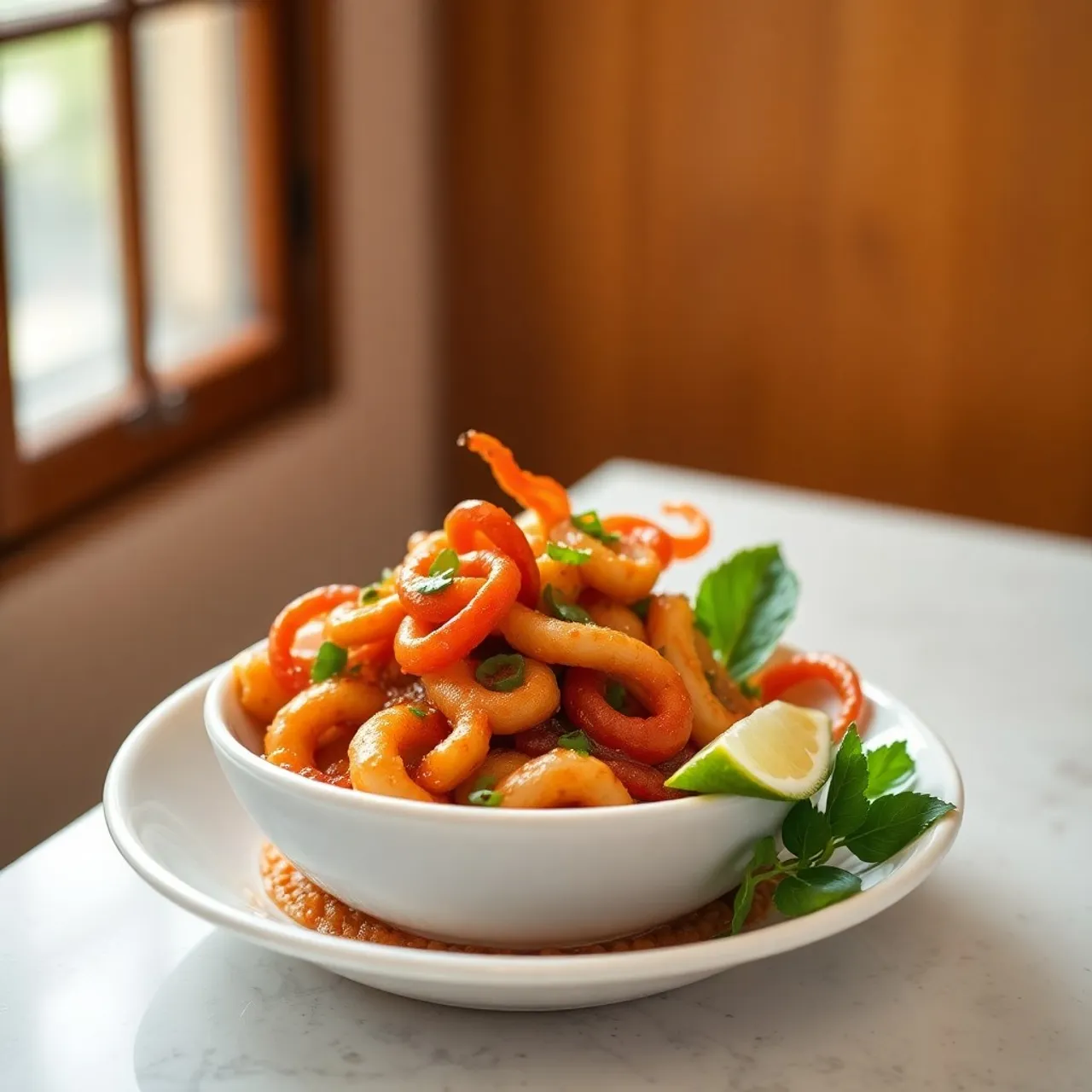
 Vietnamese Images are for illustrative purposes only, may be inaccurate, and do not guarantee the presence or absence of specific ingredients.
 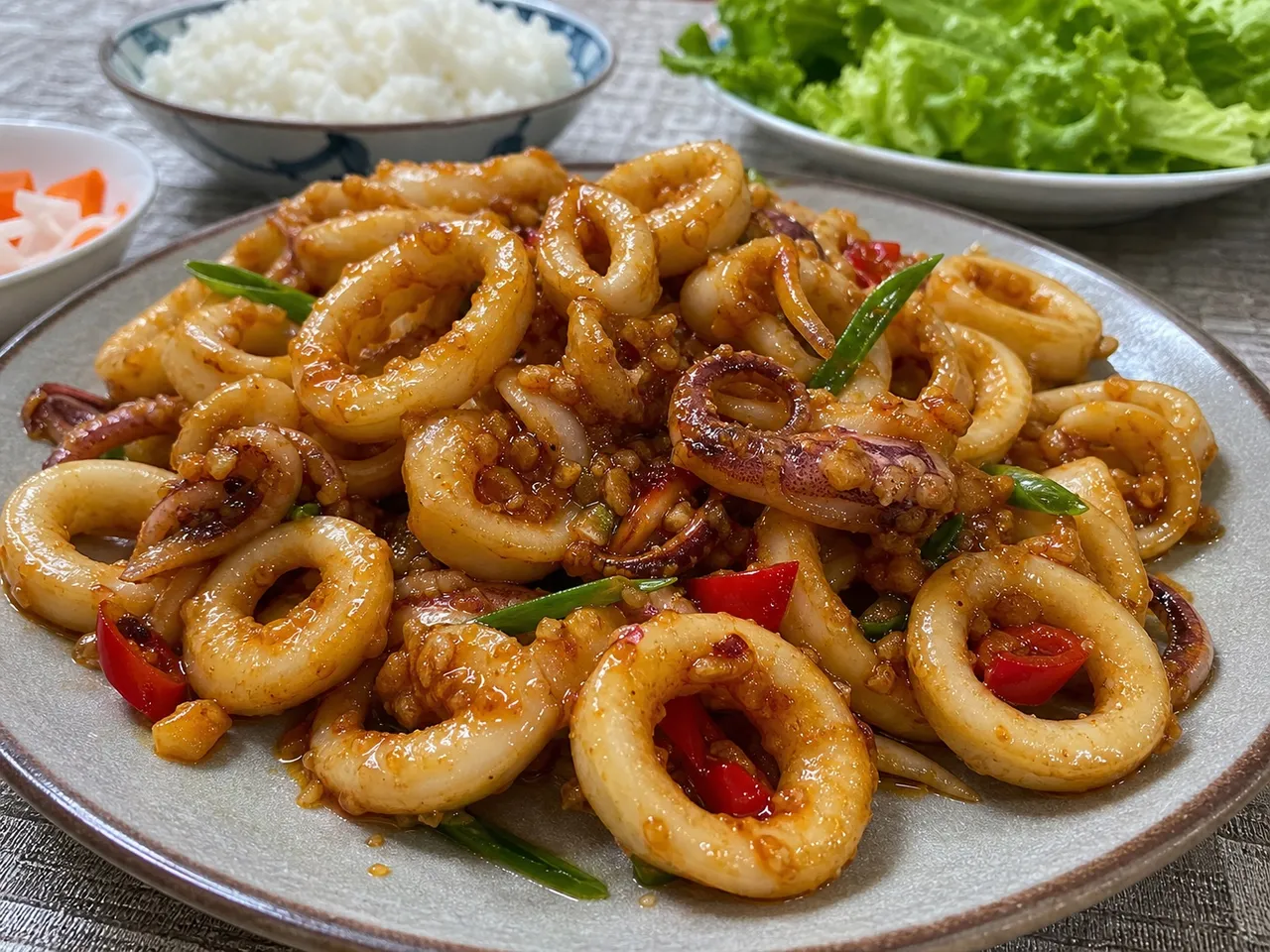 Serving Images are for illustrative purposes only, may be inaccurate, and do not guarantee the presence or absence of specific ingredients.
 Mực Chiên Nước Mắm (Fried Squid with Fish Sauce)
Crispy fried squid coated in a sticky, sweet, and savory fish sauce glaze.
Contains common allergens
In the app, Listahan checks these against your household automatically.
Good to know
- Crispy
- Ready in under 30 minutes
Matched from this dish's own ingredients and timing. Browse more: crispy recipes30-minute meals
Instructions
6 steps- 1
Prep Squid: Ensure the squid rings are completely dry by patting them down with paper towels. Toss them in a bowl with the cornstarch until lightly but evenly coated. Shake off excess.
- 2
Fry Squid: Heat 2 inches of oil in a wok to 375°F (190°C). Fry the squid in batches for just 1-2 minutes until the coating is crispy and golden. Do not overcook. Drain on a wire rack.
- 3
Fry Garlic: Pour out most of the oil, leaving about 1 tbsp in the wok. Add the minced garlic and fry over medium-low heat until it turns deeply golden and crispy. Remove the garlic and set aside.
- 4
Make Glaze: In the same wok, add the fish sauce, sugar, water, and chili flakes. Heat until it bubbles vigorously and thickens into a syrup.
- 5
Toss: Quickly add the fried squid back into the wok. Toss rapidly for 30 seconds so the sticky glaze coats every ring.
- 6
Serve: Turn off the heat, toss the crispy garlic back in, and serve immediately over a bed of lettuce or cucumbers.
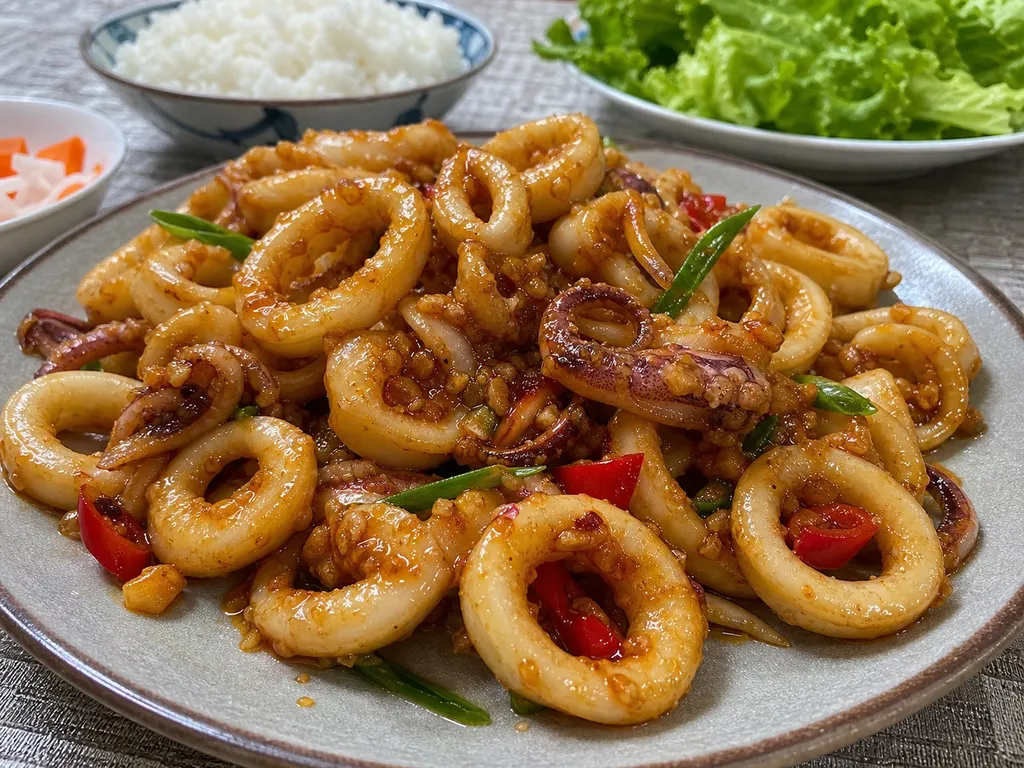 Images are for illustrative purposes only, may be inaccurate, and do not guarantee the presence or absence of specific ingredients.
 Listahan Family Score™
62/100
Works for many families
Score reflects how well this recipe fits a typical busy household. In the app, your Family Score is personalized to your household's allergens, kids, and pantry.
Nutrition
per serving180
Calories
24 g
Protein
15 g
Carbs
2 g
Fat
Estimated per serving. Actual values depend on the brands and portions you use.
Listahan cooking guide
Chef notes & practical guide
Technique notes, ingredient swaps, serve-alongside ideas, storage guidance, and equipment for this recipe.
Cultural context
Muc chien nuoc mam is a southern Vietnamese beer-snack staple — crispy fried squid finished in a sweet-salty-garlicky fish sauce glaze that coats every ring in a lacquered shell. The dish belongs to the same family of nuoc mam-glazed fried proteins that includes shrimp and soft-shell crab, and it typically appears at the start of a Vietnamese communal meal or alongside cold beer at a quan nhau (drinking restaurant). The use of cornstarch rather than wheat flour produces an especially thin, shattery crust.
Listahan note
This version uses a full head of garlic, fried in the residual oil after the squid is done, to create deep golden garlic bits that cling to the glaze — the garlic is as important as the squid itself here.
Technique cues
- Pat squid rings completely dry with paper towels before dredging in cornstarch — surface moisture converts to steam during frying and turns the crust soft rather than crisp.
- Fry in small batches at 375 F (190 C); crowding drops the oil temperature dramatically and the rings steam-fry instead of crisping, absorbing more oil in the process.
- The glaze must go from liquid to nearly dry in the pan — cook it over medium-high heat for about 90 seconds until it thickens and just starts to caramelize at the edges, then toss the squid in immediately so the heat finishes the coating without making it sticky.
Kitchen flow
- Parallel prep
- Set oil to heat while you mince the garlic and mix the glaze ingredients; dredge the squid rings in cornstarch just before the oil reaches temperature so they do not become gummy from sitting.
- Make-ahead
- Cleaned, cut squid can be refrigerated dry on a paper-towel-lined plate for up to 4 hours before cooking; fry and glaze only at serving time since the crust softens within minutes.
- Leftover move
- Leftover glazed squid can be stuffed inside a banh mi roll with pickled vegetables and fresh cucumber the next day — the glaze rehydrates slightly and acts as a condiment.
- Cleanup rhythm
- Let the frying oil cool before straining and discarding; wipe the pan used for the glaze while it is still warm since the caramelized sugar releases easily with a damp cloth when hot.
Ingredient brief
Role, handling, and swap guidance for each key ingredient.
1 lb medium squid, cleaned and cut into thick rings
main protein
Purpose: Squid cut into thick rings rather than thin holds its texture through frying without turning rubbery, and the rings have enough surface area to carry the glaze.
Handling: Score the inside of each ring lightly with a knife in a crosshatch pattern before dredging — it helps the cornstarch adhere and gives the glaze more surface to cling to.
Adaptation: Large shrimp (peeled, deveined) follow the exact same technique and produce an equally popular result.
1/4 cup cornstarch
crust
Purpose: Cornstarch creates a thinner, crispier crust than flour and stays lighter after glazing, which is what distinguishes Vietnamese-style fried squid from Western beer-battered versions.
Handling: Season with a pinch of salt and white pepper before dredging so the crust itself is not bland.
Adaptation: Potato starch behaves almost identically and produces a comparably crispy result; tapioca starch is a close third.
1 whole head of garlic, finely minced
key aromatic and textural element
Purpose: A full head of garlic fried until golden creates toasted bits that embed in the glaze and give every bite an intense savory crunch that defines this dish.
Handling: Mince as finely as possible — uniform size ensures even browning; have everything else ready before putting the garlic in the oil because it goes from golden to burnt in seconds.
Adaptation: Garlic chips (thinly sliced and fried) can replace minced for a different but equally punchy result.
2 tbsp fish sauce
glaze backbone and umami
Purpose: Fish sauce provides the fermented saltiness and deep umami that makes the glaze taste complex rather than simply sweet.
Handling: Combine with the other glaze ingredients in a small bowl before cooking so you can add it all at once without measuring under heat pressure.
Adaptation: Soy sauce plus a small drop of lime juice approximates the salty-umami profile for those avoiding fish products.
2 tbsp sugar
glaze sweetness and caramelization
Purpose: Sugar balances the fish sauce and caramelizes slightly in the hot pan, which is what gives the glaze its tacky, lacquered finish.
Handling: Measure and add to the fish sauce mixture before heating so it dissolves into the liquid.
Adaptation: Palm sugar or coconut sugar adds a slightly deeper, less sharp sweetness that rounds the glaze further.
Technique notes
- Fry the garlic in the same oil used for the squid, after draining the squid, so it picks up all the flavor left behind — cook over medium heat and watch it constantly, pulling the pan off heat when it turns light gold since residual heat will darken it further.
- Add the fried squid to the glaze pan off the heat first, toss to coat, then return to medium-high heat for 20-30 seconds — this sequence prevents the crust from steaming soft in the pan before the glaze sets.
- The dish should be assembled and on the table within 2 minutes of glazing; squid loses its crunch quickly at room temperature, especially once the moist glaze gets involved.
Ingredient swaps
- Gluten-free direction
- Cornstarch is already gluten-free; confirm the fish sauce and soy sauce are certified gluten-free if sensitivity is a concern.
- Lower-sodium option
- Reduce fish sauce to 1 tbsp and add 1 tsp of lime juice to compensate for the missing brightness; the glaze will be slightly thinner but still flavorful.
- Vegan direction
- King oyster mushroom stems, sliced into rings, can replace squid using the same dredge-and-fry technique; sub soy sauce for fish sauce in the glaze.
Serve alongside
- simple cucumber slices with a pinch of salt and rice vinegar
- steamed jasmine rice for a fuller meal
- do chua (pickled daikon and carrot) to cut through the fried richness
- butter lettuce cups for wrapping the squid
- ice-cold Vietnamese lager (333, Saigon) — the definitive pairing
- sparkling water with lime and a pinch of salt as a non-alcoholic alternative
- light pilsner or a session IPA
Serving suggestions only — check pairings for your household's allergens.
Storage & reheating
- Glazed squid is a same-day dish; the cornstarch crust becomes irreversibly soft after 30 minutes.
- If you must store it, refrigerate in an airtight container up to 1 day and re-crisp in a dry skillet or air fryer at 400 F for 2-3 minutes.
- Do not freeze — squid turns rubbery after freezing and thawing.
Equipment
- deep, heavy pot or wok for frying (at least 3 quarts)
- deep-fry or candy thermometer
- spider strainer or slotted spoon for removing squid from oil
- large skillet or wok for the glazing step
Make this household-aware
Listahan Pro checks this recipe against your household's allergens, finds pantry-aware swaps, builds the shopping list, and helps you plan the week around it.
Plan it in Listahan
Add Mực Chiên Nước Mắm (Fried Squid with Fish Sauce) to your week, check it against your household's allergens, and build the shopping list automatically.
More Vietnamese recipes
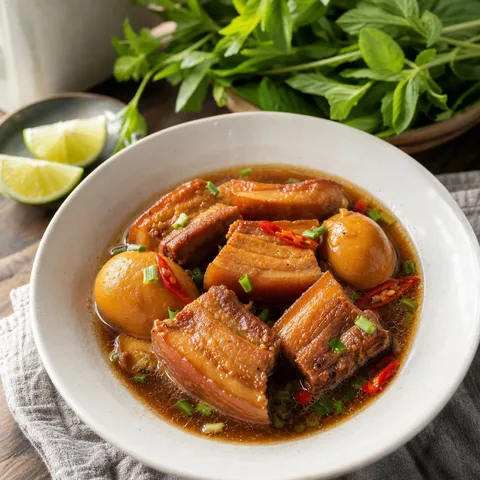 Vietnamese Lens Verified Images are for illustrative purposes only, may be inaccurate, and do not guarantee the presence or absence of specific ingredients.
 Thịt Kho Tàu (Caramelized Pork and Eggs)
Meltingly tender pork belly and hard-boiled eggs braised in a rich, sweet, and savory coconut juice caramel, perfect over steamed rice.
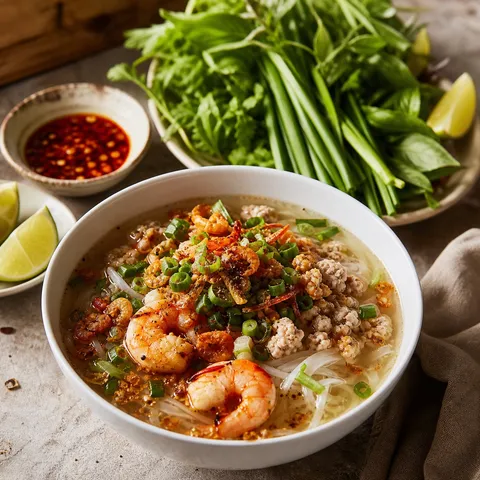 Vietnamese Lens Verified Images are for illustrative purposes only, may be inaccurate, and do not guarantee the presence or absence of specific ingredients.
 Hủ Tiếu (Pork and Seafood Noodle Soup)
A Vietnamese pork-bone broth noodle soup loaded with ground pork, shrimp, and dried shrimp over chewy tapioca noodles, finished with garlic chives and fried garlic.
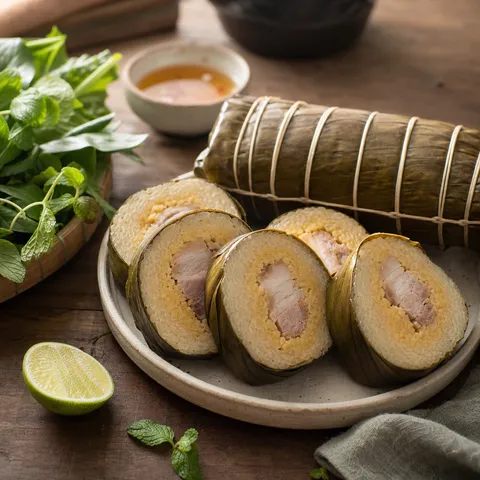 Vietnamese Lens Verified Images are for illustrative purposes only, may be inaccurate, and do not guarantee the presence or absence of specific ingredients.
 Bánh Tét (Cylindrical Sticky Rice Cake)
The Southern equivalent of Bánh Chưng, rolled into a cylinder.