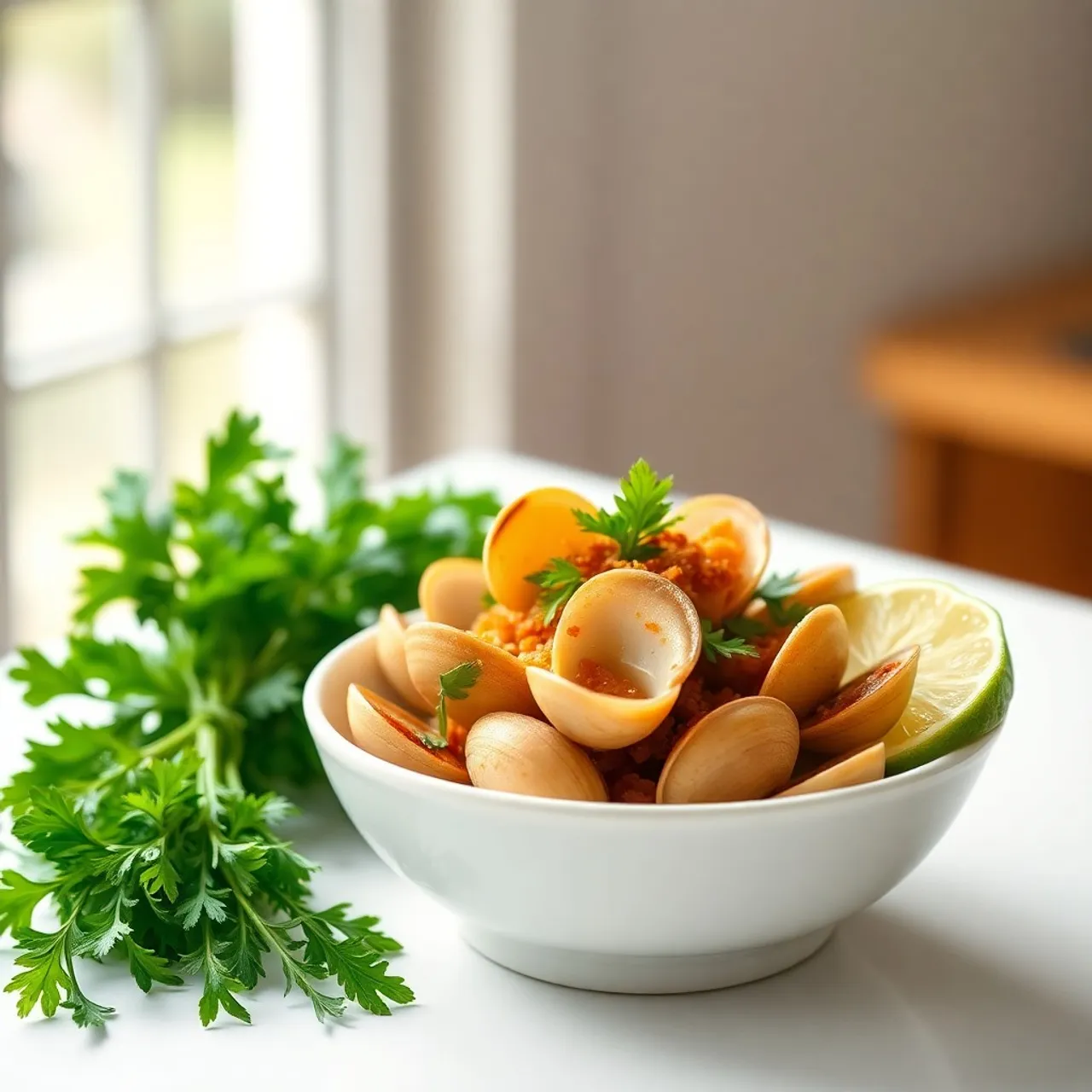
 Vietnamese Images are for illustrative purposes only, may be inaccurate, and do not guarantee the presence or absence of specific ingredients.
 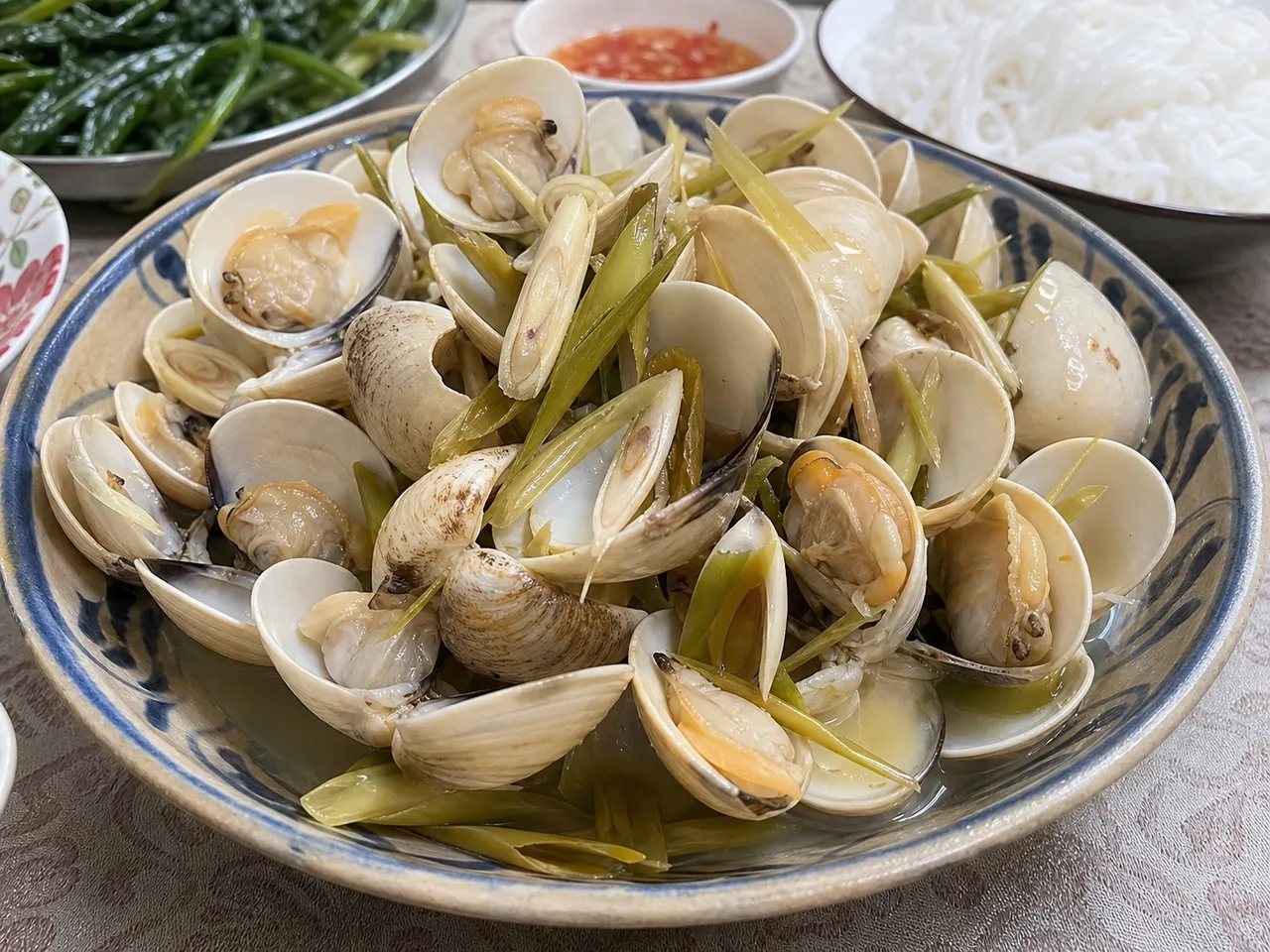 Serving Images are for illustrative purposes only, may be inaccurate, and do not guarantee the presence or absence of specific ingredients.
 Nghêu Hấp Sả (Lemongrass Steamed Clams)
Fresh clams steamed in a fragrant broth of lemongrass and chili.
Contains common allergens
In the app, Listahan checks these against your household automatically.
Good to know
- One-pot
- Ready in under 30 minutes
Matched from this dish's own ingredients and timing. Browse more: one-pot dinners30-minute meals
Instructions
6 steps- 1
Clean Clams: Scrub the clam shells under cold water. Discard any clams that are open and do not close when tapped.
- 2
Prepare Pot: In a wide pot or Dutch oven, lay down a bed of the bruised lemongrass stalks and smashed chilies. Add the sugar, fish sauce, and water (or beer).
- 3
Add Clams: Place the cleaned clams on top of the aromatics.
- 4
Steam: Cover the pot with a tight-fitting lid. Place over medium-high heat.
- 5
Check: Let steam for 5-7 minutes. Shake the pot occasionally. As soon as the clam shells pop open wide, they are done. Do not overcook, or they will become rubbery.
- 6
Serve: Turn off the heat, toss in a generous handful of Thai basil, and give it one final stir. Serve immediately in a large bowl, pouring the fragrant, briny broth over the clams. Discard any clams that did not open.
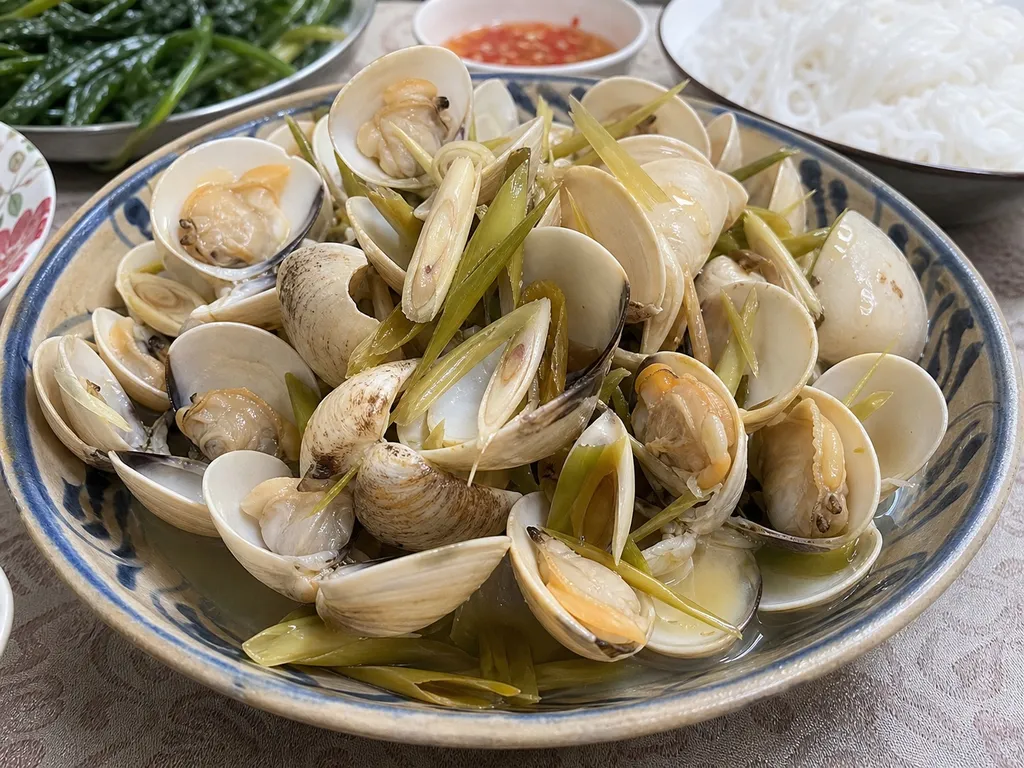 Images are for illustrative purposes only, may be inaccurate, and do not guarantee the presence or absence of specific ingredients.
 Listahan Family Score™
60/100
Works for many families
Score reflects how well this recipe fits a typical busy household. In the app, your Family Score is personalized to your household's allergens, kids, and pantry.
Nutrition
per serving240
Calories
35 g
Protein
20 g
Carbs
2 g
Fat
Estimated per serving. Actual values depend on the brands and portions you use.
Listahan cooking guide
Chef notes & practical guide
Technique notes, ingredient swaps, serve-alongside ideas, storage guidance, and equipment for this recipe.
Cultural context
Steamed clams with lemongrass is a staple of Vietnamese coastal cooking, particularly in the central and southern regions where fresh shellfish arrive daily at the market. The technique of steaming in an aromatic liquid — rather than boiling — keeps the clam meat tender and concentrates the lemongrass-chili perfume inside the shell. In street-food settings the broth left in the pot is often drunk straight from a cup as a bonus seafood tea.
Listahan note
This version uses light beer or water as the steaming liquid, which the lemongrass and chilies infuse completely in just minutes, producing a broth clear enough to drink and fragrant enough to compete with the clam liquor itself.
Technique cues
- Clams should be added to the pot when the liquid is already producing steady steam — placing them in cold liquid means they sit in gradually warming water, which makes them rubbery rather than just barely set.
- Pull the pot off the heat the moment the last clam opens, about 4-6 minutes total; even 2 extra minutes over steam toughens Manila clams noticeably.
- Bruising the lemongrass by smashing it with the flat of a knife blade before cutting releases far more citrus-floral oil than slicing it unbruised — this single step makes the aromatic difference between a flat broth and a fragrant one.
Kitchen flow
- Parallel prep
- Set clams purging in salted water while you bruise and cut the lemongrass and smash the chilies; everything will be ready at the same time after about 20-25 minutes.
- Make-ahead
- The aromatic liquid (lemongrass, chili, fish sauce, sugar, water or beer) can be combined in the pot up to 2 hours ahead; add clams only when ready to steam.
- Leftover move
- Reserve any leftover broth and use it as the base for a rice noodle soup the next day with a handful of rice vermicelli and fresh herbs; it already has deep shellfish flavor.
- Cleanup rhythm
- The pot is the only major item to clean; discard the spent lemongrass pieces with the shells and rinse the pot while still warm.
Ingredient brief
Role, handling, and swap guidance for each key ingredient.
2 lbs live Manila clams or littleneck clams
main protein and flavor source
Purpose: Manila clams are sweet and small enough to open quickly and evenly in steam; their liquor mingles with the lemongrass liquid to build the soup-broth that is part of the dish.
Handling: Soak in cold salted water for 20-30 minutes to purge sand, then scrub under running water and discard any open clams that do not close when tapped.
Adaptation: Small cockles or mussels steam even faster; adjust total time to 3-4 minutes for mussels.
4 stalks lemongrass, bruised and cut into 2-inch lengths
primary aromatic
Purpose: Lemongrass provides the dish's defining citrus-floral fragrance, which steam carries directly into the open shells as the clams cook.
Handling: Peel away the tough outer layers to the pale core, smash each stalk firmly with the side of a knife, then cut into pieces; this maximizes oil release.
Adaptation: Lemon zest strips plus a few kaffir lime leaves approximate the aromatic profile if fresh lemongrass is unavailable.
3 Thai bird's eye chilies, smashed
heat
Purpose: Smashed (not minced) chilies release heat gently into the steaming liquid, providing warmth in the broth without overwhelming the clean shellfish flavor.
Handling: Smash whole with the flat of a knife so they split and bruise but stay in identifiable pieces that can be left out by diners who prefer less heat.
Adaptation: One serrano chili, halved, gives moderate heat that is more manageable for chili-sensitive diners.
1/2 cup water or light beer
steaming medium
Purpose: The liquid creates the steam that cooks the clams and becomes the fragrant broth the dish is served with; beer adds a faint malt sweetness that complements the shellfish.
Handling: Pour directly into the pot with the aromatics before heating; the liquid should reach only the bottom of the pot, not touch the clam layer.
Adaptation: Dry white wine provides acidity that makes the broth more wine-forward; coconut water gives a slightly sweet, tropical direction.
2 tbsp sugar
balance
Purpose: A small amount of sugar rounds the salinity of the fish sauce and balances the chili heat in the broth.
Handling: Dissolve in the steaming liquid before heating so it does not pool at the bottom.
Adaptation: Palm sugar adds a slightly caramel note; honey can be used but adds a floral element that competes with the lemongrass.
Technique notes
- A wide, shallow pot or large wok with a lid allows clams to spread in a single layer, which means they all open at the same time rather than the bottom layer overcooking while the top layer is still closed.
- Check at the 4-minute mark by lifting the lid briefly — any clams still shut after 7 minutes total should be discarded, as they were likely dead before cooking.
- Serve with toasted baguette or crusty bread torn into pieces to soak up the broth; in Vietnam, this role is filled by a thick grilled baguette (banh mi nuong) placed directly on the serving plate.
Ingredient swaps
- Fish-sauce-free direction
- Replace fish sauce with soy sauce plus a pinch of salt for a similar seasoning profile that is suitable for pescatarians who avoid fermented fish products.
- Alcohol-free option
- Use water with a squeeze of lime and a pinch of salt in place of beer; the broth will be lighter in body but the lemongrass aroma compensates.
- Low-heat family version
- Use only one bird's eye chili or replace with a small sliced red Fresno for color and mild warmth, keeping the dish accessible to children.
Serve alongside
- warm Vietnamese baguette for dipping in the broth
- simple cucumber salad with rice vinegar and sugar
- steamed jasmine rice to soak up the remaining broth
- do chua (pickled daikon and carrot) for brightness
- cold light lager such as Tiger or Saigon
- sparkling water with lime wedge
- dry off-dry Riesling, which mirrors the lemongrass citrus note
Serving suggestions only — check pairings for your household's allergens.
Storage & reheating
- Steamed clams are best eaten within 30 minutes of cooking; shelled meat can be refrigerated in the broth for up to 1 day.
- Reheat gently in a small saucepan with a splash of water over medium-low heat just until warm; do not bring to a boil.
- Do not freeze cooked clams — the texture becomes very tough after thawing.
Equipment
- wide pot or large wok with a tight-fitting lid
- colander for purging and draining clams
- tongs for transferring clams to serving bowl
- shallow serving bowl deep enough to hold the broth
Make this household-aware
Listahan Pro checks this recipe against your household's allergens, finds pantry-aware swaps, builds the shopping list, and helps you plan the week around it.
Plan it in Listahan
Add Nghêu Hấp Sả (Lemongrass Steamed Clams) to your week, check it against your household's allergens, and build the shopping list automatically.
More Vietnamese recipes
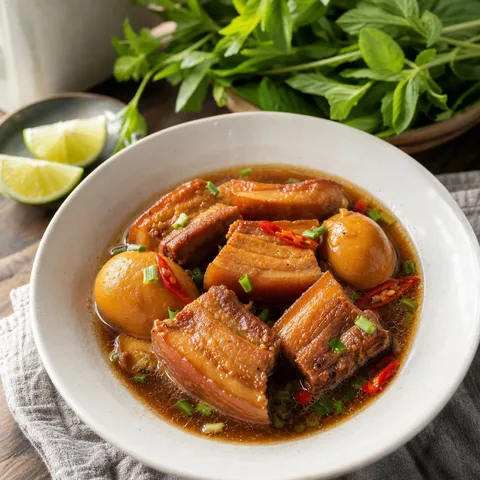 Vietnamese Lens Verified Images are for illustrative purposes only, may be inaccurate, and do not guarantee the presence or absence of specific ingredients.
 Thịt Kho Tàu (Caramelized Pork and Eggs)
Meltingly tender pork belly and hard-boiled eggs braised in a rich, sweet, and savory coconut juice caramel, perfect over steamed rice.
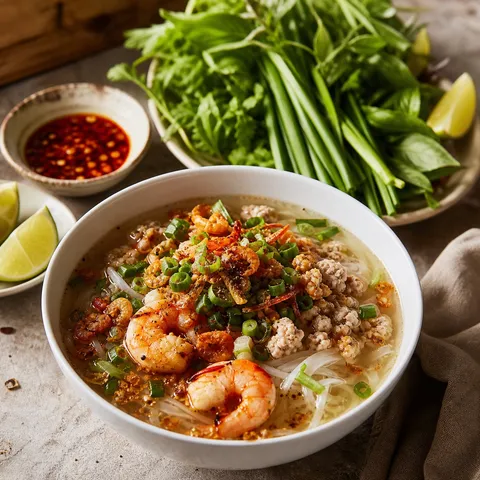 Vietnamese Lens Verified Images are for illustrative purposes only, may be inaccurate, and do not guarantee the presence or absence of specific ingredients.
 Hủ Tiếu (Pork and Seafood Noodle Soup)
A Vietnamese pork-bone broth noodle soup loaded with ground pork, shrimp, and dried shrimp over chewy tapioca noodles, finished with garlic chives and fried garlic.
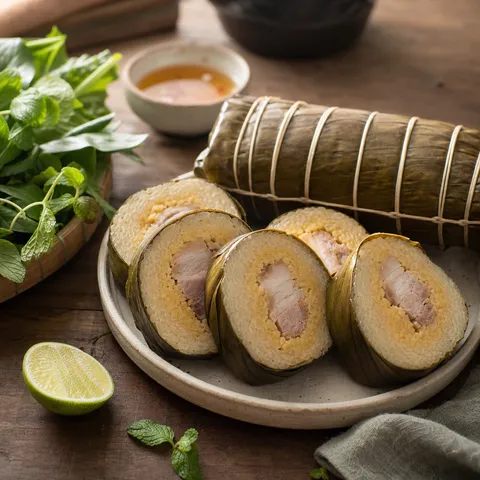 Vietnamese Lens Verified Images are for illustrative purposes only, may be inaccurate, and do not guarantee the presence or absence of specific ingredients.
 Bánh Tét (Cylindrical Sticky Rice Cake)
The Southern equivalent of Bánh Chưng, rolled into a cylinder.