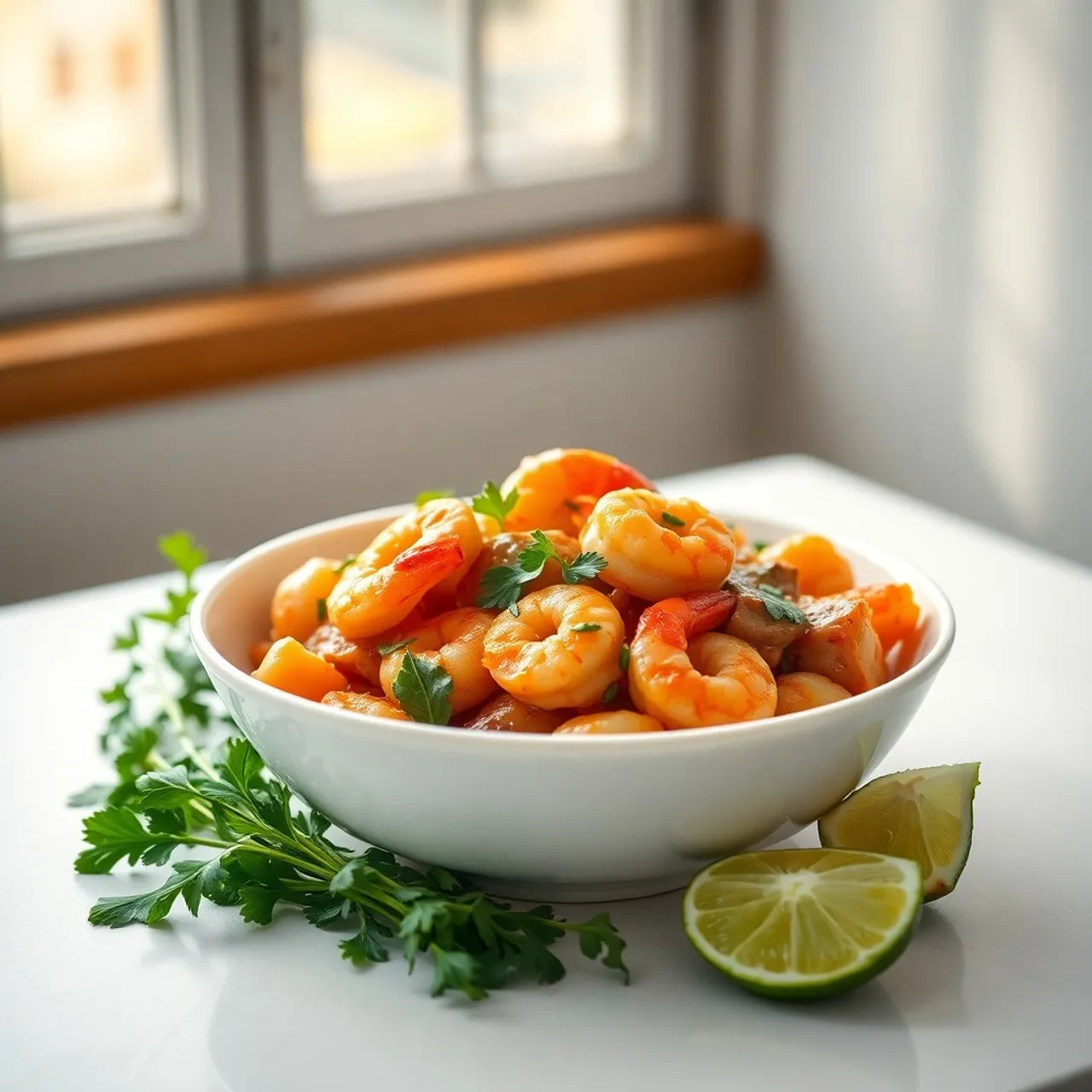
 Vietnamese Images are for illustrative purposes only, may be inaccurate, and do not guarantee the presence or absence of specific ingredients.
 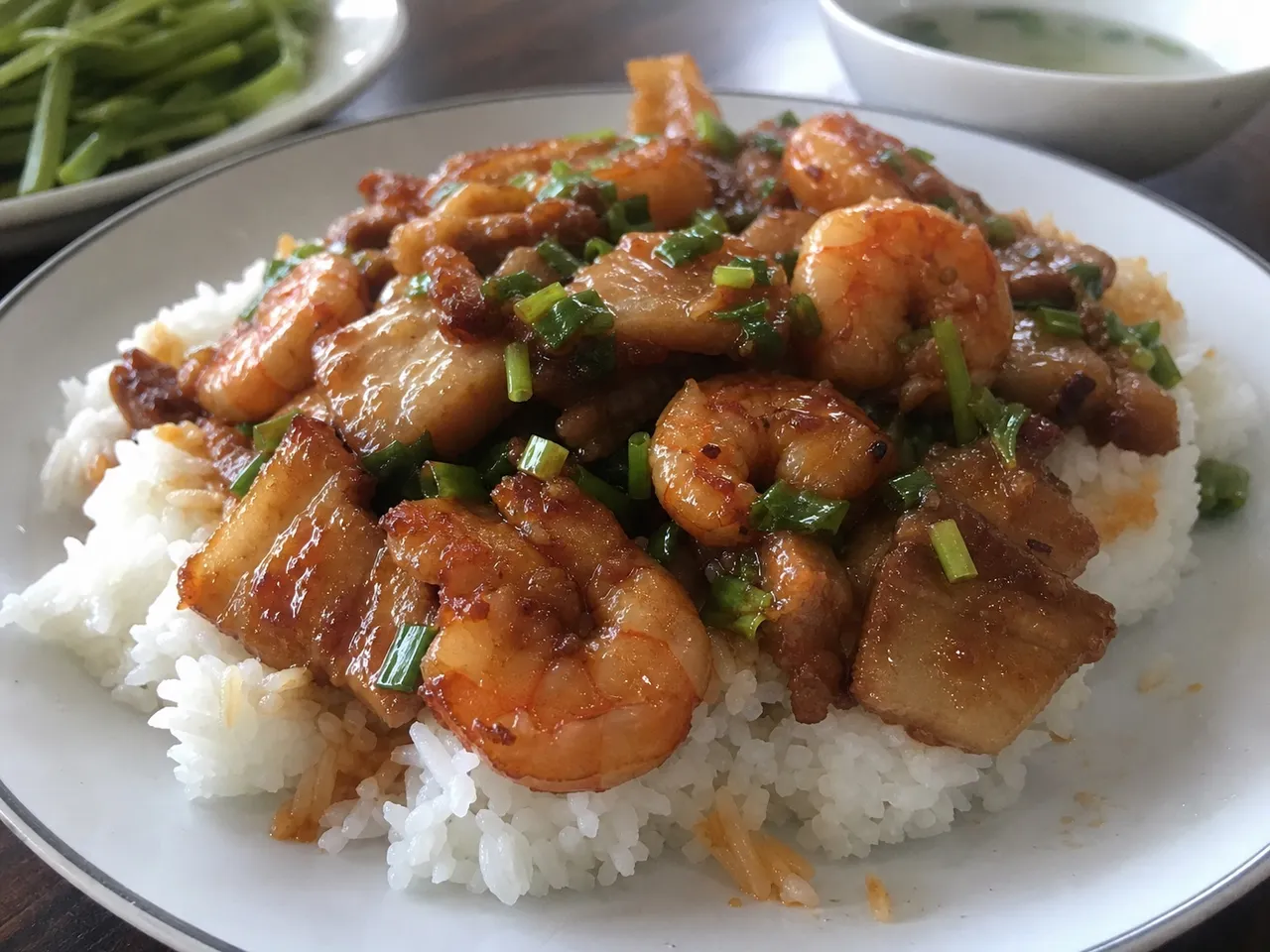 Serving Images are for illustrative purposes only, may be inaccurate, and do not guarantee the presence or absence of specific ingredients.
 Tôm Rang Thịt Ba Chỉ (Shrimp and Pork Belly Stir-fry)
A savory, slightly sweet caramelized dish of shrimp and pork belly.
Contains common allergens
In the app, Listahan checks these against your household automatically.
Good to know
- Ready in under 30 minutes
Matched from this dish's own ingredients and timing. Browse more: 30-minute meals
Instructions
6 steps- 1
Prepare Shrimp: Trim the sharp points off the shrimp heads and legs, but leave the shells on for maximum flavor and crunch.
- 2
Render Pork Fat: Heat a wok or pan over medium heat. Add the pork belly strips without any oil. Cook slowly until the fat renders out and the edges of the pork become golden and crispy.
- 3
Caramelize: Push the pork to the side. Add sugar to the rendered fat in the center of the pan. Stir until the sugar melts and turns a dark caramel color.
- 4
Stir-fry: Add the minced garlic and shallot, stirring quickly. Immediately add the shrimp. Increase heat to high and stir-fry until the shrimp shells turn bright orange.
- 5
Season and Glaze: Pour in the fish sauce and black pepper. Toss everything together vigorously. Let the liquid bubble and reduce until it forms a thick, sticky, savory-sweet glaze that coats the shrimp and pork.
- 6
Finish: Toss in the scallion pieces, cook for 30 seconds until wilted, and remove from heat. Serve immediately with a large bowl of steamed rice.
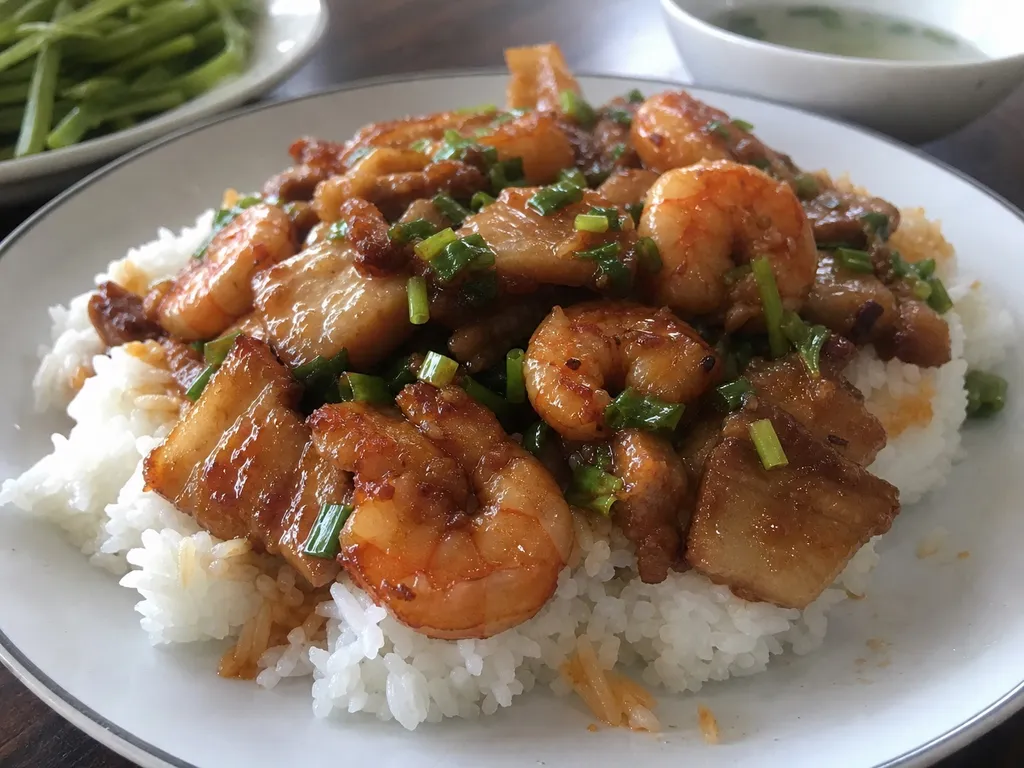 Images are for illustrative purposes only, may be inaccurate, and do not guarantee the presence or absence of specific ingredients.
 Listahan Family Score™
63/100
Works for many families
Score reflects how well this recipe fits a typical busy household. In the app, your Family Score is personalized to your household's allergens, kids, and pantry.
Nutrition
per serving305
Calories
40 g
Protein
11 g
Carbs
11 g
Fat
Estimated per serving. Actual values depend on the brands and portions you use.
Listahan cooking guide
Chef notes & practical guide
Technique notes, ingredient swaps, serve-alongside ideas, storage guidance, and equipment for this recipe.
Cultural context
Tom rang thit ba chi is a southern Vietnamese everyday home dish — the kind of recipe that does not appear in restaurant menus but is made weekly in millions of Vietnamese households across the country and the diaspora. It belongs to a category called 'mon an com' (rice-accompanying dishes), meaning it is intentionally salty and savory to be eaten in small amounts over plain rice, with the rice itself absorbing the caramelized, glossy sauce. The combination of pork belly and shrimp together in one pan is a distinctly Vietnamese pairing that appears in other forms across the cuisine, from clay-pot dishes to braised preparations.
Listahan note
This version relies on caramelizing the sugar directly in the pan before adding any protein, building a bitter-sweet fond that coats both the shrimp and pork in a glossy, deeply flavored sauce rather than simply seasoning them on top.
Technique cues
- Cook the pork belly strips first and render some of their fat before adding the shrimp — the rendered pork fat becomes the cooking medium for the shrimp, giving them a savory pork-enriched flavor that neutral oil cannot replicate.
- The sugar in this dish is not background sweetness; it is caramelized in the pan to the point of slight bitterness before the protein is added, producing the characteristic deep brown glaze (Vietnamese caramel) that is a foundational flavor-building technique across Vietnamese braised and stir-fried dishes.
- Shrimp cook extremely fast over high heat — they need only 1-2 minutes per side; add them after the pork is mostly done and pull the whole pan off the heat as soon as the shrimp turn pink and begin to curl, or they will overcook and become rubbery in the residual heat.
Kitchen flow
- Parallel prep
- Measure and set out the sugar, fish sauce, garlic, and shallot before starting — this dish moves fast once the pan is hot and there is no time to search for ingredients mid-cook.
- Make-ahead
- The pork belly can be sliced and marinated in fish sauce and black pepper up to 1 day ahead; do not marinate the shrimp ahead of time, as fish sauce begins to cure them.
- Leftover move
- Leftovers reheat well in a pan over low heat with a splash of water to loosen the thickened sauce; serve over fresh rice or tuck into banh mi with pickled daikon.
- Cleanup rhythm
- Deglaze the caramel pan immediately with a tablespoon of warm water before putting it down; caramelized sugar hardens within minutes and becomes extremely difficult to scrub off cold.
Ingredient brief
Role, handling, and swap guidance for each key ingredient.
1/2 lb pork belly, cut into thin bite-sized strips
main protein and fat source
Purpose: Pork belly provides both lean protein and rich fat that renders into the pan and flavors everything cooked alongside it.
Handling: Freeze the pork belly for 20 minutes before slicing to firm it up for cleaner, thinner cuts.
Adaptation: Pork shoulder slices work but render less fat and produce a leaner, less silky sauce.
1/2 lb medium shrimp, head-on or tail-on preferred
secondary protein
Purpose: Shrimp add sweetness and a contrasting delicate texture to the unctuous pork belly, and the heads contribute shrimp oil to the sauce when pressed during cooking.
Handling: If using head-on shrimp, press the heads against the pan with a spatula during cooking to release the orange shrimp oil.
Adaptation: Peeled and deveined shrimp work fine for ease; increase fish sauce by half a teaspoon to compensate for the lost head-oil flavor.
2 tbsp sugar
caramel base for sauce
Purpose: Caramelized sugar forms the glossy, bitter-sweet coating that is the defining flavor of this dish and many Vietnamese braised preparations.
Handling: Add the sugar to the dry pan over medium heat and resist stirring until the edges begin to melt, then swirl the pan to even the caramel.
Adaptation: Palm sugar produces a deeper, more complex caramel; dark brown sugar adds a slight molasses note.
2 tbsp fish sauce
seasoning and umami
Purpose: Fish sauce provides the salt and deep savory umami that balances the caramel sweetness and unifies the pork and shrimp flavors.
Handling: Add fish sauce after the protein is seared; adding it to raw caramel causes it to splatter vigorously.
Adaptation: Coconut aminos plus a pinch of salt provides a soy-free, lower-sodium approximation.
Technique notes
- Use the highest heat your burner can produce for this stir-fry; insufficient heat causes the ingredients to steam and braise in their own liquid instead of searing, producing a watery rather than glossy result.
- The scallion pieces go in at the very end, off the heat — they are not meant to wilt fully but to barely warm through, retaining their slight crunch and fresh green color as a contrast to the deeply caramelized protein.
- Taste the finished dish with plain rice before adjusting salt; this is a mon an com (over-rice dish) calibrated to taste salty and intense on its own but perfectly seasoned when eaten a few pieces at a time over a bowl of plain rice.
Ingredient swaps
- Gluten-free direction
- Fish sauce is naturally gluten-free; this dish requires no additional soy sauce or any wheat-containing ingredient.
- Shellfish-free option
- Replace the shrimp with an equal weight of firm tofu cubes, pressed dry and pan-fried separately until golden, then added at the final stage.
- Lower-fat direction
- Swap pork belly for pork loin thinly sliced; add 1 teaspoon of neutral oil to the pan since the loin renders almost no fat.
Serve alongside
- steamed jasmine rice — essential as the base for this over-rice dish
- stir-fried water spinach with garlic
- simple miso-style Vietnamese canh (clear broth soup) to balance the rich main
- chilled Vietnamese iced tea (tra da)
- cold Saigon or 333 beer
Serving suggestions only — check pairings for your household's allergens.
Storage & reheating
- Refrigerate in an airtight container for up to 2 days; the sauce thickens further when cold.
- Reheat in a pan over low heat with 1-2 tablespoons of water stirred in to restore the sauce's glossy consistency.
- Not recommended for freezing — shrimp becomes rubbery after freezing and thawing.
Equipment
- wok or large heavy skillet for high-heat cooking
- wok spatula or wooden spoon
- small bowl for pre-measured sauces and seasonings
Make this household-aware
Listahan Pro checks this recipe against your household's allergens, finds pantry-aware swaps, builds the shopping list, and helps you plan the week around it.
Plan it in Listahan
Add Tôm Rang Thịt Ba Chỉ (Shrimp and Pork Belly Stir-fry) to your week, check it against your household's allergens, and build the shopping list automatically.
More Vietnamese recipes
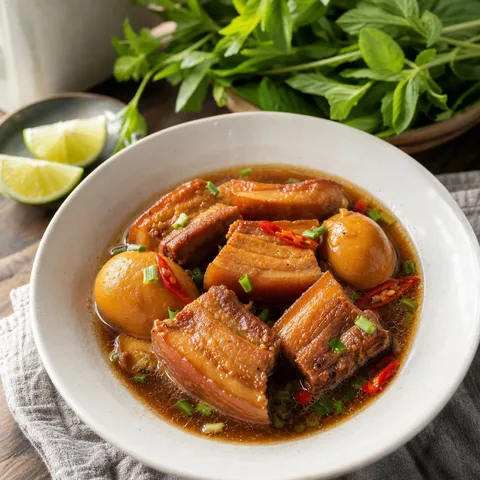 Vietnamese Lens Verified Images are for illustrative purposes only, may be inaccurate, and do not guarantee the presence or absence of specific ingredients.
 Thịt Kho Tàu (Caramelized Pork and Eggs)
Meltingly tender pork belly and hard-boiled eggs braised in a rich, sweet, and savory coconut juice caramel, perfect over steamed rice.
 Vietnamese Lens Verified Images are for illustrative purposes only, may be inaccurate, and do not guarantee the presence or absence of specific ingredients.
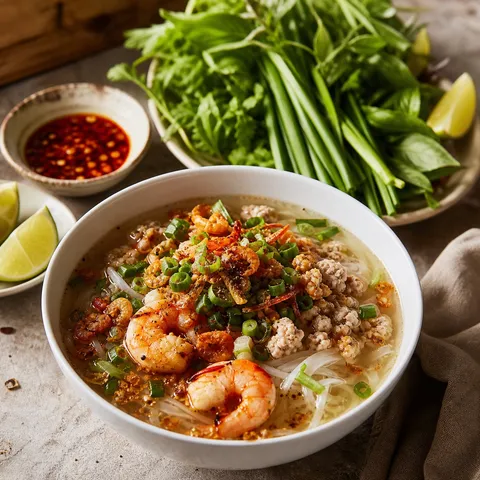
 Hủ Tiếu (Pork and Seafood Noodle Soup)
A Vietnamese pork-bone broth noodle soup loaded with ground pork, shrimp, and dried shrimp over chewy tapioca noodles, finished with garlic chives and fried garlic.
 Vietnamese Lens Verified Images are for illustrative purposes only, may be inaccurate, and do not guarantee the presence or absence of specific ingredients.
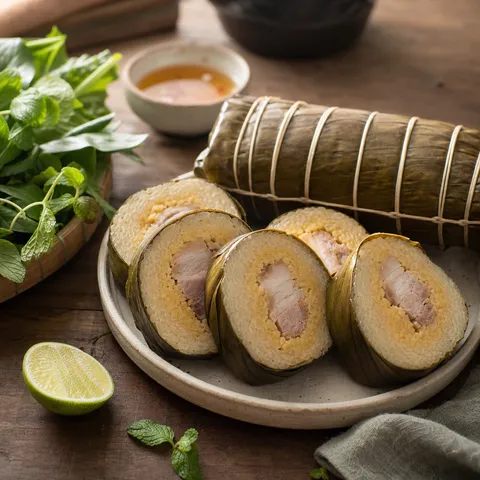
 Bánh Tét (Cylindrical Sticky Rice Cake)
The Southern equivalent of Bánh Chưng, rolled into a cylinder.