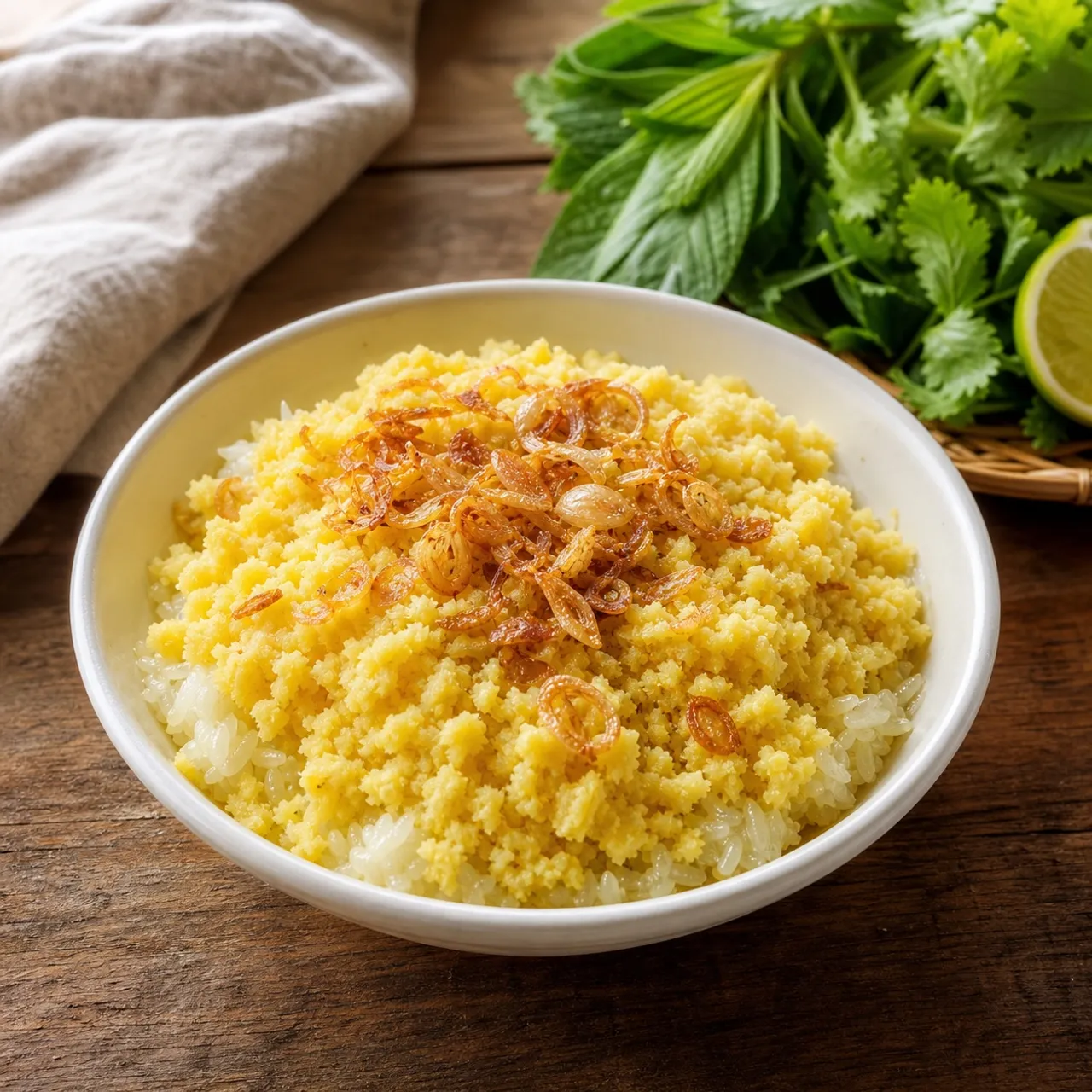
 Vietnamese Images are for illustrative purposes only, may be inaccurate, and do not guarantee the presence or absence of specific ingredients.
 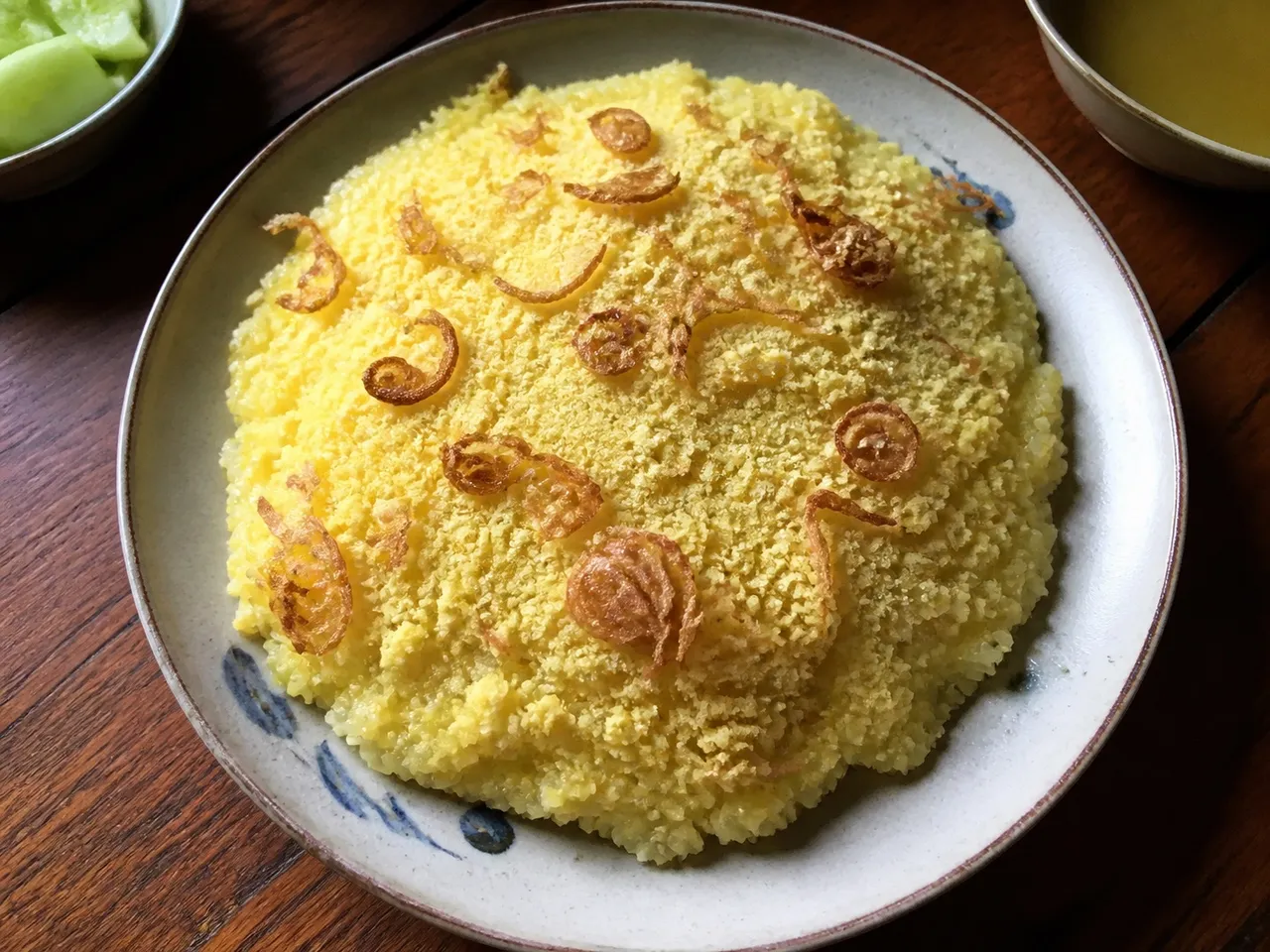 Serving Images are for illustrative purposes only, may be inaccurate, and do not guarantee the presence or absence of specific ingredients.
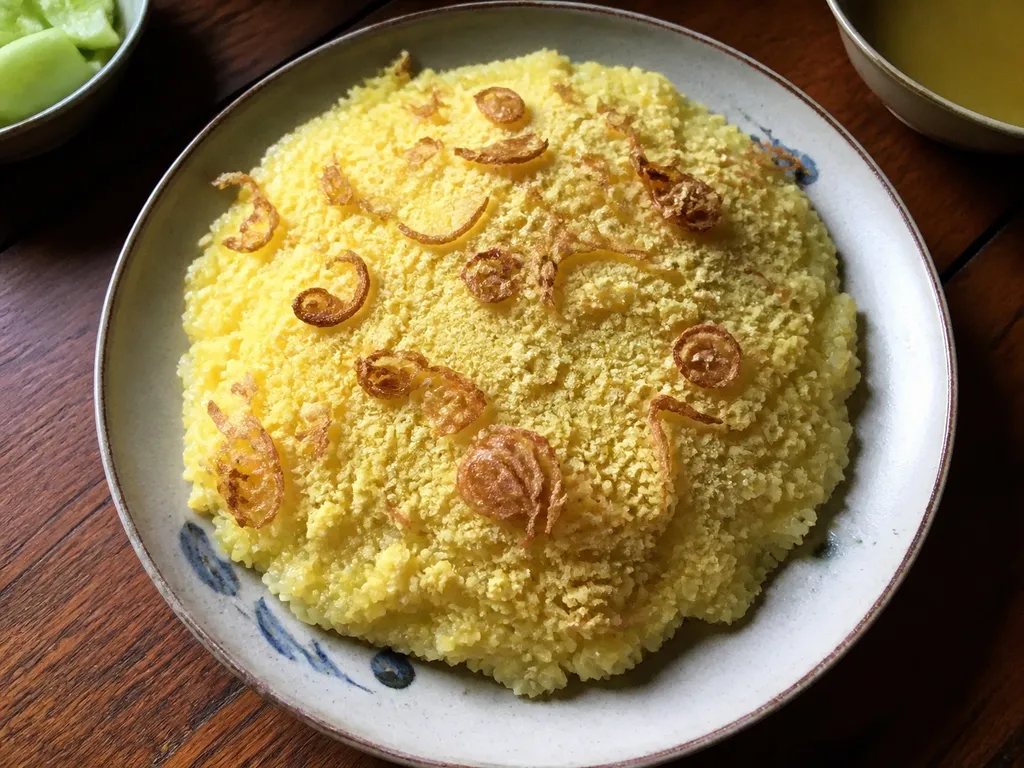
 Xôi Xéo (Mung Bean Sticky Rice)
A classic Hanoi street breakfast of golden turmeric sticky rice crowned with crumbled mung bean paste and crispy fried shallots.
No common allergens detected
Based on this recipe's ingredient list. Always verify with your own brands and labels.
Good to know
- Crispy
Matched from this dish's own ingredients and timing. Browse more: crispy recipes
Instructions
6 steps- 1
Soak the glutinous rice in water with the turmeric and 1/2 teaspoon salt overnight, and separately soak the mung beans for at least 4 hours, then drain both.
- 2
Steam the mung beans in a lined steamer basket over boiling water for 20 minutes until very soft, then pound or mash them with the remaining 1/2 teaspoon salt into a smooth paste while still warm.
- 3
Form the mung bean paste into a tight ball and let it firm up, which makes it easy to shave into thin crumbles later.
- 4
Steam the drained turmeric rice in the same steamer for 25 to 30 minutes, drizzling with the shallot oil halfway through, until each grain is glossy and tender.
- 5
Mound the warm yellow sticky rice into bowls, then use a knife to shave the mung bean ball into delicate crumbles over the top.
- 6
Finish with a generous shower of crispy fried shallots and serve warm as a portable, satisfying breakfast.
 Images are for illustrative purposes only, may be inaccurate, and do not guarantee the presence or absence of specific ingredients.
 Listahan Family Score™
74/100
Good fit for most families
Score reflects how well this recipe fits a typical busy household. In the app, your Family Score is personalized to your household's allergens, kids, and pantry.
Nutrition
per serving435
Calories
9 g
Protein
81 g
Carbs
8 g
Fat
Estimated per serving. Actual values depend on the brands and portions you use.
Listahan cooking guide
Chef notes & practical guide
Technique notes, ingredient swaps, serve-alongside ideas, storage guidance, and equipment for this recipe.
Cultural context
Xôi (sticky rice) dishes occupy a central role in Vietnamese food culture, functioning simultaneously as street breakfast, festival offering, and ceremonial food at weddings and ancestor commemorations. Xôi xéo is the northern Vietnamese version — xéo refers to the technique of steaming split mung beans until tender and pressing them into the sticky rice — and it appears at both everyday Hanoi breakfast stalls and elaborate Tết New Year spreads. The yellow color from turmeric and the aromatic shallot oil that coats each grain made it historically a dish of celebration rather than plain sustenance, distinguishing it from the simpler plain xôi trắng.
Listahan note
This version focuses on the two techniques that make xoi xeo work: steaming the glutinous rice to individual, separate grains rather than a gummy mass, and making genuinely fragrant shallot oil from scratch so its aroma permeates the rice.
Technique cues
- Glutinous rice must be soaked for a minimum of 4 hours (overnight is ideal) before steaming — unsoaked or under-soaked grains will steam unevenly, leaving some chalky in the center while others become mushy on the exterior.
- The split mung beans and the rice cook separately and are combined only after both are fully done; pressing hot mung beans directly into the hot rice while both are fresh from the steamer produces a cohesion that does not work if either component has cooled.
- Shallot oil is the flavor backbone of the dish and cannot be approximated with plain oil — fry thin shallot slices in oil over medium-low heat, going slowly until deep golden (not brown), then use both the fried shallots and the infused oil to dress the rice.
Kitchen flow
- Parallel prep
- Start soaking both the glutinous rice and mung beans the night before; day-of, soak is done and both can steam simultaneously in separate layers if the steamer is large enough.
- Make-ahead
- Xoi xeo is actually better made an hour or two before serving and kept warm wrapped in a clean kitchen towel, which allows the flavors to meld and the shallot oil to fully penetrate the rice.
- Leftover move
- Cold xoi xeo firms up significantly; pan-fry flat portions in a little oil over medium heat until a crispy crust forms on the bottom, then serve with fried egg and soy sauce for a savory breakfast.
- Cleanup rhythm
- The only real mess is the shallot-frying oil; use a small, deep saucepan to minimize splatter and line the stovetop around it with a paper towel before starting.
Ingredient brief
Role, handling, and swap guidance for each key ingredient.
glutinous (sweet) rice
sticky, chewy base
Purpose: Glutinous rice's high amylopectin content is what creates the characteristic sticky, slightly translucent texture that differentiates xôi from regular steamed rice.
Handling: Soak in cold water for at least 4 hours, drain thoroughly, and steam in a traditional bamboo steamer or layered in cheesecloth in a colander over boiling water for 20-25 minutes.
Adaptation: There is no true substitute — long-grain rice will not produce the required sticky texture. If glutinous rice is unavailable, the dish simply cannot be made as designed.
split dried mung beans
creamy yellow interior layer
Purpose: Cooked mung beans pressed into the rice add a creamy, slightly earthy richness and a second layer of texture that lifts xôi xéo above plain sticky rice.
Handling: Soak for 2 hours, drain, then steam alongside or separately until completely soft and mashable; season lightly with salt before mixing into the rice.
Adaptation: Split yellow peas can substitute structurally but deliver a less authentic flavor; dried chickpea flour (besan) mixed with water and cooked into a thick paste is a very different but workable fill.
ground turmeric
color and mild earthy warmth
Purpose: Turmeric gives xôi xéo its signature yellow-gold color, which is as much a visual cue of celebration and abundance as it is a flavor element.
Handling: Add to the soaking water or sprinkle over the rice before steaming so it distributes through the grains during cooking rather than streaking the surface.
Adaptation: Fresh turmeric grated fine gives a more vivid orange-yellow and slightly more pronounced flavor; use 1 teaspoon fresh per 1/4 teaspoon ground.
fried shallots
aromatic topping and textural garnish
Purpose: Crispy fried shallots provide the sweetness, crunch, and caramelized onion aroma that define xôi xéo's finishing character and differentiate it from plainer sticky rice preparations.
Handling: Slice shallots thin and uniform (a mandoline helps) for even frying; fry in the oil used for the dish so the infused oil serves double duty as the dressing.
Adaptation: Store-bought fried shallots (available in bags at Asian grocery stores) are a convenient substitute; they lack some freshness but provide the right crunch and flavor.
rendered shallot oil or vegetable oil
flavor vehicle and moisture
Purpose: The shallot-infused oil tossed with the hot rice provides the fat that carries the turmeric's flavor compounds and coats each grain for the characteristic glossy, non-sticky surface of well-made xôi.
Handling: Use the still-warm oil left from frying the shallots so both elements are used efficiently from the same pan; toss with the hot rice immediately.
Adaptation: Coconut oil adds a subtle sweetness that works well in this application; sesame oil is too dominant and should not be used.
Technique notes
- Season the rice immediately after steaming while it is still scorching hot — salt, turmeric, and the shallot oil penetrate glutinous rice much more effectively when it is freshly steamed and the starch is still fully pliable.
- The mung bean layer should be pressed firmly into the top of the hot rice using the back of a spoon or a flat spatula, not just scattered on top — this compresses the bean layer and creates the textural contrast between creamy bean and chewy rice that the dish is named for.
- Do not cover tightly while still hot or condensation will drip back onto the surface and make the shallots soggy — lay a clean kitchen towel under the lid or keep the cover slightly ajar for the first 10 minutes before sealing for transport.
Ingredient swaps
- Vegan direction
- The dish is naturally vegan as written; use vegetable oil rather than lard or chicken fat if those are substituted in traditional versions.
- Lower-fat option
- Reduce the shallot oil to 1 tablespoon and steam the shallots into the rice rather than frying them — the texture changes (no crunch) but the flavor profile is preserved.
- Allium-free direction
- Omit shallots entirely and dress the rice with coconut oil, toasted sesame seeds, and extra turmeric for a dish that is onion- and garlic-free while keeping its celebratory golden character.
Serve alongside
- Vietnamese pork floss (ruoc) sprinkled over the top for a savory protein addition
- cha lua (Vietnamese steamed pork roll), sliced thin
- simple sliced cucumber with salt and white pepper
- hot lotus tea (tra sen), traditional at northern Vietnamese breakfast tables
- fresh soy milk, sweetened lightly, as is common alongside xoi at Hanoi street stalls
- Vietnamese drip coffee with sweetened condensed milk
Serving suggestions only — check pairings for your household's allergens.
Storage & reheating
- Xoi xeo keeps at room temperature wrapped in a clean towel for up to 4 hours; refrigerating causes it to harden and lose its characteristic texture.
- To restore refrigerated xoi, re-steam in a bamboo steamer for 5-7 minutes until soft and pliable again; do not microwave without covering with a damp paper towel.
- Freeze in individual portions wrapped tightly in plastic; thaw at room temperature and re-steam to serve — it restores reasonably well compared to most cooked rice dishes.
Equipment
- bamboo steamer basket or metal steamer insert lined with cheesecloth
- small deep saucepan for frying shallots
- mandoline or sharp knife for thin, even shallot slices
- wide mixing bowl for tossing the hot rice with oil and seasoning
Make this household-aware
Listahan Pro checks this recipe against your household's allergens, finds pantry-aware swaps, builds the shopping list, and helps you plan the week around it.
Plan it in Listahan
Add Xôi Xéo (Mung Bean Sticky Rice) to your week, check it against your household's allergens, and build the shopping list automatically.
More Vietnamese recipes
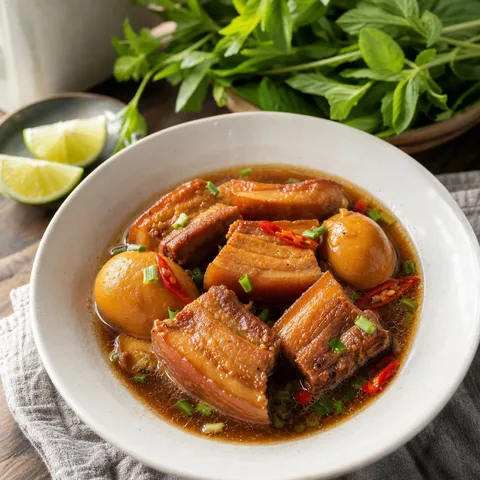 Vietnamese Lens Verified Images are for illustrative purposes only, may be inaccurate, and do not guarantee the presence or absence of specific ingredients.
 Thịt Kho Tàu (Caramelized Pork and Eggs)
Meltingly tender pork belly and hard-boiled eggs braised in a rich, sweet, and savory coconut juice caramel, perfect over steamed rice.
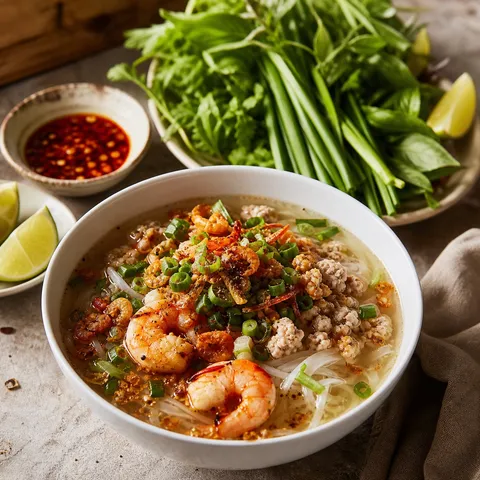 Vietnamese Lens Verified Images are for illustrative purposes only, may be inaccurate, and do not guarantee the presence or absence of specific ingredients.
 Hủ Tiếu (Pork and Seafood Noodle Soup)
A Vietnamese pork-bone broth noodle soup loaded with ground pork, shrimp, and dried shrimp over chewy tapioca noodles, finished with garlic chives and fried garlic.
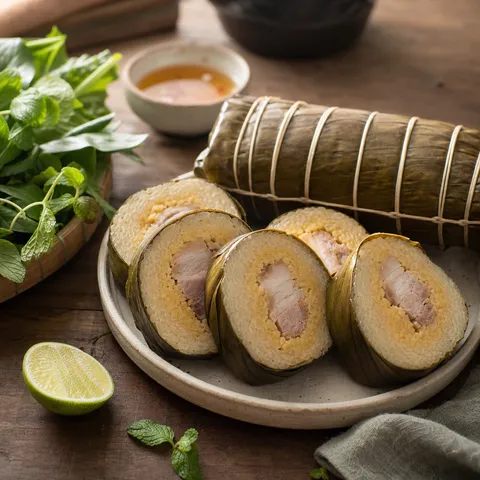 Vietnamese Lens Verified Images are for illustrative purposes only, may be inaccurate, and do not guarantee the presence or absence of specific ingredients.
 Bánh Tét (Cylindrical Sticky Rice Cake)
The Southern equivalent of Bánh Chưng, rolled into a cylinder.