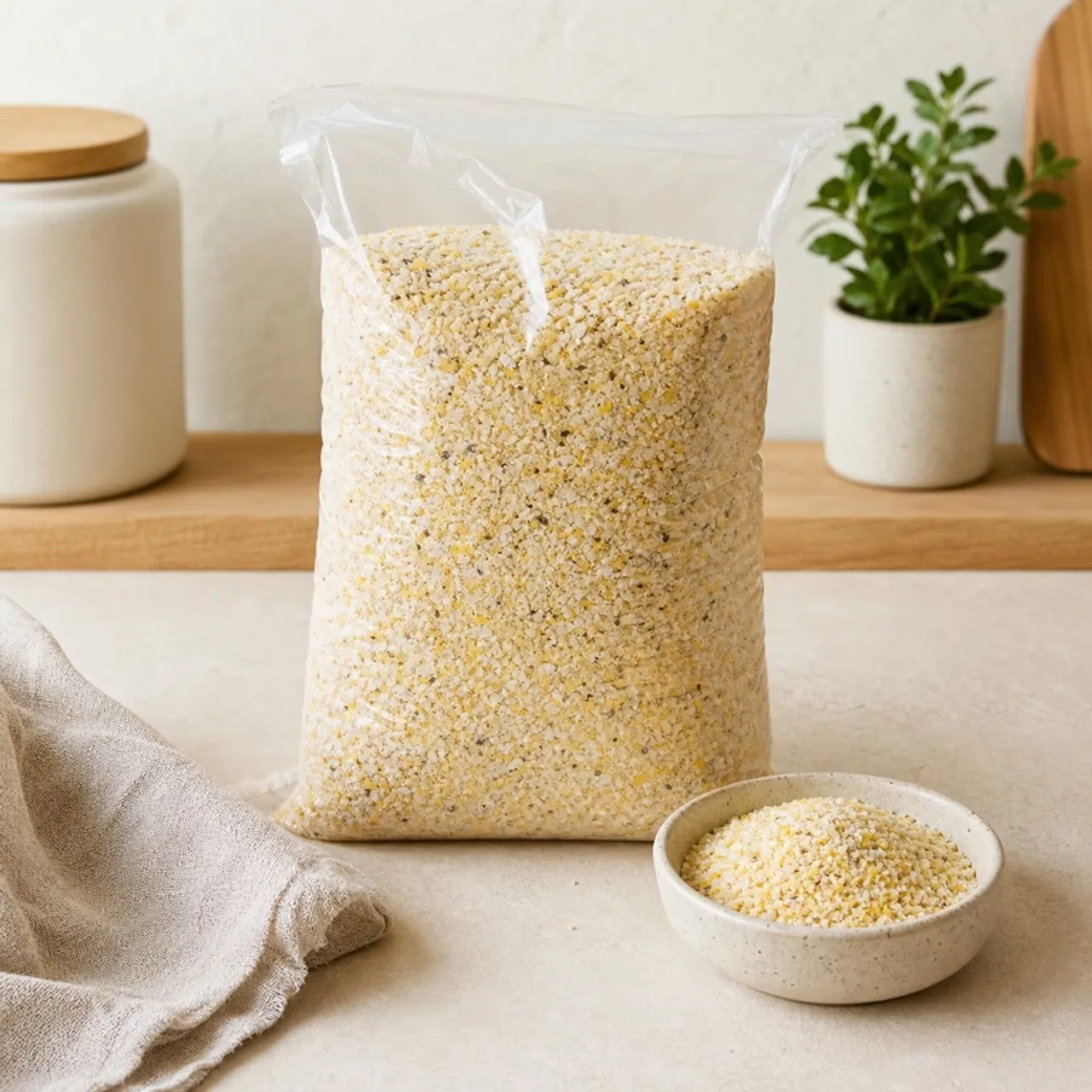
 Food Lens Images are for illustrative purposes only, may be inaccurate, and do not guarantee the presence or absence of specific ingredients.
 Food Lens · Recipe ingredients
Stone Ground Grits
Sweet, earthy, and richly corn-flavoured with a creamy, thick texture when cooked; the germ adds a faint nuttiness and a depth that quick-cook grits simply do not have.
Lens VerifiedStone-ground grits are dried corn kernels ground between millstones at low speed, leaving the germ and some bran intact and producing a coarser, more flavourful meal than the quick-cooking or instant grits found in most supermarkets. They cook slowly — 45 minutes to an hour — absorbing liquid gradually into a creamy, porridge-like texture that is the backbone of Southern American breakfast and soul food cooking. The stone-grinding process preserves more of the corn's natural oils and flavour, resulting in a noticeably more complex, sweeter, more corn-forward taste.
Where it comes from
Ground between stones the way millers have worked for centuries, stone-ground grits carry the patience of slow cooking and the deep corn flavour that shortcuts never replicate — the South's answer to polenta, with a lineage older than the colony itself.
Varieties — Stone-ground grits are the traditional, full-flavour form. Quick-cook grits are finely ground for faster cooking (5 minutes) but with a blander, mushier result. Instant grits are pre-cooked and merely reconstituted — convenient but flavourless by comparison. Yellow grits are made from yellow corn; white grits from white corn (a Southern preference); blue corn grits are a specialty variety. Hominy grits are made from nixtamalized corn.
Grits carry deep cultural significance in the American South — they are comfort, heritage, and identity on a plate. The Gullah Geechee people of the South Carolina and Georgia coast are particularly associated with the Low Country shrimp and grits tradition. 'Grits' appears in the unofficial Southern motto 'SOS' — Shrimp Or Sausage — over grits.
In a modern kitchen — Cook stone-ground grits in a mix of water and whole milk, stir in butter and aged cheddar at the end, and they become a side dish that outcompetes mashed potatoes for richness and depth at any table.
Buying it
Look for stone-ground grits from small regional mills (Anson Mills, McEwen and Sons, and Bob's Red Mill are widely available) rather than major supermarket brands, which typically sell quick-cook varieties. Stone-ground grits should smell faintly of corn and have a coarser, uneven texture. Because the germ is retained, they contain natural oils and can go stale or rancid — store in the refrigerator or freezer and use within 3–6 months of opening.
Storing it
Store stone-ground grits in an airtight container in a cool, dry pantry — their intact germ makes them more prone to going rancid than instant grits, so use them within a few months. A stale or slightly bitter smell means it's time to replace them.
Keeps about 1 year in the pantry.
Out of stone ground grits? Good swaps
- Polenta (coarse) — Made from Italian yellow corn; almost identical cooking process and result; slightly more golden and sweet.
- Quick-cook grits — Use when time is limited; cook per package directions; flavour and texture are noticeably inferior to stone-ground.
- Semolina (cooked as porridge) — Wheat-based and more neutral; works structurally in a bowl under a sauce but lacks corn flavour entirely.
General cooking guidance — always check the labels on the products you use. Listahan’s allergen checks run automatically when you plan a recipe in the app. Not medical advice.
Common questions about stone ground grits
Is stone ground grits vegan?
Stone Ground Grits is generally plant-based and suitable for a vegan diet, but brands differ — confirm on the label.
What can I use instead of stone ground grits?
Good swaps include Polenta (coarse), Quick-cook grits, Semolina (cooked as porridge). Each behaves a little differently — see the swaps above for notes, and always check labels for allergens.
How do I store stone ground grits?
Store stone-ground grits in an airtight container in a cool, dry pantry — their intact germ makes them more prone to going rancid than instant grits, so use them within a few months. A stale or slightly bitter smell means it's time to replace them. It keeps about 1 year in the pantry.
More recipe ingredients
See all


Make stone ground grits about your kitchen — with Listahan Pro
Everything above is free, forever. Pro adds the Household Lens — the same food, seen for your family:
-
Checked for each member
Flags stone ground grits per person against your household's allergies and school rules — not just a generic "contains" tag.
-
Pantry-aware
Knows whether you already have it, what is running low, and the best swap from what is in your kitchen tonight.
-
What it costs near you
A real price from the Presyo community index, so you can plan the budget — not guess.
-
Your household memory
Who likes it, plus your own private notes — brand, where you keep it, who skips it.
Allergen safety is always free — Pro adds the automation, never the safety.
Cook with stone ground grits — safely
Plan a recipe in Listahan and the household allergen check runs automatically — every plan, every swap, every lunchbox. Safety is never paywalled.