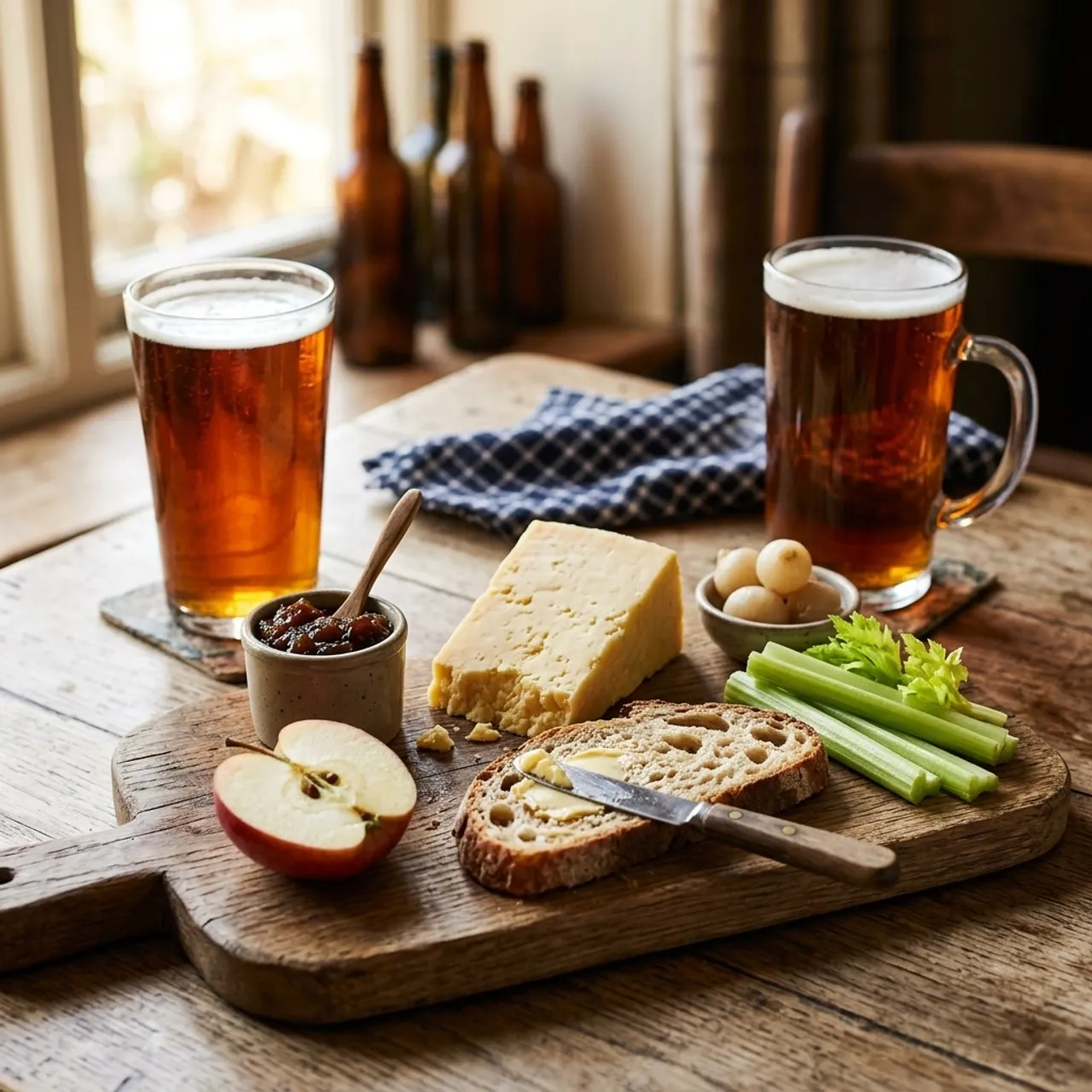
 British & Irish Images are for illustrative purposes only, may be inaccurate, and do not guarantee the presence or absence of specific ingredients.
 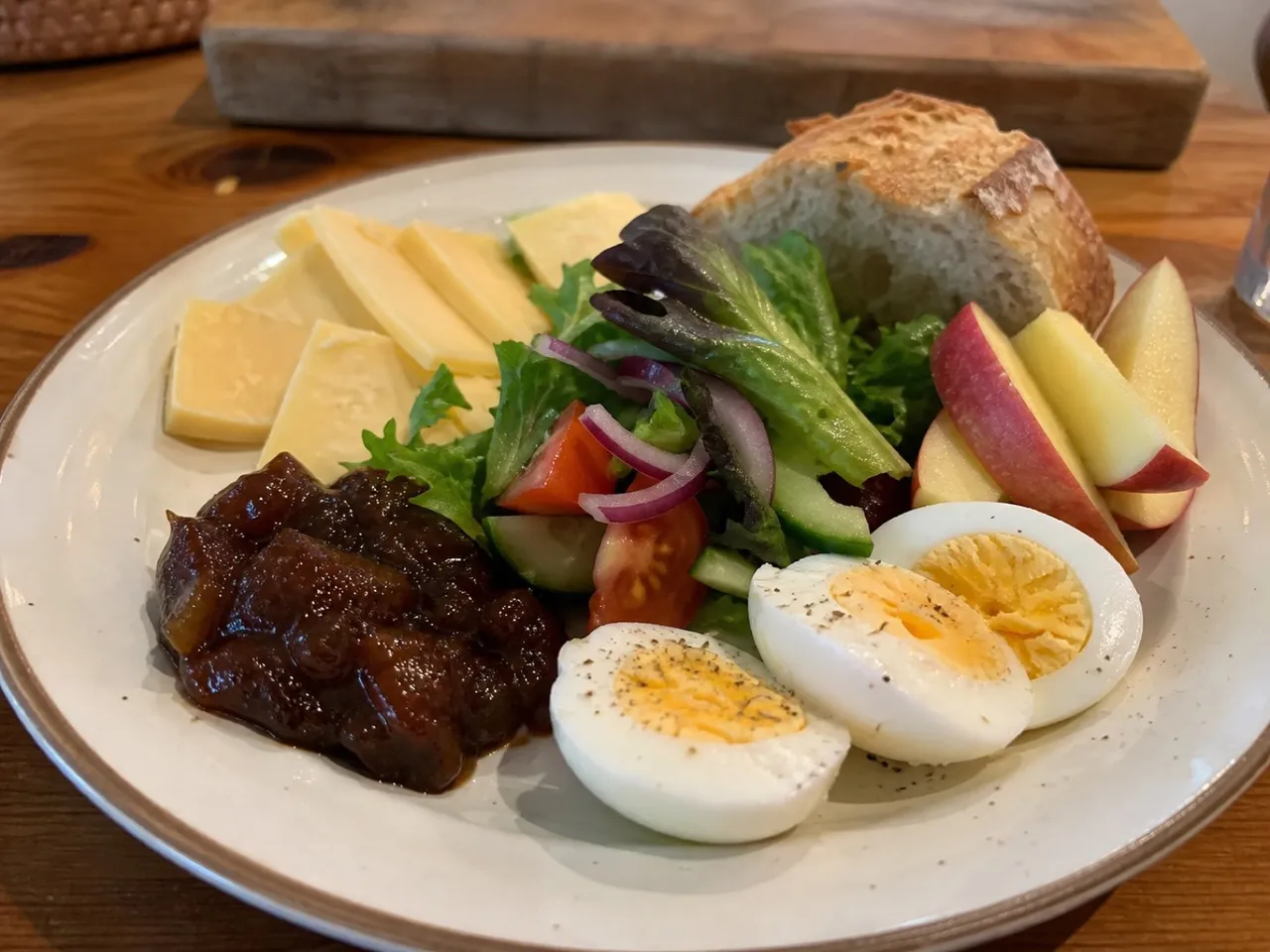 Serving Images are for illustrative purposes only, may be inaccurate, and do not guarantee the presence or absence of specific ingredients.
 Ploughman's Lunch
Sharp aged cheddar, crusty bread, tangy Branston pickle, and a boiled egg — a beloved no-cook British lunch that's greater than the sum of its parts.
Contains common allergens
In the app, Listahan checks these against your household automatically.
Good to know
- Ready in under 30 minutes
Matched from this dish's own ingredients and timing. Browse more: 30-minute meals
Instructions
6 steps- 1
Prepare the bread: Generously butter the thick slice of crusty farmhouse bread.
- 2
Arrange the cheeses: Cut the mature Cheddar into thick wedges or rustic chunks. Do the same with the Stilton or your preferred blue cheese.
- 3
Plate the core items: On a wooden board or large plate, place the buttered bread alongside the chunks of cheese.
- 4
Add the accompaniments: Spoon a generous dollop of sweet Branston pickle onto the board. Add the pickled onion on the side.
- 5
Add fresh elements: Arrange the fresh apple slices and the mixed salad leaves around the cheese to provide crisp, refreshing contrast.
- 6
Serve: Serve immediately with a cold pint of ale or cider for the authentic pub experience.
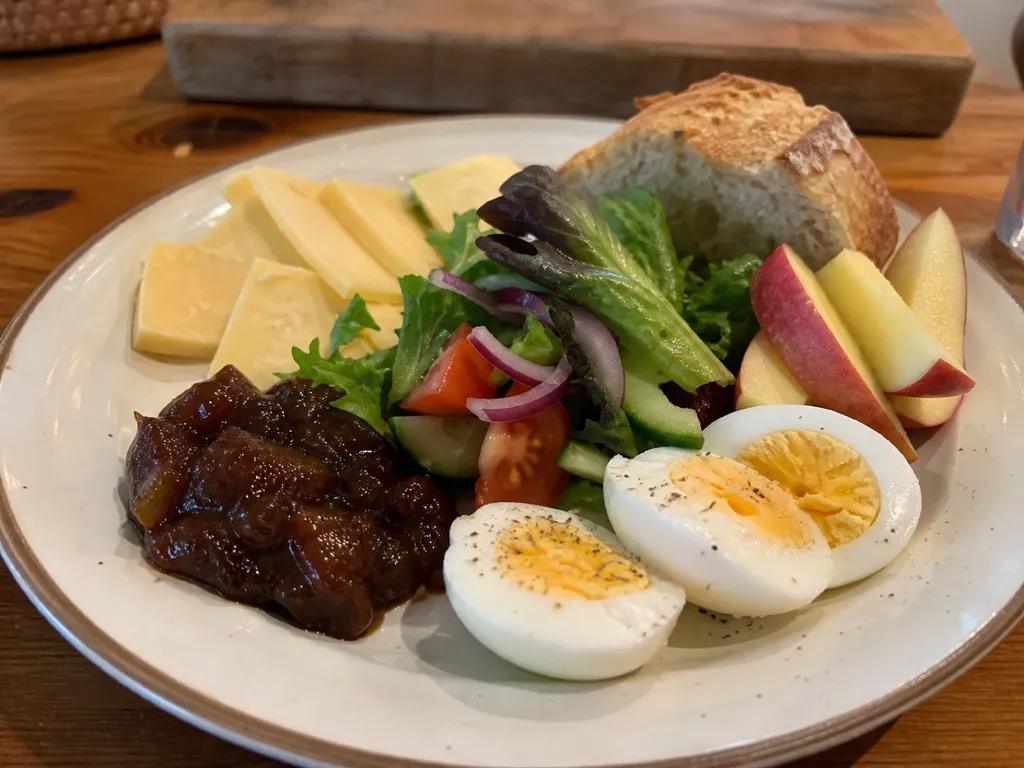 Images are for illustrative purposes only, may be inaccurate, and do not guarantee the presence or absence of specific ingredients.
 Listahan Family Score™
69/100
Works for many families
Score reflects how well this recipe fits a typical busy household. In the app, your Family Score is personalized to your household's allergens, kids, and pantry.
Nutrition
per serving255
Calories
13 g
Protein
7 g
Carbs
20 g
Fat
Estimated per serving. Actual values depend on the brands and portions you use.
Listahan cooking guide
Chef notes & practical guide
Technique notes, ingredient swaps, serve-alongside ideas, storage guidance, and equipment for this recipe.
Cultural context
Despite its rustic, ancient-sounding name, the Ploughman's Lunch was largely invented by the Cheese Bureau in the 1950s and 1960s as a marketing campaign to sell more British cheese through pub food. The concept of a simple cold lunch of bread, cheese, and pickles served in a pub predates the campaign, but the specific combination and the name were standardized and promoted deliberately to revive pub lunch culture during the postwar austerity era. The result was so successful that the dish became genuinely beloved and is now considered an authentic British classic, despite its invented origins.
Listahan note
This version treats each component with care — proper cheddar aged long enough to have bite, Branston or a quality pickle, and crusty bread that holds up to the cheese without going soggy.
Technique cues
- Bring all cheese to room temperature for 30 minutes before serving — cold cheese mutes the flavor compounds that make a mature cheddar complex and interesting.
- The pickle is not a garnish; it is a structural counterpart — its sharp, sweet-sour acidity is what makes the richness of the cheddar and butter feel balanced rather than heavy.
- Arrange the components on the plate with deliberate spacing rather than piling everything together; a ploughman's is about visual generosity and the pleasure of assembling each bite yourself.
Kitchen flow
- Parallel prep
- Pull everything from the fridge 30 minutes before serving; the only actual prep is slicing the bread, cheese, and apple, which takes under 5 minutes.
- Make-ahead
- The ploughman's is entirely assembly — nothing cooks. Prep all components the evening before except the apple and refrigerate separately; assemble and bring to temperature at lunchtime.
- Leftover move
- Any leftover cheese and pickle make an excellent toasted sandwich the next day; butter the bread generously and press in a dry pan.
- Cleanup rhythm
- One cutting board and a cheese knife; rinse the board and it is done. This is the appeal.
Ingredient brief
Role, handling, and swap guidance for each key ingredient.
mature or aged cheddar
primary cheese component
Purpose: A well-aged cheddar with crystalline texture and sharp, nutty bite is what distinguishes a proper ploughman's from a generic cheese plate.
Handling: Remove from the fridge 30 minutes ahead; cut into a chunky wedge or break into irregular pieces rather than neat slices.
Adaptation: Red Leicester, Stilton, or a crumbly Lancashire cheese are all authentic alternatives depending on region.
crusty white or whole-grain bread
base and textural contrast
Purpose: Good bread is half the meal; it provides the neutral, chewy base that carries the cheese and pickle and absorbs the butter.
Handling: Slice thickly and serve at room temperature; toasting is not traditional but is acceptable if the bread is a day old.
Adaptation: A crusty baguette or sourdough loaf works just as well.
Branston pickle or similar chunky pickle
essential sweet-sour counterpoint
Purpose: The vinegar-and-sugar base of chunky pickle cuts through the fat of the cheese and butter, making the meal feel lively rather than rich.
Handling: Serve in a small ramekin or spooned directly onto the plate beside the cheese.
Adaptation: Pickled onions, caperberries, or a good chutney all serve the same acidic counterpoint role.
unsalted butter
enrichment for the bread
Purpose: A generous spread of good butter on the bread adds richness and helps the cheese adhere so every bite is complete.
Handling: Soften at room temperature so it spreads without tearing the bread.
Adaptation: Good quality plant-based butter if keeping dairy-free.
apple or pear
fresh, sweet element
Purpose: A wedge of apple provides natural sweetness and a crisp textural contrast that refreshes the palate between bites of rich cheese.
Handling: Slice just before serving and rub the cut surface with a bit of lemon juice to prevent browning.
Adaptation: Grapes or dried apricots serve a similar sweet-fresh role.
Technique notes
- A ploughman's reward is in the sourcing: a genuinely aged farmhouse cheddar from a good cheesemonger transforms the experience compared to standard supermarket block.
- Include at least one pickled element — whether Branston, pickled onions, or cornichons — and one sweet element like apple or chutney; the interplay of those two is the architecture of the dish.
- Mustard is optional but a small pot of English or wholegrain mustard alongside the plate adds another condiment layer that elevates a simple ploughman's.
Ingredient swaps
- Dairy-free direction
- Use a well-aged plant-based cheddar-style cheese with plant-based butter; the pickle, bread, and fruit components are already dairy-free.
- Gluten-free direction
- Serve with gluten-free crusty bread or good rice crackers; all other components are naturally gluten-free.
- Elevated version
- Add a wedge of Stilton alongside the cheddar, a small pot of quince jelly, and some toasted walnuts for a full cheese-board experience.
Serve alongside
- Cornichons or pickled walnuts
- Hard-boiled eggs
- Mixed green salad with vinaigrette
- Bitter or real ale
- Dry cider
Serving suggestions only — check pairings for your household's allergens.
Storage & reheating
- Cheese keeps refrigerated wrapped in waxed paper for up to 1 week; rewrap after each use.
- Assemble individual portions only at serving time; components stored separately last 3-5 days.
Equipment
- Cheese knife or wire cutter for clean slicing
- Small ramekin for serving pickle and mustard
- Wooden board for plating that doubles as the serving vessel
- Bread knife for thick, even slices
Make this household-aware
Listahan Pro checks this recipe against your household's allergens, finds pantry-aware swaps, builds the shopping list, and helps you plan the week around it.
Plan it in Listahan
Add Ploughman's Lunch to your week, check it against your household's allergens, and build the shopping list automatically.
More British & Irish recipes
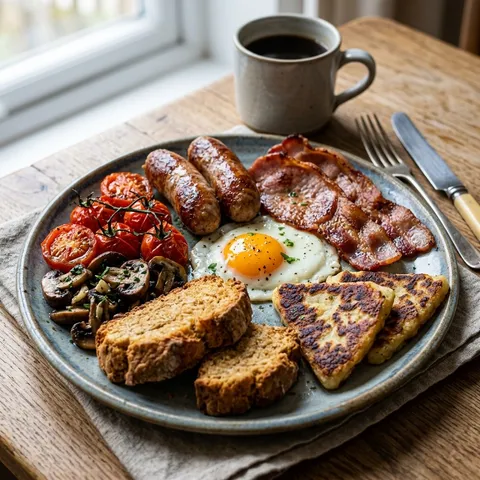 British & Irish Lens Verified Images are for illustrative purposes only, may be inaccurate, and do not guarantee the presence or absence of specific ingredients.
 Ulster Fry
Northern Ireland's legendary fry-up: bacon, sausages, eggs, black pudding, potato bread, and soda bread — fuller and heartier than its English cousin.
 British & Irish Lens Verified Images are for illustrative purposes only, may be inaccurate, and do not guarantee the presence or absence of specific ingredients.
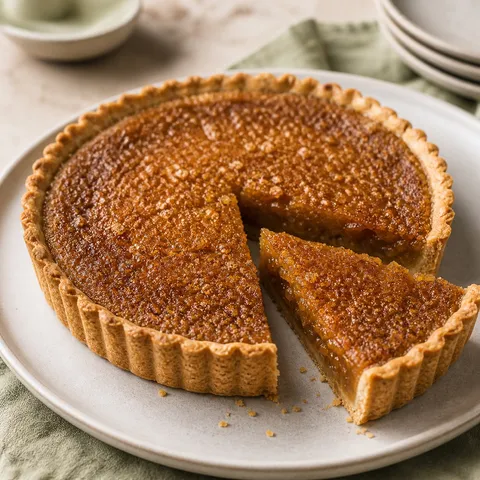
 Treacle Tart
A sweet, sticky tart filled with golden syrup and fresh breadcrumbs, with a gently caramelized top and a hint of lemon — Harry Potter's favorite dessert.
 British & Irish Lens Verified Images are for illustrative purposes only, may be inaccurate, and do not guarantee the presence or absence of specific ingredients.
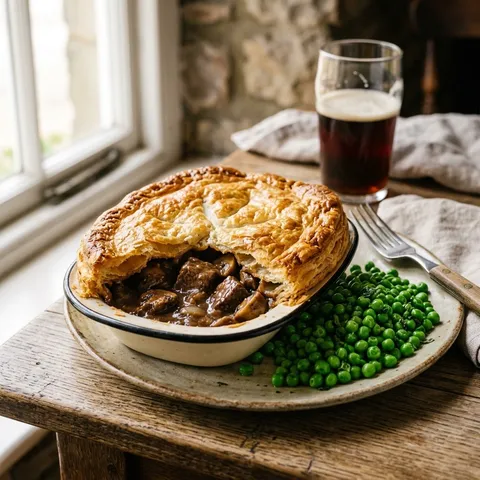
 Steak and Ale Pie
Slow-braised beef and dark ale filling with a deep, malty richness, encased in a buttery golden pastry shell. The ultimate British pub pie.