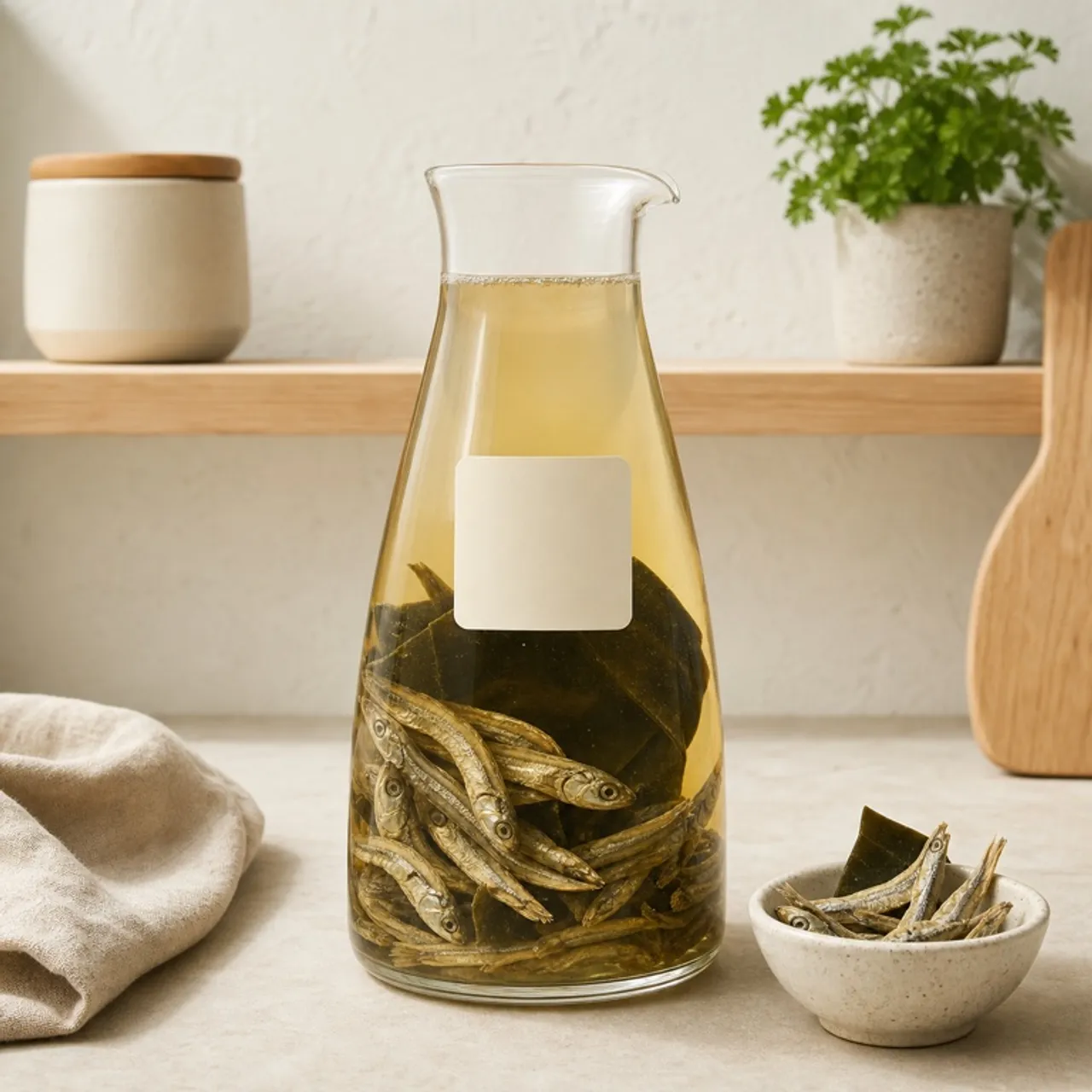
 Food Lens Images are for illustrative purposes only, may be inaccurate, and do not guarantee the presence or absence of specific ingredients.
 Food Lens · Recipe ingredients
Anchovy Kelp Broth
Clean, savory, and gently oceanic with a rounded umami backbone; lighter and less fishy than a Western fish stock, with a subtle sweetness from the kelp.
Lens VerifiedAnchovy-kelp broth (Korean: 멸치다시마육수, myeolchi dasima yuksu) is the foundational stock of Korean cooking — a clear, deeply savory broth made by simmering dried anchovies and dried kelp in water. It functions much like Japanese dashi, delivering clean umami depth to soups, stews, and braised dishes without overpowering them.
Where it comes from
The quiet backbone of Korean home cooking — this clear, umami-rich broth made from dried sea creatures and kelp turns a pot of water into the foundation for the country's most beloved soups.
Varieties — The basic version uses only dried anchovies (myeolchi) and kelp (dasima). Some cooks add dried shiitakes or radish for additional sweetness.
This broth is so fundamental to Korean home cooking that many Korean cooks keep a batch in the refrigerator at all times — it is the water of Korean cuisine.
In a modern kitchen — Do not boil the kelp — steep it in cold water for 20 minutes, then bring to a simmer and remove it before it turns slimy; add the anchovies after and simmer 10–15 minutes.
Buying it
Buy large dried anchovies (dried myeolchi) labeled for broth use — these are larger and less bitter than the small snack anchovies. Dried kelp (dasima) should be flat, thick, and dusty with natural white mineral deposits (not mold).
Storing it
Store an unopened anchovy-kelp broth pack in a cool, dry pantry away from direct light. Once opened, refrigerate in a sealed container and use within a few days, as its light, savory broth turns sour quickly at room temperature.
Keeps about 1 year in the pantry.
Out of anchovy kelp broth? Good swaps
- Japanese dashi (kombu + katsuobushi) — Very similar in function and flavor profile; a reliable 1:1 swap in Korean soups
- vegetable broth + dried shiitake soaking liquid — Provides umami depth without seafood; works in vegetarian versions of Korean stews
General cooking guidance — always check the labels on the products you use. Listahan’s allergen checks run automatically when you plan a recipe in the app. Not medical advice.
Common questions about anchovy kelp broth
What can I use instead of anchovy kelp broth?
Good swaps include Japanese dashi (kombu + katsuobushi), vegetable broth + dried shiitake soaking liquid. Each behaves a little differently — see the swaps above for notes, and always check labels for allergens.
How do I store anchovy kelp broth?
Store an unopened anchovy-kelp broth pack in a cool, dry pantry away from direct light. Once opened, refrigerate in a sealed container and use within a few days, as its light, savory broth turns sour quickly at room temperature. It keeps about 1 year in the pantry.
More recipe ingredients
See all


Make anchovy kelp broth about your kitchen — with Listahan Pro
Everything above is free, forever. Pro adds the Household Lens — the same food, seen for your family:
-
Checked for each member
Flags anchovy kelp broth per person against your household's allergies and school rules — not just a generic "contains" tag.
-
Pantry-aware
Knows whether you already have it, what is running low, and the best swap from what is in your kitchen tonight.
-
What it costs near you
A real price from the Presyo community index, so you can plan the budget — not guess.
-
Your household memory
Who likes it, plus your own private notes — brand, where you keep it, who skips it.
Allergen safety is always free — Pro adds the automation, never the safety.
Cook with anchovy kelp broth — safely
Plan a recipe in Listahan and the household allergen check runs automatically — every plan, every swap, every lunchbox. Safety is never paywalled.