 Food Lens Images are for illustrative purposes only, may be inaccurate, and do not guarantee the presence or absence of specific ingredients.
 Food Lens · Recipe ingredients
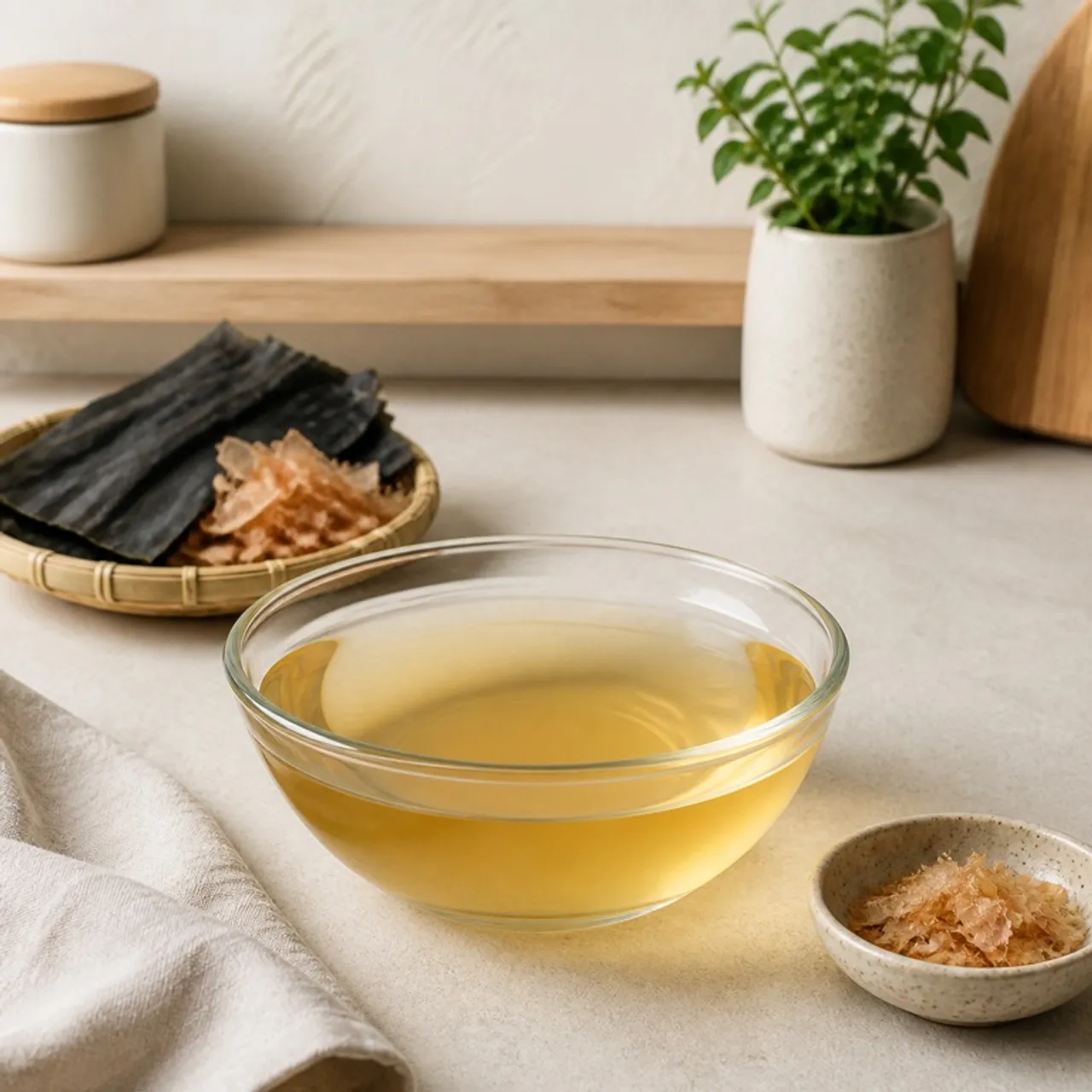
Dashi
Clean, light savory depth with oceanic notes; subtle sweetness from kombu; traditional dashi adds a smoky, umami-rich complexity from katsuobushi.
Lens VerifiedDashi is a delicate Japanese stock that forms the umami backbone of countless Japanese dishes, from miso soup to simmered vegetables. Traditional dashi is made from kombu (dried kelp) and katsuobushi (dried tuna flakes), though kombu-only dashi is a widely used vegan alternative.
Where it comes from
Dashi's origins stretch back to early Japanese civilization, with kombu harvesting records dating to the Nara period (710–794 CE). The combination of kombu and dried bonito became refined during the Edo period as Japanese cuisine formalized its flavor principles. Today, kombu is exported from Hokkaido and both kombu and instant dashi powder are readily available in Asian grocery stores across North America.
Varieties — Ichiban dashi (first draw) is light and refined; niban dashi (second draw) is stronger and used for heartier dishes. Kombu dashi (vegan) uses kelp alone. Shiitake dashi adds a woodsy note. Instant dashi powder (dashi no moto) is convenient but typically contains fish and MSG.
Dashi embodies the Japanese culinary concept of umami — the fifth taste of savory depth — and is considered the soul of Japanese cooking. Knowing how to make a clean dashi is a foundational skill in Japanese home cooking.
In a modern kitchen — Kombu-only dashi is simple and vegan: soak a 4-inch piece of kombu in 4 cups cold water for 30 minutes, then heat until just below a boil and remove the kombu. Do not boil kombu or it turns bitter.
Buying it
Instant dashi powder (dashi no moto) is sold in small packets at Japanese and Korean grocery stores and increasingly at mainstream Asian food sections. Kombu is sold in dried sheets in the same aisles. For homemade: soak kombu cold, then gently heat; add katsuobushi for traditional dashi.
Storing it
Unopened dashi powder or packets keep well in a cool, dry pantry. Once opened, reseal tightly against moisture, and refrigerate any prepared liquid dashi, using it within a couple of days.
Keeps about 1 year in the pantry.
Out of dashi? Good swaps
- Kombu dashi (vegan) — Kelp-only version; mild umami without fish. Use 1:1.
- Shiitake soaking water — Earthy, deep umami; use as part or all of the liquid in vegan applications.
- Light chicken or vegetable stock — Loss of characteristic oceanic umami; use in mild-flavored dishes as a background liquid.
General cooking guidance — always check the labels on the products you use. Listahan’s allergen checks run automatically when you plan a recipe in the app. Not medical advice.
Recipes that use dashi
Common questions about dashi
What can I use instead of dashi?
Good swaps include Kombu dashi (vegan), Shiitake soaking water, Light chicken or vegetable stock. Each behaves a little differently — see the swaps above for notes, and always check labels for allergens.
How do I store dashi?
Unopened dashi powder or packets keep well in a cool, dry pantry. Once opened, reseal tightly against moisture, and refrigerate any prepared liquid dashi, using it within a couple of days. It keeps about 1 year in the pantry.
More recipe ingredients
See all


Make dashi about your kitchen — with Listahan Pro
Everything above is free, forever. Pro adds the Household Lens — the same food, seen for your family:
-
Checked for each member
Flags dashi per person against your household's allergies and school rules — not just a generic "contains" tag.
-
Pantry-aware
Knows whether you already have it, what is running low, and the best swap from what is in your kitchen tonight.
-
What it costs near you
A real price from the Presyo community index, so you can plan the budget — not guess.
-
Your household memory
Who likes it, plus your own private notes — brand, where you keep it, who skips it.
Allergen safety is always free — Pro adds the automation, never the safety.
Cook with dashi — safely
Plan a recipe in Listahan and the household allergen check runs automatically — every plan, every swap, every lunchbox. Safety is never paywalled.