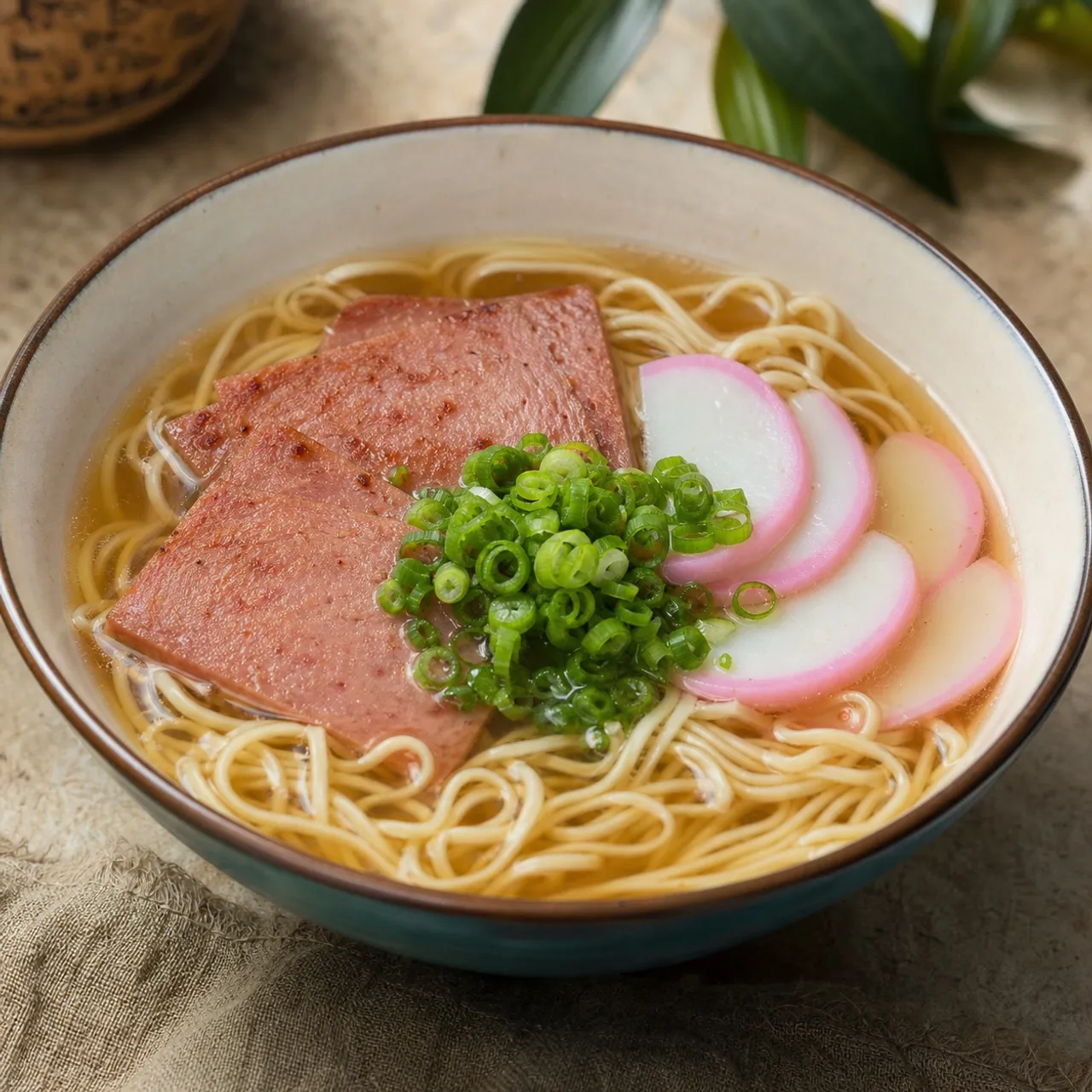
 Hawaiian Images are for illustrative purposes only, may be inaccurate, and do not guarantee the presence or absence of specific ingredients.
 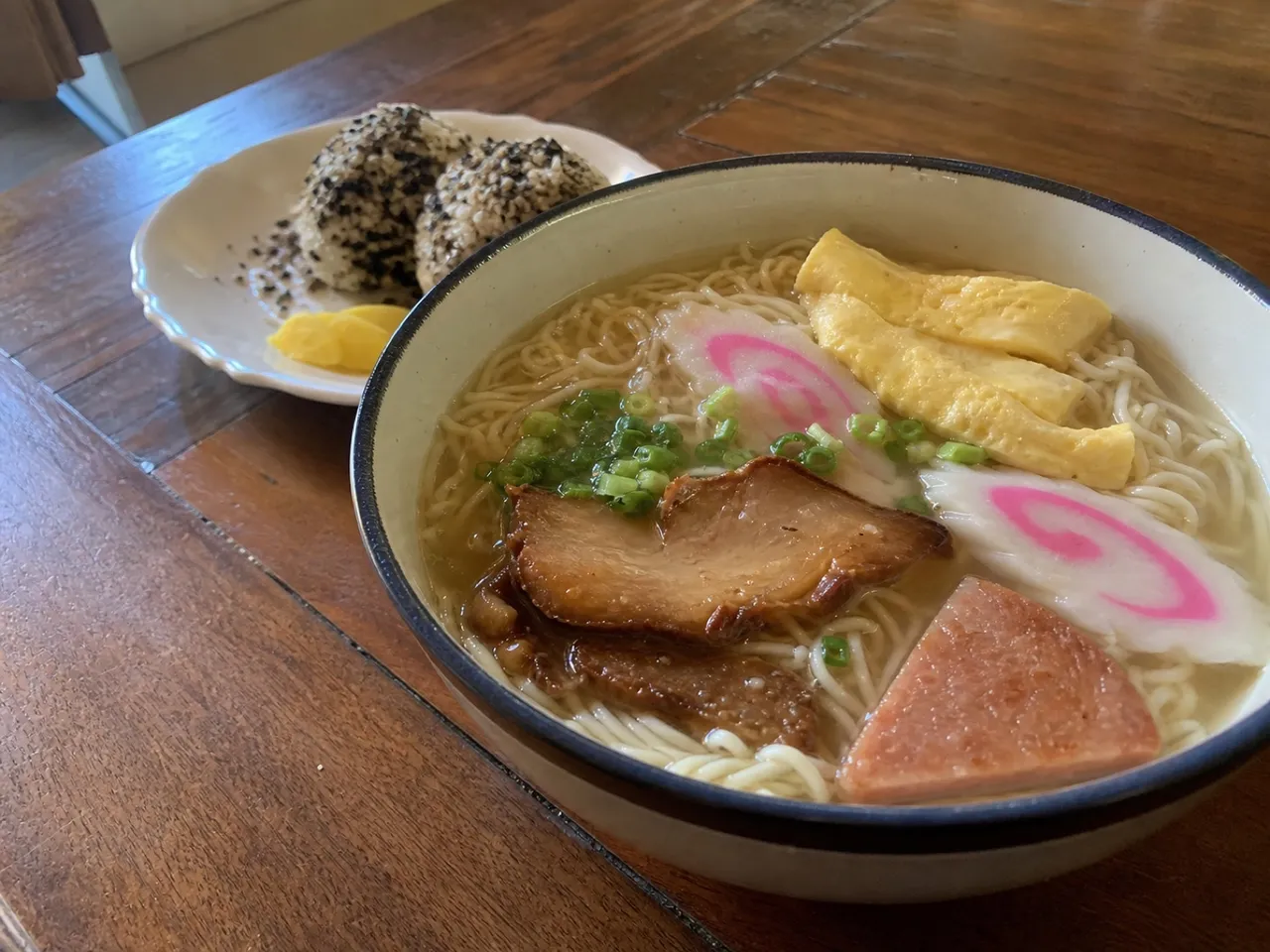 Serving Images are for illustrative purposes only, may be inaccurate, and do not guarantee the presence or absence of specific ingredients.
 Saimin
Hawaii's beloved noodle soup — springy wheat-egg noodles in a dashi-based broth, topped with Spam, fish cake, and green onion for a local-style bowl.
Contains common allergens
In the app, Listahan checks these against your household automatically.
Good to know
- Ready in under 30 minutes
Matched from this dish's own ingredients and timing. Browse more: 30-minute meals
Instructions
8 steps- 1
Bring the chicken or dashi broth to a simmer in a saucepan and season with the soy sauce and mirin.
- 2
Pan-fry the Spam slices in a dry skillet over medium heat until browned and slightly crisp on both sides.
- 3
Bring a separate pot of water to a boil and cook the saimin noodles just until tender, 2 to 3 minutes; drain well.
- 4
Divide the noodles between deep soup bowls.
- 5
Ladle the hot broth over the noodles.
- 6
Arrange the fried Spam, kamaboko slices, and bean sprouts on top of each bowl.
- 7
Scatter green onion over the surface and add the soft-boiled egg half if using.
- 8
Serve immediately while the broth is steaming hot and the noodles are still springy.
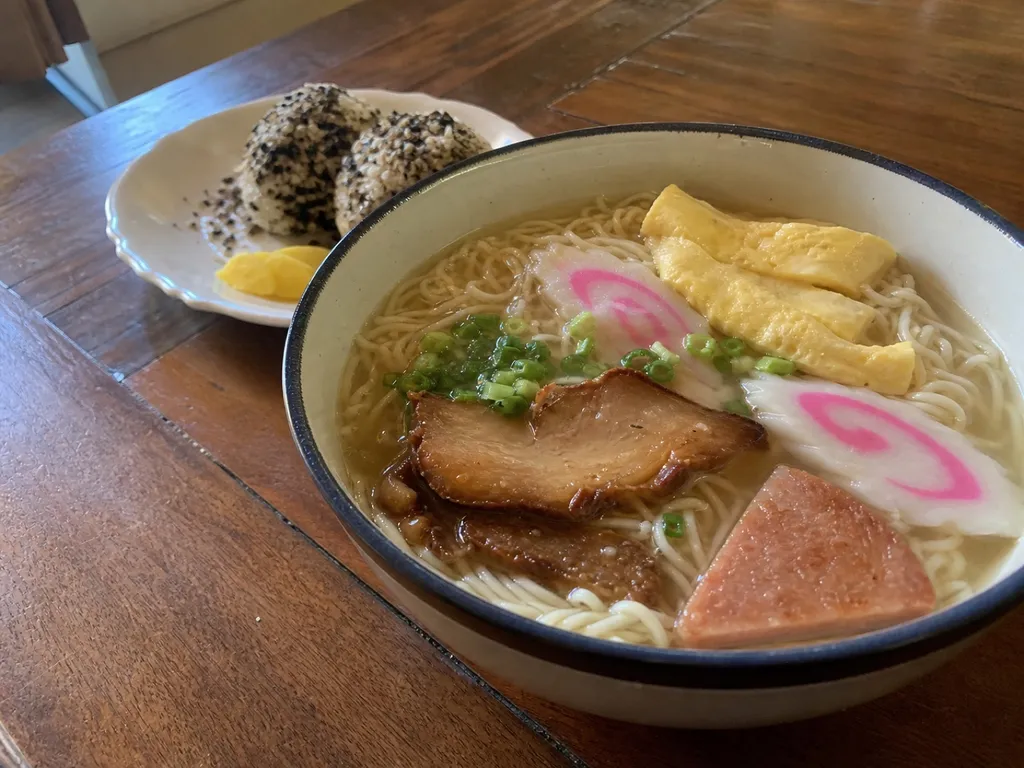 Images are for illustrative purposes only, may be inaccurate, and do not guarantee the presence or absence of specific ingredients.
 Listahan Family Score™
68/100
Works for many families
Score reflects how well this recipe fits a typical busy household. In the app, your Family Score is personalized to your household's allergens, kids, and pantry.
Nutrition
per serving325
Calories
12 g
Protein
64 g
Carbs
1 g
Fat
Estimated per serving. Actual values depend on the brands and portions you use.
Listahan cooking guide
Chef notes & practical guide
Technique notes, ingredient swaps, serve-alongside ideas, storage guidance, and equipment for this recipe.
Cultural context
Saimin is a uniquely Hawaiian noodle soup born from the collision of the many immigrant communities who arrived in Hawaii to work the sugar and pineapple plantations in the late 19th and early 20th centuries. The noodles draw from Chinese and Japanese traditions (resembling a cross between ramen and Chinese lo mein), the broth incorporates Japanese dashi technique with pork bones in a Chinese style, and common toppings like Spam and Portuguese sausage reflect the working-class multicultural community that created it. McDonald's Hawaii is one of the only locations in the McDonald's system that serves saimin — a recognition of how deeply embedded the dish is in local food culture.
Listahan note
This version builds the broth from scratch using dashi and pork, aiming for the clean but complex flavor that makes saimin taste distinct from any individual parent cuisine.
Technique cues
- The broth is the soul of saimin; use a combination of dashi (kombu and bonito) and pork or chicken stock for the layered umami that no single broth type achieves alone.
- Cook the noodles separately in boiling water and rinse with cold water before adding to individual bowls — cooking noodles directly in the broth makes it starchy and clouds the clean soup.
- Warm the bowls before ladling in the broth — noodle soups lose heat fast in a cold bowl and the eating experience suffers within minutes.
Kitchen flow
- Parallel prep
- Simmer the broth while you prep toppings; cook noodles in a separate pot in the last 5 minutes before service.
- Make-ahead
- The broth keeps in the refrigerator for up to 4 days or frozen for 2 months; cook noodles fresh for each serving.
- Leftover move
- Leftover broth can be used as the base for a quick weeknight ramen or even as the cooking liquid for rice to add umami depth.
- Cleanup rhythm
- Strain the broth through a fine-mesh sieve into a clean pot before serving to capture every bonito flake and piece of kombu; the strainer is the only extra dish.
Ingredient brief
Role, handling, and swap guidance for each key ingredient.
saimin noodles or fresh ramen noodles
main body of the dish
Purpose: The thin, springy egg wheat noodles are the defining textural element; they absorb the broth gradually as you eat, changing character from the first bite to the last.
Handling: Cook 1 minute less than package instructions specify since they will continue hydrating in the hot broth in the bowl.
Adaptation: Dried ramen noodles are a close substitute; lo mein noodles work too, though they are slightly thicker.
dashi (kombu and katsuobushi)
broth umami backbone
Purpose: Cold-steep kombu followed by bonito flake infusion creates the light but deeply savory Japanese dashi that gives saimin its clean, distinct flavor profile.
Handling: Cold steep the kombu in water for 30 minutes, bring just to a simmer (do not boil), remove kombu, add bonito, steep 5 minutes, and strain.
Adaptation: Instant dashi powder is a reliable weeknight shortcut; the flavor is slightly less nuanced but works well in this context.
Spam or char siu pork
traditional topping protein
Purpose: Spam sliced thin and quickly pan-fried is the most common topping at local saimin stands; it adds familiar Hawaiian comfort and a savory, salty counterpoint to the clean broth.
Handling: Pan-fry Spam slices over medium heat until lightly caramelized on both sides before laying over the noodles in the bowl.
Adaptation: Kamaboko (fish cake) is the most traditional topping; char siu pork adds a sweet-smoky alternative.
fish cake (kamaboko)
classic textural topping
Purpose: The slightly bouncy texture of steamed fish cake provides contrast against the soft noodles and is the most recognizable saimin topping.
Handling: Slice thinly on the bias and add cold directly to the hot bowl — the broth warms it without overcooking.
Adaptation: Sliced surimi (imitation crab sticks) approximates the texture and flavor at a lower cost.
Technique notes
- Never boil the dashi after adding the bonito flakes — simmering extracts bitterness from the flakes and muddies the clean flavor that makes saimin broth so distinctive.
- Season the broth with soy sauce and salt in very small increments; the saltiness of the toppings (Spam, kamaboko) contributes significantly to the finished bowl's sodium level.
- A drizzle of sesame oil and a sprinkle of green onions at service are small details that make the bowl look and taste restaurant-quality.
Ingredient swaps
- Gluten-free direction
- Use rice noodles in place of wheat-based saimin noodles and tamari in place of soy sauce; verify that kamaboko is gluten-free (check brand labels as some contain wheat starch).
- Vegetarian direction
- Make the broth from kombu, dried shiitake, and vegetable stock; top with tofu, snow peas, and soft-boiled egg instead of Spam and fish cake.
Serve alongside
- Spam musubi
- Manapua (steamed bun)
- Small side of kim chee
- Hawaiian iced tea
- Cold barley tea (mugicha)
Serving suggestions only — check pairings for your household's allergens.
Storage & reheating
- Store broth and noodles separately in the refrigerator for up to 3 days; noodles stored in broth become waterlogged and lose their springy texture.
- Freeze the broth in 2-cup portions for quick weeknight saimin; cook noodles fresh from dried for each serving.
Equipment
- Large stockpot for broth
- Fine-mesh strainer for clarifying dashi
- Separate medium saucepan for cooking noodles
Make this household-aware
Listahan Pro checks this recipe against your household's allergens, finds pantry-aware swaps, builds the shopping list, and helps you plan the week around it.
Plan it in Listahan
Add Saimin to your week, check it against your household's allergens, and build the shopping list automatically.
More Hawaiian recipes
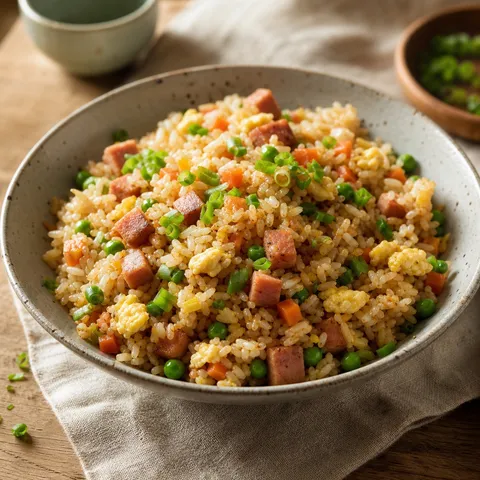 Hawaiian Lens Verified Images are for illustrative purposes only, may be inaccurate, and do not guarantee the presence or absence of specific ingredients.
 Spam Fried Rice
Day-old rice stir-fried with caramelized Spam, egg, soy sauce, and green onion — a quick, satisfying island classic that turns pantry staples into something craveable.
 Hawaiian Lens Verified Images are for illustrative purposes only, may be inaccurate, and do not guarantee the presence or absence of specific ingredients.
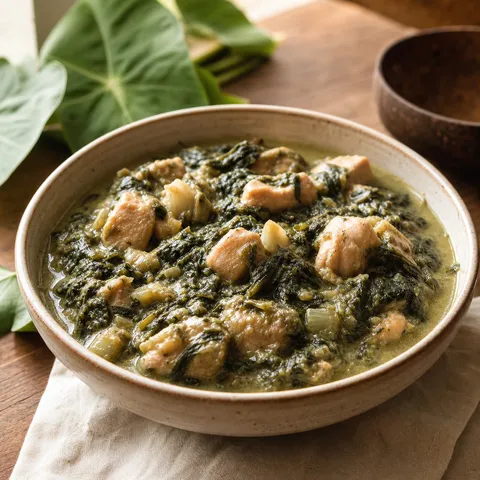
 Chicken Luau
Tender chicken simmered with young taro leaves in coconut milk until velvety and earthy — a quietly comforting Hawaiian stew full of old-fashioned luau warmth.
 Hawaiian Lens Verified Images are for illustrative purposes only, may be inaccurate, and do not guarantee the presence or absence of specific ingredients.
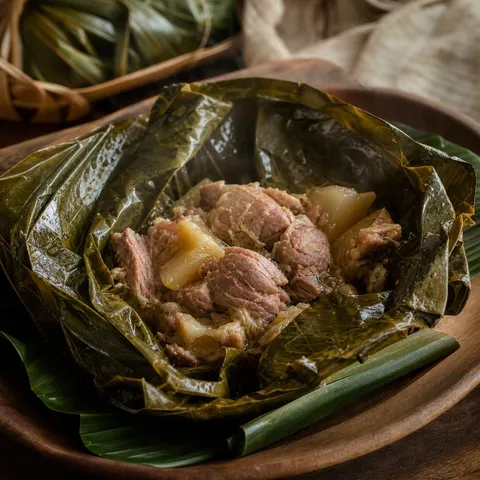
 Lau Lau
Pork shoulder and butterfish bundled in layers of taro leaf and steamed until meltingly tender — earthy, rich, and deeply rooted in Native Hawaiian tradition.