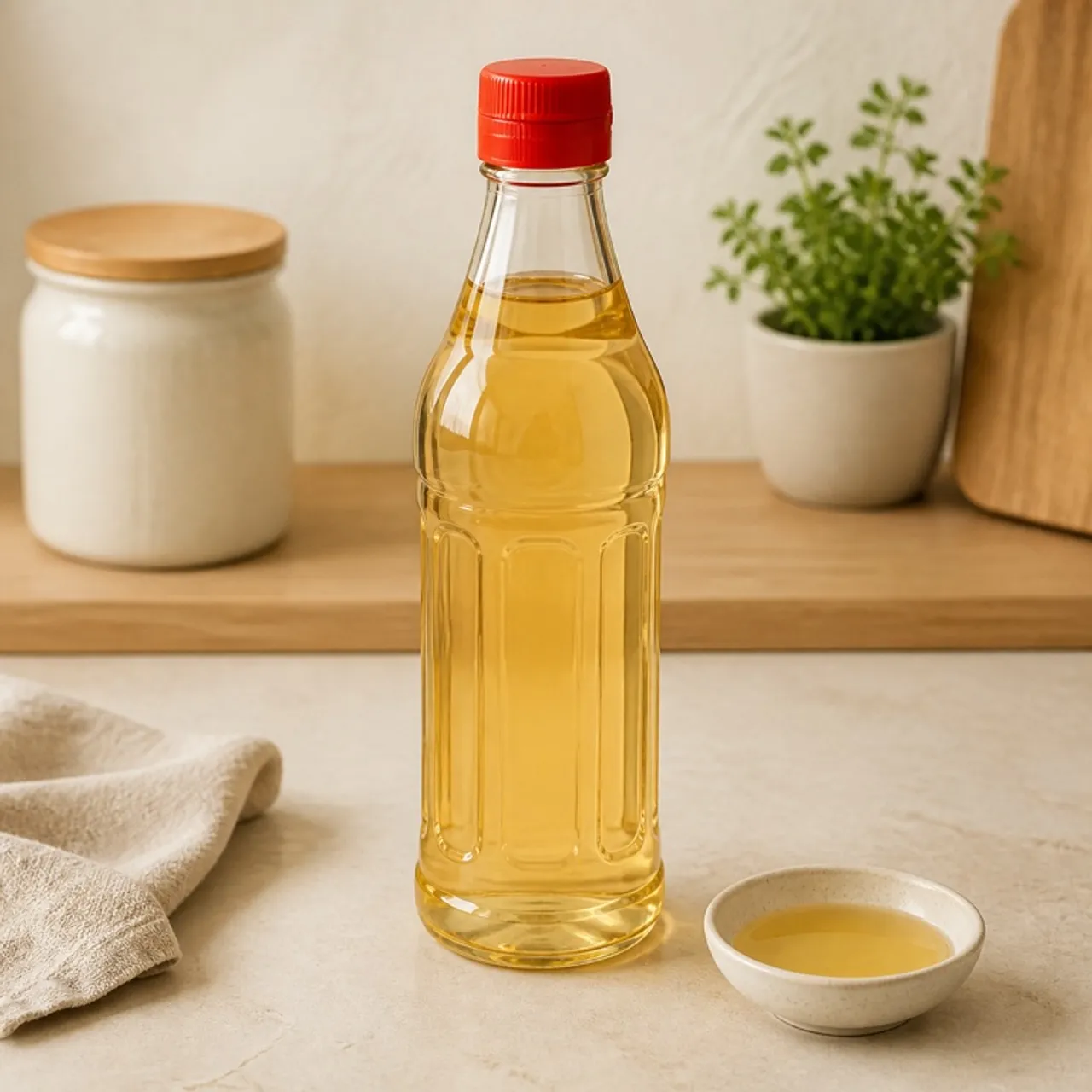
 Food Lens Images are for illustrative purposes only, may be inaccurate, and do not guarantee the presence or absence of specific ingredients.
 Food Lens · Recipe ingredients
Mirin
Sweet, lightly alcoholic, subtly umami, and mildly rice-like with a syrupy gloss when reduced.
Lens VerifiedMirin is a sweet Japanese rice wine used as a seasoning in glazes, sauces, and marinades. It adds mild sweetness, a glossy sheen, and subtle rice character to teriyaki, ramen broths, and dipping sauces.
Where it comes from
Mirin is a sweet, low-alcohol rice wine that has been central to Japanese cooking since the Edo period. It balances the saltiness of soy sauce with natural sweetness and adds a beautiful glossy sheen to glazed proteins and vegetables — two effects no simple sugar substitute can fully replicate.
Varieties — Hon-mirin (true mirin) has a higher alcohol content and more complex sweetness; aji-mirin (mirin-style condiment) has less or no alcohol and is more widely available in North America.
Mirin is indispensable in Japanese cooking — the balance of soy sauce and mirin defines the flavor of teriyaki, glazed fish, and simmered vegetables.
In a modern kitchen — Mirin caramelizes quickly under heat because of its sugar content, giving teriyaki its characteristic glossy, caramelized crust.
Buying it
Hon-mirin (true mirin) is the highest quality and preferred for cooking. Aji-mirin is more widely available and works well for most home recipes. Look for bottles without heavy artificial sweeteners or excessive additives.
Storing it
Store tightly capped in a cool pantry away from light. Once opened, it keeps for several months at room temperature, though refrigerating helps it hold its sweetness longer.
Keeps about 1 year in the pantry.
Out of mirin? Good swaps
- Dry sherry plus sugar — 1 tbsp dry sherry plus ½ tsp sugar as a rough substitute in sauces.
- Rice vinegar plus sugar — Add a small pinch of sugar per teaspoon of rice vinegar for approximate sweetness and acidity.
- Sake plus sugar — Similar alcohol character; add ½ tsp sugar per tbsp sake.
General cooking guidance — always check the labels on the products you use. Listahan’s allergen checks run automatically when you plan a recipe in the app. Not medical advice.
Recipes that use mirin
Common questions about mirin
Is mirin vegan?
Mirin is generally plant-based and suitable for a vegan diet, but brands differ — confirm on the label.
What can I use instead of mirin?
Good swaps include Dry sherry plus sugar, Rice vinegar plus sugar, Sake plus sugar. Each behaves a little differently — see the swaps above for notes, and always check labels for allergens.
How do I store mirin?
Store tightly capped in a cool pantry away from light. Once opened, it keeps for several months at room temperature, though refrigerating helps it hold its sweetness longer. It keeps about 1 year in the pantry.
More recipe ingredients
See all


Make mirin about your kitchen — with Listahan Pro
Everything above is free, forever. Pro adds the Household Lens — the same food, seen for your family:
-
Checked for each member
Flags mirin per person against your household's allergies and school rules — not just a generic "contains" tag.
-
Pantry-aware
Knows whether you already have it, what is running low, and the best swap from what is in your kitchen tonight.
-
What it costs near you
A real price from the Presyo community index, so you can plan the budget — not guess.
-
Your household memory
Who likes it, plus your own private notes — brand, where you keep it, who skips it.
Allergen safety is always free — Pro adds the automation, never the safety.
Cook with mirin — safely
Plan a recipe in Listahan and the household allergen check runs automatically — every plan, every swap, every lunchbox. Safety is never paywalled.