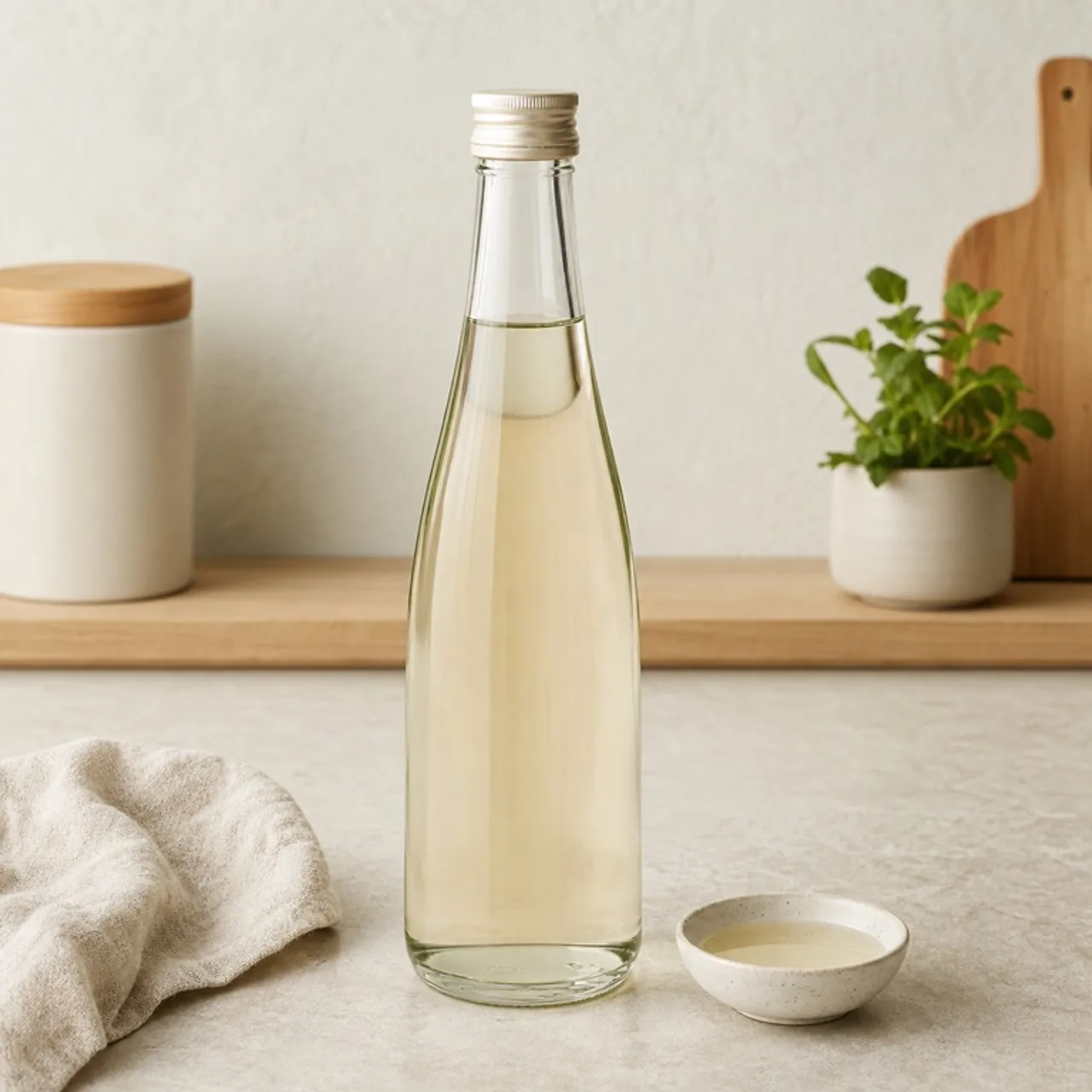
 Food Lens Images are for illustrative purposes only, may be inaccurate, and do not guarantee the presence or absence of specific ingredients.
 Food Lens · Recipe ingredients
Sake
Clean, mildly sweet, and lightly umami with a delicate rice aroma and a soft alcoholic warmth.
Lens VerifiedSake is Japanese rice wine produced by fermenting polished rice, and in cooking it is used to tenderize proteins, eliminate gaminess, and add a subtle, clean sweetness and depth to marinades, sauces, and braises. Cooking sake (ryōrishu) is the widely available pantry form.
Where it comes from
Sake's role in the Japanese kitchen evolved alongside the cuisine itself — monks, aristocrats, and farmers all developed techniques for using rice wine to refine flavors and preserve ingredients over centuries. Japanese immigrants and the global Japanese food culture wave have made cooking sake widely available in North America, and it is now stocked in most Asian grocery stores and many mainstream supermarkets.
Varieties — Drinking sake ranges from junmai (pure rice) to daiginjo (highly polished, fragrant). For cooking, ryōrishu (cooking sake) is the practical choice — widely available and inexpensive, though it often contains added salt to discourage drinking. Regular drinking sake also works and produces a cleaner flavor.
In Japanese home cooking, sake is as fundamental as salt — it is splashed into almost every savory dish from nimono (simmered dishes) to yakitori. Adding sake to steaming clams or chicken before cooking is a traditional technique for removing unwanted aromas.
In a modern kitchen — Cooking sake and drinking sake are interchangeable in recipes, but cooking sake often contains added salt — if you use it, reduce other salt in the dish accordingly. Dry sherry is a serviceable substitute, but mirin is not (it is much sweeter).
Buying it
For cooking, look for bottles labeled 'ryōrishu' or 'cooking sake.' Kikkoman and Takara are reliable brands found in most Asian groceries. Check the label for added salt if sodium matters in your dish. Store opened bottles in the refrigerator and use within a few months.
Storing it
Store unopened in a cool, dark pantry away from heat. Once opened, keep it tightly capped in the fridge and use within a few weeks, as its flavor fades with air exposure.
Keeps about 1 year in the pantry.
Out of sake? Good swaps
- Dry sherry — Use 1:1 — a Western equivalent with similar dry, slightly nutty complexity; the most recommended non-sake substitute.
- Dry white wine — Use 1:1 — lighter in umami depth but adds similar acidity and brightens sauces comparably.
- Chicken or vegetable stock — Use 1:1 for alcohol-free cooking — adds body but misses the fermentation note; add a splash of rice vinegar for brightness.
General cooking guidance — always check the labels on the products you use. Listahan’s allergen checks run automatically when you plan a recipe in the app. Not medical advice.
Recipes that use sake
Common questions about sake
Is sake vegan?
Sake is generally plant-based and suitable for a vegan diet, but brands differ — confirm on the label.
What can I use instead of sake?
Good swaps include Dry sherry, Dry white wine, Chicken or vegetable stock. Each behaves a little differently — see the swaps above for notes, and always check labels for allergens.
How do I store sake?
Store unopened in a cool, dark pantry away from heat. Once opened, keep it tightly capped in the fridge and use within a few weeks, as its flavor fades with air exposure. It keeps about 1 year in the pantry.
More recipe ingredients
See all


Make sake about your kitchen — with Listahan Pro
Everything above is free, forever. Pro adds the Household Lens — the same food, seen for your family:
-
Checked for each member
Flags sake per person against your household's allergies and school rules — not just a generic "contains" tag.
-
Pantry-aware
Knows whether you already have it, what is running low, and the best swap from what is in your kitchen tonight.
-
What it costs near you
A real price from the Presyo community index, so you can plan the budget — not guess.
-
Your household memory
Who likes it, plus your own private notes — brand, where you keep it, who skips it.
Allergen safety is always free — Pro adds the automation, never the safety.
Cook with sake — safely
Plan a recipe in Listahan and the household allergen check runs automatically — every plan, every swap, every lunchbox. Safety is never paywalled.