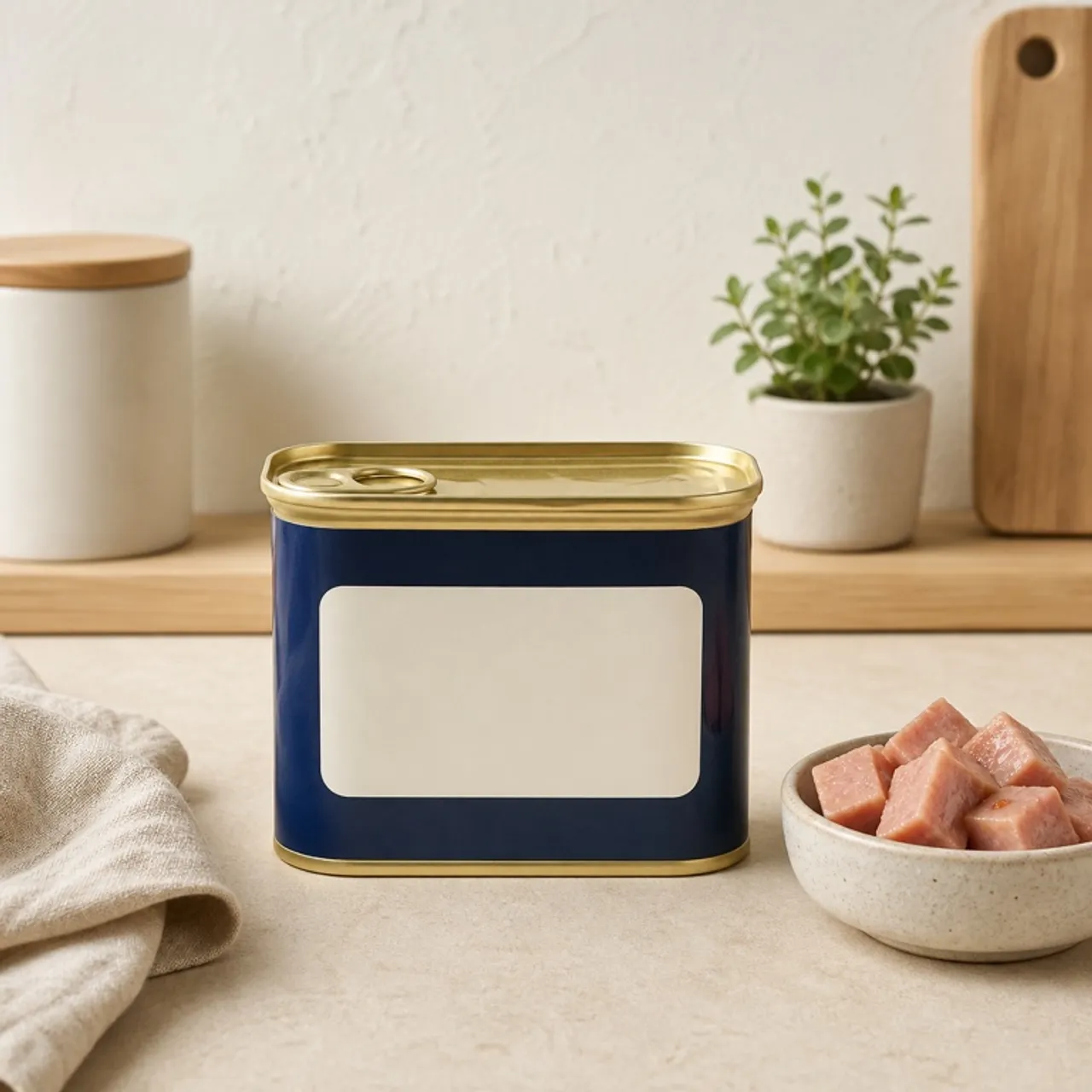
 Food Lens Images are for illustrative purposes only, may be inaccurate, and do not guarantee the presence or absence of specific ingredients.
 Food Lens · Canned
Spam
Salty, savory, and lightly porky with a mild smokiness and a hint of sweetness. The texture is firm and smooth — denser than cooked ham, less fibrous than pulled pork. When pan-fried, the exterior crisps into a deeply caramelized, almost crackling crust while the interior stays tender. The flavor intensifies significantly with heat.
Lens VerifiedSPAM is a canned cooked pork product made from pork shoulder meat and ham, seasoned with salt, sugar, sodium nitrite, and a small amount of potato starch. Introduced by Hormel in 1937, it became one of the most globally distributed pantry staples in history — carried by Allied forces in World War II and adopted with genuine enthusiasm by cultures across Hawaii, the Philippines, South Korea, Okinawa, Guam, and Hong Kong. Far from a junk food curiosity, SPAM is a legitimate and beloved ingredient in multiple major culinary traditions.
Where it comes from
SPAM was created by Hormel Foods in Austin, Minnesota, in 1937 and was transformed from a wartime ration into a deeply embedded cultural ingredient across Hawaii, the Philippines, South Korea, and Okinawa through three generations of Pacific culinary history.
Varieties — The original Classic flavor is the most iconic, but over a dozen varieties now exist: Lite (reduced fat), Low Sodium, Turkey SPAM, Teriyaki, Jalapeño, Tocino (for the Filipino market), and Black Pepper, among others. Musubi-cut (thick-sliced) is the informal default in Hawaii. In South Korea, a gifted SPAM set in a premium tin is a recognized Chuseok (harvest holiday) gift.
SPAM's cultural footprint in the Pacific is not accidental or merely tolerated — it has been genuinely embraced and integrated into local culinary identities over three generations. In Hawaii, SPAM consumption per capita is among the highest in the world. Filipino SPAMsilog is a fully formed culinary tradition, not a shortcut. The annual SPAM Jam festival in Waikiki draws tens of thousands of visitors. These cultures did not just accept a foreign pantry item; they transformed it into something culturally their own.
In a modern kitchen — Pan-frying SPAM over medium-high heat until the exterior caramelizes is the essential technique — the Maillard reaction transforms the texture from soft and saline to crispy-edged and savory-sweet. A glaze of soy sauce and mirin or honey in the last 30 seconds of cooking elevates it dramatically. Chef David Chang has cited budae jjigae as one of his formative flavor memories.
Buying it
SPAM is shelf-stable and universally recognizable in its blue rectangular tin. The Classic variety is the most versatile. The key quality variable is freshness within shelf life — look for tins that are intact and undented. Teriyaki and Tocino varieties are worth seeking out for specific applications. Available in most supermarkets; Asian grocery stores often stock variety-specific versions unavailable in mainstream retail.
Storing it
Store an unopened can of Spam in the pantry, where it keeps for about two years; once opened, move leftover meat to the fridge and use it within a few days.
Keeps about 2 years in the pantry.
Out of spam? Good swaps
General cooking guidance — always check the labels on the products you use. Listahan’s allergen checks run automatically when you plan a recipe in the app. Not medical advice.
Recipes that use spam
Common questions about spam
What can I use instead of spam?
Good swaps include , . Each behaves a little differently — see the swaps above for notes, and always check labels for allergens.
How do I store spam?
Store an unopened can of Spam in the pantry, where it keeps for about two years; once opened, move leftover meat to the fridge and use it within a few days. It keeps about 2 years in the pantry.
More canned
See all


Make spam about your kitchen — with Listahan Pro
Everything above is free, forever. Pro adds the Household Lens — the same food, seen for your family:
-
Checked for each member
Flags spam per person against your household's allergies and school rules — not just a generic "contains" tag.
-
Pantry-aware
Knows whether you already have it, what is running low, and the best swap from what is in your kitchen tonight.
-
What it costs near you
A real price from the Presyo community index, so you can plan the budget — not guess.
-
Your household memory
Who likes it, plus your own private notes — brand, where you keep it, who skips it.
Allergen safety is always free — Pro adds the automation, never the safety.
Cook with spam — safely
Plan a recipe in Listahan and the household allergen check runs automatically — every plan, every swap, every lunchbox. Safety is never paywalled.