 Korean Images are for illustrative purposes only, may be inaccurate, and do not guarantee the presence or absence of specific ingredients.
  Serving Images are for illustrative purposes only, may be inaccurate, and do not guarantee the presence or absence of specific ingredients.
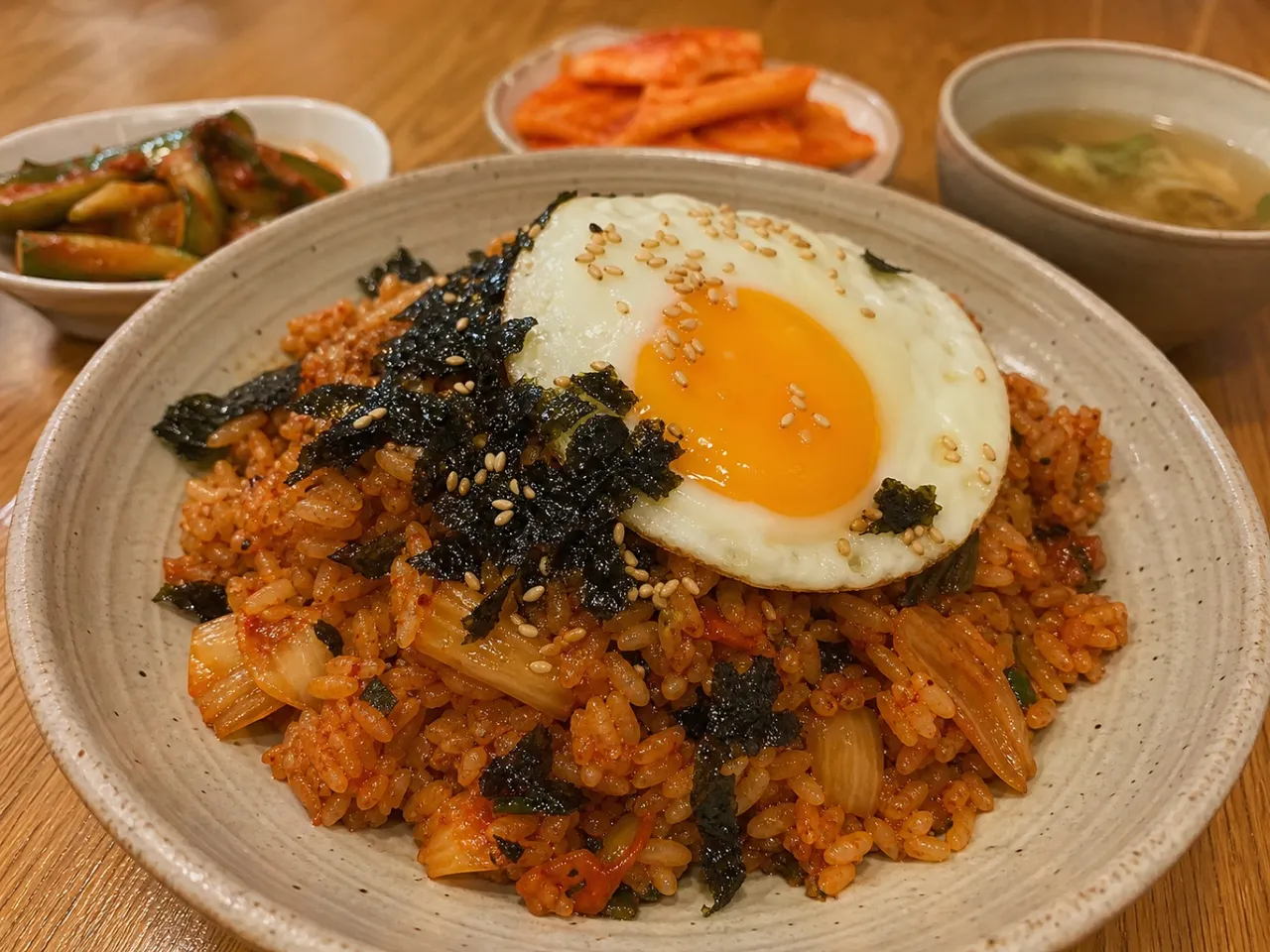
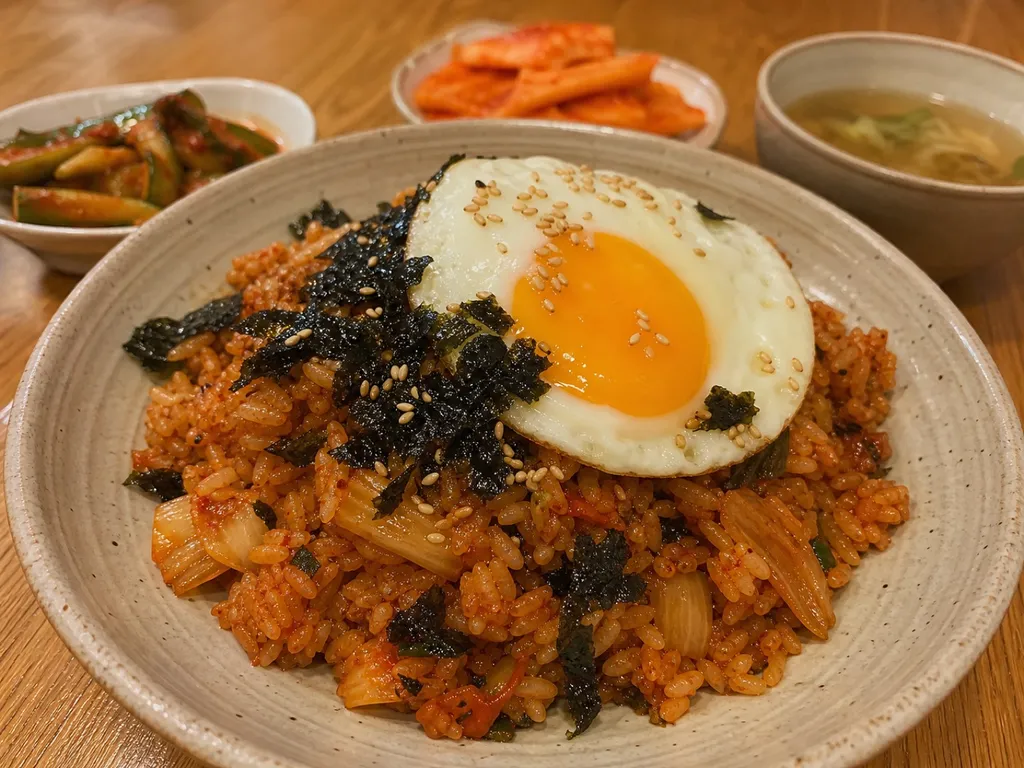
 Kimchi Bokkeumbap (Kimchi Fried Rice)
A simple, flavorful fried rice dish made with chopped over-ripe kimchi and day-old rice.
Contains common allergens
In the app, Listahan checks these against your household automatically.
Good to know
- Ready in under 30 minutes
Matched from this dish's own ingredients and timing. Browse more: 30-minute meals
Instructions
6 steps- 1
Heat a large skillet or wok over medium-high heat. Add the diced Spam or bacon and cook until crispy and the fat has rendered (about 3 minutes).
- 2
Add the diced onion and chopped kimchi to the pork fat. Sauté for 3-4 minutes until the kimchi becomes translucent and fragrant.
- 3
Stir in the gochujang and kimchi juice, cooking for 1 more minute until the liquid reduces slightly.
- 4
Add the cold, day-old rice, breaking up any clumps with the edge of a spatula. Toss rapidly to coat every grain of rice evenly in the red sauce.
- 5
Turn off the heat, drizzle with sesame oil, and give it one final toss.
- 6
Divide into bowls, top each with a sunny-side-up fried egg, and garnish generously with crumbled roasted seaweed.
 Images are for illustrative purposes only, may be inaccurate, and do not guarantee the presence or absence of specific ingredients.
 Listahan Family Score™
64/100
Works for many families
Score reflects how well this recipe fits a typical busy household. In the app, your Family Score is personalized to your household's allergens, kids, and pantry.
Nutrition
per serving525
Calories
17 g
Protein
78 g
Carbs
15 g
Fat
Estimated per serving. Actual values depend on the brands and portions you use.
Listahan cooking guide
Chef notes & practical guide
Technique notes, ingredient swaps, serve-alongside ideas, storage guidance, and equipment for this recipe.
Cultural context
Kimchi Bokkeumbap is Korea's answer to leftover rice and aging kimchi: both fried together with a little protein into a fast, deeply satisfying meal, usually crowned with a fried egg. It is humble, quick, and endlessly adaptable. The sour kimchi and savory rice need only a runny yolk to finish.
Listahan note
This version fries the kimchi until it caramelizes before the rice goes in, building flavor, then tops each plate with a runny fried egg.
Technique cues
- Use cold day-old rice so the grains fry separate, not gummy.
- Caramelize the kimchi in oil before adding rice for deeper flavor.
- Add a spoon of kimchi juice and gochujang for color and tang.
Kitchen flow
- Parallel prep
- Dice the kimchi and protein while the pan heats; the fry is fast.
- Make-ahead
- Best fresh, but cooked rice can be ready in the fridge in advance.
- Leftover move
- Press leftovers into a hot pan to crisp the bottom into a rice cake.
- Cleanup rhythm
- Deglaze the pan used for Kimchi Bokkeumbap (Kimchi Fried Rice) with a splash of water or broth right after cooking — it lifts the browned bits before they dry on and saves scrubbing later. This one leans on the very sour/fermented kimchi. Plan around the roast; that's the slow part.
Ingredient brief
Role, handling, and swap guidance for each key ingredient.
Day-old cold rice
Base
Purpose: Dry, firm grains fry up well rather than clumping.
Handling: Break up clumps before adding to the hot pan.
Adaptation: Chill fresh rice on a tray for an hour if needed.
Sour kimchi
Flavor base
Purpose: Its tang and funk define the dish.
Handling: Chop and fry until it caramelizes; add some of its juice.
Adaptation: Older, more fermented kimchi gives the best flavor.
Spam or bacon
Protein
Purpose: Adds savory, salty richness that pairs with kimchi.
Handling: Dice and crisp before adding the rice.
Adaptation: Use diced pork, tofu, or omit entirely.
Egg
Finishing richness
Purpose: A runny yolk ties the fried rice together.
Handling: Fry sunny-side up and set on top.
Adaptation: Scramble it into the rice if you prefer.
Technique notes
- Caramelize the kimchi well; under-fried kimchi tastes raw and sharp.
- Keep the rice moving in a hot pan so it toasts evenly.
- Finish with sesame oil and crumbled seaweed off the heat.
Ingredient swaps
- Vegetarian direction
- Skip the Spam, use tofu, and confirm the kimchi is vegan.
- Gluten-free direction
- Use a gluten-free gochujang and tamari.
- Lower-sodium direction
- Skip the Spam and go light on added salt.
Serve alongside
- Fried egg
- Crumbled seaweed (gim)
- Pickled radish
- Doenjang jjigae
- Barley tea
- Cold water
- Light lager
Serving suggestions only — check pairings for your household's allergens.
Storage & reheating
- Refrigerate up to 3 days in a sealed container.
- Reheat in a hot pan with a splash of water; add a fresh egg.
- Freezing is not recommended, as fried rice loses texture.
Equipment
- Large skillet or wok
- Spatula
- Cutting board
- Small pan for egg
Make this household-aware
Listahan Pro checks this recipe against your household's allergens, finds pantry-aware swaps, builds the shopping list, and helps you plan the week around it.
Plan it in Listahan
Add Kimchi Bokkeumbap (Kimchi Fried Rice) to your week, check it against your household's allergens, and build the shopping list automatically.
More Korean recipes
 Korean Lens Verified Images are for illustrative purposes only, may be inaccurate, and do not guarantee the presence or absence of specific ingredients.
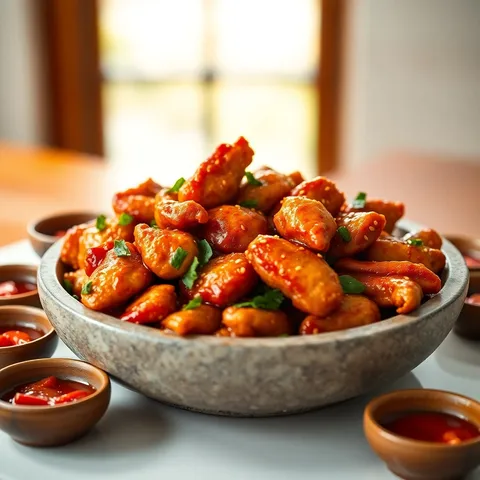
 Dakgalbi (Spicy Stir-fried Chicken)
Diced chicken marinated in a gochujang-based sauce, stir-fried with sweet potatoes, cabbage, perilla leaves, and tteok.
 Korean Lens Verified Images are for illustrative purposes only, may be inaccurate, and do not guarantee the presence or absence of specific ingredients.
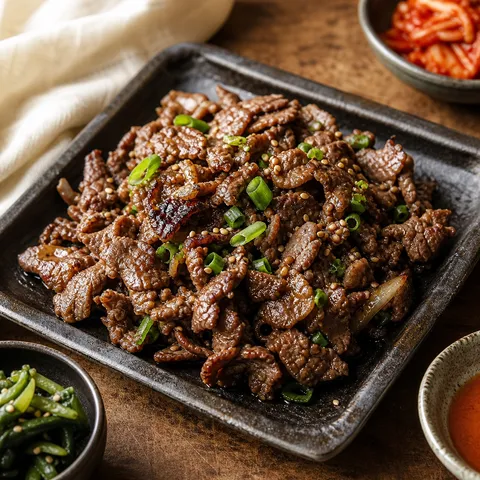
 Bulgogi (Marinated Beef BBQ)
Thinly sliced, marinated beef ribeye or sirloin grilled or stir-fried. Sweet, savory, and tender.
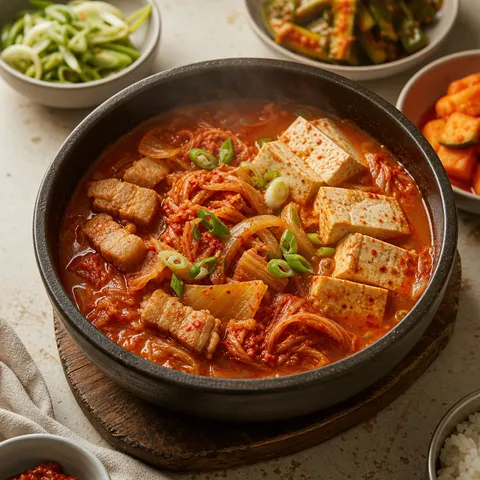 Korean Lens Verified Images are for illustrative purposes only, may be inaccurate, and do not guarantee the presence or absence of specific ingredients.
 Kimchi Jjigae (Kimchi Stew)
A classic, comforting stew made with aged kimchi, pork or seafood, scallions, onions, and diced tofu.