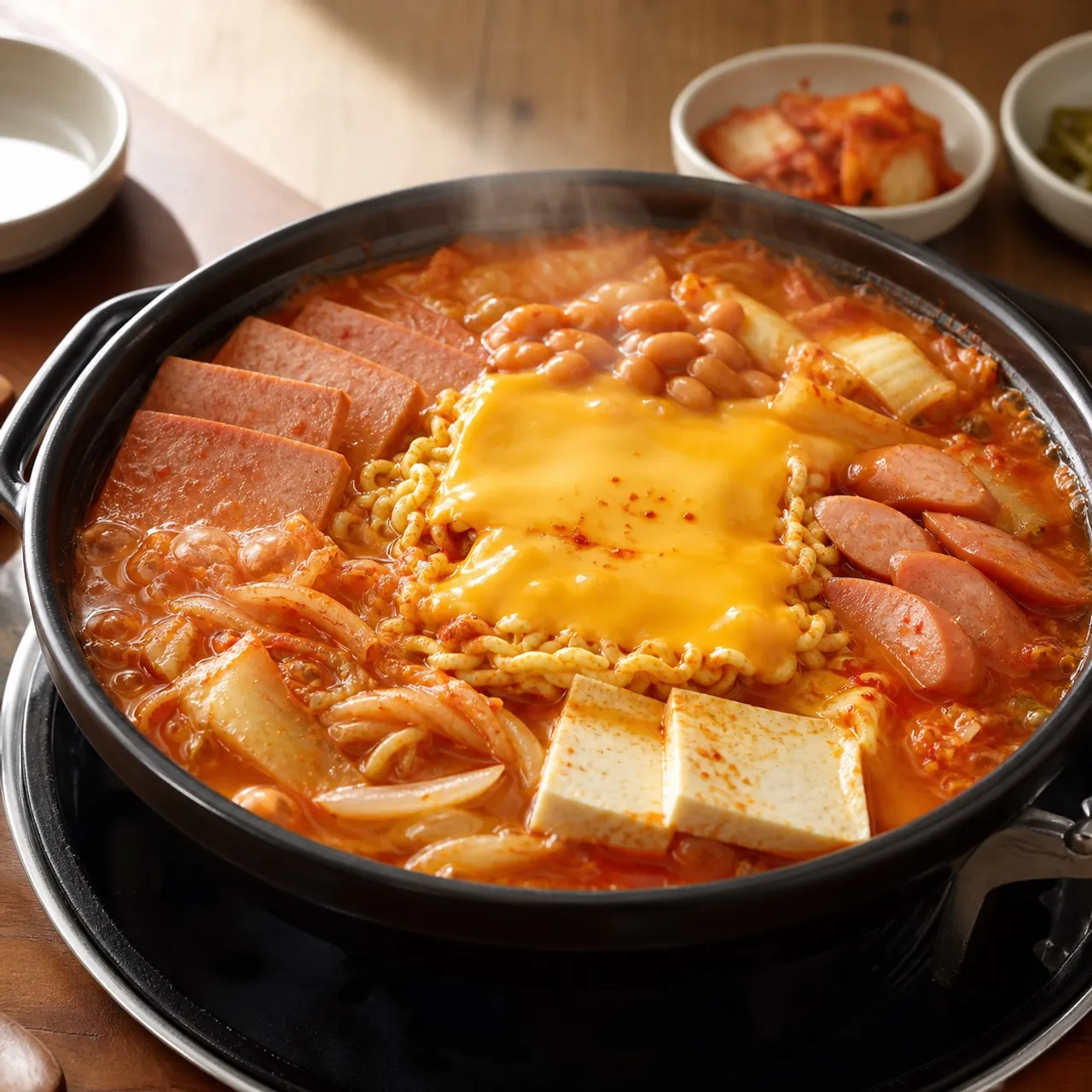
 Korean Images are for illustrative purposes only, may be inaccurate, and do not guarantee the presence or absence of specific ingredients.
 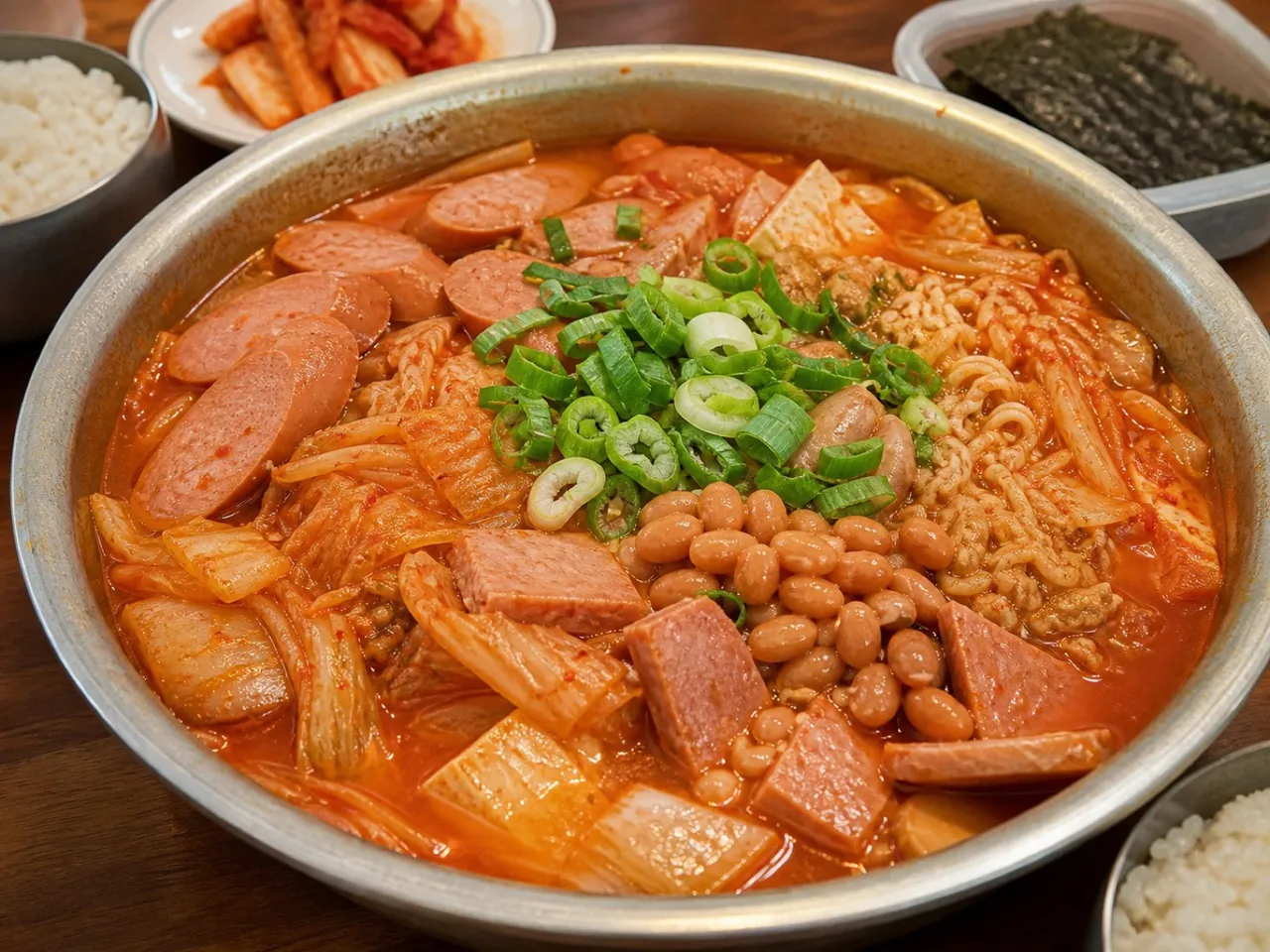 Serving Images are for illustrative purposes only, may be inaccurate, and do not guarantee the presence or absence of specific ingredients.
 Budae Jjigae (Army Stew)
A fusion stew created after the Korean War using surplus processed meats from US military bases mixed with Korean ingredients.
Contains common allergens
In the app, Listahan checks these against your household automatically.
Good to know
- One-pot
- Ready in under 30 minutes
Matched from this dish's own ingredients and timing. Browse more: one-pot dinners30-minute meals
Instructions
6 steps- 1
Mix the gochugaru, gochujang, soy sauce, minced garlic, and rice wine in a small bowl to create the spicy base paste.
- 2
In a wide, shallow pot (a traditional Jeongol pan is ideal), beautifully arrange the sliced Spam, sausages, kimchi, tofu, and onions around the edges.
- 3
Place the baked beans and the spicy base paste directly in the center.
- 4
Pour the broth gently over the ingredients so as not to disturb the arrangement. Bring to a boil over medium-high heat.
- 5
Once boiling, gently stir the center to dissolve the spicy paste into the broth. Let it simmer for 5 minutes.
- 6
Place the instant ramen noodles and American cheese slices right in the center. Simmer for 3-4 more minutes until the noodles are chewy and the cheese melts into the broth.
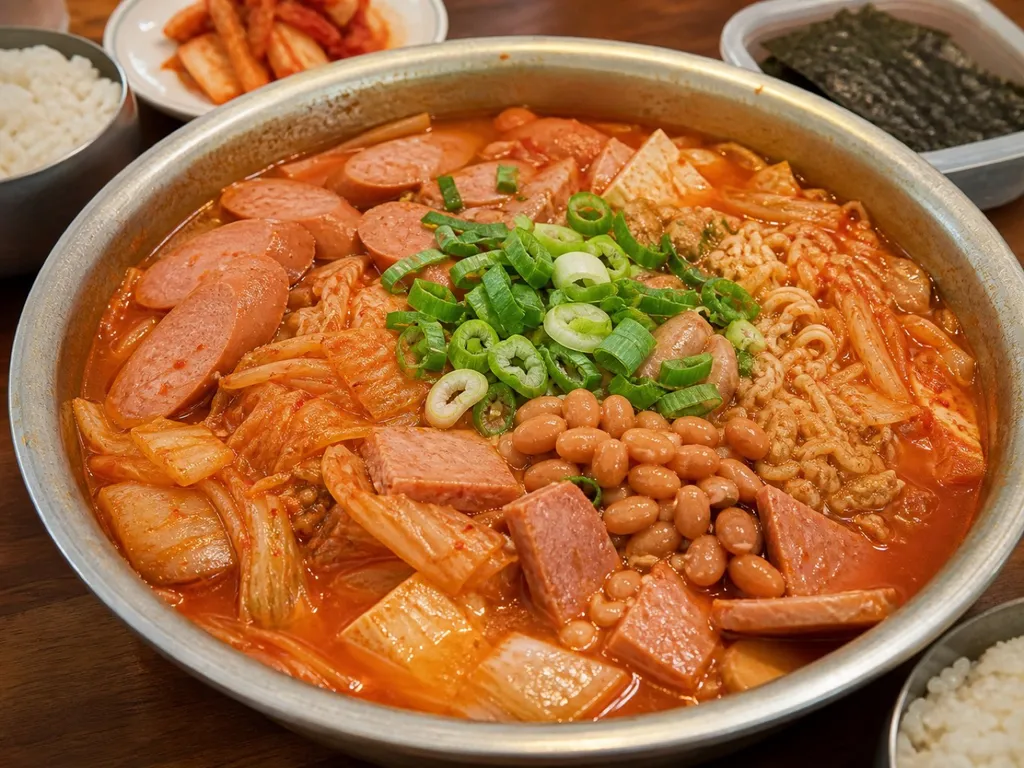 Images are for illustrative purposes only, may be inaccurate, and do not guarantee the presence or absence of specific ingredients.
 Listahan Family Score™
55/100
Works for many families
Score reflects how well this recipe fits a typical busy household. In the app, your Family Score is personalized to your household's allergens, kids, and pantry.
Nutrition
per serving260
Calories
17 g
Protein
5 g
Carbs
19 g
Fat
Estimated per serving. Actual values depend on the brands and portions you use.
Listahan cooking guide
Chef notes & practical guide
Technique notes, ingredient swaps, serve-alongside ideas, storage guidance, and equipment for this recipe.
Cultural context
Budae jjigae, literally army base stew, was born near US military bases after the Korean War, when cooks combined surplus American ingredients like Spam, hot dogs, and canned beans with Korean staples such as kimchi and gochujang. It remains a beloved comfort dish and a direct edible record of that era.
Listahan note
This version arranges the ingredients in neat sections around the pot and keeps the spicy paste in the center until it boils, so the table sees the composed jeongol presentation before everything is stirred together.
Technique cues
- Using fermented, sour kimchi rather than fresh gives the broth the tang it needs to cut through the rich Spam and sausage.
- The instant ramen and cheese go in last so the noodles stay chewy and the cheese melts into a glossy finish rather than overcooking.
- Stirring the central paste into the broth only after it boils lets each diner watch the clear stock turn red and spicy at the table.
Kitchen flow
- Parallel prep
- Slice the Spam, sausages, tofu, and onion and mix the spicy paste while the broth comes up to temperature.
- Make-ahead
- Arrange the raw pot and mix the paste a few hours ahead, then add broth and cook at the table.
- Leftover move
- Add a scoop of rice and another splash of broth to leftovers for a thicker next-day pot.
- Cleanup rhythm
- Cook in one wide shallow pot at the table so there is a single vessel to wash.
Ingredient brief
Role, handling, and swap guidance for each key ingredient.
Spam
Salty cured meat
Purpose: Its salt and fat are the backbone of the stew's rich, savory character.
Handling: Slice and arrange around the edge of the pot so it crisps slightly where it meets the heat.
Adaptation: Any canned luncheon meat works; reduce added salt elsewhere to compensate.
fermented kimchi
Acid and depth
Purpose: Sour, aged kimchi brings the fermented tang that balances all the processed meat.
Handling: Chop and arrange in the pot; its juice is welcome in the broth.
Adaptation: Fresh kimchi works in a pinch, but add a splash of vinegar to mimic the sourness.
gochujang
Spicy base
Purpose: The fermented chili paste, mixed with gochugaru, builds the stew's deep red heat.
Handling: Whisk it into the base paste and set in the center to dissolve once boiling.
Adaptation: More gochugaru plus a little miso approximates the body if you are out of gochujang.
American cheese
Finishing richness
Purpose: It melts into the spicy broth for a signature creamy, mellowing finish.
Handling: Lay the slices in the center near the end so they melt without curdling.
Adaptation: A mild melting cheese like a thin slice of cheddar works but is sharper.
instant ramen noodles
Starch
Purpose: The chewy noodles soak up the spicy broth and make the stew a full meal.
Handling: Add only in the final few minutes so they stay springy, not mushy.
Adaptation: Any quick-cooking wheat noodle works; discard the seasoning packet to control salt.
anchovy-kelp or chicken broth
Liquid base
Purpose: It provides the savory stock the paste and meats season into a stew.
Handling: Pour gently over the arranged ingredients so the composition stays intact.
Adaptation: Plain chicken broth works; an anchovy-kelp base gives more umami depth.
Technique notes
- Hold the ramen and cheese until the last 3 to 4 minutes; adding them early turns the noodles soft and the cheese stringy.
- Pour the broth around the edge rather than over the center so the arranged paste mound stays in place until you choose to stir it in.
- Keep the pot at a gentle simmer once stirred, not a hard boil, so the cheese stays emulsified into the broth.
Ingredient swaps
- Dairy-free direction
- Skip the American cheese; the stew loses its creamy mellowing but stays rich from the Spam and beans.
- Gluten-free direction
- Use rice-based instant noodles, tamari for the soy sauce, and confirm the Spam and beans are gluten-free; texture is nearly identical.
- Lower-sodium direction
- Cut the Spam to half a can, rinse the kimchi lightly, and use a low-sodium broth to tame the salt without losing the spirit.
Serve alongside
- Steamed short-grain rice
- Danmuji (yellow pickled radish)
- Kongnamul muchim (seasoned soybean sprouts)
- Gyeran mari (rolled omelet)
- Cold light lager
- Soju, neat
- Makgeolli (rice wine)
Serving suggestions only — check pairings for your household's allergens.
Storage & reheating
- Refrigerate for up to 3 days; the broth deepens but the noodles should be added fresh on reheating.
- Reheat on the stovetop over medium with an extra splash of broth, adding new noodles if needed.
- Freezing is not recommended; the tofu turns spongy and the cheese separates on thawing.
Equipment
- Wide shallow jeongol pot
- Portable tabletop burner
- Ladle
- Kitchen scissors for the noodles and meats
Make this household-aware
Listahan Pro checks this recipe against your household's allergens, finds pantry-aware swaps, builds the shopping list, and helps you plan the week around it.
Plan it in Listahan
Add Budae Jjigae (Army Stew) to your week, check it against your household's allergens, and build the shopping list automatically.
More Korean recipes
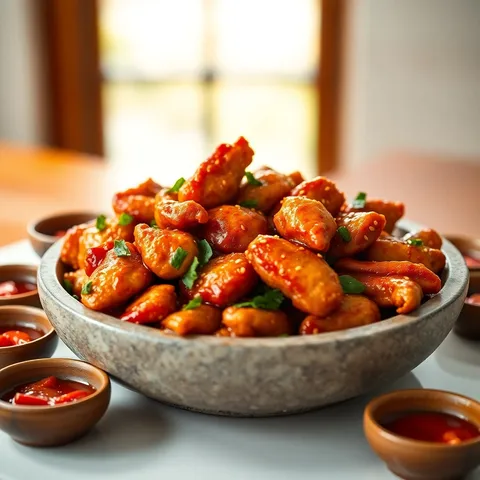 Korean Lens Verified Images are for illustrative purposes only, may be inaccurate, and do not guarantee the presence or absence of specific ingredients.
 Dakgalbi (Spicy Stir-fried Chicken)
Diced chicken marinated in a gochujang-based sauce, stir-fried with sweet potatoes, cabbage, perilla leaves, and tteok.
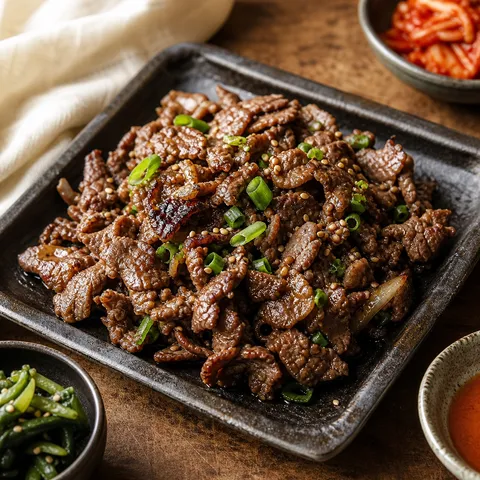 Korean Lens Verified Images are for illustrative purposes only, may be inaccurate, and do not guarantee the presence or absence of specific ingredients.
 Bulgogi (Marinated Beef BBQ)
Thinly sliced, marinated beef ribeye or sirloin grilled or stir-fried. Sweet, savory, and tender.
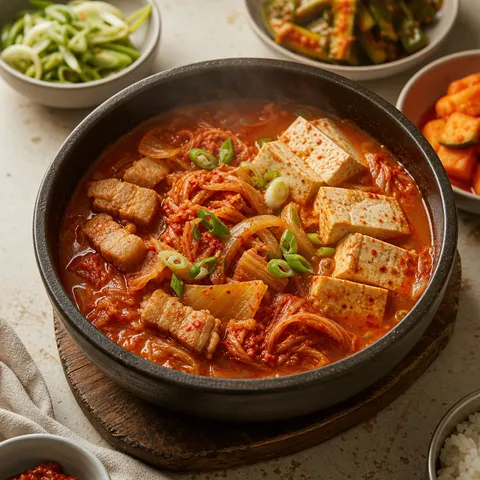 Korean Lens Verified Images are for illustrative purposes only, may be inaccurate, and do not guarantee the presence or absence of specific ingredients.
 Kimchi Jjigae (Kimchi Stew)
A classic, comforting stew made with aged kimchi, pork or seafood, scallions, onions, and diced tofu.