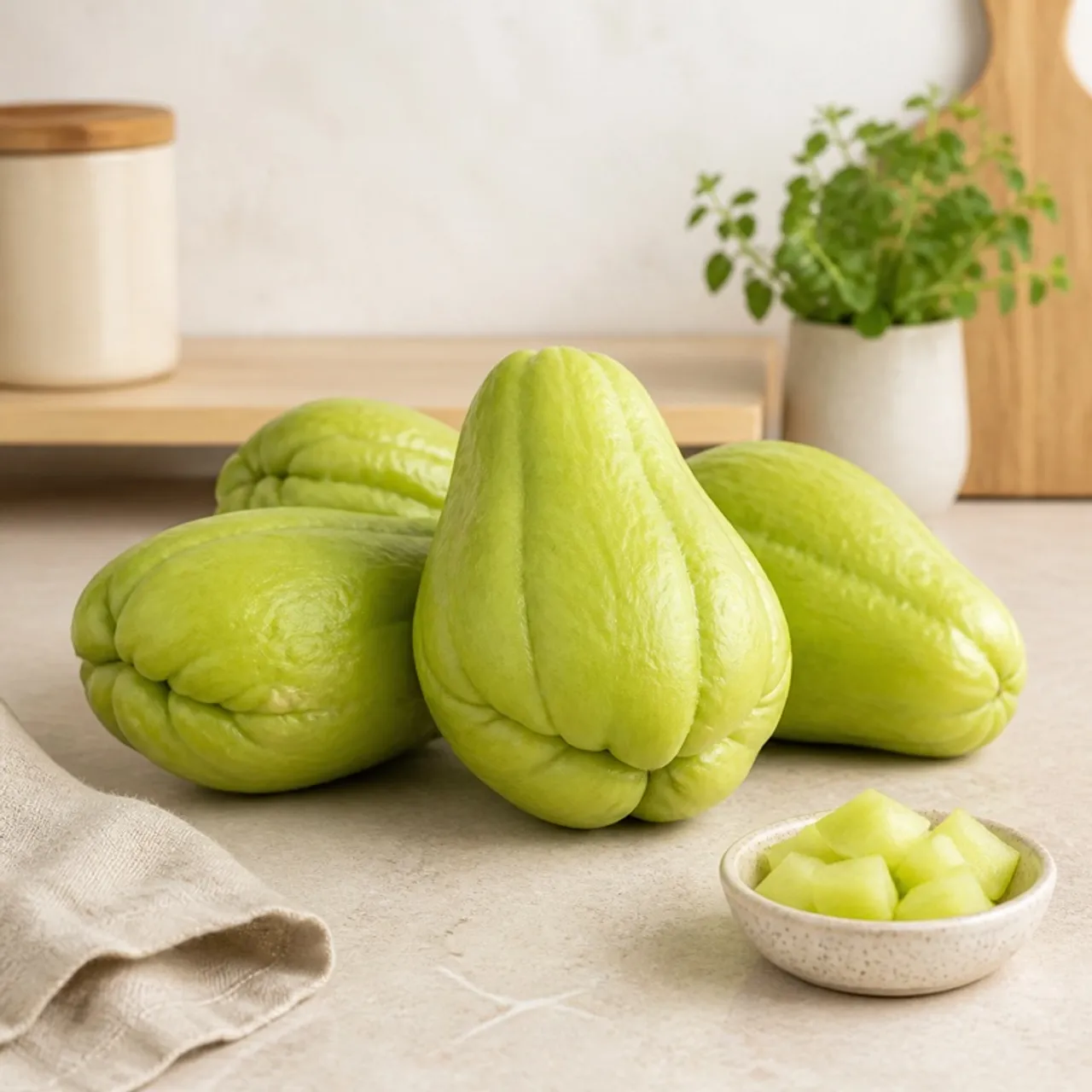
 Food Lens Images are for illustrative purposes only, may be inaccurate, and do not guarantee the presence or absence of specific ingredients.
 Food Lens · Recipe ingredients
Chayote
Very mild and delicate — clean, slightly vegetal, and subtly sweet with a crisp, watery texture reminiscent of cucumber or water chestnut when raw. When cooked, the flesh softens to a tender, slightly squash-like consistency while retaining a pleasant firmness. It absorbs surrounding flavors — garlic, spices, herbs, broth — readily.
Lens VerifiedChayote (Sechium edule) is a mild, pale green, pear-shaped member of the gourd family, widely used as a versatile starchy-crisp vegetable across Latin American, Caribbean, Asian, and Creole cuisines. Its flesh is juicy, crunchy when raw, and tender when cooked, with a delicate flavor that sits somewhere between cucumber and zucchini. The entire plant is edible — skin, seed, flesh, shoots, and root — making it an extraordinarily useful crop in its home regions.
Where it comes from
Chayote was domesticated in southern Mexico and Central America thousands of years ago and was a cultivated food of Aztec civilization long before Spanish contact in the 16th century.
Varieties — The most common form is smooth-skinned and pale green. Some varieties are slightly spiny or deeply ridged. White chayote (creamy pale) is slightly sweeter. In the Caribbean, it is called christophene or cho-cho; in the American South, it is mirliton; in France, chayotte; in Australia, choko.
In Jamaica and the wider Caribbean, cho-cho is a common kitchen garden vegetable — added to soups and stews for bulk and texture. In Vietnam, it is stir-fried with beef or used in pho-style broths. In Louisiana Creole cooking, mirliton stuffed with shrimp and breadcrumbs is a Thanksgiving tradition.
In a modern kitchen — Chayote's mild flavor and texture hold up well in spiralized 'noodle' applications and as a low-calorie addition to coleslaws and grain bowls. Its neutral character makes it a reliable extender in dishes without competing with stronger flavors.
Buying it
Choose chayotes that are firm, smooth, and pale green with no soft spots, wrinkles, or yellowing. Smaller chayotes tend to be more tender and milder. Avoid any that feel spongy or have begun to sprout from the seed (though a sprouting chayote can be planted — the seed is edible and starchy when cooked). Available year-round in Latin American, Caribbean, and Asian grocery stores.
Storing it
Chayote keeps for about a week in a cool pantry spot, or longer wrapped in the fridge crisper. Look for firm, unblemished skin — softening or wrinkling means it's past its best.
Keeps about 7 days in the pantry.
Out of chayote? Good swaps
General cooking guidance — always check the labels on the products you use. Listahan’s allergen checks run automatically when you plan a recipe in the app. Not medical advice.
Recipes that use chayote
Common questions about chayote
Is chayote vegan?
Chayote is generally plant-based and suitable for a vegan diet, but brands differ — confirm on the label.
What can I use instead of chayote?
Good swaps include , , . Each behaves a little differently — see the swaps above for notes, and always check labels for allergens.
How do I store chayote?
Chayote keeps for about a week in a cool pantry spot, or longer wrapped in the fridge crisper. Look for firm, unblemished skin — softening or wrinkling means it's past its best. It keeps about 7 days in the pantry.
More recipe ingredients
See all


Make chayote about your kitchen — with Listahan Pro
Everything above is free, forever. Pro adds the Household Lens — the same food, seen for your family:
-
Checked for each member
Flags chayote per person against your household's allergies and school rules — not just a generic "contains" tag.
-
Pantry-aware
Knows whether you already have it, what is running low, and the best swap from what is in your kitchen tonight.
-
What it costs near you
A real price from the Presyo community index, so you can plan the budget — not guess.
-
Your household memory
Who likes it, plus your own private notes — brand, where you keep it, who skips it.
Allergen safety is always free — Pro adds the automation, never the safety.
Cook with chayote — safely
Plan a recipe in Listahan and the household allergen check runs automatically — every plan, every swap, every lunchbox. Safety is never paywalled.