 Food Lens Images are for illustrative purposes only, may be inaccurate, and do not guarantee the presence or absence of specific ingredients.
 Food Lens · Recipe ingredients
Chinese Sausages
Sweet, savory, and porky with notes of rice wine, soy, and five-spice; chewy and dense when cold, juicy and fragrant when cooked; fat renders out beautifully into surrounding ingredients.
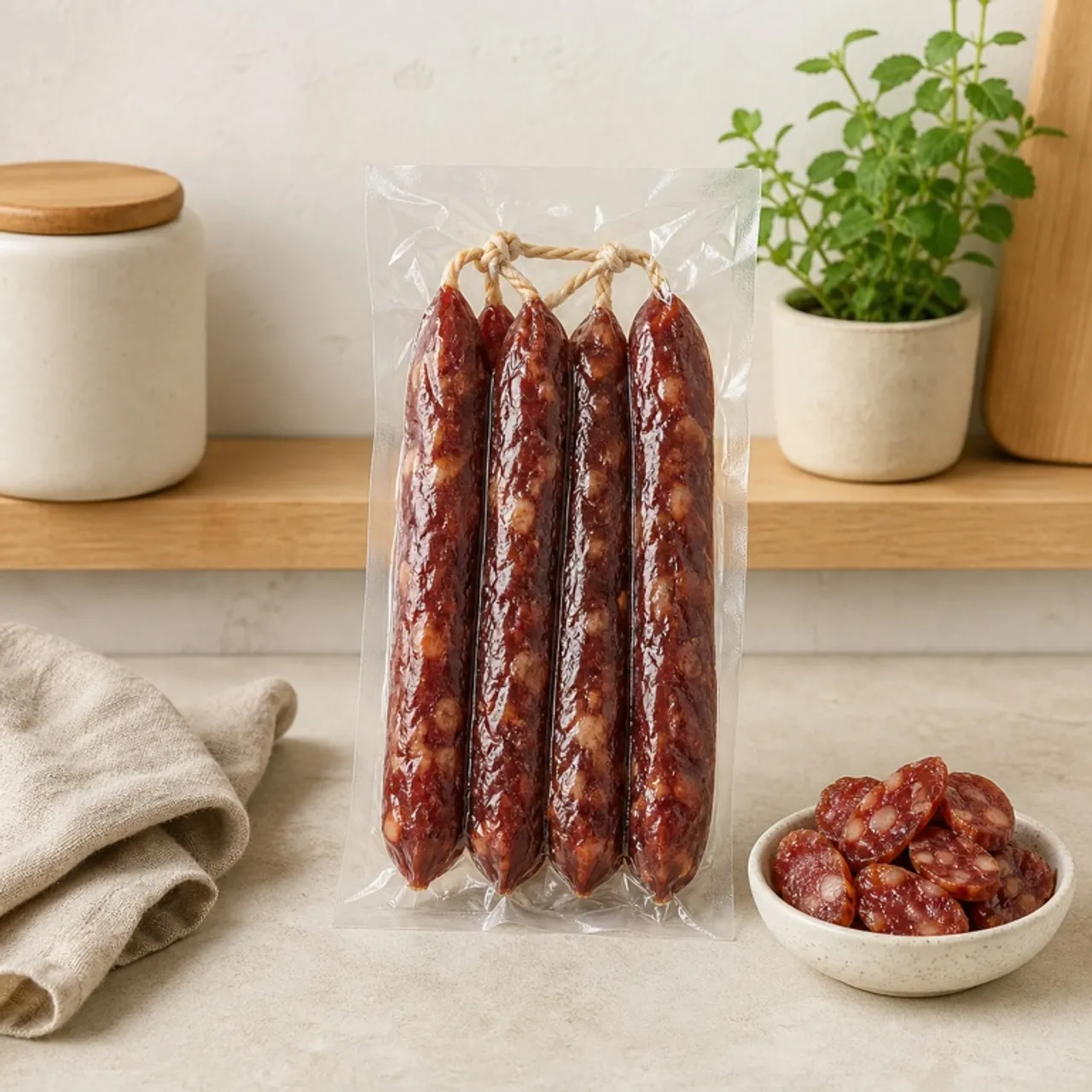
Lens VerifiedChinese sausages (known as lap cheong or lop cheung in Cantonese) are sweet, dried, cured pork sausages with a chewy, dense texture and intensely savory-sweet flavor. They are reddish in color, about the width of a finger, and must be cooked before eating. A pantry staple in Chinese and Southeast Asian households, they perfume an entire dish with their sweet-savory complexity.
Where it comes from
Sweet, chewy, and deeply savory — lap cheong is one of the most concentrated flavor packages in any Asian kitchen, cured and dried into a link that holds the essence of Cantonese cooking.
Varieties — The most common variety is the sweet Cantonese pork lap cheong, seasoned with soy sauce, sugar, rice wine, and five-spice. Liver sausages (using pork liver) are darker and more savory. Duck liver versions are a Cantonese delicacy. Some Southeast Asian versions use more garlic or spice. Refrigerated fresh Chinese sausages need prompt use; shelf-stable dried links last months.
Chinese sausages are synonymous with Chinese New Year and festive cooking throughout the Cantonese diaspora. A string of lap cheong hanging in a kitchen window to cure is an iconic sight in traditional Cantonese households. They are also one of the most recognizable flavors of claypot rice.
In a modern kitchen — Always cook lap cheong before eating — a quick steam or a few minutes in a hot pan renders the fat and transforms the texture from chewy and dense to juicy and aromatic.
Buying it
Look for lap cheong at Asian grocery stores, sold vacuum-packed or in pairs tied with string. The casing should be smooth and dry with a deep reddish-brown color. Avoid any with visible mold, off-odors, or very dark browning. Refrigerate after opening and use within a week, or freeze for up to three months.
Storing it
Unopened, cured Chinese sausages keep in a cool, dry pantry; once opened, refrigerate and use within a few weeks, or freeze for longer storage. A sticky surface or off smell means they've spoiled.
Keeps about 3 days in the fridge.
Out of chinese sausages? Good swaps
- Spanish chorizo (cured) — Smokier and spicier; lacks the sweetness but adds savory depth to rice dishes
- kielbasa, thinly sliced — Milder and less sweet; works in fried rice as a texture stand-in
- bacon, roughly chopped — Adds porky fat and savory flavor; missing the sweetness and five-spice character
General cooking guidance — always check the labels on the products you use. Listahan’s allergen checks run automatically when you plan a recipe in the app. Not medical advice.
Recipes that use chinese sausages
Common questions about chinese sausages
What can I use instead of chinese sausages?
Good swaps include Spanish chorizo (cured), kielbasa, thinly sliced, bacon, roughly chopped. Each behaves a little differently — see the swaps above for notes, and always check labels for allergens.
How do I store chinese sausages?
Unopened, cured Chinese sausages keep in a cool, dry pantry; once opened, refrigerate and use within a few weeks, or freeze for longer storage. A sticky surface or off smell means they've spoiled. It keeps about 3 days in the fridge.
More recipe ingredients
See all


Make chinese sausages about your kitchen — with Listahan Pro
Everything above is free, forever. Pro adds the Household Lens — the same food, seen for your family:
-
Checked for each member
Flags chinese sausages per person against your household's allergies and school rules — not just a generic "contains" tag.
-
Pantry-aware
Knows whether you already have it, what is running low, and the best swap from what is in your kitchen tonight.
-
What it costs near you
A real price from the Presyo community index, so you can plan the budget — not guess.
-
Your household memory
Who likes it, plus your own private notes — brand, where you keep it, who skips it.
Allergen safety is always free — Pro adds the automation, never the safety.
Cook with chinese sausages — safely
Plan a recipe in Listahan and the household allergen check runs automatically — every plan, every swap, every lunchbox. Safety is never paywalled.