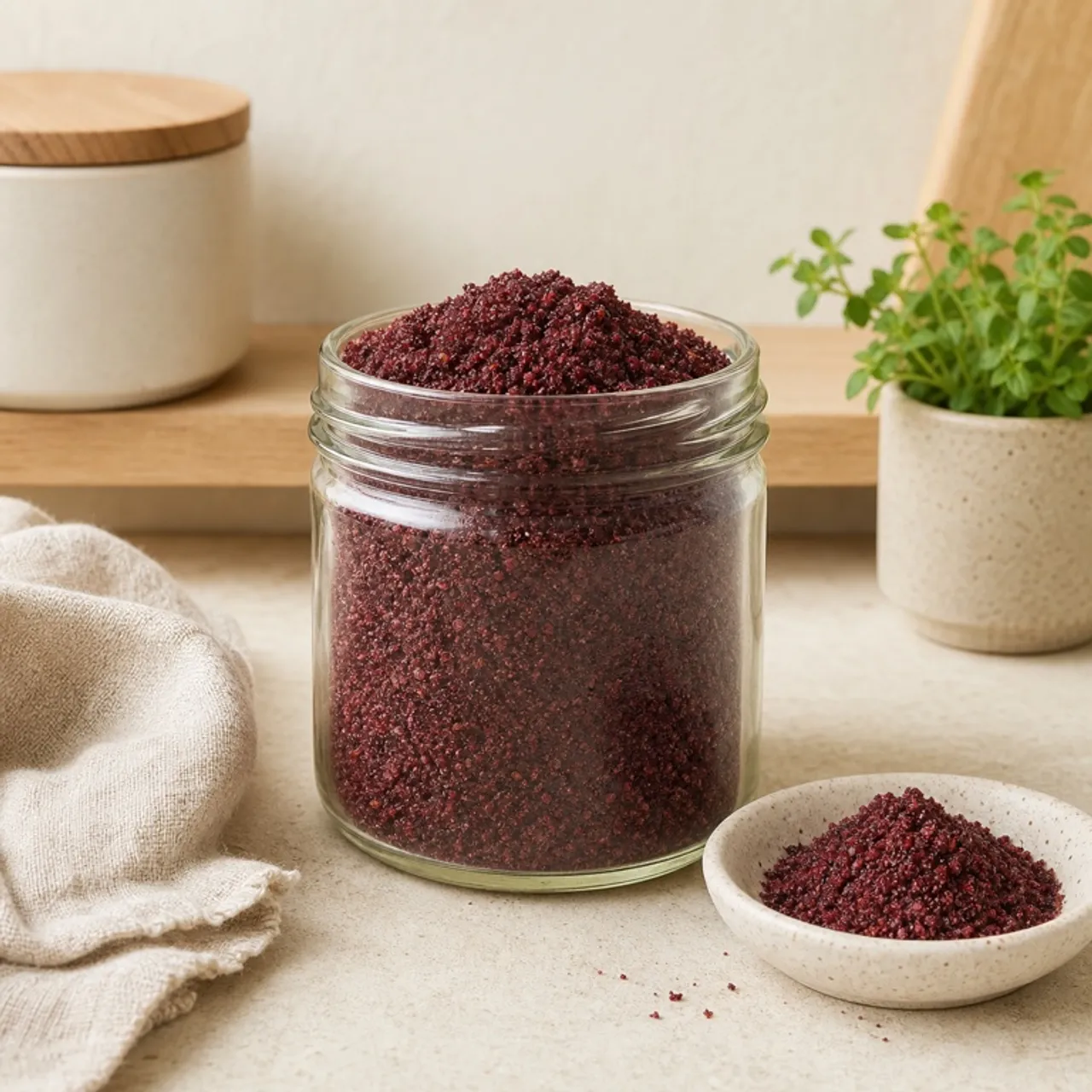
 Food Lens Images are for illustrative purposes only, may be inaccurate, and do not guarantee the presence or absence of specific ingredients.
 Food Lens · Recipe ingredients
Sumac
Bright, tangy, and fruity with a wine-like acidity and subtle astringency. Less sharp than lemon juice, with a more complex, berry-forward sourness. The color it imparts — a vivid crimson stain — is almost as important as the flavor in some preparations.
Lens VerifiedSumac is a deep burgundy-red spice ground from the dried berries of the Rhus coriaria shrub, native to the Middle East and Mediterranean. Its defining characteristic is a bright, fruity tartness — a lemony, wine-like acidity that is central to Levantine and Turkish cooking. Before lemons became widely available in the region, sumac was the primary souring agent in kitchens from Lebanon to Iran.
Where it comes from
Sumac has been harvested from wild Rhus coriaria shrubs across the eastern Mediterranean and Middle East for thousands of years, serving as a primary souring agent in cooking long before lemons were cultivated in the region.
Varieties — Rhus coriaria is the culinary species. Ground sumac is the most common form; whole dried berries are sometimes used in spice blends or for making sumac water. The color ranges from dark burgundy to brick red depending on quality and age.
In Lebanon and Palestine, sumac-dressed raw onion — thin-sliced and macerated with sumac until the onions soften and take on a deep pink hue — is an essential accompaniment to shawarma and grilled chicken. In Turkey, sumac is as routine a table condiment as salt and pepper in kebab restaurants.
In a modern kitchen — Sumac is an increasingly popular finishing spice in Western kitchens, used to add brightness and color to avocado toast, roasted vegetables, and grain bowls. It pairs especially well with lamb, eggplant, lentils, and yogurt-based dishes.
Buying it
Buy sumac that is deep burgundy-red and smells strongly of tart, wine-like fruitiness — pale, brownish sumac has lost its potency. It should feel slightly moist and clump slightly rather than being bone-dry. Purchase from Middle Eastern grocery stores for freshness and value.
Storing it
Keep sumac in a sealed container in a dark pantry cabinet — light and heat fade its color and tartness fastest. It won't spoil so much as go flat and dull over time.
Keeps about 1 year in the pantry.
Out of sumac? Good swaps
General cooking guidance — always check the labels on the products you use. Listahan’s allergen checks run automatically when you plan a recipe in the app. Not medical advice.
Recipes that use sumac
Common questions about sumac
Is sumac vegan?
Sumac is generally plant-based and suitable for a vegan diet, but brands differ — confirm on the label.
What can I use instead of sumac?
Good swaps include , , . Each behaves a little differently — see the swaps above for notes, and always check labels for allergens.
How do I store sumac?
Keep sumac in a sealed container in a dark pantry cabinet — light and heat fade its color and tartness fastest. It won't spoil so much as go flat and dull over time. It keeps about 1 year in the pantry.
More recipe ingredients
See all


Make sumac about your kitchen — with Listahan Pro
Everything above is free, forever. Pro adds the Household Lens — the same food, seen for your family:
-
Checked for each member
Flags sumac per person against your household's allergies and school rules — not just a generic "contains" tag.
-
Pantry-aware
Knows whether you already have it, what is running low, and the best swap from what is in your kitchen tonight.
-
What it costs near you
A real price from the Presyo community index, so you can plan the budget — not guess.
-
Your household memory
Who likes it, plus your own private notes — brand, where you keep it, who skips it.
Allergen safety is always free — Pro adds the automation, never the safety.
Cook with sumac — safely
Plan a recipe in Listahan and the household allergen check runs automatically — every plan, every swap, every lunchbox. Safety is never paywalled.