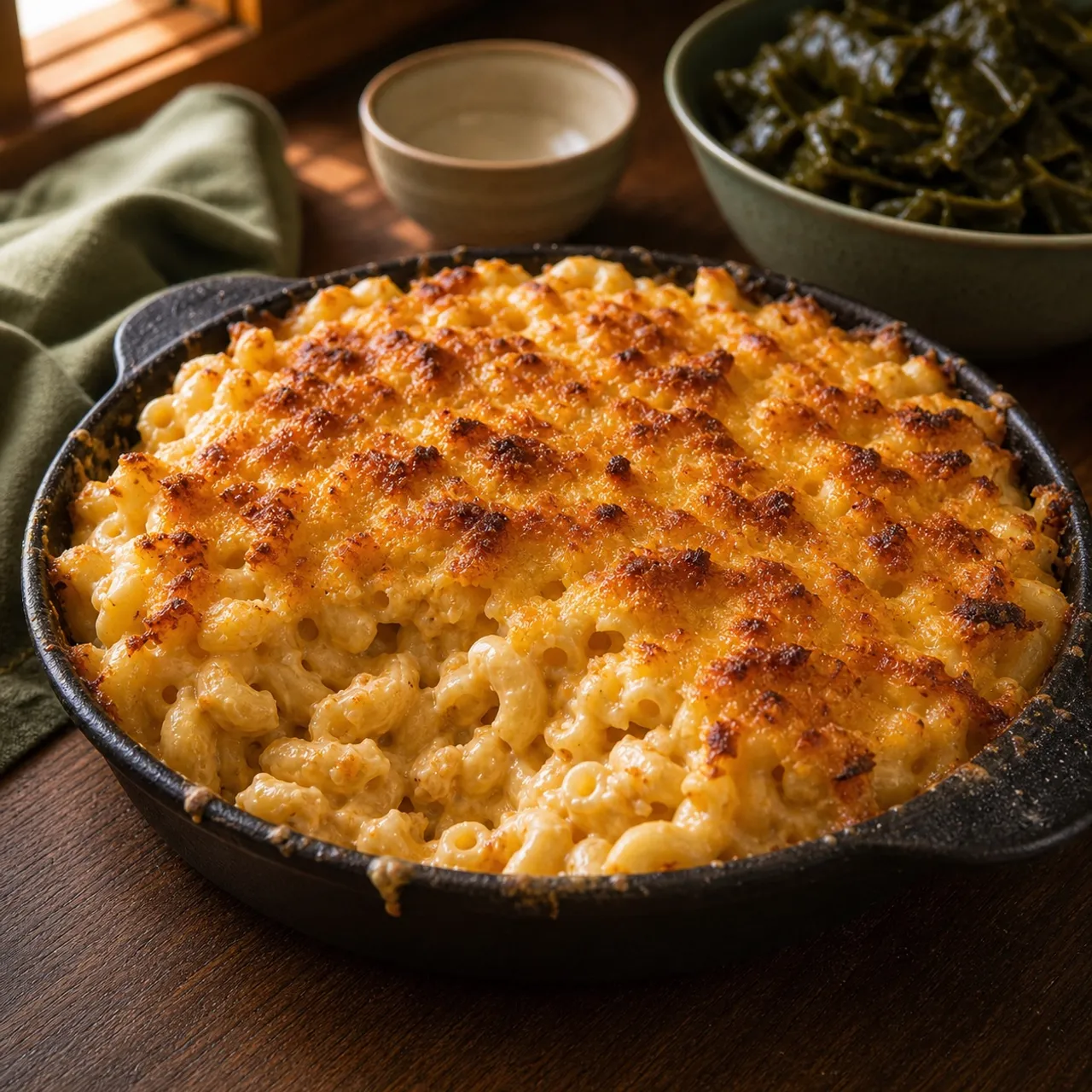
 Bbq Images are for illustrative purposes only, may be inaccurate, and do not guarantee the presence or absence of specific ingredients.
 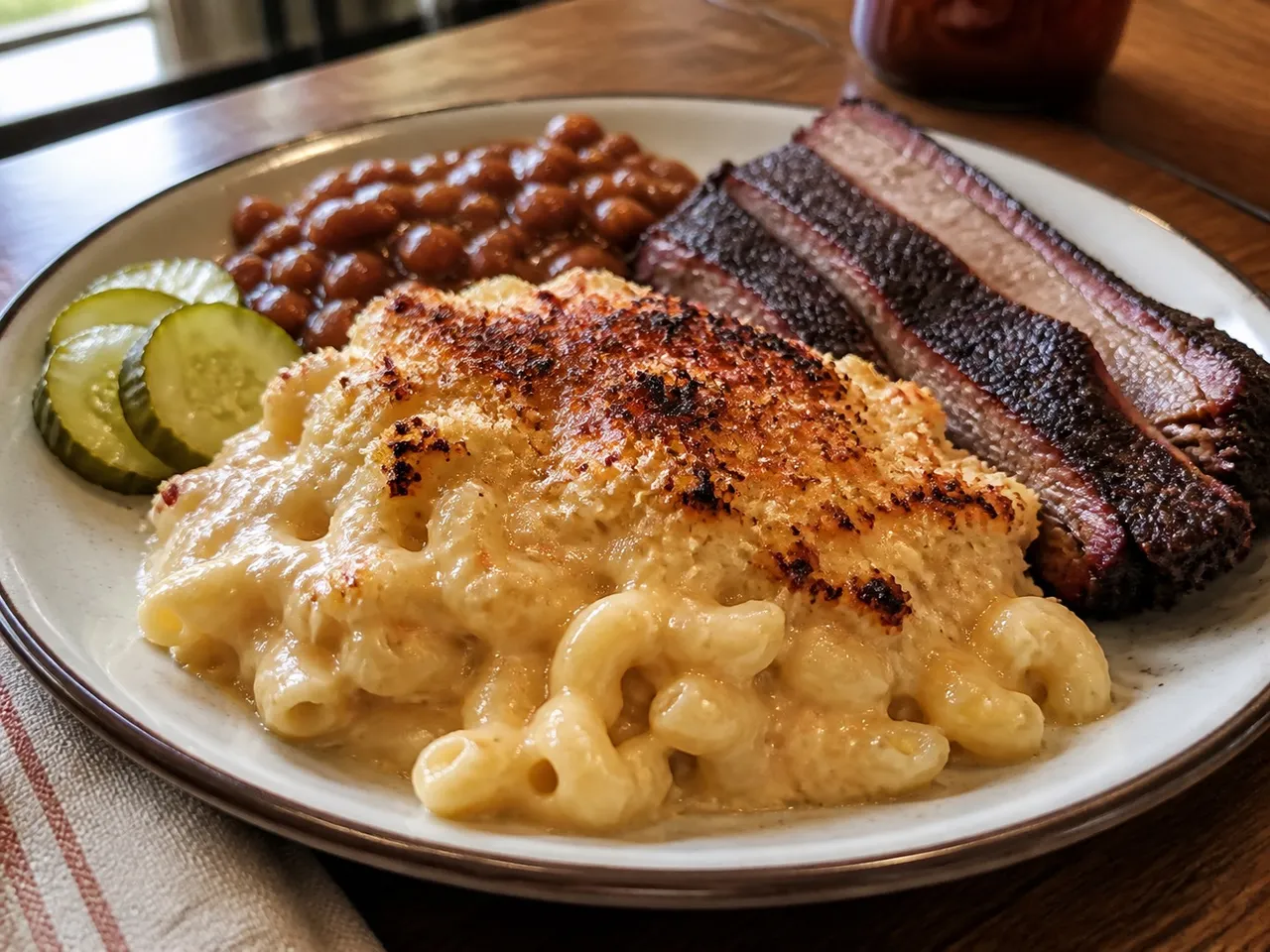 Serving Images are for illustrative purposes only, may be inaccurate, and do not guarantee the presence or absence of specific ingredients.
 Smoked Mac and Cheese
Rich, creamy stovetop mac and cheese finished with an hour in the smoker for a deep, smoky edge that pairs perfectly with barbecue.
Contains common allergens
In the app, Listahan checks these against your household automatically.
Instructions
6 steps- 1
Cook the macaroni in well-salted boiling water until just al dente, then drain.
- 2
Melt the butter in a saucepan over medium heat, whisk in the flour, and cook 1 to 2 minutes to form a roux.
- 3
Gradually whisk in the milk and cream, and cook, whisking often, until thickened, about 5 minutes.
- 4
Remove from heat and stir in the cheddar and smoked gouda until melted and smooth. Season with smoked paprika, salt, and pepper.
- 5
Combine the cheese sauce with the cooked macaroni in a disposable foil pan or cast-iron skillet; top with panko if using.
- 6
Place the pan in a smoker set to 225 degrees Fahrenheit for about 1 hour, until the edges are bubbling and the top has taken on a light smoky color. Serve hot.
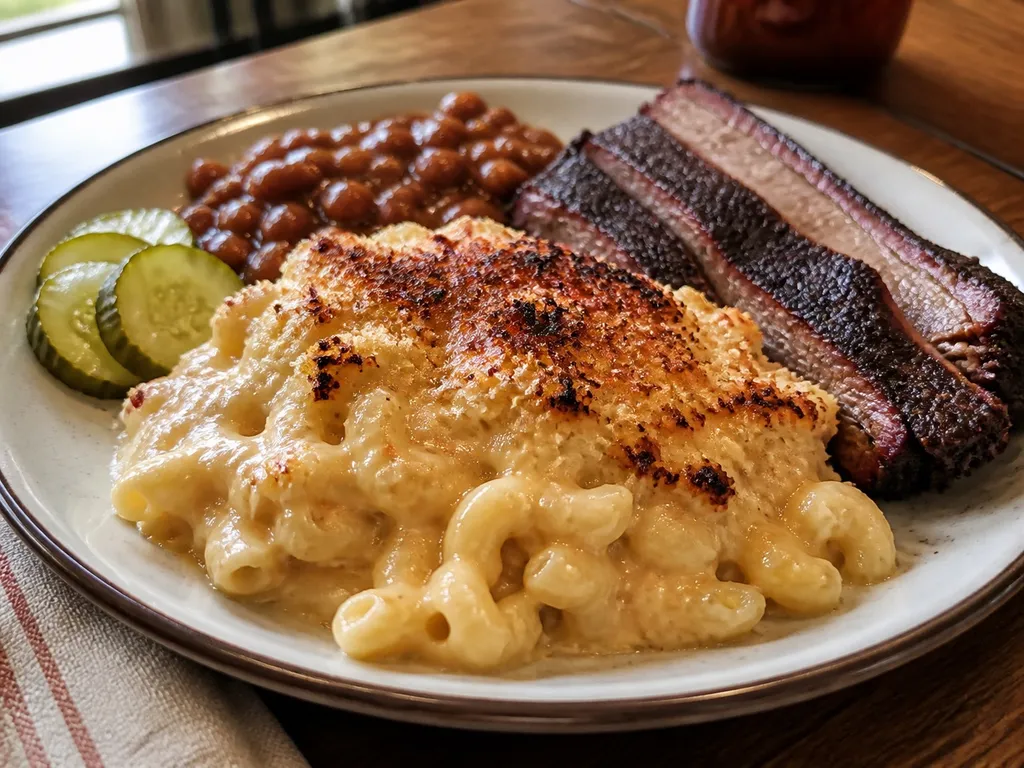 Images are for illustrative purposes only, may be inaccurate, and do not guarantee the presence or absence of specific ingredients.
 Listahan Family Score™
75/100
Good fit for most families
Score reflects how well this recipe fits a typical busy household. In the app, your Family Score is personalized to your household's allergens, kids, and pantry.
Nutrition
per serving795
Calories
32 g
Protein
58 g
Carbs
49 g
Fat
Estimated per serving. Actual values depend on the brands and portions you use.
Listahan cooking guide
Chef notes & practical guide
Technique notes, ingredient swaps, serve-alongside ideas, storage guidance, and equipment for this recipe.
Cultural context
Mac and cheese has deep roots in Southern American cooking, having been popularized by Thomas Jefferson, who reportedly brought a pasta machine back from France and served macaroni with cheese at a White House dinner. At some point in the evolution of American barbecue, pitmasters began sliding pans of mac and cheese into idle smokers, discovering that an hour of low wood smoke transformed the dish into something entirely new — a creamy, golden-crusted side with a campfire depth that no oven could replicate. Today smoked mac and cheese is one of the most ordered side dishes at barbecue restaurants, and home cooks have adopted it as a crowd-pleasing way to use residual smoker heat.
Listahan note
This version builds a three-cheese sauce base — sharp cheddar for flavor, Gruyere for melt, and cream cheese for body — then smokes the assembled dish uncovered so the top bronzes and absorbs maximum wood smoke.
Technique cues
- Cook the pasta two to three minutes short of al dente before mixing it with the cheese sauce; the pasta will continue cooking in the smoker, and starting from fully cooked pasta results in a mushy final texture.
- Do not cover the pan with foil during smoking — an uncovered surface is essential for the cheese crust to form and for the smoke to have direct contact with the dish; a foil cover traps steam and produces a pale, soft top instead of the characteristic crust.
- Pull the mac from the smoker when the top is just set and bronze, not fully firm; it continues to thicken as it cools and will be perfectly set by the time it reaches the table.
Kitchen flow
- Parallel prep
- Make the cheese sauce while the pasta cooks; assemble the pan immediately and slide it into the smoker as soon as the primary protein reaches its stall or wrapping phase, using residual smoker space efficiently.
- Make-ahead
- Assemble the mac and cheese up to 24 hours ahead and refrigerate unbaked; add 10 to 15 minutes to the smoking time when starting from cold.
- Leftover move
- Reheat leftover smoked mac in a skillet with a splash of milk over medium-low heat, stirring continuously — this recreates the creamy consistency better than a microwave, which tends to make it paste-like.
- Cleanup rhythm
- Spray the foil pan with nonstick cooking spray before filling; the smoked cheese crust releases much more easily from a coated surface, and the disposable pan handles cleanup entirely.
Ingredient brief
Role, handling, and swap guidance for each key ingredient.
elbow macaroni
pasta base
Purpose: The small curved shape of elbow macaroni traps cheese sauce inside each piece and holds up structurally through the smoke without going mushy the way more delicate pasta shapes would.
Handling: Cook in well-salted water until just shy of al dente — about 2 minutes less than the package time — drain and toss immediately with a light coat of butter to prevent sticking.
Adaptation: Cavatappi holds sauce even more aggressively due to its ridges and hollow center; medium shells are another excellent choice.
sharp cheddar cheese
primary flavor
Purpose: Sharp cheddar delivers the familiar savory-tangy profile that defines mac and cheese; its assertive flavor stands up to wood smoke without being overwhelmed.
Handling: Grate from a block rather than using pre-shredded cheese; pre-shredded cheese contains anti-caking starch that prevents smooth melting and creates a grainy sauce.
Adaptation: White cheddar provides a sharper, cleaner flavor; a combination of yellow and white cheddar gives a more complex result.
Gruyere cheese
melt and richness
Purpose: Gruyere melts into an exceptionally smooth, elastic sauce and contributes a mild nutty flavor that complements rather than competes with the cheddar.
Handling: Grate finely so it incorporates quickly into the hot bechamel without forming clumps.
Adaptation: Fontina or Havarti offer similarly smooth melting properties; smoked Gouda adds an additional smoke dimension if you want to lean further into the campfire character.
cream cheese
sauce binder
Purpose: Cream cheese provides body and stability to the sauce, helping it stay creamy and cohesive through the extended smoking time rather than breaking into greasy pools.
Handling: Bring to room temperature and cube before adding to the bechamel so it incorporates smoothly.
Adaptation: Mascarpone gives a richer, less tangy result; full-fat sour cream adds tang and body similarly.
whole milk and heavy cream
sauce base
Purpose: The combination of milk and cream produces a bechamel with enough fat to stay creamy during the slow smoke without thinning out excessively.
Handling: Warm the milk and cream before adding to the roux to prevent lumps and speed up sauce formation.
Adaptation: Evaporated milk is a classic Southern shortcut that produces a very stable sauce; for a dairy-free version, full-fat oat milk with vegan butter and dairy-free cheese provides the best approximation.
Technique notes
- For a more pronounced smoke character, add a quarter teaspoon of smoked paprika and a half teaspoon of dry mustard powder to the cheese sauce before assembling — these amplify the wood smoke flavor even before the pan goes into the smoker.
- A bread crumb topping mixed with melted butter and a pinch of smoked paprika, applied after the first 30 minutes of smoking, creates a crunchy crust over the formed cheese top that adds complexity to every bite.
- If smoking at the same time as a full brisket, place the mac at the outer edge of the smoker grate where temperatures are slightly lower; direct positioning over the firebox can cause the cheese to separate and become greasy.
Ingredient swaps
- Gluten-free direction
- Use a certified gluten-free pasta and replace the all-purpose flour in the bechamel with an equal weight of white rice flour or a GF 1-to-1 baking flour blend.
- Dairy-free direction
- Full-fat oat milk, vegan butter, and a blend of vegan cheddar and cashew cream cheese produce a surprisingly creamy result; expect a slightly different flavor profile but the smoke character remains intact.
- Spicy direction
- Stir a tablespoon of pickled jalapeno brine and a half cup of diced pickled jalapenos into the cheese sauce before assembling for a smoked jalapeno mac that pairs especially well with pulled pork.
Serve alongside
- Texas smoked brisket or Carolina pulled pork
- Vinegar coleslaw to cut through the richness
- Pickled green tomatoes
- Cream soda or vanilla craft soda
- A malty brown ale like Newcastle or Dogfish Head Indian Brown Ale
Serving suggestions only — check pairings for your household's allergens.
Storage & reheating
- Refrigerate smoked mac and cheese covered for up to 4 days; the smoked flavor actually deepens overnight as it permeates the pasta.
- Reheat individual portions in a skillet with a splash of milk over medium-low heat, stirring until smooth and creamy; the microwave works in a pinch but tends to make the texture pasty.
- Freeze in individual portions in airtight containers for up to 1 month; the texture changes slightly upon thawing but holds well if reheated slowly on the stovetop.
Equipment
- Disposable half-size aluminum foil pan
- Box grater or food processor with shredding disc for block cheese
- Heavy saucepan for making the bechamel sauce
Make this household-aware
Listahan Pro checks this recipe against your household's allergens, finds pantry-aware swaps, builds the shopping list, and helps you plan the week around it.
Plan it in Listahan
Add Smoked Mac and Cheese to your week, check it against your household's allergens, and build the shopping list automatically.
More Bbq recipes
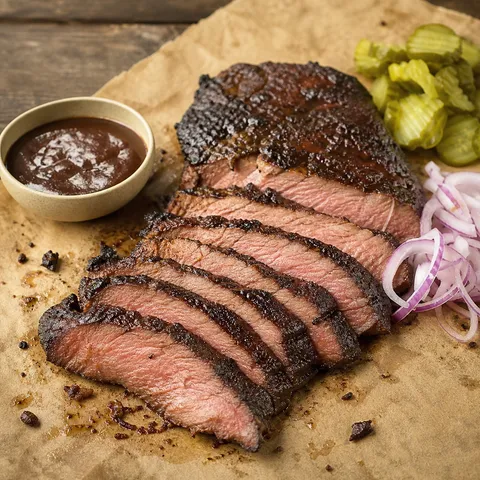 Bbq Lens Verified Images are for illustrative purposes only, may be inaccurate, and do not guarantee the presence or absence of specific ingredients.
 Santa Maria Tri-Tip
California-style Santa Maria tri-tip roast seasoned simply with garlic, pepper, and salt, then grilled over red oak for a smoky crust.
 Bbq Lens Verified Images are for illustrative purposes only, may be inaccurate, and do not guarantee the presence or absence of specific ingredients.
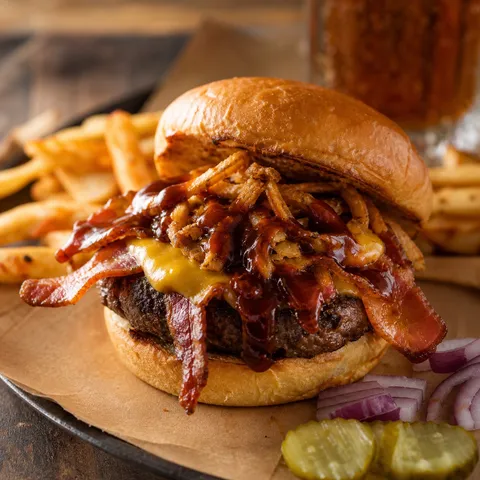
 BBQ Bacon Cheeseburgers
Thick beef patties grilled over an open flame, topped with crispy bacon, melted cheddar, and smoky BBQ sauce on a toasted bun.
 Bbq Lens Verified Images are for illustrative purposes only, may be inaccurate, and do not guarantee the presence or absence of specific ingredients.
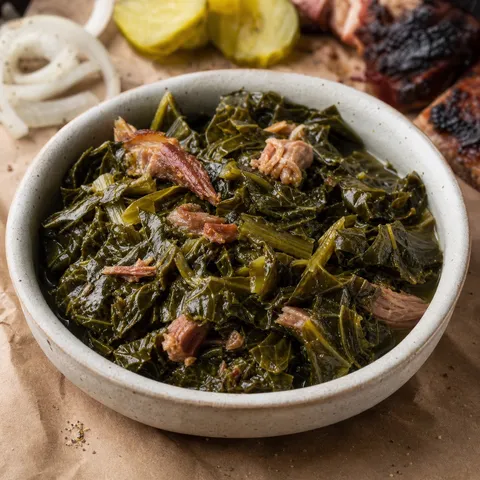
 Southern Collard Greens
Slow-simmered collard greens with smoked ham hock, cider vinegar, and a touch of heat, a soulful Southern BBQ side.