 Brazilian Images are for illustrative purposes only, may be inaccurate, and do not guarantee the presence or absence of specific ingredients.
  Serving Images are for illustrative purposes only, may be inaccurate, and do not guarantee the presence or absence of specific ingredients.
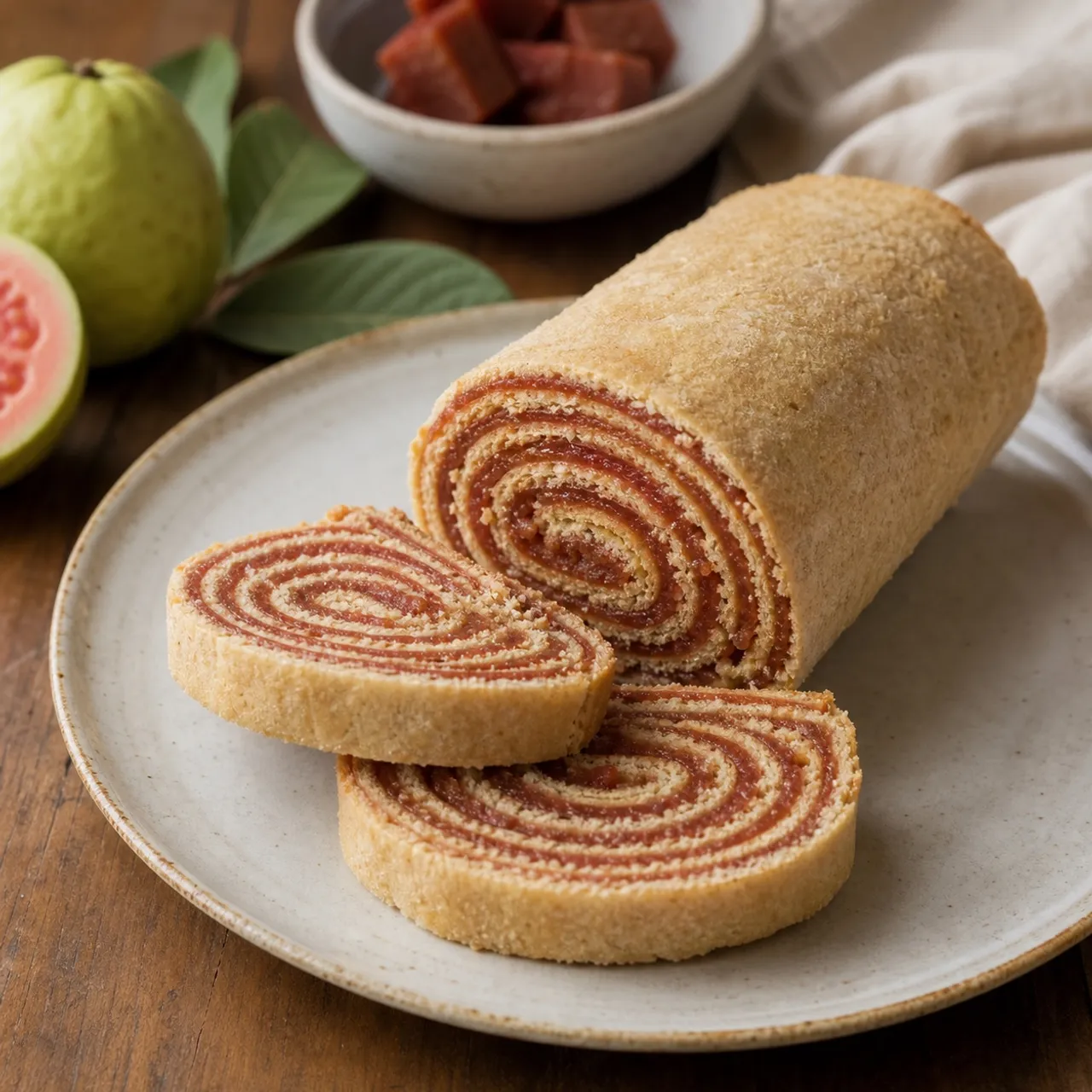
 Bolo de Rolo (Brazilian Rolled Guava Cake)
A striking swirled sponge cake from Pernambuco, paper-thin layers of butter cake rolled tightly around a ribbon of guava paste.
Contains common allergens
In the app, Listahan checks these against your household automatically.
Instructions
7 steps- 1
Preheat the oven to 375°F and grease and line a large rimmed baking sheet with parchment paper.
- 2
Cream the butter and sugar together until light and fluffy, then beat in the eggs one at a time and stir in the vanilla.
- 3
Gently fold in the flour until just combined into a smooth, thin batter.
- 4
Spread a very thin, even layer of batter across the prepared baking sheet and bake for 5-6 minutes until just set and lightly golden at the edges.
- 5
While still warm, spread a thin layer of warmed guava paste over the sponge and, using the parchment to help, roll it tightly into a log starting from one short end.
- 6
Repeat with the remaining batter, baking one thin sheet at a time, spreading with guava paste, and rolling the new layer around the previous roll to build up the spiral.
- 7
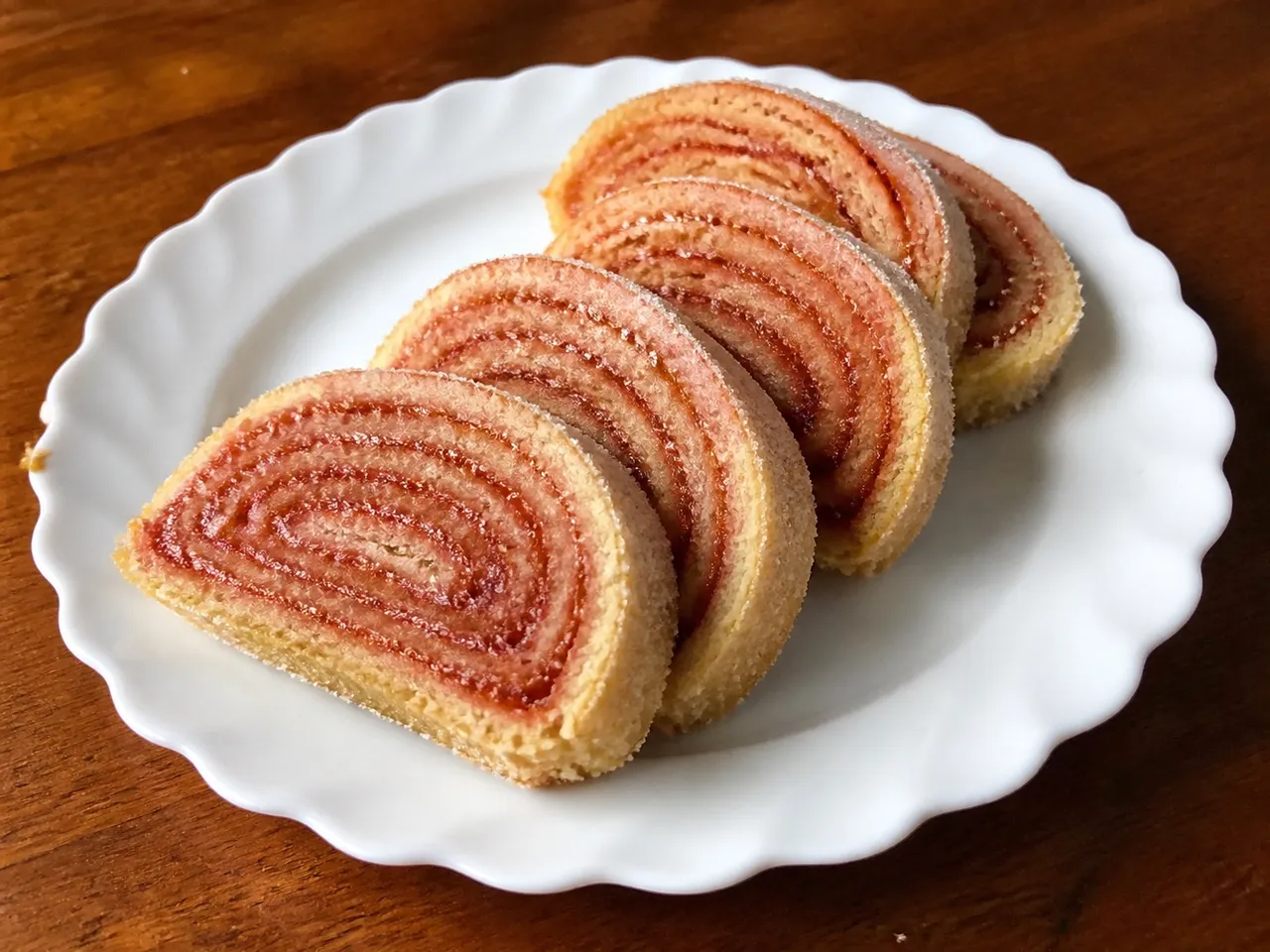
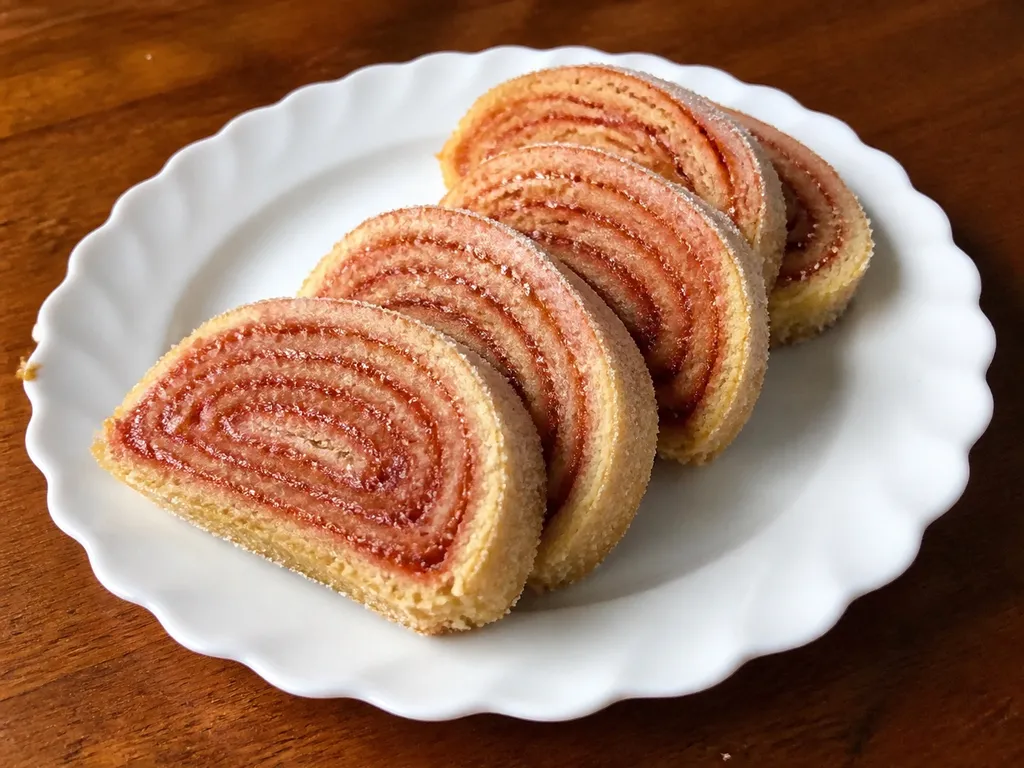
Let the finished roll cool completely, dust with sugar, and slice into thin rounds to reveal the spiral before serving.
 Images are for illustrative purposes only, may be inaccurate, and do not guarantee the presence or absence of specific ingredients.
 Listahan Family Score™
68/100
Works for many families
Score reflects how well this recipe fits a typical busy household. In the app, your Family Score is personalized to your household's allergens, kids, and pantry.
Nutrition
per serving435
Calories
7 g
Protein
49 g
Carbs
23 g
Fat
Estimated per serving. Actual values depend on the brands and portions you use.
Listahan cooking guide
Chef notes & practical guide
Technique notes, ingredient swaps, serve-alongside ideas, storage guidance, and equipment for this recipe.
Cultural context
Bolo de rolo is a signature dessert of Pernambuco, particularly Recife, prized for its labor-intensive technique of baking many razor-thin sponge layers one at a time and rolling each around a spread of goiabada, guava paste, to build up a tight spiral. Its difficulty and precision have made it a point of regional pride, often reserved for special occasions rather than everyday baking. When sliced, the visible spiral is considered the mark of a well-made version, uneven spirals or breaks are seen as flaws.
Listahan note
This version bakes the batter one thin sheet at a time directly on the pan, spreading each with warmed guava paste and rolling it around the growing spiral, the traditional single-sheet build rather than a shortcut jelly-roll method.
Technique cues
- Each layer of batter must be spread extremely thin and even, a thick layer bakes into a spongy cake rather than the delicate, pliable sheet needed to roll without cracking.
- The sponge needs to be rolled while still warm and flexible right out of the oven, once it cools it loses pliability and will crack rather than curl into a tight spiral.
- Warming the guava paste until spreadable, rather than using it cold and stiff, is what allows it to spread thin and evenly without tearing the delicate sponge layer beneath it.
Kitchen flow
- Parallel prep
- Warm the guava paste while the first sheet of batter bakes so it's ready to spread the moment the sponge comes out of the oven.
- Make-ahead
- Bolo de rolo is traditionally made the day it's needed since the rolled log is best sliced within a day or two of baking for the cleanest spiral.
- Leftover move
- Leftover slices keep well at room temperature in an airtight container; this cake is not reheated, it's served as is.
- Cleanup rhythm
- Line the baking sheet fresh with new parchment for each thin layer rather than reusing one, residual guava paste can cause the next sheet to stick.
Ingredient brief
Role, handling, and swap guidance for each key ingredient.
guava paste (goiabada)
the defining filling and flavor
Purpose: goiabada's firm, intensely sweet-tart guava flavor is what makes bolo de rolo instantly recognizable and distinguishes it from a generic rolled sponge cake
Handling: warm it gently, in a double boiler or short microwave bursts, until soft enough to spread without tearing the thin cake layer
Adaptation: a firm quince or fig paste can substitute in a pinch, though the flavor will shift noticeably away from the traditional guava profile
all-purpose flour
structure for the thin, pliable sponge
Purpose: the flour is folded in gently to create a batter thin and elastic enough to bake into sheets that can be rolled without tearing
Handling: fold it in just until combined to avoid overworking the gluten, which would make the sponge tough rather than tender
Adaptation: a 1:1 gluten-free flour blend can be tried but the sponge will likely be more fragile and prone to cracking when rolled
large eggs
structure and lift for the sponge
Purpose: eggs beaten into the creamed butter and sugar are what give the thin sponge enough structure to hold together while still remaining flexible enough to roll
Handling: beat in one at a time so each fully incorporates before the next is added, keeping the batter smooth
Adaptation: there is no reliable egg-free substitute for this technique, the eggs are essential to both structure and pliability
butter, softened
richness and tender crumb
Purpose: creaming softened butter with sugar builds the airy base that keeps the thin sponge tender rather than dense or leathery once rolled
Handling: cream thoroughly with the sugar until light and fluffy before adding eggs
Adaptation: a plant-based butter substitute can work for a dairy-free direction, though the crumb will be slightly less tender
Technique notes
- Use the parchment paper itself to help guide the rolling motion, lifting and curling the edge of the paper rather than touching the hot, delicate sponge directly with your hands.
- Roll each new baked layer around the outside of the previous roll rather than starting a fresh roll each time, this is what builds the cake's continuous spiral when sliced.
- Slice with a very sharp, thin knife in a single clean motion rather than sawing, sawing can compress and distort the delicate spiral pattern.
Ingredient swaps
- Dairy-free direction
- Substitute a plant-based butter for both the batter and greasing, keeping in mind the crumb will be slightly less tender than the dairy version.
- Different filling direction
- Dulce de leche or a fruit preserve like fig jam can replace the guava paste for a different but still traditional-feeling rolled cake.
- Shortcut approach
- Bake the batter in two or three slightly thicker sheets instead of many very thin ones for an easier, though less finely spiraled, version.
Serve alongside
- fresh sliced mango
- a small cup of cafezinho
- a scoop of vanilla ice cream for a modern twist
- cafezinho
- chilled passion fruit juice (suco de maracuja)
Serving suggestions only — check pairings for your household's allergens.
Storage & reheating
- Store at room temperature in an airtight container for up to 3 days.
- Not reheated; sliced and served at room temperature.
- The rolled log freezes well whole for up to a month; thaw at room temperature before slicing.
Equipment
- large rimmed baking sheet
- parchment paper
- offset spatula
- electric mixer or stand mixer
Make this household-aware
Listahan Pro checks this recipe against your household's allergens, finds pantry-aware swaps, builds the shopping list, and helps you plan the week around it.
Plan it in Listahan
Add Bolo de Rolo (Brazilian Rolled Guava Cake) to your week, check it against your household's allergens, and build the shopping list automatically.
More Brazilian recipes
 Brazilian Lens Verified Images are for illustrative purposes only, may be inaccurate, and do not guarantee the presence or absence of specific ingredients.
 Pudim de Leite (Brazilian Flan)
A silky caramel-topped milk pudding made with sweetened condensed milk, the most requested dessert at any Brazilian family gathering.
 Brazilian Lens Verified Images are for illustrative purposes only, may be inaccurate, and do not guarantee the presence or absence of specific ingredients.
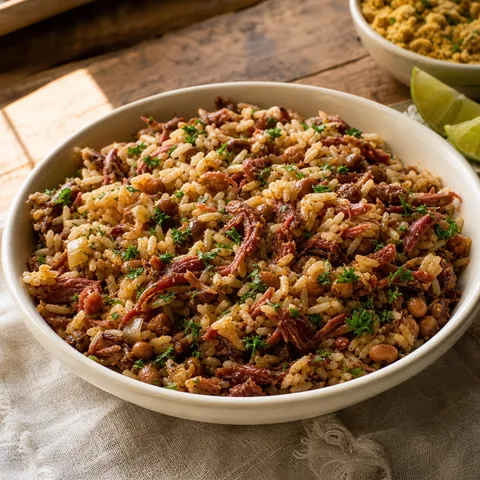
 Arroz Carreteiro (Brazilian Rice with Dried Beef)
A smoky one-pot rice from the gaúcho cattle-drivers of southern Brazil, cooked with shredded dried beef, tomato, and peppers.
 Brazilian Lens Verified Images are for illustrative purposes only, may be inaccurate, and do not guarantee the presence or absence of specific ingredients.
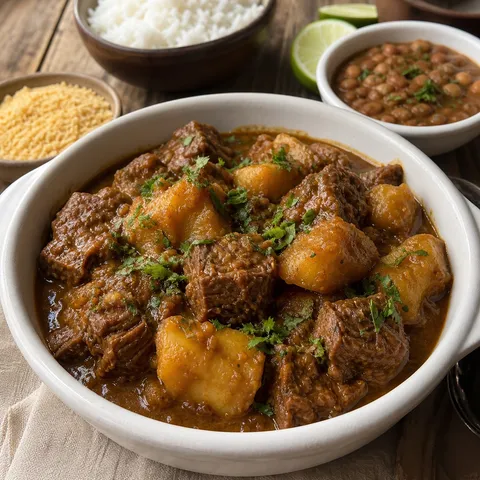
 Vaca Atolada (Beef and Cassava Stew)
"Stuck cow" stew: fall-apart beef short ribs braised with cassava until the pot turns thick and glossy, a Minas Gerais farmhouse classic.