 Brazilian Images are for illustrative purposes only, may be inaccurate, and do not guarantee the presence or absence of specific ingredients.
  Serving Images are for illustrative purposes only, may be inaccurate, and do not guarantee the presence or absence of specific ingredients.
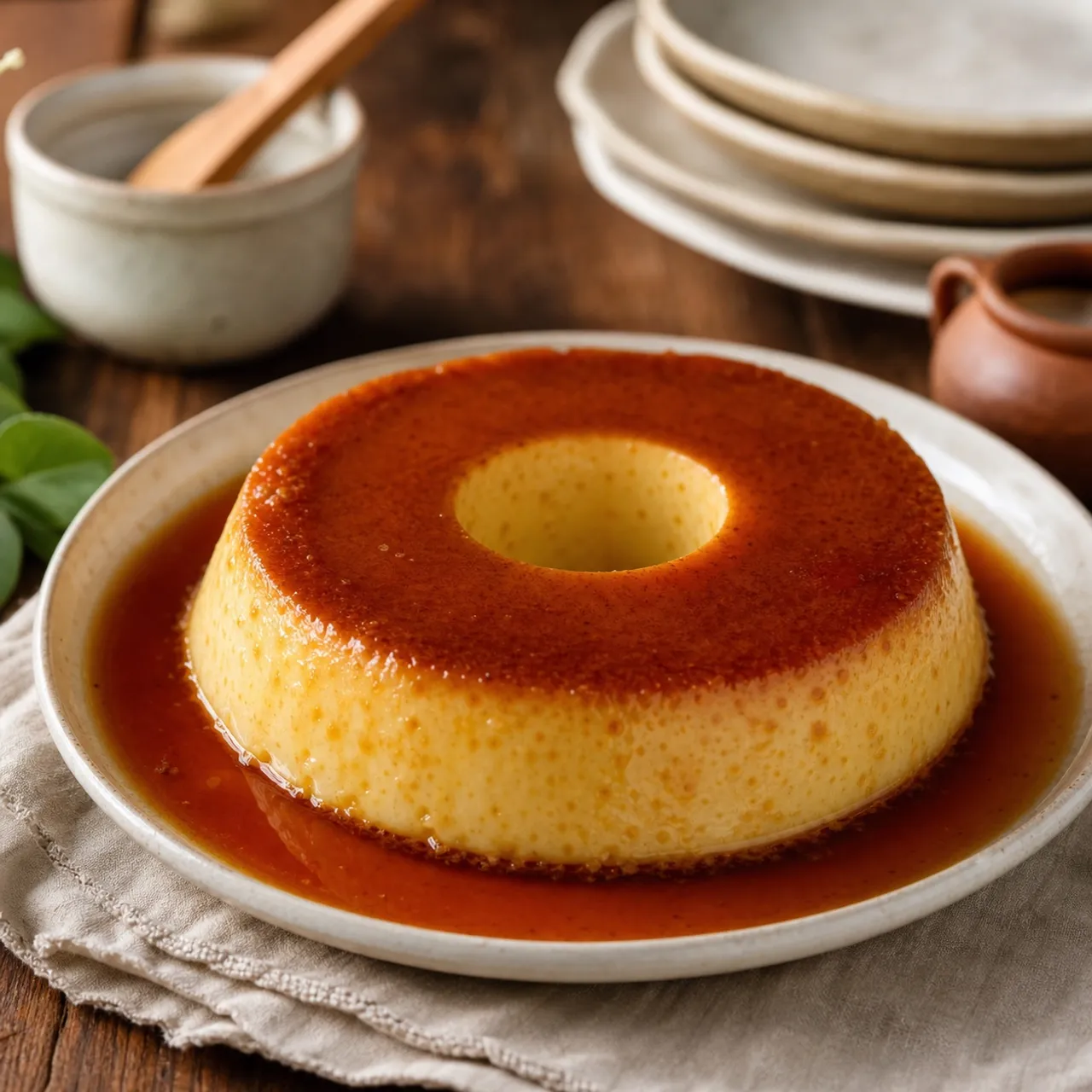
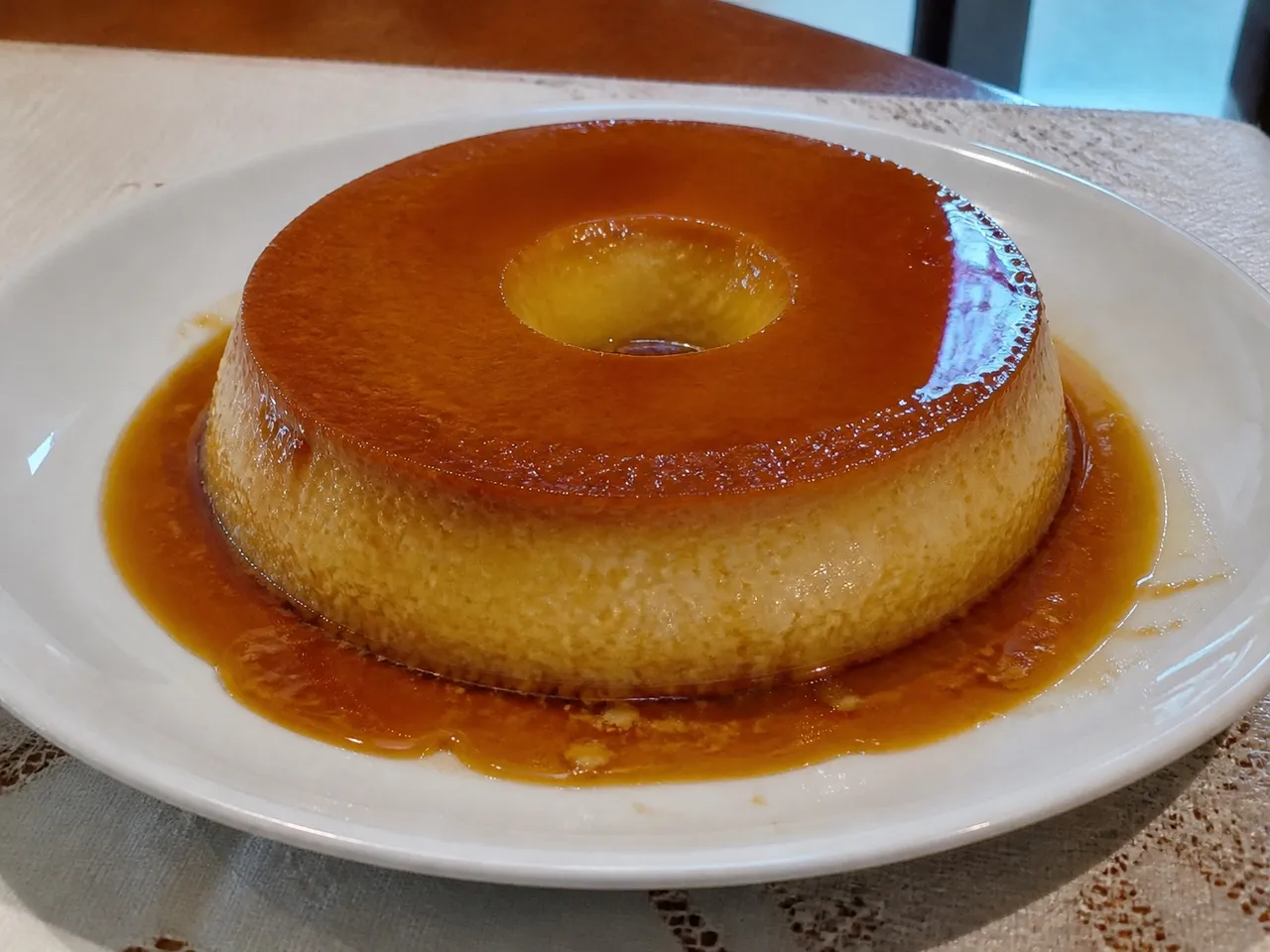
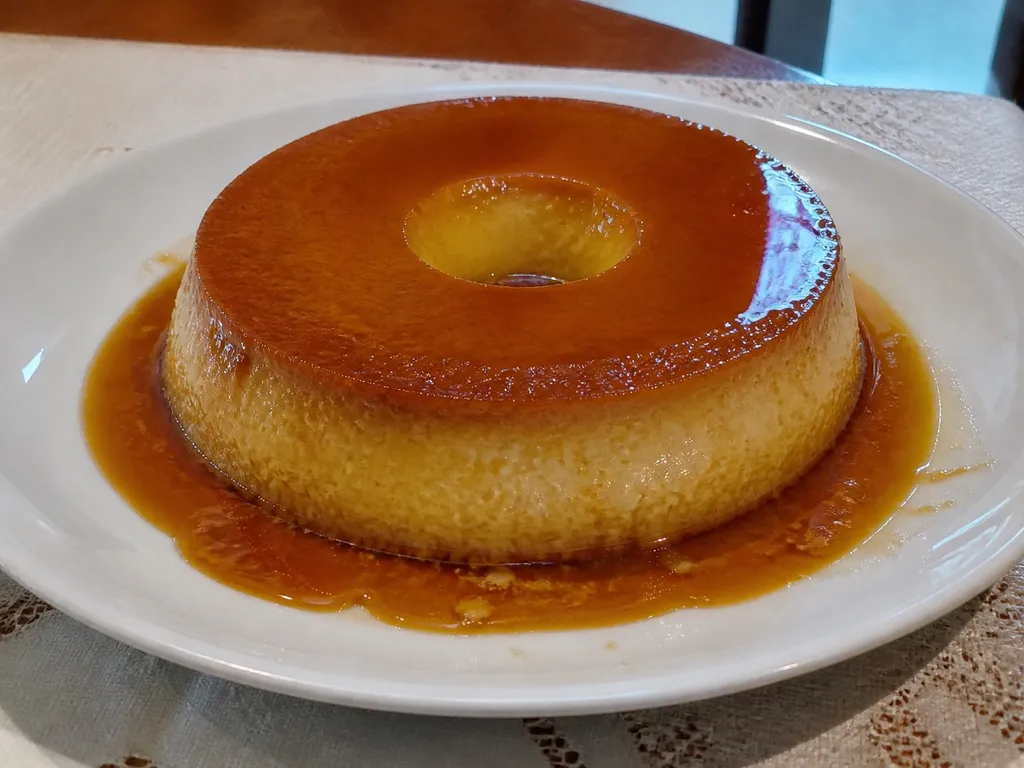
 Pudim de Leite (Brazilian Flan)
A silky caramel-topped milk pudding made with sweetened condensed milk, the most requested dessert at any Brazilian family gathering.
Contains common allergens
In the app, Listahan checks these against your household automatically.
Instructions
7 steps- 1
Preheat the oven to 350°F and bring a kettle of water to a boil for the water bath.
- 2
Melt the sugar in a saucepan over medium heat, swirling until it turns deep amber, then quickly pour into a round baking pan or bundt mold, tilting to coat the bottom.
- 3
In a blender, combine the condensed milk, whole milk, eggs, and vanilla, and blend until smooth.
- 4
Pour the mixture over the caramel in the pan.
- 5
Place the pan in a larger roasting dish, pour in boiling water to reach halfway up the sides, and bake for 55-65 minutes until set but still slightly jiggly in the center.
- 6
Cool to room temperature, then refrigerate for at least 4 hours or overnight.
- 7
Run a knife around the edge and invert onto a serving plate so the caramel sauce pools over the top before slicing.
 Images are for illustrative purposes only, may be inaccurate, and do not guarantee the presence or absence of specific ingredients.
 Listahan Family Score™
80/100
Good fit for most families
Score reflects how well this recipe fits a typical busy household. In the app, your Family Score is personalized to your household's allergens, kids, and pantry.
Nutrition
per serving160
Calories
5 g
Protein
27 g
Carbs
4 g
Fat
Estimated per serving. Actual values depend on the brands and portions you use.
Listahan cooking guide
Chef notes & practical guide
Technique notes, ingredient swaps, serve-alongside ideas, storage guidance, and equipment for this recipe.
Cultural context
Pudim de leite descends from the Portuguese colonial custard tradition but became distinctly Brazilian once sweetened condensed milk, introduced commercially in the early 20th century, replaced part of the fresh milk and eggs, giving it a denser, richer set than a French-style flan. It is the default Sunday lunch dessert in most Brazilian homes, so common that its absence from a family meal is more notable than its presence. The inverted presentation, caramel pooling over the top, is considered essential rather than decorative.
Listahan note
This version leans on the classic three-way blend of condensed milk, whole milk, and eggs, baked in a water bath for a silky set, so getting the caramel color and the bake time right matters more than any add-in.
Technique cues
- The caramel needs to reach a deep amber, not a light gold, because it continues cooking briefly as it's poured and needs enough color depth to read as caramel rather than taste flat once diluted by the custard's condensation during baking.
- Blending rather than whisking the custard base is what gives pudim de leite its characteristically ultra-smooth, dense texture, since the blender fully emulsifies the eggs into the milks without overbeating in air bubbles.
- The water bath is what keeps the custard's edges from curdling before the center sets, direct dry oven heat on an uninsulated pan overcooks the outer ring while the middle remains loose.
Kitchen flow
- Parallel prep
- Start the caramel first, since it needs to be poured into the mold immediately, then blend the custard base while the caramel cools slightly.
- Make-ahead
- Pudim de leite is meant to be made ahead, it needs at least 4 hours and ideally overnight in the fridge to set fully and firm up for clean slicing.
- Leftover move
- Leftovers keep well chilled and covered; serve cold directly from the fridge rather than reheating, which the custard doesn't need or benefit from.
- Cleanup rhythm
- Soak the caramel-coated mold in hot water immediately after unmolding, hardened caramel is much easier to dissolve while the pan is still warm.
Ingredient brief
Role, handling, and swap guidance for each key ingredient.
granulated sugar, for caramel
the base layer and glossy sauce
Purpose: melted to a deep amber, it forms both the mold's lining and the sauce that coats the finished pudim when inverted
Handling: melt it undisturbed or with gentle swirling, never stirred with a utensil, which can cause it to seize and crystallize
Adaptation: there's no good substitute if you want the classic caramel layer, though a store-bought caramel sauce could be poured in as a shortcut with a less deep flavor
sweetened condensed milk
the custard's density and sweetness backbone
Purpose: condensed milk is what separates Brazilian pudim from a French flan, giving it a denser, richer set and built-in sweetness rather than relying solely on added sugar
Handling: blend it thoroughly with the other liquids so it fully incorporates rather than settling at the bottom
Adaptation: there is no true substitute; using only whole milk and sugar produces a noticeably lighter, less characteristic custard
large eggs
the setting agent
Purpose: eggs are what allow the custard to set into a sliceable, silky solid once baked, rather than remaining a liquid milk mixture
Handling: blend them in fully but avoid over-blending for too long, which can incorporate excess air bubbles into the finished texture
Adaptation: there is no reliable egg-free substitute that achieves the same sliceable set for this style of custard
whole milk
loosens the density from the condensed milk
Purpose: it balances the thick condensed milk into a pourable custard base that still sets firm, rather than an overly dense, cloying result
Handling: use it at room temperature so it blends smoothly with the other ingredients
Adaptation: a full-fat non-dairy milk like oat or coconut milk can substitute, though it will shift the flavor and slightly change the set
Technique notes
- Pour boiling water into the outer roasting pan after it's already in the oven to avoid sloshing hot water into the custard mixture itself.
- Check doneness by looking for a center that jiggles slightly like set gelatin rather than looking fully firm, it will continue to set as it cools and chills.
- Run a thin knife around the edge before inverting, this breaks the seal so the custard releases cleanly instead of tearing.
Ingredient swaps
- Dairy-free direction
- Use full-fat coconut milk in place of the whole milk and a coconut-based condensed milk alternative, understanding the flavor will shift toward coconut.
- Lower-sugar direction
- Reduce the caramel sugar slightly and use a reduced-sugar condensed milk, though the custard will be noticeably less sweet and glossy.
- Individual-portion option
- Divide the mixture among small ramekins instead of one large mold for shorter bake times and easier portioning.
Serve alongside
- fresh sliced strawberries
- a light dusting of unsweetened whipped cream
- a small espresso alongside
- cafezinho (sweetened Brazilian coffee)
- a strong espresso
Serving suggestions only — check pairings for your household's allergens.
Storage & reheating
- Refrigerate covered for up to 4 days.
- Serve chilled directly from the fridge, it is not reheated.
- Can be frozen unmolded for up to a month, though the caramel sauce texture softens slightly after thawing.
Equipment
- medium saucepan for caramel
- blender
- round cake pan or bundt mold
- larger roasting pan for the water bath
Make this household-aware
Listahan Pro checks this recipe against your household's allergens, finds pantry-aware swaps, builds the shopping list, and helps you plan the week around it.
Plan it in Listahan
Add Pudim de Leite (Brazilian Flan) to your week, check it against your household's allergens, and build the shopping list automatically.
More Brazilian recipes
 Brazilian Lens Verified Images are for illustrative purposes only, may be inaccurate, and do not guarantee the presence or absence of specific ingredients.
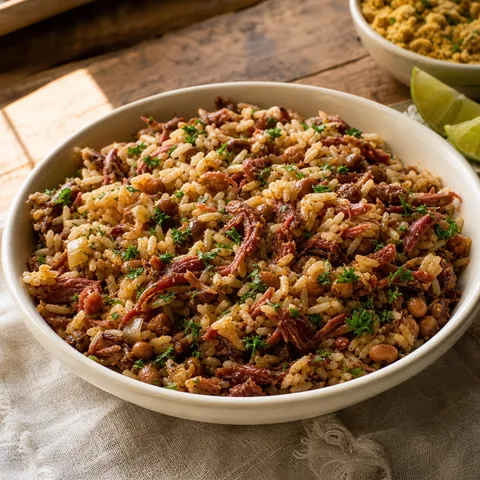
 Arroz Carreteiro (Brazilian Rice with Dried Beef)
A smoky one-pot rice from the gaúcho cattle-drivers of southern Brazil, cooked with shredded dried beef, tomato, and peppers.
 Brazilian Lens Verified Images are for illustrative purposes only, may be inaccurate, and do not guarantee the presence or absence of specific ingredients.
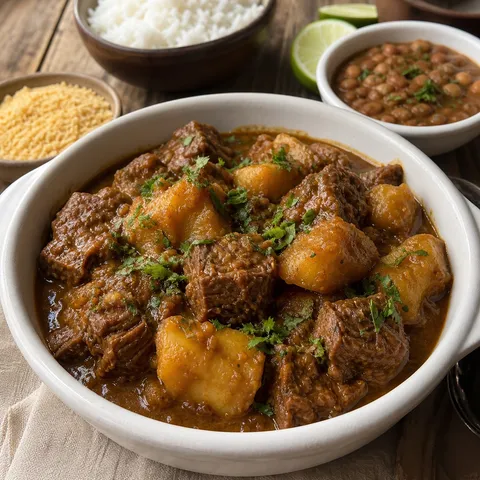
 Vaca Atolada (Beef and Cassava Stew)
"Stuck cow" stew: fall-apart beef short ribs braised with cassava until the pot turns thick and glossy, a Minas Gerais farmhouse classic.
 Brazilian Lens Verified Images are for illustrative purposes only, may be inaccurate, and do not guarantee the presence or absence of specific ingredients.
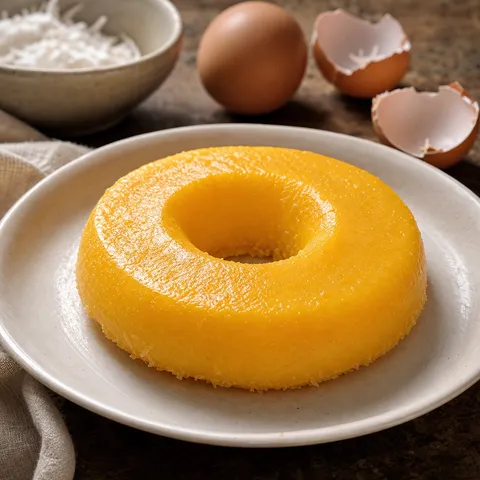
 Quindim (Coconut Egg Yolk Custard)
Glossy, golden individual custards made from egg yolks, sugar, and coconut — a jewel-like classic with a delicate, chewy top.