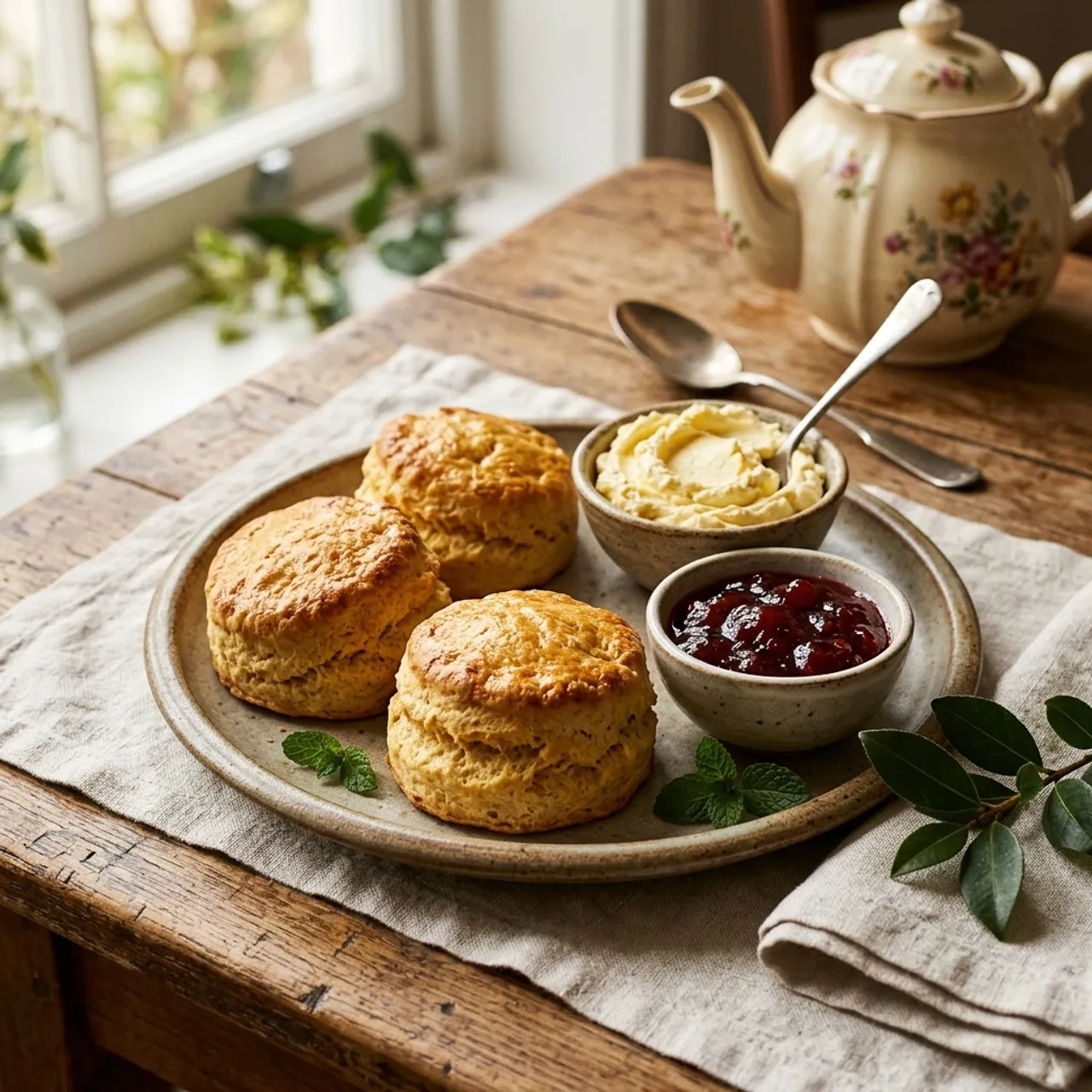
 British & Irish Images are for illustrative purposes only, may be inaccurate, and do not guarantee the presence or absence of specific ingredients.
 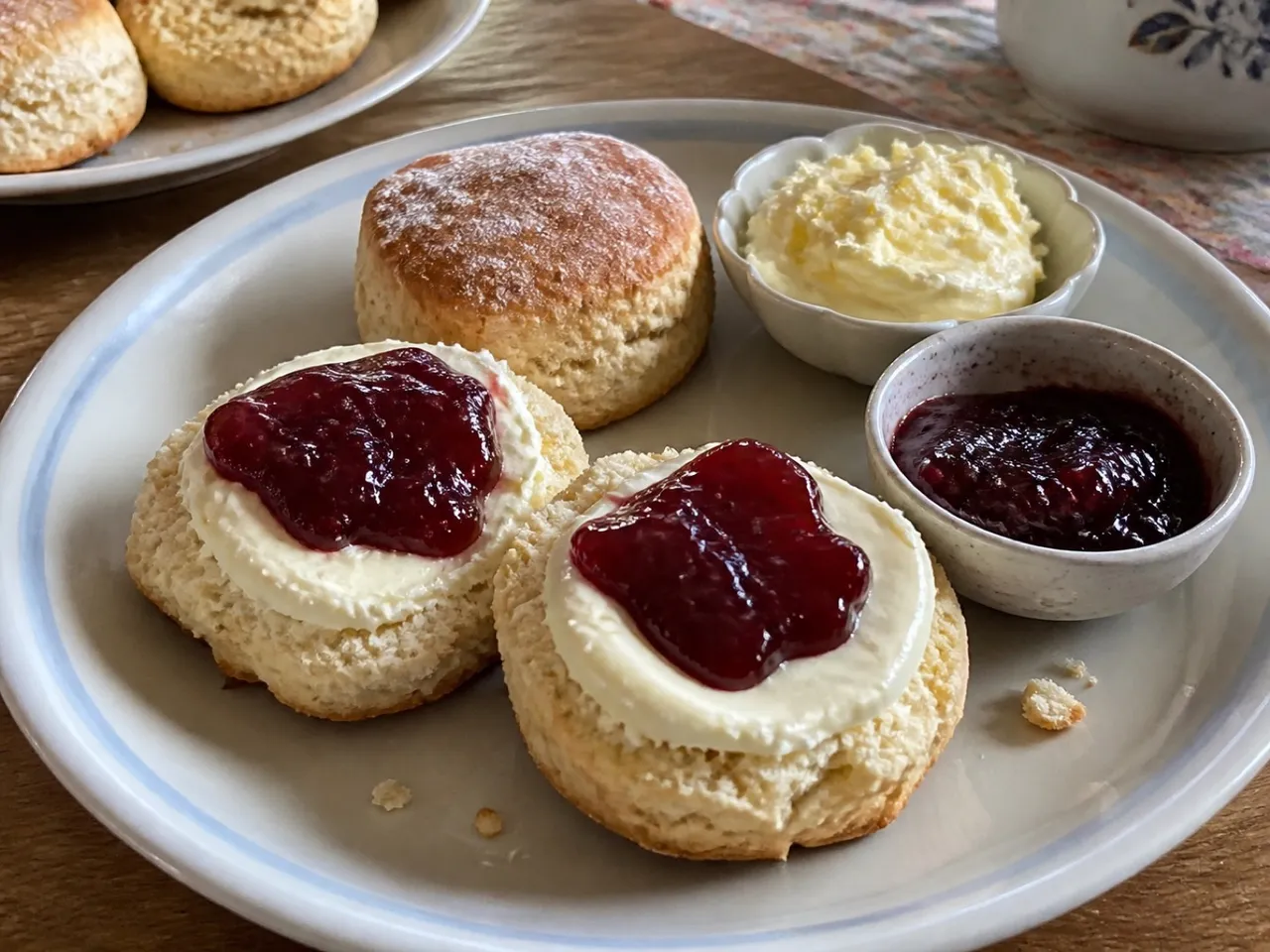 Serving Images are for illustrative purposes only, may be inaccurate, and do not guarantee the presence or absence of specific ingredients.
 Scones with Clotted Cream
Buttery, flaky scones warm from the oven, split and piled with thick clotted cream and strawberry jam — the heart of a proper British afternoon tea.
Contains common allergens
In the app, Listahan checks these against your household automatically.
Good to know
- Ready in under 30 minutes
Matched from this dish's own ingredients and timing. Browse more: 30-minute meals
Instructions
7 steps- 1
Rub the butter into the flour and baking powder until it resembles fine breadcrumbs, then stir in the sugar.
- 2
Beat the egg into the milk, then make a well in the dry ingredients and pour most of it in, mixing quickly with a knife to form a soft, slightly sticky dough.
- 3
Turn onto a floured surface and pat gently to about 2cm thick; do not overwork the dough.
- 4
Cut into rounds with a 5cm cutter, pressing straight down without twisting, and place on a baking tray.
- 5
Brush the tops with the remaining egg and milk mixture, avoiding the cut sides so they rise evenly.
- 6
Bake at 220C (425F) for 10 to 12 minutes, until well risen and golden on top.
- 7
Cool slightly on a wire rack, then split while still warm and pile with strawberry jam and a generous dollop of clotted cream.
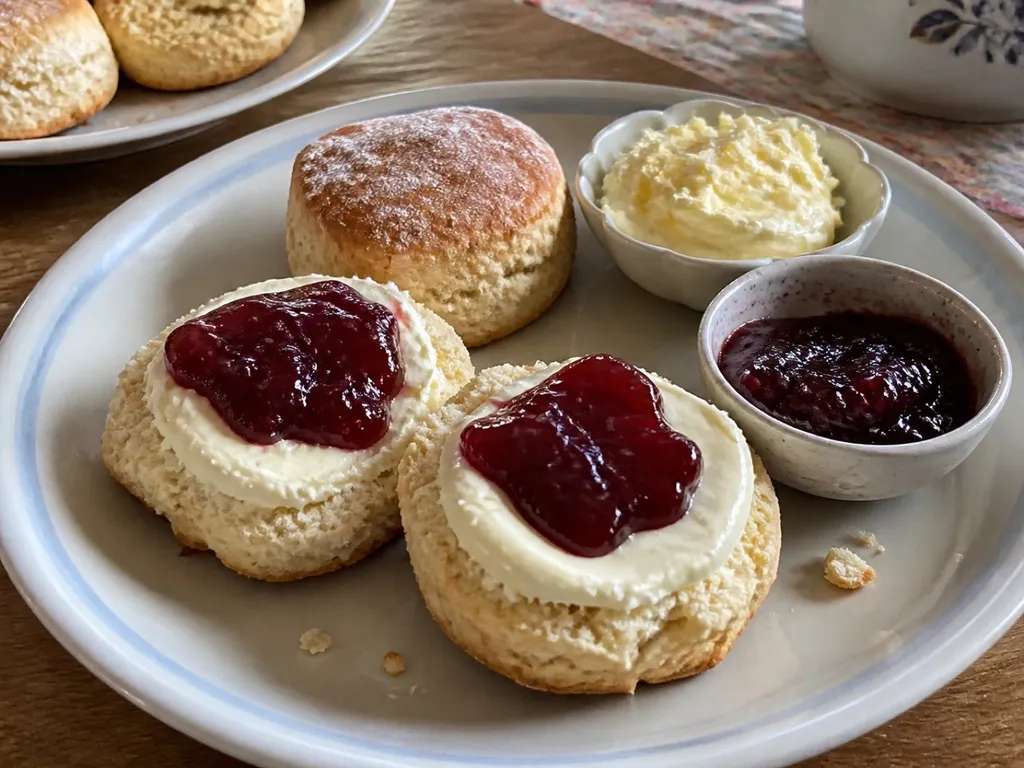 Images are for illustrative purposes only, may be inaccurate, and do not guarantee the presence or absence of specific ingredients.
 Listahan Family Score™
77/100
Good fit for most families
Score reflects how well this recipe fits a typical busy household. In the app, your Family Score is personalized to your household's allergens, kids, and pantry.
Nutrition
per serving735
Calories
8 g
Protein
76 g
Carbs
45 g
Fat
Estimated per serving. Actual values depend on the brands and portions you use.
Listahan cooking guide
Chef notes & practical guide
Technique notes, ingredient swaps, serve-alongside ideas, storage guidance, and equipment for this recipe.
Cultural context
The cream tea, with its warm scones, clotted cream, and jam, has been a fixture of English county fairs and tearoom menus since at least the 1850s, with Devon and Cornwall still maintaining a spirited rivalry over the correct order of application — cream first in Cornwall, jam first in Devon. The scone itself is a quick bread leavened with baking powder rather than yeast, making it one of the fastest breads a home baker can produce. Clotted cream, made by slowly heating and cooling rich cream until the fat forms thick clusters, is specific to the West Country and has no real equivalent elsewhere.
Listahan note
This version keeps the scones small and high-risen rather than large and flat; the goal is a clean split along the middle that creates two even surfaces for cream and jam.
Technique cues
- Handle the dough as little as possible after adding the liquid — overworking develops gluten and produces a tough, dense scone rather than a tender, flaky one that splits cleanly.
- Chill the butter until it is very cold before rubbing it in; warm or softened butter smears into the flour rather than forming the discrete fat pockets that create a layered, flaky crumb.
- Brush the tops with egg wash right to the edges but avoid letting it drip down the sides — glazed sides prevent the scone from rising straight and cause it to lean to one side in the oven.
Kitchen flow
- Parallel prep
- While the scones bake, set out the clotted cream, jam, and plates so everything is ready the moment they come out of the oven — warm scones are the whole point.
- Make-ahead
- The dry ingredients and rubbed-in butter can be mixed and refrigerated for up to 24 hours; add the buttermilk, shape, and bake just before serving.
- Leftover move
- Day-old scones split and toasted in a dry pan become excellent bases for breakfast with butter and marmalade, or sliced thin for a quick savory cheese toast.
- Cleanup rhythm
- Line the baking sheet with parchment paper before use; the egg wash caramelizes and is difficult to scrub off a bare pan.
Ingredient brief
Role, handling, and swap guidance for each key ingredient.
self-raising flour
structure and lift
Purpose: The built-in leavening in self-raising flour gives consistent, reliable rise without requiring careful measurement of separate baking powder.
Handling: Sift to aerate and remove any lumps before rubbing in the butter.
Adaptation: All-purpose flour with 2 teaspoons of baking powder per cup is a direct substitute if self-raising flour is not available.
cold unsalted butter
fat for flakiness and tenderness
Purpose: Cold butter creates steam pockets during baking that produce the characteristic flaky, layered crumb; it also keeps the fat in distinct pieces that melt into the flour rather than coating it.
Handling: Cut into small cubes and return to the freezer for 10 minutes before rubbing in.
Adaptation: Cold lard produces an even flakier, more tender crumb and is the traditional choice; vegetable shortening works for a dairy-free version.
buttermilk
moisture and tenderness
Purpose: The acidity of buttermilk reacts with the baking powder to boost the rise and also tenderizes the gluten, giving a softer interior than plain milk.
Handling: Use cold from the refrigerator and add it gradually to avoid making the dough wet.
Adaptation: Regular whole milk soured with a teaspoon of lemon juice or white vinegar mimics buttermilk effectively.
clotted cream
condiment and signature element
Purpose: Clotted cream's thick, almost solid texture sits on top of the scone without dripping, and its mild, slightly sweet flavor is uniquely rich without being as sharp as butter.
Handling: Bring to room temperature for 20 minutes before serving so it spreads easily without tearing the scone.
Adaptation: Devon or Cornish clotted cream is worth seeking at British import shops; mascarpone is the closest in texture if unavailable.
strawberry jam
sweet-tart counterpoint
Purpose: The jam's bright acidity and fruitiness cuts through the richness of the cream, making each bite feel balanced rather than heavy.
Handling: Use a good-quality jam with visible fruit pieces rather than a smooth jelly.
Adaptation: Raspberry or blackcurrant jam is equally traditional and adds a more assertive tartness.
Technique notes
- Press the cutter straight down without twisting; a twisting motion seals the edges of the cut and prevents the scone from rising straight and tall.
- Place the scones touching each other on the baking sheet so they rise upward rather than spreading outward — the shared sides act as a support structure during baking.
- For extra height and a more dramatic split, pat the dough slightly thicker than seems right, at least an inch before cutting; they will not rise as much as you expect and a thin cut produces a flat, disappointing result.
Ingredient swaps
- Dairy-free direction
- Use cold coconut oil or a solid dairy-free butter for rubbing in, oat milk soured with lemon juice as the liquid, and coconut cream thickened overnight in the refrigerator as a rough stand-in for clotted cream.
- Gluten-free direction
- A 1:1 gluten-free flour blend with an added teaspoon of xanthan gum produces a serviceable scone; expect a slightly denser crumb and reduce handling even further than usual.
- Savory direction
- Omit the sugar and stir in 60 grams of grated sharp cheddar and a pinch of cayenne to make cheese scones, which pair equally well with cream cheese or butter and a slice of ham.
Serve alongside
- Earl Grey or English Breakfast tea with milk
- Thin-cut cucumber finger sandwiches
- Lemon curd alongside the jam
- Darjeeling or Assam tea
- Elderflower cordial with sparkling water
- Prosecco for an afternoon tea celebration
Serving suggestions only — check pairings for your household's allergens.
Storage & reheating
- Scones are best eaten within two hours of baking; store leftovers in an airtight container at room temperature for up to two days.
- Warm day-old scones in a 300-degree oven for five minutes to restore some of their original tenderness before serving; do not microwave as this makes them rubbery.
Equipment
- Pastry cutter or two knives for rubbing butter into flour without warming it with your hands
- Round biscuit cutter, 2 to 2.5 inches, for clean-edged cuts
- Parchment-lined baking sheet for easy release
- Pastry brush for applying the egg wash
Make this household-aware
Listahan Pro checks this recipe against your household's allergens, finds pantry-aware swaps, builds the shopping list, and helps you plan the week around it.
Plan it in Listahan
Add Scones with Clotted Cream to your week, check it against your household's allergens, and build the shopping list automatically.
More British & Irish recipes
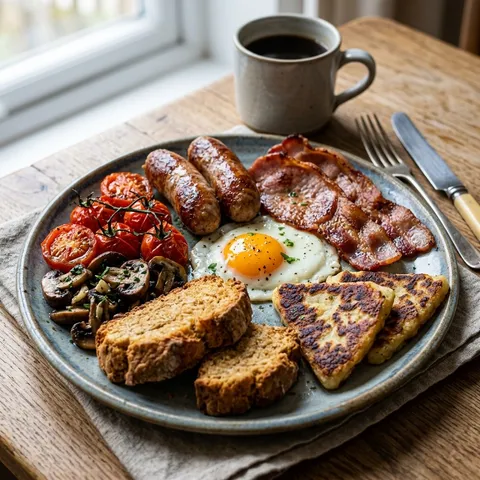 British & Irish Lens Verified Images are for illustrative purposes only, may be inaccurate, and do not guarantee the presence or absence of specific ingredients.
 Ulster Fry
Northern Ireland's legendary fry-up: bacon, sausages, eggs, black pudding, potato bread, and soda bread — fuller and heartier than its English cousin.
 British & Irish Lens Verified Images are for illustrative purposes only, may be inaccurate, and do not guarantee the presence or absence of specific ingredients.
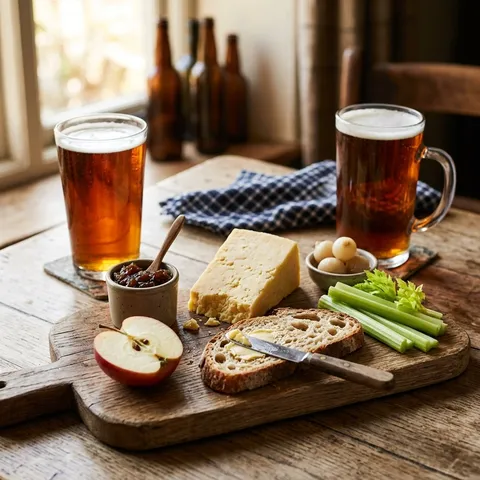
 Ploughman's Lunch
Sharp aged cheddar, crusty bread, tangy Branston pickle, and a boiled egg — a beloved no-cook British lunch that's greater than the sum of its parts.
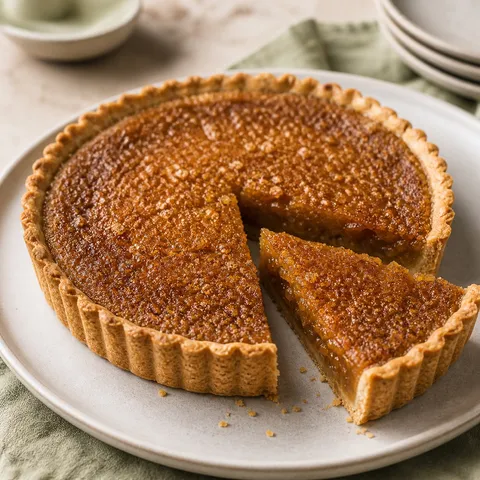 British & Irish Lens Verified Images are for illustrative purposes only, may be inaccurate, and do not guarantee the presence or absence of specific ingredients.
 Treacle Tart
A sweet, sticky tart filled with golden syrup and fresh breadcrumbs, with a gently caramelized top and a hint of lemon — Harry Potter's favorite dessert.