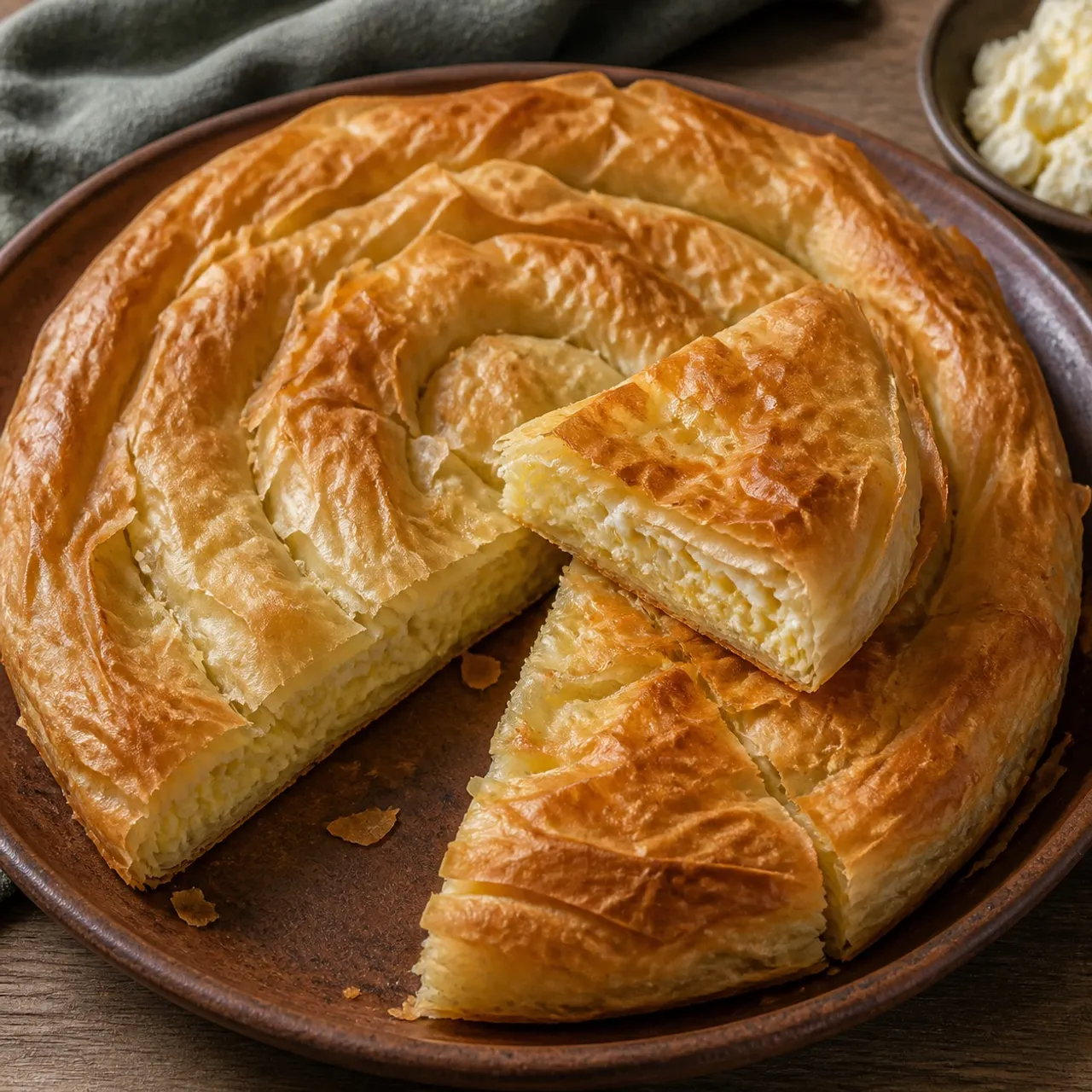
 Eastern European Images are for illustrative purposes only, may be inaccurate, and do not guarantee the presence or absence of specific ingredients.
 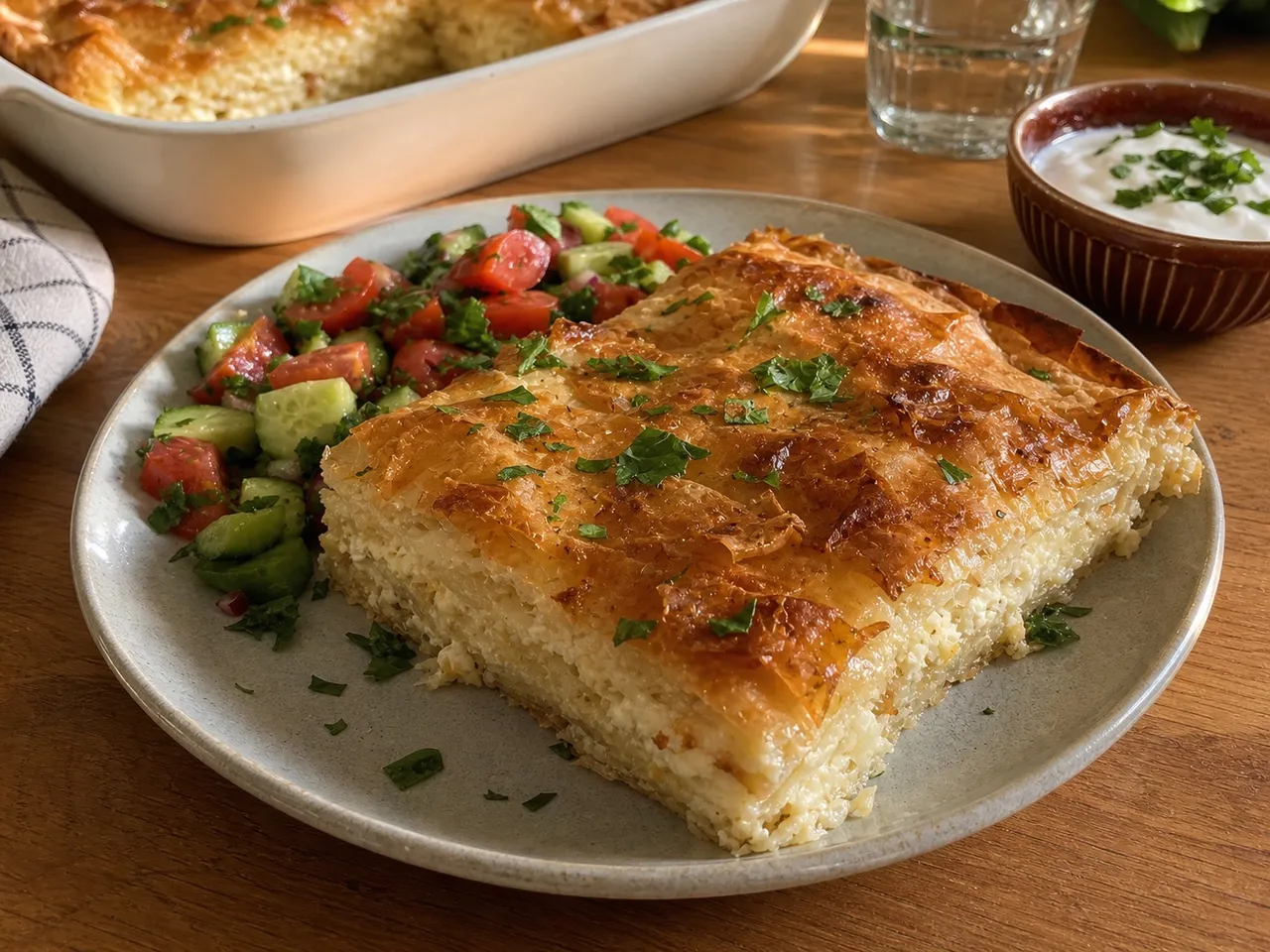 Serving Images are for illustrative purposes only, may be inaccurate, and do not guarantee the presence or absence of specific ingredients.
 Banitsa
Bulgaria's beloved breakfast pastry — crisp, burnished filo layers encasing tangy white cheese and egg, baked until golden and best eaten straight from the oven.
Contains common allergens
In the app, Listahan checks these against your household automatically.
Good to know
- Crispy
Matched from this dish's own ingredients and timing. Browse more: crispy recipes
Instructions
8 steps- 1
Preheat the oven to 375 F and brush a round or rectangular baking dish generously with melted butter.
- 2
In a bowl, whisk together the eggs, yogurt, and baking soda, then crumble in the sirene or feta and mix until combined into a loose, chunky custard.
- 3
Lay a sheet of filo in the dish, letting the edges hang over, and brush lightly with melted butter; repeat with two more sheets.
- 4
Spoon a thin layer of the cheese mixture over the filo, then crumple the next sheet of filo loosely before laying it on top, brushing with butter, and adding more filling.
- 5
Continue layering crumpled, buttered filo sheets and filling until both are used up, finishing with a well-buttered layer of filo on top.
- 6
Fold the overhanging edges over the top and brush the entire surface with the remaining butter.
- 7
Bake for 35 to 40 minutes, until deeply golden and crisp on top and cooked through in the center.
- 8
Let the banitsa rest for 10 minutes before slicing, and serve warm.
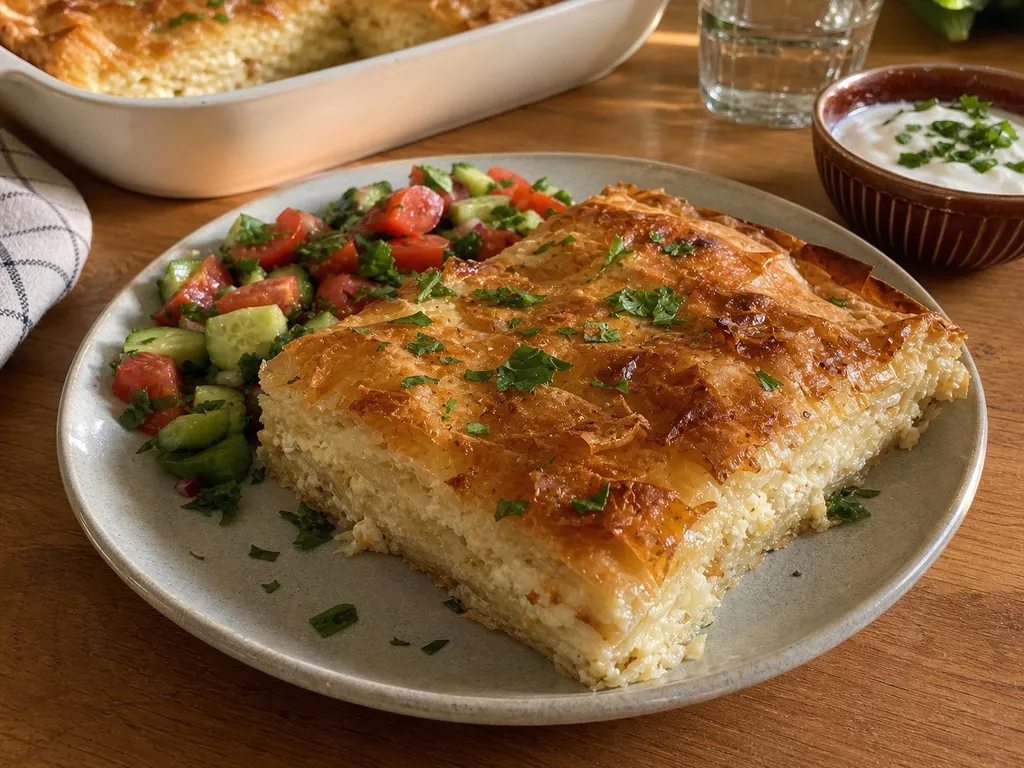 Images are for illustrative purposes only, may be inaccurate, and do not guarantee the presence or absence of specific ingredients.
 Listahan Family Score™
74/100
Good fit for most families
Score reflects how well this recipe fits a typical busy household. In the app, your Family Score is personalized to your household's allergens, kids, and pantry.
Nutrition
per serving665
Calories
28 g
Protein
88 g
Carbs
22 g
Fat
Estimated per serving. Actual values depend on the brands and portions you use.
Listahan cooking guide
Chef notes & practical guide
Technique notes, ingredient swaps, serve-alongside ideas, storage guidance, and equipment for this recipe.
Cultural context
Banitsa is the Bulgarian version of the Balkan filo pastry tradition and has been the country's go-to breakfast, holiday centerpiece, and late-night bite for centuries. The filling of brined white cheese — traditionally Bulgarian sirene, a close cousin of feta — is whisked with eggs and yogurt before being layered between sheets of delicate hand-pulled or commercial filo. On New Year's Eve, fortunes written on slips of paper are tucked between the layers, and finding one in your slice is considered luck for the year ahead.
Listahan note
This version uses widely available feta and Greek yogurt to approximate the tang and texture of traditional Bulgarian sirene filling without needing specialty sourcing.
Technique cues
- Keep the filo covered with a barely damp kitchen towel as you work — the sheets dry out and crack in minutes when exposed to air, and cracked sheets are impossible to roll or layer properly.
- Brush each filo sheet generously with the egg-and-oil mixture rather than just butter, which gives the layers a lacy, crackly quality when baked rather than just flaky.
- Bake banitsa until deeply golden brown throughout, not just on top — a pale center means the inner layers are still wet and the pastry will be soggy once it cools and steams itself.
Kitchen flow
- Parallel prep
- Mix the filling while the filo tempers on the counter; the filling holds at room temperature for up to 30 minutes while you set up your baking pan and oil.
- Make-ahead
- Assemble the unbaked banitsa, cover tightly, and refrigerate overnight; bring to room temperature for 20 minutes before baking for even rising and browning.
- Leftover move
- Cold banitsa reheats in a 350 F oven for 10 minutes to restore crispiness; the microwave makes it limp and is not worth it.
- Cleanup rhythm
- Lay a large piece of parchment under the filo work area to collect shreds; roll it up and discard when done to avoid filo debris stuck to the counter.
Ingredient brief
Role, handling, and swap guidance for each key ingredient.
filo dough
layered pastry wrapper
Purpose: The tissue-thin sheets create the characteristic crispy, shattering layers when baked that define banitsa and distinguish it from bread-based pastries.
Handling: Thaw in the refrigerator overnight rather than at room temperature; bring to room temp for 30 minutes before unrolling to reduce cracking.
Adaptation: Homemade hand-pulled dough is traditional and produces a thicker, chewier pastry if you want to go the traditional route, though commercial filo is standard today.
feta cheese
filling base
Purpose: Crumbled feta provides the salty, tangy, creamy core of the filling and is the closest widely available substitute for Bulgarian sirene.
Handling: Crumble finely and combine with the egg and yogurt mixture so it is evenly distributed across the layers rather than clumped.
Adaptation: A mix of ricotta and feta (equal parts) creates a milder filling with a softer texture that suits those who find straight feta too sharp.
eggs
filling binder and browning agent
Purpose: Eggs set the filling during baking into a cohesive custard and also contribute to the deep golden color of the top layers when brushed on.
Handling: Whisk well with the yogurt before adding to the crumbled cheese so the mixture is fully homogenous and spreads evenly.
Adaptation: Two flax eggs can be used to reduce cholesterol, but the filling will not set as firmly or brown as richly.
plain yogurt
filling moisture and tang
Purpose: Yogurt loosens the egg-and-cheese filling to a spreadable consistency and adds lactic tang that reinforces the flavor of the feta.
Handling: Full-fat yogurt produces a richer, more stable filling; low-fat versions release more water during baking and can make the pastry soggy.
Adaptation: Sour cream can substitute for yogurt at a 1:1 ratio with a slightly richer result.
Technique notes
- Scoring the top of the assembled banitsa in a diamond pattern before baking is not just decorative — it allows steam to escape and promotes even, crispy browning across the whole surface.
- Pour 2 to 3 tablespoons of sparkling water over the top of the assembled pastry just before baking; the steam it creates during the first few minutes of baking lifts the top layers and makes the finished pastry dramatically flakier.
- The internal temperature should reach 165 F and the bottom should sound hollow when tapped on the pan — a properly baked banitsa holds together cleanly when sliced rather than collapsing.
Ingredient swaps
- Gluten-free direction
- Gluten-free filo sheets are available from specialty bakers and can be used as a direct substitute, though they are more fragile and benefit from a lighter touch when layering.
- Lower-sodium direction
- Rinse the feta in cold water and let it drain before mixing to remove surface brine, and skip any additional salt in the filling — the cheese provides enough on its own.
- Weeknight shortcut
- Use a deep 9x13 pan and layer rather than roll the filo sheets; a flat layered banitsa takes half the time to assemble as a spiral or rolled version.
Serve alongside
- plain Bulgarian-style yogurt for dipping
- shopska salad (tomato, cucumber, and white cheese)
- ayran (cold yogurt drink)
- strong black coffee
- cold ayran
Serving suggestions only — check pairings for your household's allergens.
Storage & reheating
- Banitsa is best the day it is baked but keeps at room temperature loosely covered for up to 1 day. Refrigerate for up to 3 days; the filo softens in the fridge but crisps back up in the oven. Reheat in a 350 F oven for 10 to 12 minutes uncovered; never microwave.
Equipment
- round 12-inch oven-safe pan or 9x13 baking dish
- pastry brush for oiling filo layers
- large clean damp kitchen towel to cover filo
Make this household-aware
Listahan Pro checks this recipe against your household's allergens, finds pantry-aware swaps, builds the shopping list, and helps you plan the week around it.
Plan it in Listahan
Add Banitsa to your week, check it against your household's allergens, and build the shopping list automatically.
More Eastern European recipes
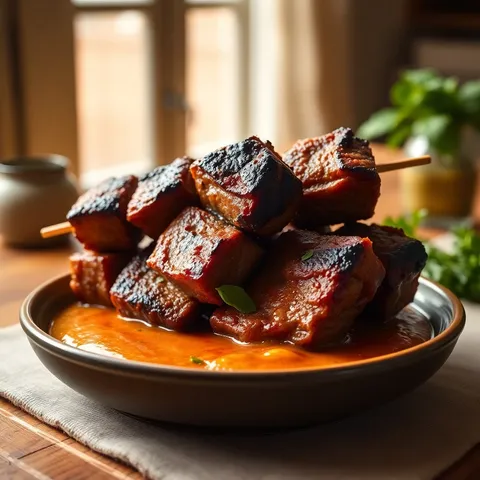 Eastern European Lens Verified Images are for illustrative purposes only, may be inaccurate, and do not guarantee the presence or absence of specific ingredients.
 Shashlik
Smoky, charred cubes of marinated lamb or pork threaded on skewers and grilled over embers — Central Asia's festive open-fire classic, fragrant with onion and spice.
 Eastern European Lens Verified Images are for illustrative purposes only, may be inaccurate, and do not guarantee the presence or absence of specific ingredients.
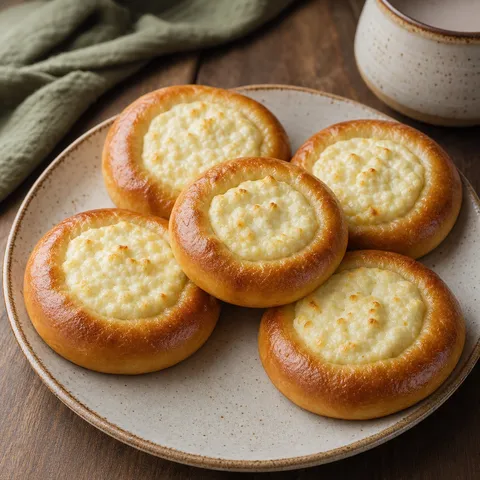
 Vatrushka
Soft, pillowy Russian buns filled with a sweetened quark or farmer's cheese center — lightly golden and gently sweet, perfect alongside tea or coffee.
 Eastern European Lens Verified Images are for illustrative purposes only, may be inaccurate, and do not guarantee the presence or absence of specific ingredients.
 Kurtosh Kalach
Hungary's iconic chimney cake — sweet yeast dough spiraled around a spit, rolled in cinnamon sugar, and roasted until the outside caramelizes into a crackly, warm shell.