 Eastern European Images are for illustrative purposes only, may be inaccurate, and do not guarantee the presence or absence of specific ingredients.
  Serving Images are for illustrative purposes only, may be inaccurate, and do not guarantee the presence or absence of specific ingredients.
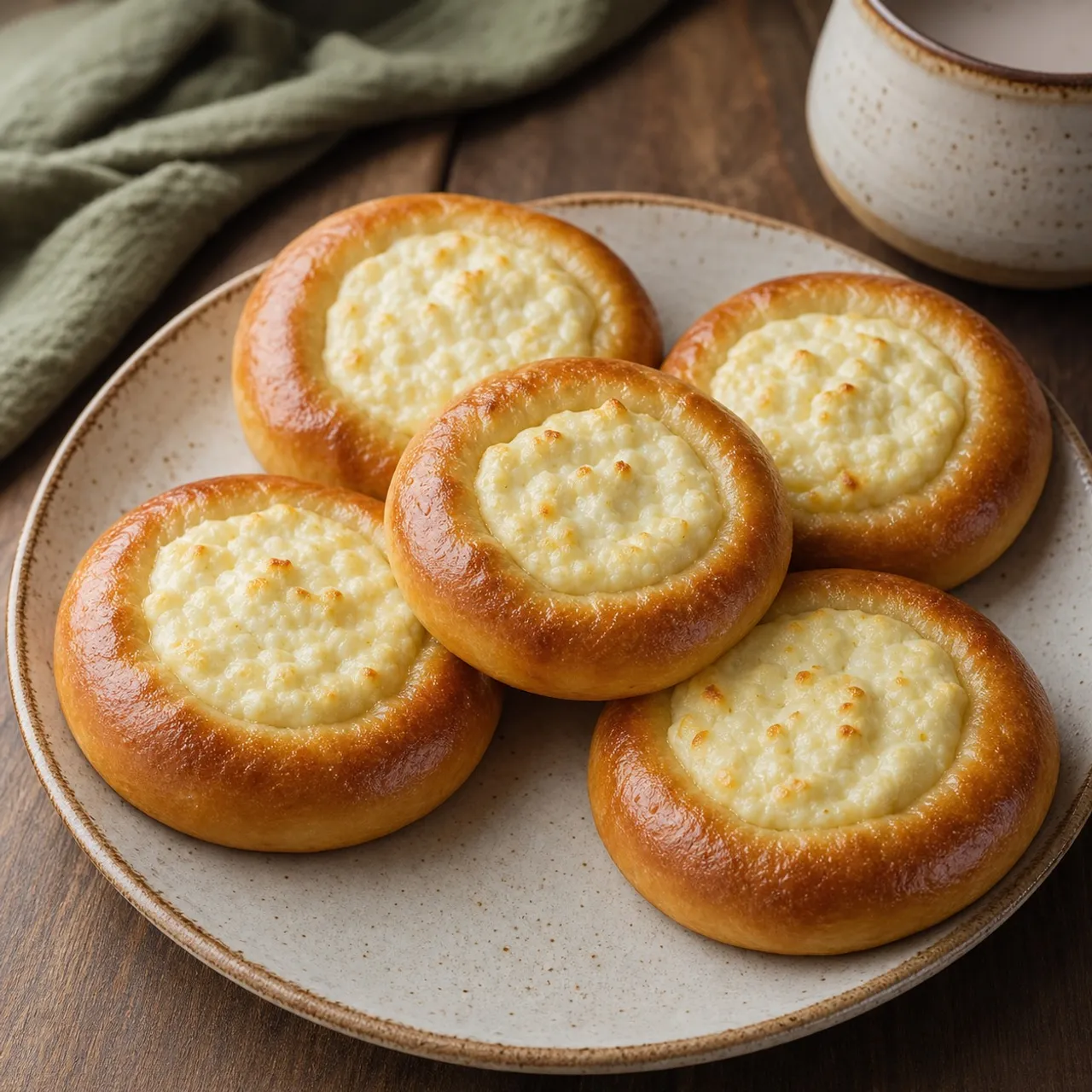
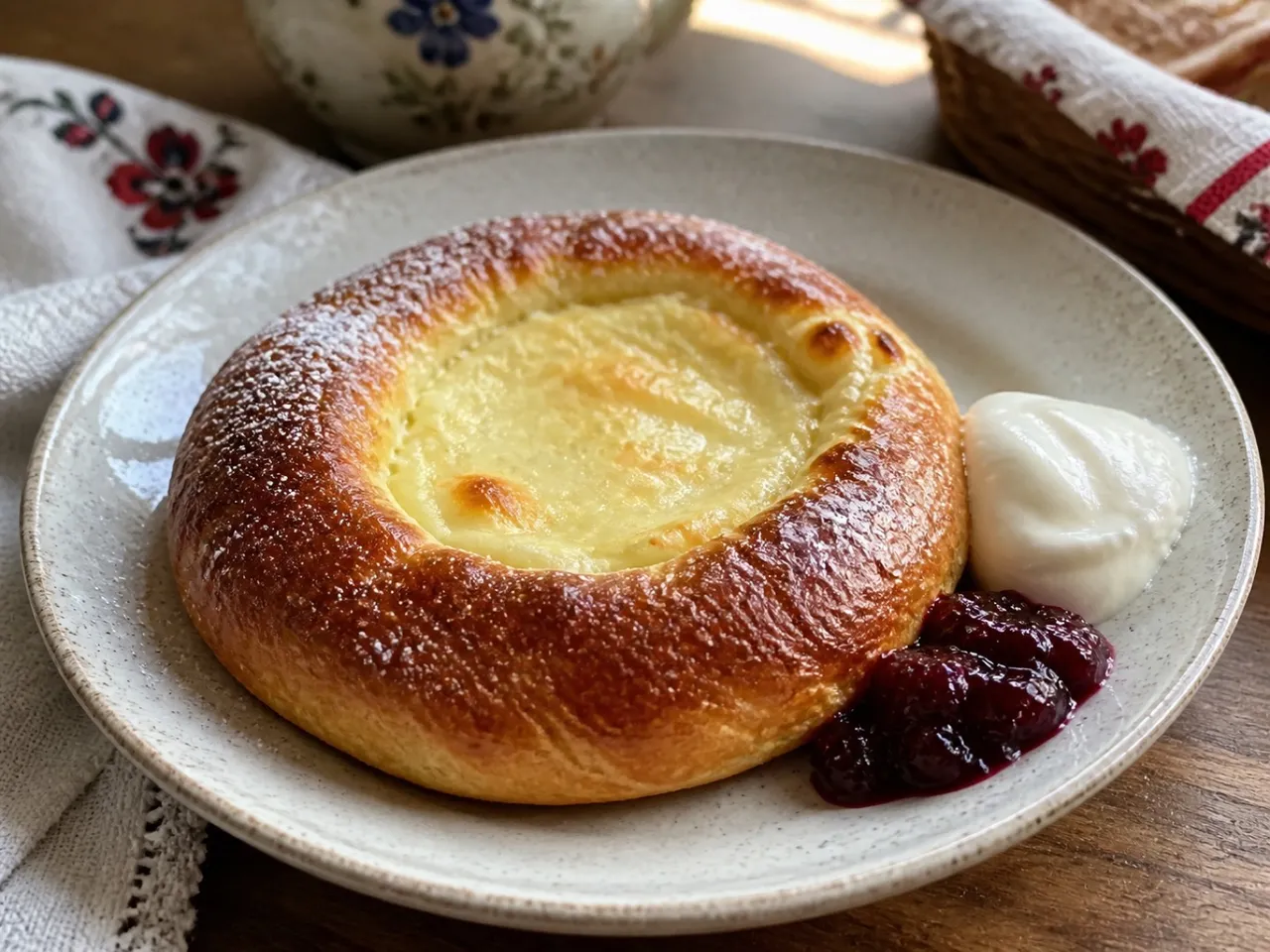
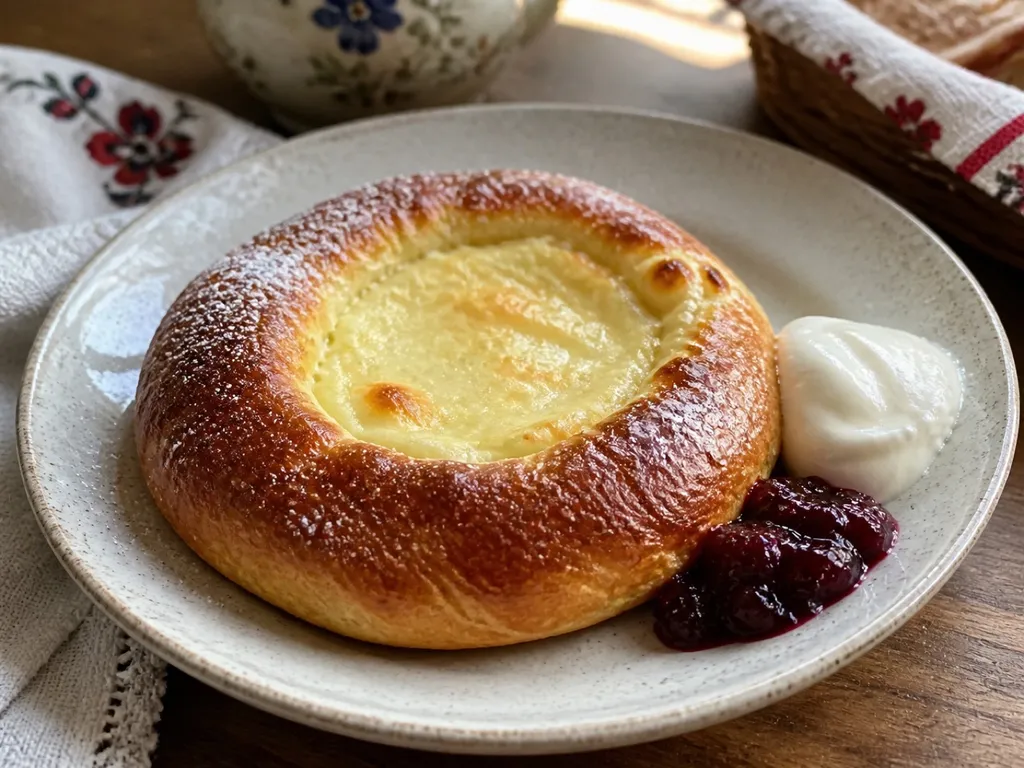
 Vatrushka
Soft, pillowy Russian buns filled with a sweetened quark or farmer's cheese center — lightly golden and gently sweet, perfect alongside tea or coffee.
Contains common allergens
In the app, Listahan checks these against your household automatically.
Instructions
8 steps- 1
Whisk the yeast into the warm milk with a pinch of the sugar and let stand until foamy, about 8 minutes.
- 2
In a large bowl, combine the flour, remaining sugar, and salt. Add the yeast mixture, softened butter, and one egg, and knead until a smooth, elastic dough forms, about 8 minutes.
- 3
Cover and let the dough rise in a warm spot until doubled, about 1 hour.
- 4
While the dough rises, beat the farmer's cheese with the second egg, vanilla, sour cream, and 2 tablespoons sugar until smooth for the filling.
- 5
Punch down the dough and divide into 8 equal balls. Roll each into a disc and place on a lined baking sheet, spaced apart.
- 6
Press an indentation into the center of each disc with your fingers or a small glass, leaving a raised rim, then spoon in the cheese filling.
- 7
Cover loosely and let rise 20 minutes, then brush the exposed dough rims with egg wash.
- 8
Bake at 375 degrees F for 15 to 18 minutes until the buns are golden and the filling is just set. Cool slightly before serving.
 Images are for illustrative purposes only, may be inaccurate, and do not guarantee the presence or absence of specific ingredients.
 Listahan Family Score™
75/100
Good fit for most families
Score reflects how well this recipe fits a typical busy household. In the app, your Family Score is personalized to your household's allergens, kids, and pantry.
Nutrition
per serving575
Calories
56 g
Protein
43 g
Carbs
29 g
Fat
Estimated per serving. Actual values depend on the brands and portions you use.
Listahan cooking guide
Chef notes & practical guide
Technique notes, ingredient swaps, serve-alongside ideas, storage guidance, and equipment for this recipe.
Cultural context
Vatrushka are Russian sweet buns with a dimpled well of sweetened cheese filling — typically tvorog, a fresh farmer's cheese that is the workhorse dairy product of Russian, Ukrainian, and Belarusian baking. The name is thought to derive from an old Slavic word for hearth or fire, associating the round buns with the circular shape of a traditional oven opening. They appear in Russian bakeries, cafeterias, and home kitchens with equal frequency and are the most uncomplicated sweet roll in the eastern European repertoire: soft, lightly sweetened dough with a tangy, creamy center that is more satisfying than elaborate.
Listahan note
This version uses widely available farmer's cheese or full-fat ricotta to replicate the tvorog filling so no specialty dairy sourcing is needed to make a faithful version of the bun.
Technique cues
- Make a deep, wide well in each dough round before filling — a shallow dimple fills in as the bun proofs and bakes, leaving no visible cavity; aim for a well that reaches close to the base of the dough ball.
- The tvorog or ricotta filling should be thick enough to hold its shape in the well without spreading — drain ricotta in a strainer for 30 minutes before mixing if it is particularly wet or the filling will bubble over the edges during baking.
- Brush the dough border with egg wash before baking but keep the egg wash off the filling, which should remain pale and creamy-set rather than browned and dry on the surface.
Kitchen flow
- Parallel prep
- Mix and knead the dough and let it proof while you drain and mix the filling so both are ready at the same time for shaping and filling.
- Make-ahead
- Formed, filled vatrushka can be placed in the refrigerator for a slow overnight proof and baked directly from cold the next morning — extend baking time by 3 minutes.
- Leftover move
- Vatrushka keep at room temperature for up to 2 days and are excellent briefly warmed in a 300 F oven for 5 minutes to refresh the dough; they also freeze well for up to 1 month.
- Cleanup rhythm
- Use a parchment-lined baking sheet so the cheese filling that inevitably seeps out during baking does not bond to the pan; parchment disposal is faster than scrubbing caramelized cheese.
Ingredient brief
Role, handling, and swap guidance for each key ingredient.
all-purpose flour
enriched dough base
Purpose: An enriched yeasted dough made with milk, butter, and eggs produces the soft, slightly chewy bun that holds its shape around the filled center without becoming bread-like or dry.
Handling: Add the butter in small pieces after the dough has come together to avoid fat interfering with gluten development; knead until the dough is smooth and passes the windowpane test.
Adaptation: Bread flour can be used for a chewier crumb with more structure; the difference is subtle but the higher-protein flour holds the bun shape slightly better.
farmer's cheese or ricotta
tvorog substitute filling
Purpose: Fresh farmer's cheese most closely approximates tvorog's dry, crumbly texture and mild tang; ricotta is a looser but acceptable alternative that many North American cooks find easier to source.
Handling: Mix with sugar, vanilla, and one egg yolk until smooth; if using ricotta, drain in a lined strainer for at least 30 minutes to remove excess moisture before mixing.
Adaptation: Drained full-fat cottage cheese pureed smooth in a blender is a very close substitute; cream cheese produces a richer, denser filling that works but tastes noticeably different.
sugar
filling sweetener and dough enricher
Purpose: Moderate sweetness in both the dough and the filling keeps vatrushka in the category of lightly sweet breakfast pastry rather than dessert, which is their proper register.
Handling: Use fine white sugar in the filling so it dissolves fully without grittiness in the baked cheese center.
Adaptation: Honey in the filling adds a floral sweetness and helps bind the cheese mixture; use at a 3:4 ratio replacing the sugar.
vanilla extract
filling aromatic
Purpose: Vanilla in the cheese filling provides a warm aromatic note that tempers the tanginess of the fresh cheese and signals that the bun is a sweet pastry rather than a savory snack.
Handling: Use pure vanilla extract rather than imitation; the clean, floral quality of real vanilla is more noticeable in a simple cheese filling than in a more complex dough.
Adaptation: Lemon zest in place of vanilla gives the filling a brighter, citrus-forward character that is excellent with stone fruit toppings.
Technique notes
- Letting the shaped and filled buns proof for a full 30 minutes on the baking sheet before going into the oven produces a noticeably lighter, fluffier dough that surrounds the filling rather than sitting dense and compact around it.
- Add a few fresh blueberries, a teaspoon of jam, or a thin slice of peach pressed into the cheese filling before baking for a seasonal variation that is entirely in the spirit of the original preparation.
- The internal temperature of the bun dough should read 190 F when done — if the top is golden but the temperature is lower, reduce the oven temperature by 25 degrees and give it 5 more minutes rather than risking an overbrowning.
Ingredient swaps
- Dairy-free direction
- Use a firm tofu-based filling blended with coconut cream, sugar, and vanilla to approximate the fresh cheese character; the result is different in texture but captures the sweet-neutral filling quality.
- Egg-free direction
- Replace the egg in the dough with 3 tablespoons of full-fat yogurt; omit the yolk in the filling and add an extra tablespoon of sugar to keep the filling cohesive.
- Savory direction
- Skip the sugar and vanilla in the filling, add minced dill and a pinch of salt to the cheese, and serve alongside soup for a savory vatrushka that is equally traditional.
Serve alongside
- strong black tea with milk (the classic Russian pairing)
- fruit compote or jam for spreading
- fresh berries in season
- black tea or Russian-style sweet tea
- warm milk for children
Serving suggestions only — check pairings for your household's allergens.
Storage & reheating
- Vatrushka are best the day they are baked while the dough is still soft. They keep at room temperature covered for up to 2 days; the dough firms slightly but remains pleasant. Refresh briefly in a 300 F oven for 5 minutes. Vatrushka freeze well individually wrapped for up to 1 month; thaw at room temperature for 1 hour before warming.
Equipment
- stand mixer with dough hook or large bowl for kneading by hand
- bench scraper for dividing dough into equal portions
- small round glass or the back of a spoon for pressing the filling well
Make this household-aware
Listahan Pro checks this recipe against your household's allergens, finds pantry-aware swaps, builds the shopping list, and helps you plan the week around it.
Plan it in Listahan
Add Vatrushka to your week, check it against your household's allergens, and build the shopping list automatically.
More Eastern European recipes
 Eastern European Lens Verified Images are for illustrative purposes only, may be inaccurate, and do not guarantee the presence or absence of specific ingredients.
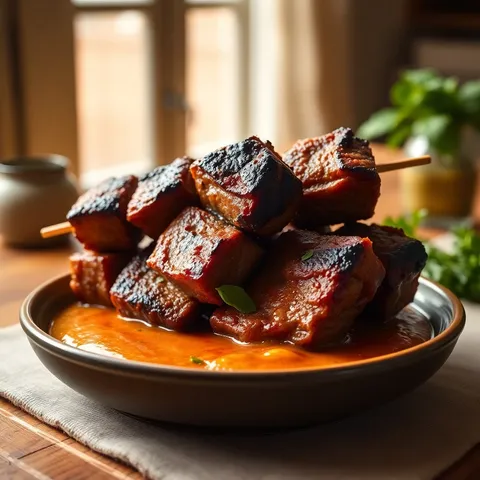
 Shashlik
Smoky, charred cubes of marinated lamb or pork threaded on skewers and grilled over embers — Central Asia's festive open-fire classic, fragrant with onion and spice.
 Eastern European Lens Verified Images are for illustrative purposes only, may be inaccurate, and do not guarantee the presence or absence of specific ingredients.
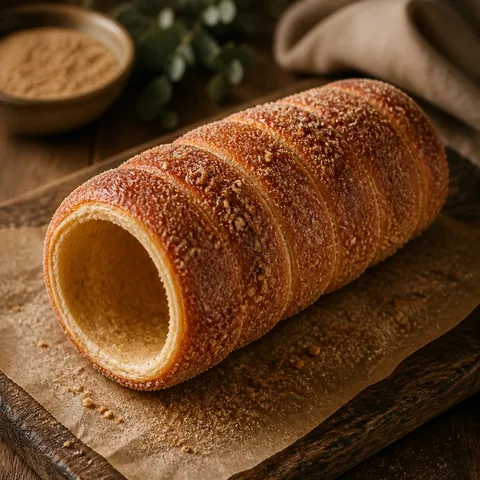
 Kurtosh Kalach
Hungary's iconic chimney cake — sweet yeast dough spiraled around a spit, rolled in cinnamon sugar, and roasted until the outside caramelizes into a crackly, warm shell.
 Eastern European Lens Verified Images are for illustrative purposes only, may be inaccurate, and do not guarantee the presence or absence of specific ingredients.
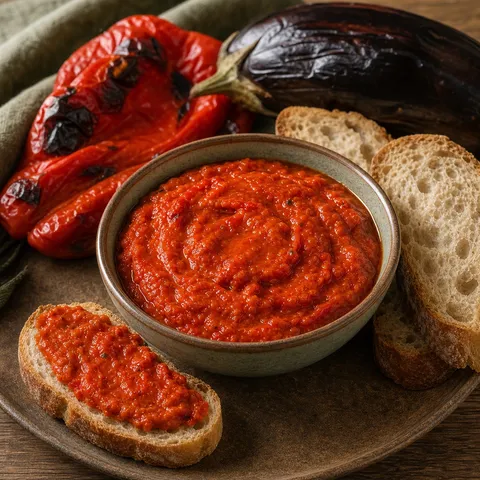
 Ajvar
Smoky roasted red pepper and eggplant relish from the Balkans — sweet, slightly charred, and spoonable — the essential condiment for grilled meats and crusty bread.