 Japanese Images are for illustrative purposes only, may be inaccurate, and do not guarantee the presence or absence of specific ingredients.
  Serving Images are for illustrative purposes only, may be inaccurate, and do not guarantee the presence or absence of specific ingredients.
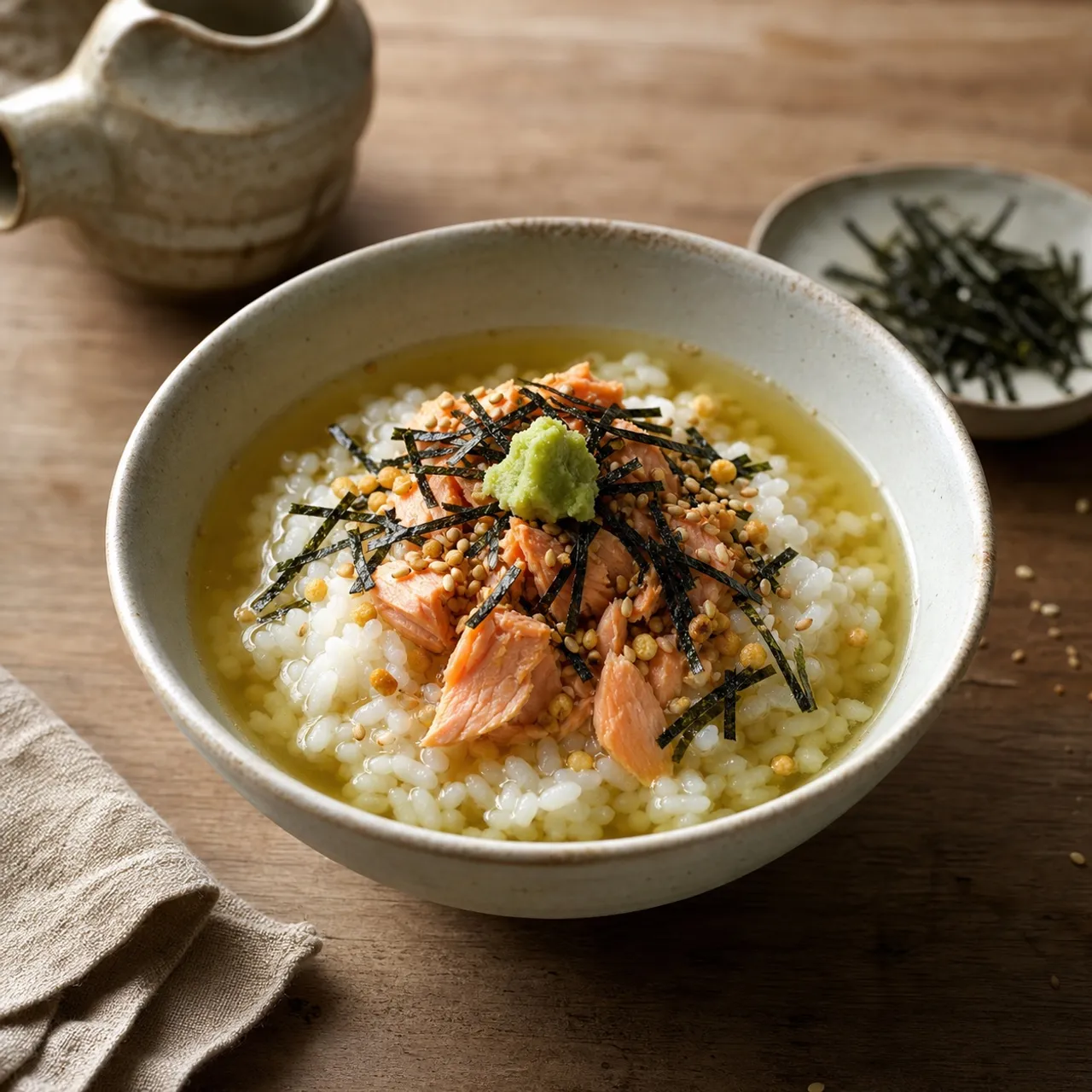
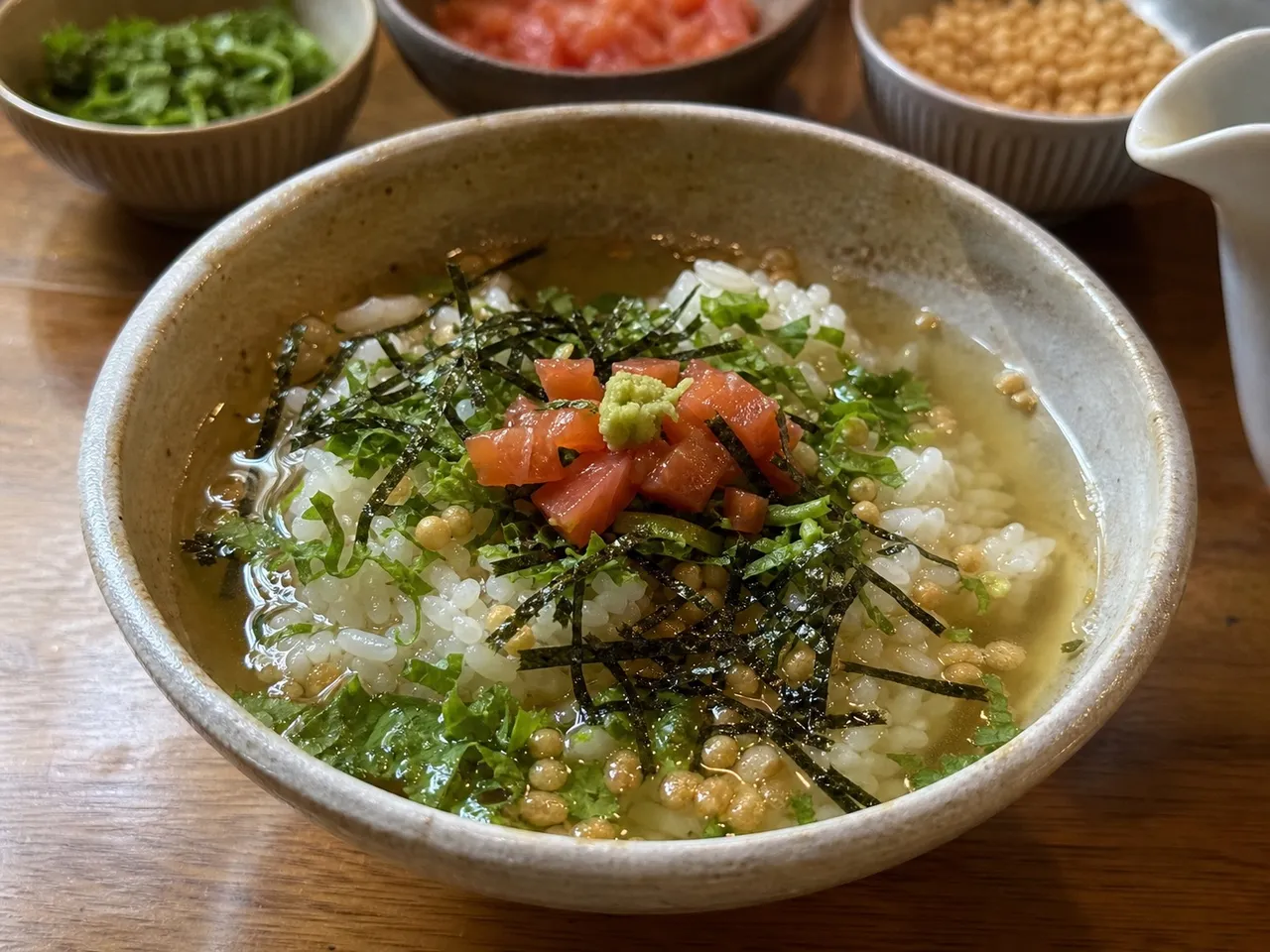
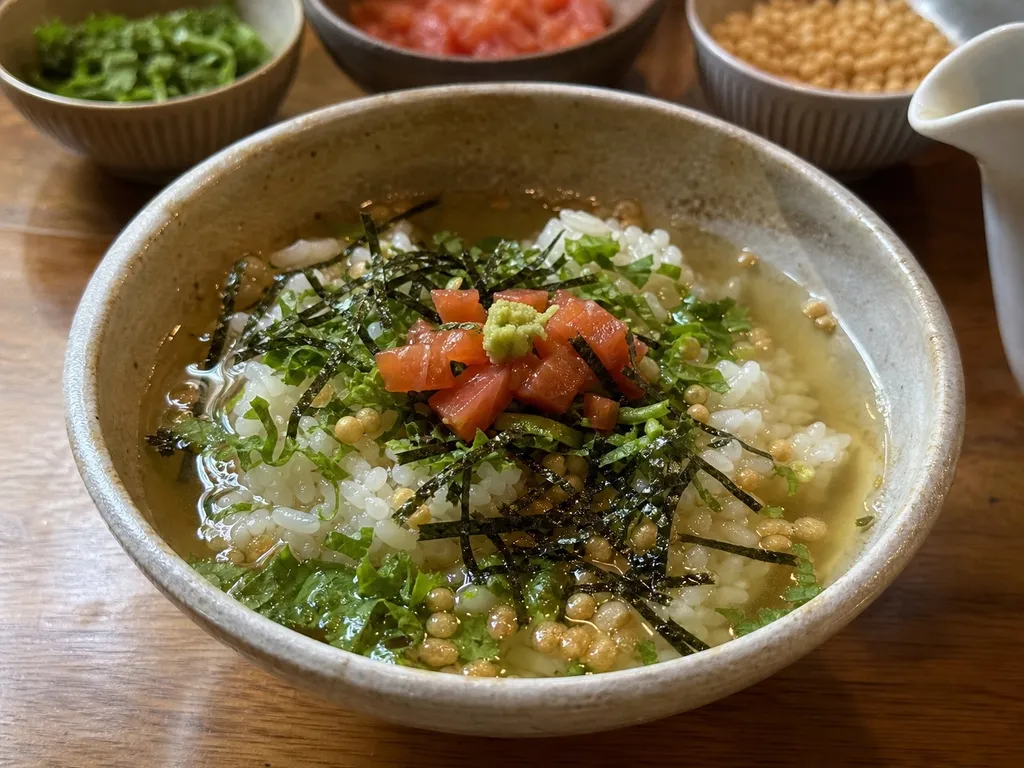
 Ochazuke
A soothing bowl of steamed rice doused in hot green tea or dashi, topped with savory morsels for a light, restorative meal.
Contains common allergens
In the app, Listahan checks these against your household automatically.
Good to know
- Ready in under 30 minutes
Matched from this dish's own ingredients and timing. Browse more: 30-minute meals
Instructions
5 steps- 1
Divide the warm cooked rice between two bowls, mounding it loosely so the tea can flow through.
- 2
Flake the grilled salmon into bite-size pieces and arrange it over the center of each rice mound.
- 3
Scatter the arare, nori strips, and toasted sesame seeds over the top, and add a small dab of wasabi at the side of each bowl.
- 4
Brew the green tea fresh at about 175°F, then pour roughly 1 cup of the hot tea around the edge of each bowl so the rice is half-submerged.
- 5
Serve immediately and instruct diners to stir gently before eating so the flavors meld while the rice is still hot.
 Images are for illustrative purposes only, may be inaccurate, and do not guarantee the presence or absence of specific ingredients.
 Listahan Family Score™
65/100
Works for many families
Score reflects how well this recipe fits a typical busy household. In the app, your Family Score is personalized to your household's allergens, kids, and pantry.
Nutrition
per serving440
Calories
16 g
Protein
75 g
Carbs
7 g
Fat
Estimated per serving. Actual values depend on the brands and portions you use.
Listahan cooking guide
Chef notes & practical guide
Technique notes, ingredient swaps, serve-alongside ideas, storage guidance, and equipment for this recipe.
Cultural context
Ochazuke is hot green tea (or dashi) poured over a bowl of rice with savory toppings, a humble, soothing dish often eaten as a light supper or a way to finish a meal. Its comfort lies in its simplicity: warm rice, a salty accent, and fragrant tea.
Listahan note
This version keeps it true to form, freshly cooked rice and a few good toppings, with the tea poured at the table so the rice stays loose and the toppings crisp until the last second.
Technique cues
- Mound the rice loosely so the hot tea can flow through it rather than sitting on top.
- Brew the green tea fresh and not too hot (around 175F) so it tastes clean and not bitter over the rice.
- Pour the tea around the edge at the table so the arare and nori stay crisp until you stir.
Kitchen flow
- Parallel prep
- Have the rice hot and the toppings ready, and brew the tea last so it is fresh when poured.
- Make-ahead
- Ochazuke is itself a way to use leftover rice; assemble and pour to order rather than ahead.
- Leftover move
- It is already the classic leftover-rice dish; vary the topping with whatever savory bits you have.
- Cleanup rhythm
- A single bowl and a teapot; almost nothing to wash.
Ingredient brief
Role, handling, and swap guidance for each key ingredient.
Cooked short-grain rice
The base
Purpose: Warm, plump rice is the canvas the tea and toppings sit on.
Handling: Use freshly cooked rice mounded loosely.
Adaptation: Leftover rice works if warmed; do not use cold, hard rice.
Green tea or dashi
The broth
Purpose: Hot genmaicha or sencha (or warm dashi) is poured over to bring it together.
Handling: Brew fresh just before serving and pour at the table.
Adaptation: Warm dashi makes a more savory ochazuke; both are traditional.
Grilled salted salmon
The savory topping
Purpose: Flaked salty salmon is a classic, satisfying topping that seasons the bowl.
Handling: Flake over the rice before pouring the tea.
Adaptation: Umeboshi, tarako, or pickles are common alternatives.
Arare and nori
Texture and aroma
Purpose: Crunchy rice crackers and crisp seaweed add contrast to the soft rice.
Handling: Scatter on top just before the tea so they stay crisp.
Adaptation: Toasted sesame and a little furikake work too.
Wasabi
The accent
Purpose: A small dab adds a clean, sharp lift to the gentle bowl.
Handling: Add a little at the side to stir in to taste.
Adaptation: A little grated ginger gives a different lift.
Technique notes
- Pour the tea at the table, not in the kitchen, so the toppings keep their crunch.
- Brew the tea fresh and gentle; bitter, stewed tea overwhelms the delicate bowl.
- Stir just before eating so the flavors meld while the rice is still hot.
Ingredient swaps
- Savory dashi direction
- Pour warm dashi instead of tea for a more soup-like, savory ochazuke.
- Fish-free, vegetarian direction
- Top with umeboshi, pickles, or toasted sesame instead of salmon, and use tea rather than bonito dashi.
- Sesame-free direction
- Skip the sesame seeds and lean on nori and arare for texture.
Serve alongside
- Japanese pickles
- Tamagoyaki
- Grilled fish
- Miso soup
- Green tea
- Barley tea
Serving suggestions only — check pairings for your household's allergens.
Storage & reheating
- Assemble and eat immediately; ochazuke does not keep once the tea is poured.
- Store the toppings and rice separately and combine fresh.
- Do not freeze the assembled dish.
Equipment
- Rice cooker or pot
- Teapot or kettle
- Serving bowls
- Small dish for toppings
Make this household-aware
Listahan Pro checks this recipe against your household's allergens, finds pantry-aware swaps, builds the shopping list, and helps you plan the week around it.
Plan it in Listahan
Add Ochazuke to your week, check it against your household's allergens, and build the shopping list automatically.
More Japanese recipes
 Japanese Lens Verified Images are for illustrative purposes only, may be inaccurate, and do not guarantee the presence or absence of specific ingredients.
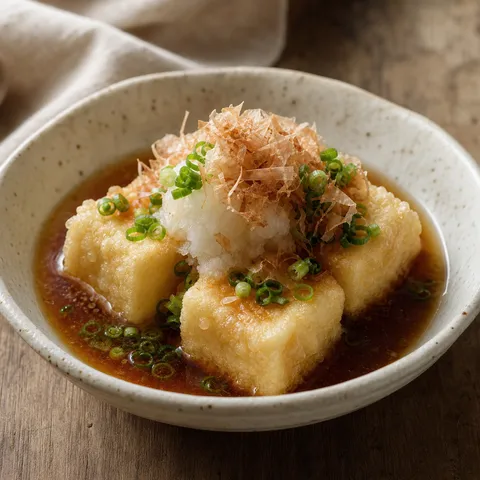
 Agedashi Tofu
Lightly fried tofu dusted in potato starch and served in a warm dashi-soy-mirin broth, topped with grated daikon and bonito flakes, a classic Japanese izakaya starter.
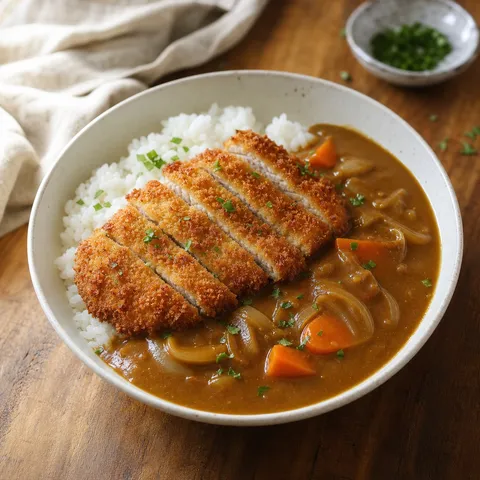 Japanese Lens Verified Images are for illustrative purposes only, may be inaccurate, and do not guarantee the presence or absence of specific ingredients.
 Katsu Curry
A Japanese recipe: Katsu Curry.
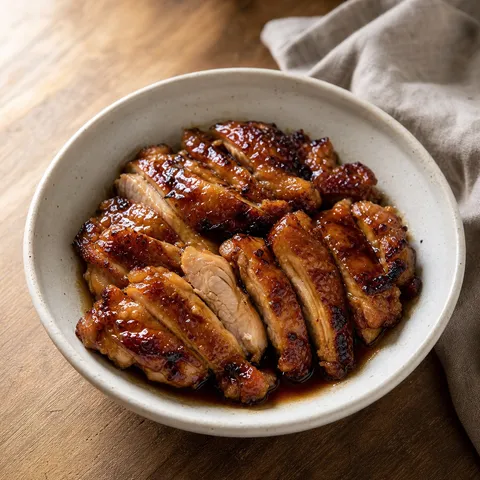 Japanese Lens Verified Images are for illustrative purposes only, may be inaccurate, and do not guarantee the presence or absence of specific ingredients.
 Chicken Teriyaki
Enjoy tender, juicy chicken glazed in a deeply flavorful, glossy sweet soy sauce, perfectly caramelized to sticky perfection.