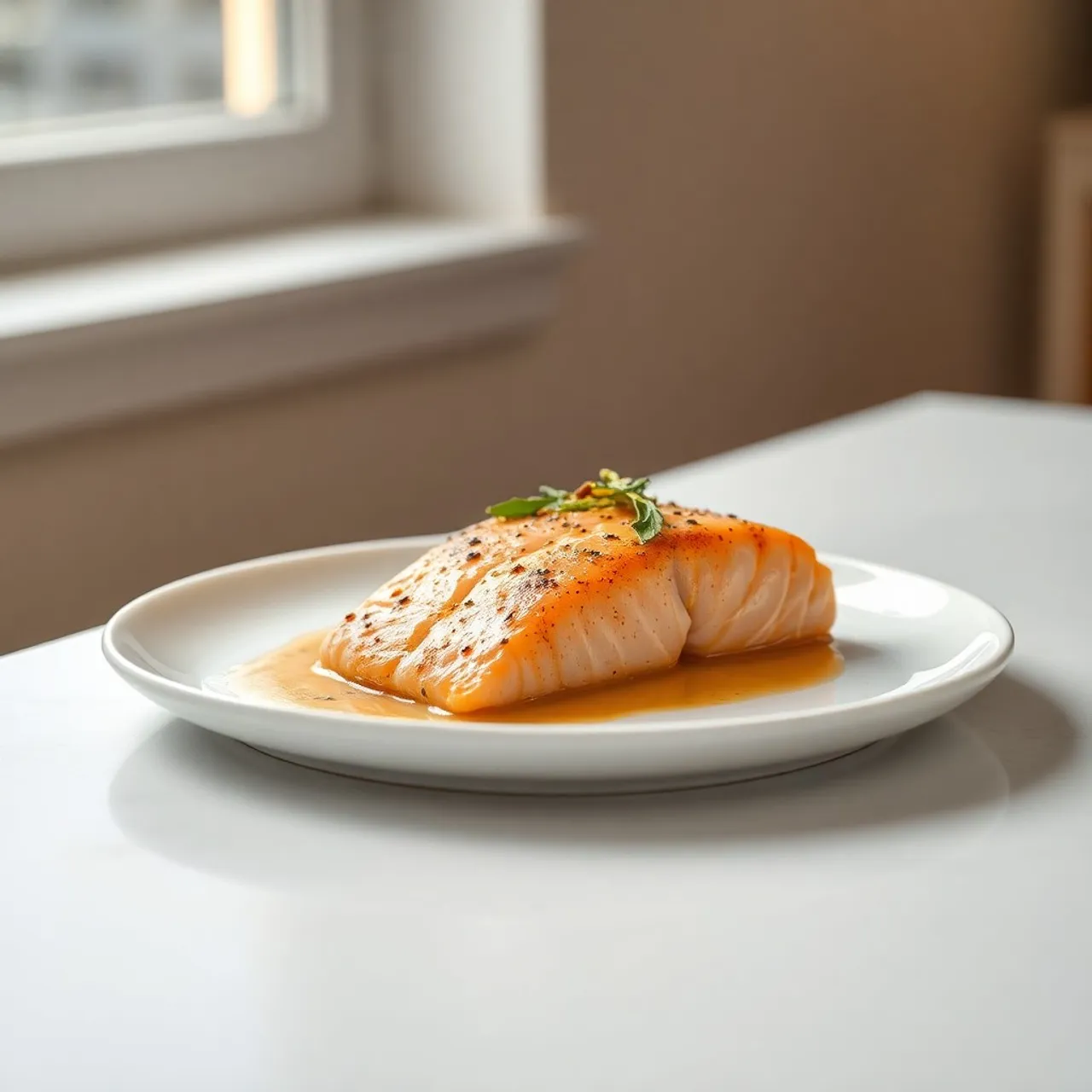
 Keto Images are for illustrative purposes only, may be inaccurate, and do not guarantee the presence or absence of specific ingredients.
 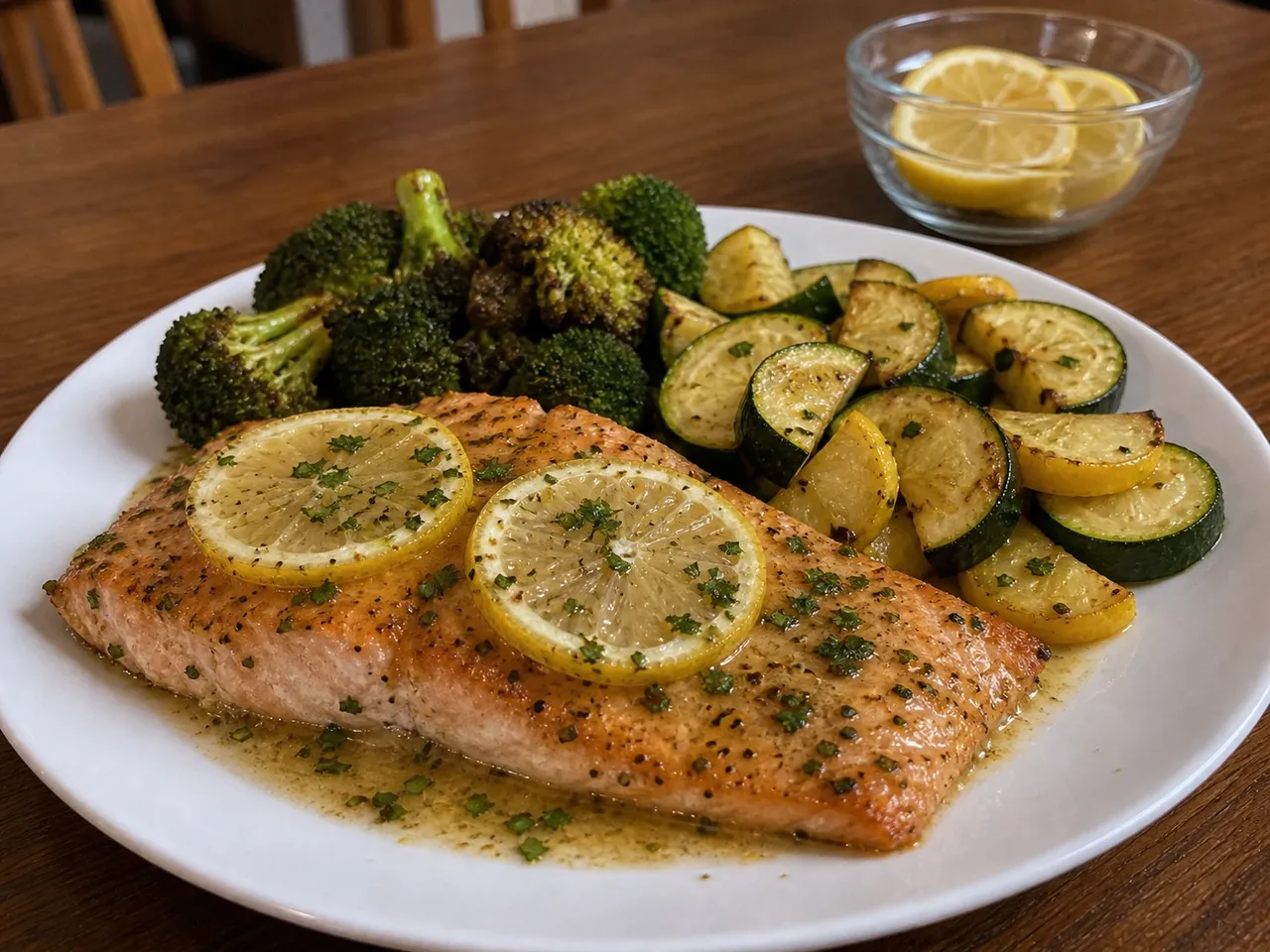 Serving Images are for illustrative purposes only, may be inaccurate, and do not guarantee the presence or absence of specific ingredients.
 Lemon Butter Salmon
Flaky, pan-seared salmon fillets elevated with a bright, citrusy, and creamy butter sauce.
Contains common allergens
In the app, Listahan checks these against your household automatically.
Good to know
- Ready in under 30 minutes
Matched from this dish's own ingredients and timing. Browse more: 30-minute meals
Instructions
6 steps- 1
Pat the salmon fillets dry and season them well with salt and freshly ground black pepper.
- 2
Heat olive oil in a non-stick skillet over medium-high heat. Place the salmon flesh-side down and sear for 4-5 minutes until golden brown.
- 3
Carefully flip the salmon. Cook for an additional 3-4 minutes until it easily flakes with a fork. Remove the salmon from the skillet and set aside.
- 4
In the same skillet over medium heat, melt the butter. Add the minced garlic and sauté for 30 seconds until fragrant.
- 5
Pour in the chicken broth (or wine), lemon juice, and lemon zest. Simmer for 2-3 minutes, scraping up any browned bits from the bottom, until the sauce reduces and slightly thickens.
- 6
Return the salmon to the skillet, spoon the lemon butter sauce over the fillets, and garnish with fresh parsley and lemon slices before serving.
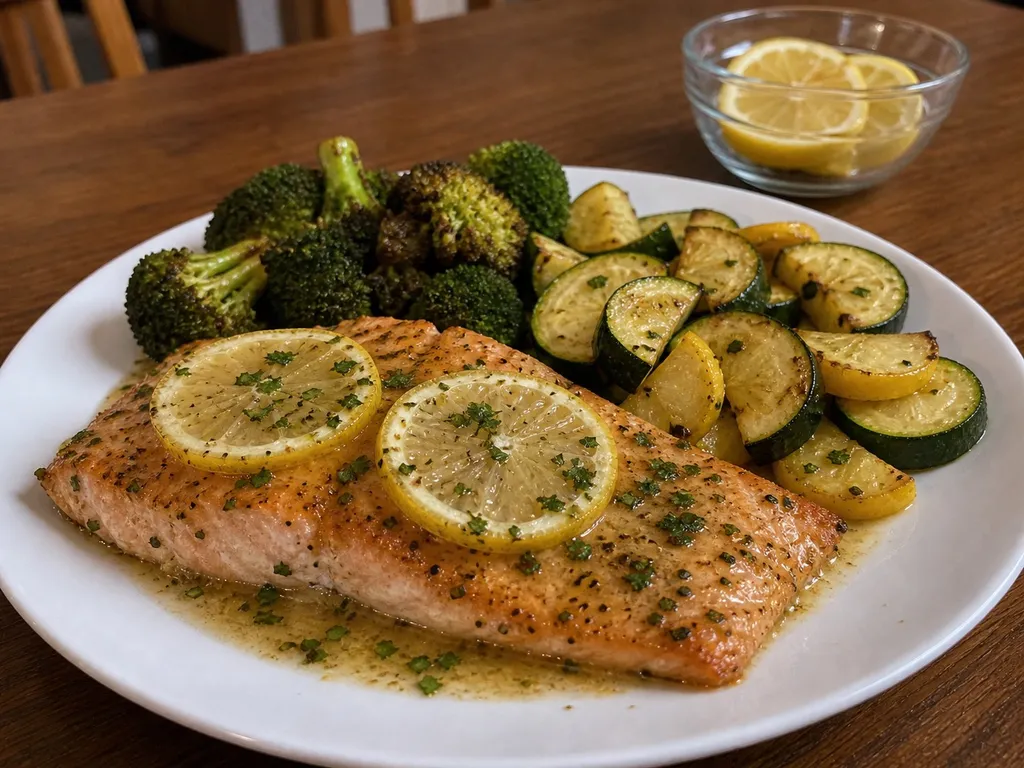 Images are for illustrative purposes only, may be inaccurate, and do not guarantee the presence or absence of specific ingredients.
 Listahan Family Score™
64/100
Works for many families
Score reflects how well this recipe fits a typical busy household. In the app, your Family Score is personalized to your household's allergens, kids, and pantry.
Nutrition
per serving265
Calories
17 g
Protein
1 g
Carbs
20 g
Fat
Estimated per serving. Actual values depend on the brands and portions you use.
Listahan cooking guide
Chef notes & practical guide
Technique notes, ingredient swaps, serve-alongside ideas, storage guidance, and equipment for this recipe.
Cultural context
Pan-searing fish in butter with acid and aromatics is one of the foundational techniques of French classical cooking — the meuniere approach stripped to its essentials. Salmon in particular became a mainstream American protein from the 1980s onward as both Atlantic farmed and Pacific wild salmon became more available year-round. The dish is keto-compliant without any modification: salmon is fatty, butter is fat, and lemon juice contains only trace carbohydrates. It is one of those rare cases where the keto-friendly version is also simply the best version of the dish.
Listahan note
This version focuses on achieving a proper sear with a crispy skin-on side, which requires a dry fish surface, a hot pan, and patience — fighting the urge to move the fillet before it releases naturally.
Technique cues
- Pat the salmon fillets completely dry with paper towels on all sides before seasoning — any moisture on the surface will steam rather than sear and prevent the skin from crisping.
- Place the fillet skin-side down in a cold pan, then turn the heat to medium-high and leave it completely undisturbed; the skin will stick at first but release cleanly on its own when it is properly crisped — typically 5 to 6 minutes.
- Make the butter sauce in the residual heat of the pan after the salmon is removed — the pan juices and browned bits contribute flavor that starting with a clean pan cannot replicate.
Kitchen flow
- Parallel prep
- Prep the lemon, herbs, and garlic before touching the salmon; once the fish hits the hot pan, everything else needs to happen without interruption.
- Make-ahead
- Salmon is best cooked and eaten immediately; holding it more than 10 minutes after cooking allows the flesh to continue cooking in its own residual heat.
- Leftover move
- Flake cold leftover salmon into a salad with capers, red onion, and a lemon-herb vinaigrette for an excellent next-day lunch.
- Cleanup rhythm
- Deglaze the pan with the lemon juice while making the sauce — this lifts any stuck browned bits and cleans the pan simultaneously.
Ingredient brief
Role, handling, and swap guidance for each key ingredient.
salmon fillets
protein and omega-3 fat source
Purpose: Skin-on salmon fillets provide the best result — the skin crisps into something worth eating and acts as a natural barrier that keeps the flesh moist during cooking.
Handling: Bring to room temperature for 15 minutes before cooking and dry thoroughly; score the skin in two places to prevent the fillet from curling in the pan.
Adaptation: Trout fillets behave very similarly in the pan and pair equally well with lemon butter.
unsalted butter
fat base for sauce
Purpose: Butter provides richness and a nuttiness when lightly browned (beurre noisette) that elevates a simple pan sauce into something complex.
Handling: Cut into cubes and keep cold until the pan is off the heat; adding cold butter to a hot pan and swirling emulsifies it into a silky sauce rather than breaking into greasy pools.
Adaptation: Ghee works if avoiding dairy proteins and has a higher smoke point, but will not create the same emulsified pan sauce.
fresh lemon
acid and brightness
Purpose: The acid in lemon juice cuts through the richness of both the salmon fat and the butter, making the dish feel balanced rather than heavy.
Handling: Zest before juicing; add the zest to the butter sauce at the end for a brighter, more aromatic lemon note than juice alone provides.
Adaptation: A splash of dry white wine deglazed before adding the butter creates a more complex, restaurant-style pan sauce.
garlic
aromatic depth
Purpose: A smashed or minced clove cooked briefly in the butter adds savory depth without competing with the lemon.
Handling: Add to the pan after removing the salmon and cook for 30 to 60 seconds before adding the butter; garlic burns quickly in a hot, empty pan.
Adaptation: Shallots add a milder, sweeter allium note and work equally well in the butter sauce.
fresh dill or parsley
herb finish
Purpose: A green herb added at the end provides color and freshness that balances the richness of the butter sauce.
Handling: Chop just before serving and add off the heat so the herb stays bright rather than turning dull and olive-colored in a hot sauce.
Adaptation: Fresh tarragon pairs elegantly with both salmon and butter and gives a more French character to the dish.
Technique notes
- A fish spatula — thin, slotted, and slightly flexible — is the correct tool for releasing skin-on fillets from the pan without tearing; a standard spatula is too thick and inflexible.
- Basting the flesh side of the salmon continuously with the butter and pan juices using a spoon during the last 1 to 2 minutes (while it cooks skin-side down) produces a more evenly cooked fillet without needing to flip.
- If the skin sticks and tears when you try to check it, it is not ready — give it another 60 seconds and check again; properly crisped skin releases with almost no resistance.
Ingredient swaps
- Dairy-free direction
- Replace butter with a generous drizzle of good quality extra virgin olive oil and a tablespoon of tahini stirred into the lemon juice for a rich, creamy sauce without dairy.
- Lower-fat direction
- Reduce butter to 1 tablespoon and finish the sauce with a splash of salmon cooking liquid or water to maintain emulsification with less overall fat.
- Gluten, nut & dairy-free direction
- The base recipe (salmon, butter, garlic, broth or wine, and lemon) has no wheat or tree-nut ingredient in it; the dairy is the butter, which the swap above replaces with olive oil and tahini. Salmon itself is a fish, and this recipe doesn't offer a substitute for it.
Serve alongside
- roasted asparagus with lemon
- cauliflower mash with cream and chives
- simple arugula salad with shaved Parmesan
- chilled Sauvignon Blanc or Pinot Gris
- sparkling water with cucumber and mint
Serving suggestions only — check pairings for your household's allergens.
Storage & reheating
- Cooked salmon keeps in the fridge for up to 2 days; the texture softens and the fat oxidizes slightly, giving it a stronger flavor. Reheat gently in a low oven (275 F) for 10 minutes or eat cold in a salad — microwaving salmon makes the fat oxidize quickly and produces a strong odor. Do not freeze cooked salmon.
Equipment
- heavy stainless steel or cast iron skillet
- fish spatula
- small saucepan or ladle for basting
Make this household-aware
Listahan Pro checks this recipe against your household's allergens, finds pantry-aware swaps, builds the shopping list, and helps you plan the week around it.
Plan it in Listahan
Add Lemon Butter Salmon to your week, check it against your household's allergens, and build the shopping list automatically.
More Keto recipes
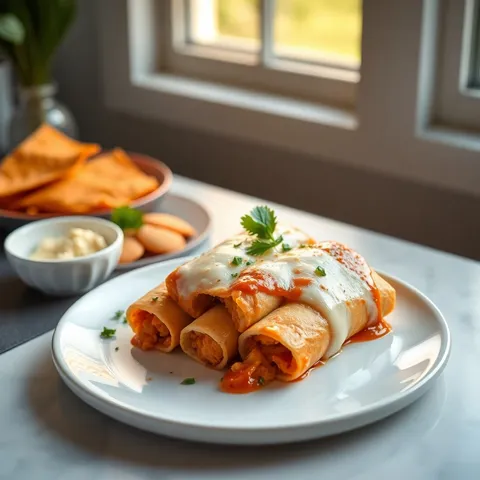 Keto Lens Verified Images are for illustrative purposes only, may be inaccurate, and do not guarantee the presence or absence of specific ingredients.
 Keto Chicken Enchiladas
Savory chicken and cheese rolled in low-carb tortillas, smothered in a rich, mild red enchilada sauce.
 Keto Lens Verified Images are for illustrative purposes only, may be inaccurate, and do not guarantee the presence or absence of specific ingredients.
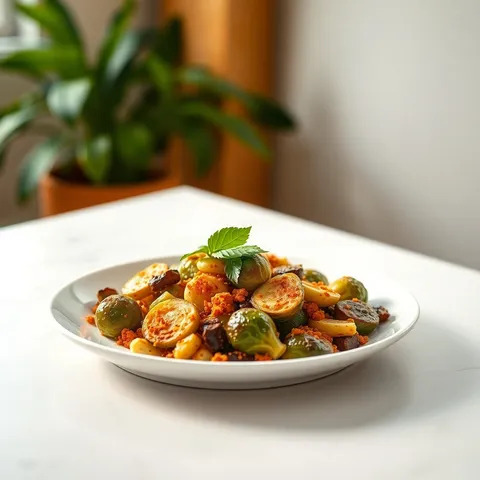
 Brussels Sprouts
Crispy oven-roasted keto Brussels sprouts with garlic and Parmesan — caramelized and golden.
 Keto Lens Verified Images are for illustrative purposes only, may be inaccurate, and do not guarantee the presence or absence of specific ingredients.
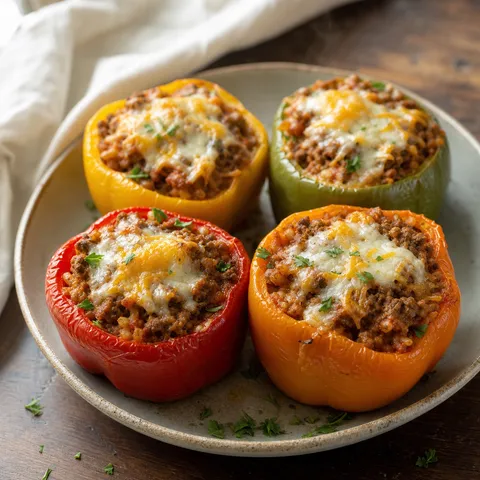
 Low-Carb Stuffed Bell Peppers
Vibrant bell peppers generously stuffed with a savory mixture of ground beef, cauliflower rice, and melted cheese.