 Food Lens Images are for illustrative purposes only, may be inaccurate, and do not guarantee the presence or absence of specific ingredients.
 Food Lens · Recipe ingredients
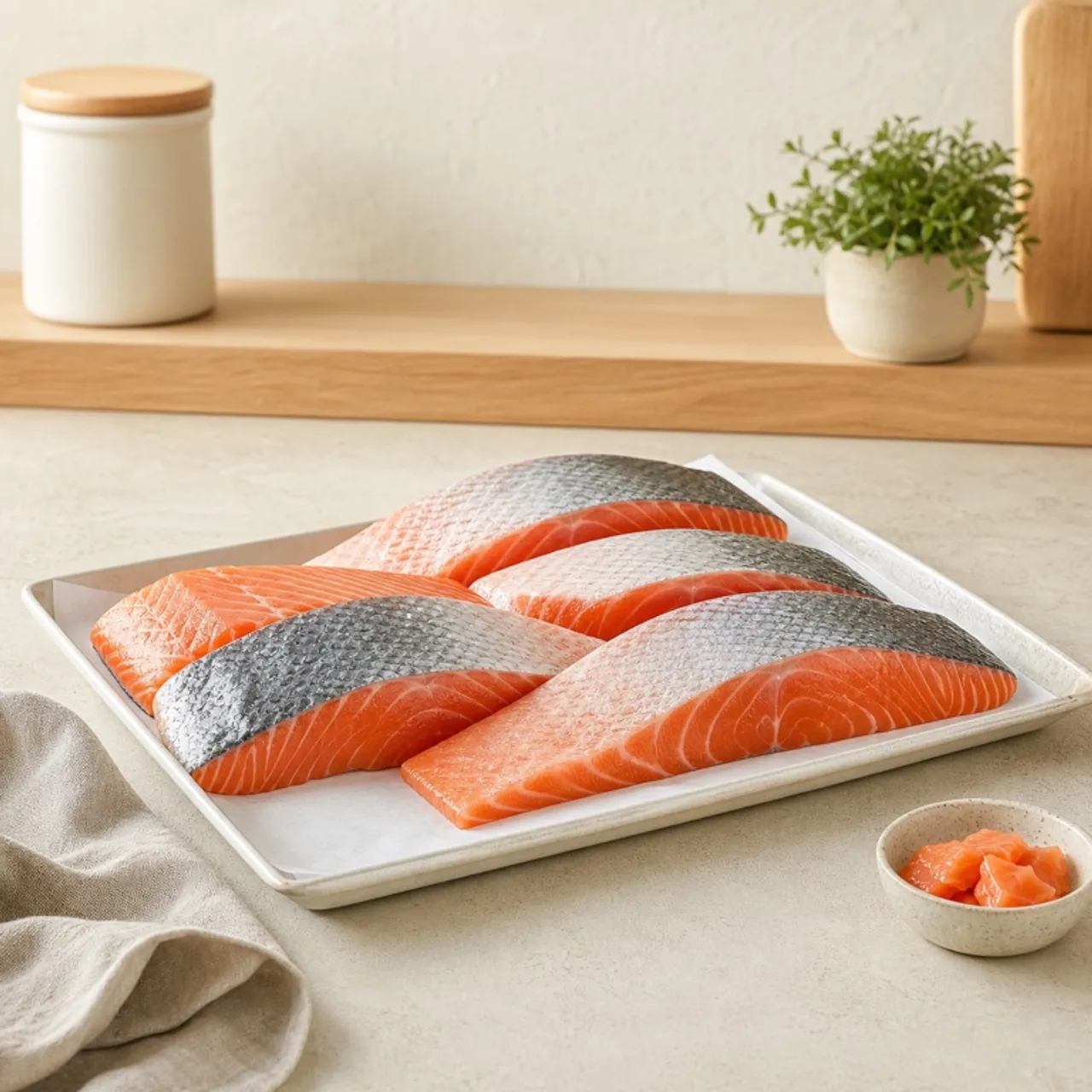
Salmon Fillets
Rich, buttery, and mildly oceanic; farmed Atlantic is subtler and fattier; wild sockeye is bolder and more assertively flavored.
Lens VerifiedSalmon fillets are boneless portions of Atlantic or Pacific salmon, prized for their rich, buttery flavor and high fat content. They cook quickly and excel across a wide range of techniques from pan-searing to poaching to baking.
Where it comes from
Salmon has been central to the food cultures of the Pacific Northwest and Scandinavia for millennia, revered by Indigenous communities and European fisherfolk alike. Norwegian aquaculture, which took off in the 1970s and 80s, transformed salmon from a seasonal luxury to a year-round grocery staple across the globe. Today, farmed Atlantic salmon is one of the most consumed fish in North America.
Varieties — Atlantic salmon (farmed — mild, rich fat, widely available year-round); sockeye (wild, deep red flesh, bold flavor); king/Chinook (wild, largest and most prized, very high fat); coho (wild, medium fat, versatile); pink salmon (mild, mostly canned).
Gravlax — salt-and-dill cured salmon — is a Scandinavian tradition served sliced thin on rye bread with mustard sauce, and has become a beloved preparation across Northern Europe and North America.
In a modern kitchen — Salmon should reach an internal temperature of 145°F (63°C) — the FDA minimum safe internal temperature for fish. Overcooked salmon becomes dry and chalky; the white albumin that seeps out indicates moisture being forced out by too much heat.
Buying it
Fresh salmon should smell of the sea — not fishy or sour. Flesh should be firm and spring back when pressed, with no gaps or separation between the flakes. Wild salmon has a deeper, more vibrant color than farmed. For skin-on fillets, skin should be shiny and taut.
Storing it
Raw salmon fillets are highly perishable — refrigerate and cook within a day or two of purchase, or freeze right away for longer storage. A strong fishy or ammonia smell, or a dull, sticky surface, means it should be discarded.
Keeps about 2 days in the fridge.
Out of salmon fillets? Good swaps
- Arctic char — Similar fat content and texture; slightly milder and more delicate; use 1:1 in any salmon preparation
- Steelhead trout — Closely related; pink flesh, rich flavor; excellent 1:1 substitute for farmed salmon
- Mahi-mahi — Leaner and firmer; works for baking and grilling; reduce cook time slightly
General cooking guidance — always check the labels on the products you use. Listahan’s allergen checks run automatically when you plan a recipe in the app. Not medical advice.
Recipes that use salmon fillets
Common questions about salmon fillets
What can I use instead of salmon fillets?
Good swaps include Arctic char, Steelhead trout, Mahi-mahi. Each behaves a little differently — see the swaps above for notes, and always check labels for allergens.
How do I store salmon fillets?
Raw salmon fillets are highly perishable — refrigerate and cook within a day or two of purchase, or freeze right away for longer storage. A strong fishy or ammonia smell, or a dull, sticky surface, means it should be discarded. It keeps about 2 days in the fridge.
More recipe ingredients
See all


Make salmon fillets about your kitchen — with Listahan Pro
Everything above is free, forever. Pro adds the Household Lens — the same food, seen for your family:
-
Checked for each member
Flags salmon fillets per person against your household's allergies and school rules — not just a generic "contains" tag.
-
Pantry-aware
Knows whether you already have it, what is running low, and the best swap from what is in your kitchen tonight.
-
What it costs near you
A real price from the Presyo community index, so you can plan the budget — not guess.
-
Your household memory
Who likes it, plus your own private notes — brand, where you keep it, who skips it.
Allergen safety is always free — Pro adds the automation, never the safety.
Cook with salmon fillets — safely
Plan a recipe in Listahan and the household allergen check runs automatically — every plan, every swap, every lunchbox. Safety is never paywalled.