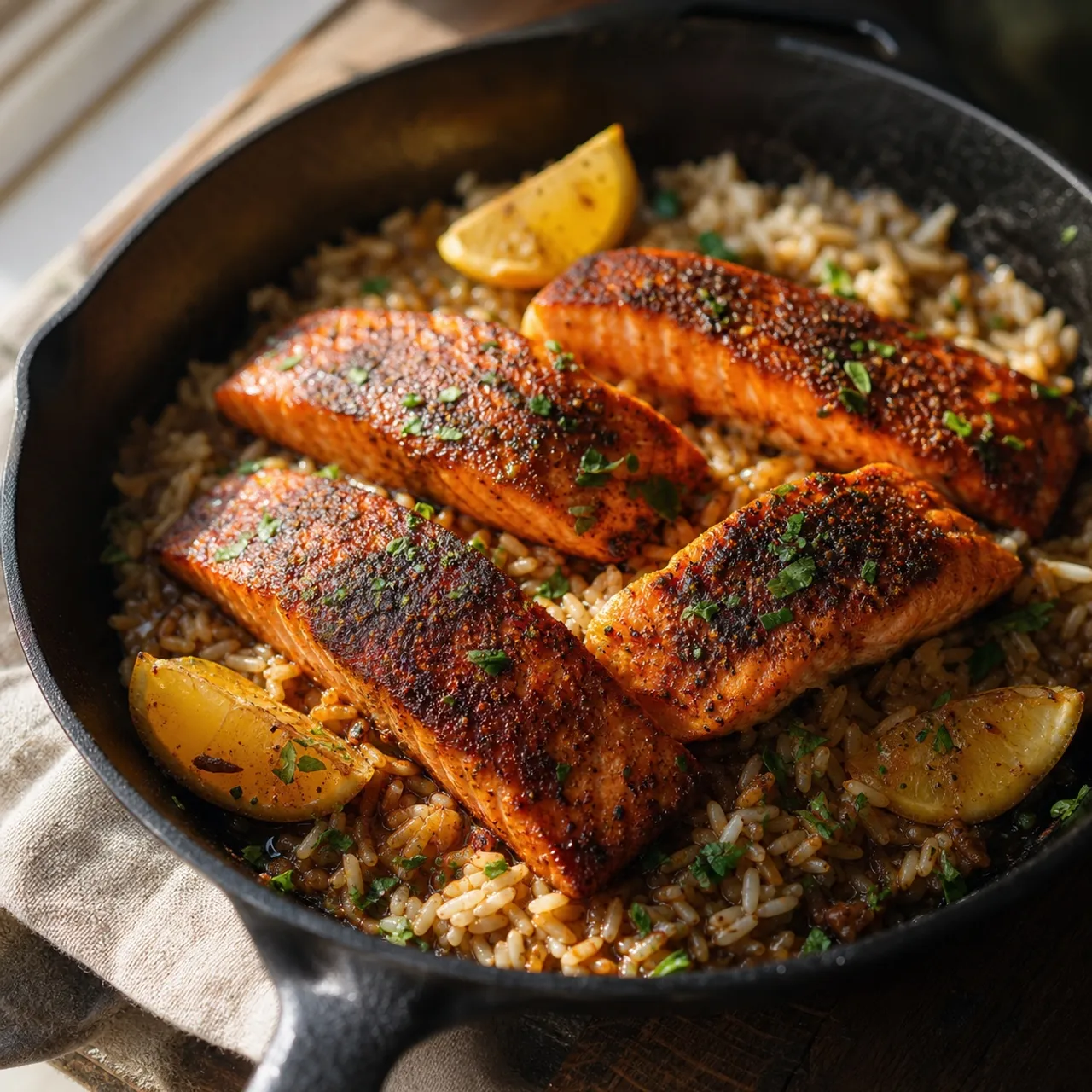
 Cajun & Creole Images are for illustrative purposes only, may be inaccurate, and do not guarantee the presence or absence of specific ingredients.
 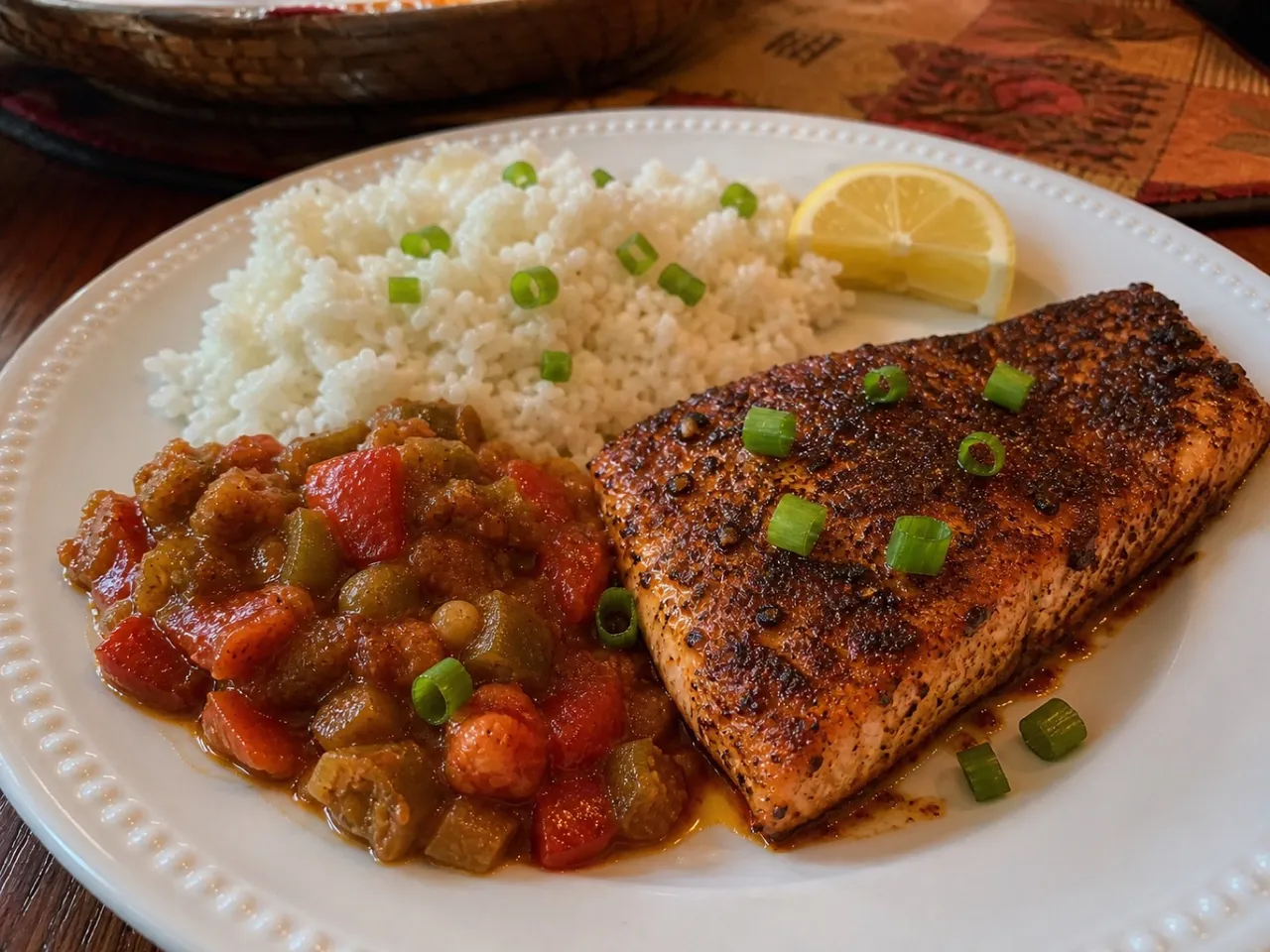 Serving Images are for illustrative purposes only, may be inaccurate, and do not guarantee the presence or absence of specific ingredients.
 Blackened Salmon
Salmon crusted in Cajun spices and seared in a blazing-hot cast iron until a smoky, peppery bark forms — bold, fast, and packed with fire.
Contains common allergens
In the app, Listahan checks these against your household automatically.
Good to know
- Ready in under 30 minutes
Matched from this dish's own ingredients and timing. Browse more: 30-minute meals
Instructions
6 steps- 1
Pat the salmon fillets completely dry with paper towels to ensure a good sear.
- 2
Brush both sides of each fillet generously with the melted butter.
- 3
Coat the flesh side of the fillets heavily with the blackening seasoning, pressing it in gently.
- 4
Heat a cast-iron skillet over high heat until it is smoking hot. Add the olive oil.
- 5
Place the salmon flesh-side down in the skillet. Cook undisturbed for 2-3 minutes until a dark, crusty char forms.
- 6
Carefully flip the fillets and cook for another 2-4 minutes until the fish flakes easily. Serve immediately with a squeeze of fresh lemon.
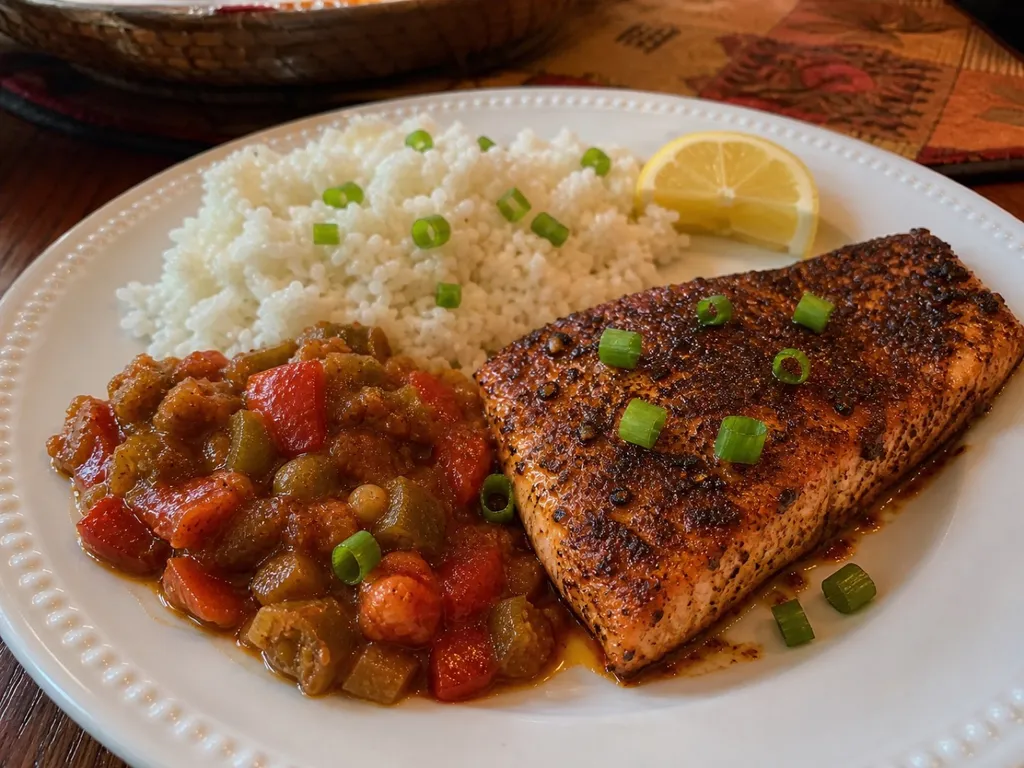 Images are for illustrative purposes only, may be inaccurate, and do not guarantee the presence or absence of specific ingredients.
 Listahan Family Score™
63/100
Works for many families
Score reflects how well this recipe fits a typical busy household. In the app, your Family Score is personalized to your household's allergens, kids, and pantry.
Nutrition
per serving495
Calories
35 g
Protein
3 g
Carbs
37 g
Fat
Estimated per serving. Actual values depend on the brands and portions you use.
Listahan cooking guide
Chef notes & practical guide
Technique notes, ingredient swaps, serve-alongside ideas, storage guidance, and equipment for this recipe.
Cultural context
The blackening technique was invented by chef Paul Prudhomme in New Orleans in the early 1980s and became one of the most widely copied cooking methods in American restaurant history. Prudhomme originally applied it to redfish, but the technique transfers to salmon with excellent results because the fat in salmon tolerates the extreme heat that creates the signature charred crust. The combination of cast iron, clarified butter, and heavily spiced fish became a defining image of the American Cajun food craze of the 1980s.
Listahan note
This version applies the blackening spice directly to dry-patted fillets and finishes them in the oven after the initial sear, so the center stays silky even when the crust is deeply charred.
Technique cues
- Pat the salmon fillets bone-dry with paper towels before applying the spice rub — any surface moisture will steam the fish rather than create the intense dry char that makes blackening distinct.
- Heat the cast iron skillet until it is visibly smoking before adding the fish — a temperature of around 500 degrees Fahrenheit is needed to carbonize the spice coating without burning the butter prematurely.
- Use clarified butter rather than whole butter because the milk solids in whole butter burn before the pan reaches the temperature needed to blacken the spice crust properly.
Kitchen flow
- Parallel prep
- Mix the spice rub while the cast iron heats on the stove; both tasks take about three minutes and hitting both simultaneously means the fish goes in the moment the pan is ready.
- Make-ahead
- The dry spice rub can be mixed in bulk and stored in a small jar for up to six months — having it pre-made turns blackened salmon into a truly ten-minute dinner.
- Leftover move
- Flake cold blackened salmon over a green salad with remoulade dressing the next day, or mix into cream cheese for a deeply flavored spread on crackers or bagels.
- Cleanup rhythm
- Run the cast iron under hot water immediately after it cools (never cold water on a hot pan) and scrub with a stiff brush; the carbonized spice comes off easily while the pan is still warm.
Ingredient brief
Role, handling, and swap guidance for each key ingredient.
salmon fillets
star protein
Purpose: Salmon's high fat content keeps the flesh moist even when subjected to the extreme heat of the blackening technique, making it one of the most forgiving fish for this method.
Handling: Bring fillets to room temperature for fifteen minutes before cooking and pin-bone them with tweezers so no one encounters a bone mid-bite.
Adaptation: Mahi-mahi or catfish fillets can be blackened in the same way — choose thicker cuts so the fish cooks through before the crust burns.
paprika
color base of the spice rub
Purpose: Smoked paprika provides most of the deep reddish-black color on the finished crust and adds a rich, slightly sweet smoke that complements salmon fat.
Handling: Combine all spices into a small bowl and mix evenly before applying to the fish so every bite has a consistent flavor.
Adaptation: A mix of regular paprika and a quarter-teaspoon of chipotle powder delivers similar depth if smoked paprika is unavailable.
cayenne pepper
heat
Purpose: Cayenne provides the sharp up-front heat that distinguishes blackened preparations from simply seasoned fish.
Handling: Start with half a teaspoon per four fillets and adjust to family heat tolerance before blending into the full spice mix.
Adaptation: Ancho chili powder gives a milder, fruitier heat for households with young kids who find cayenne too sharp.
garlic powder
savory backbone
Purpose: Garlic powder distributes evenly through the dry rub and chars at the same rate as the other spices, contributing savory depth without burning faster than the crust.
Handling: Use powder rather than fresh garlic, which would burn to bitterness in the high heat of the pan.
Adaptation: Onion powder can replace half the garlic powder if a slightly sweeter, more mellow spice base is preferred.
clarified butter
high-heat cooking fat
Purpose: Clarified butter has a smoke point well above 450 degrees Fahrenheit, giving it the ability to withstand the temperatures needed for blackening without burning to acrid smoke.
Handling: Melt regular butter and skim off the white foam, then carefully pour off the clear fat, leaving the water and milk solids behind.
Adaptation: Ghee is essentially the same thing pre-made and works identically; avocado oil is a neutral, non-dairy alternative with a similarly high smoke point.
Technique notes
- Open a window or turn on the exhaust fan before heating the skillet — the smoke generated by blackening is significant and authentic to the technique but will trigger a kitchen smoke alarm.
- Finish thicker fillets in a 400-degree oven for four to five minutes after the initial thirty-second sear on each side; this prevents the center from being raw when the crust is already perfect.
- A squeeze of lemon and a tablespoon of cold butter swirled over the plated fish just before serving adds brightness that cuts through the char and makes the dish feel restaurant-finished.
Ingredient swaps
- Dairy-free direction
- Avocado oil or refined coconut oil replaces clarified butter in the pan at equal quantity; both handle the high heat without smoking excessively.
- Lower-heat direction
- Reduce cayenne to a quarter-teaspoon and increase smoked paprika to maintain the color and smokiness with a milder heat profile suitable for kids.
- Gluten-free direction
- All spices in a standard blackening rub are naturally gluten-free; verify any pre-mixed Cajun seasoning brands for gluten-containing additives.
- Weeknight shortcut
- A quality pre-made Cajun blackening seasoning blend replaces mixing individual spices; look for versions without added sugar to avoid burning in the pan.
Serve alongside
- creamy stone-ground grits
- roasted asparagus with lemon
- Creole tomato salad
- cold Sauvignon Blanc
- iced sweet tea with lemon
Serving suggestions only — check pairings for your household's allergens.
Storage & reheating
- Refrigerate cooked fillets in a single layer in an airtight container for up to two days; stack only with parchment between layers to protect the crust. Reheat in a 350-degree oven for five minutes rather than a microwave, which makes the crust steam and go limp.
Equipment
- 10- or 12-inch cast iron skillet
- splatter screen
- kitchen thermometer for checking internal temperature
- fish spatula for flipping without breaking the fillet
Make this household-aware
Listahan Pro checks this recipe against your household's allergens, finds pantry-aware swaps, builds the shopping list, and helps you plan the week around it.
Plan it in Listahan
Add Blackened Salmon to your week, check it against your household's allergens, and build the shopping list automatically.
More Cajun & Creole recipes
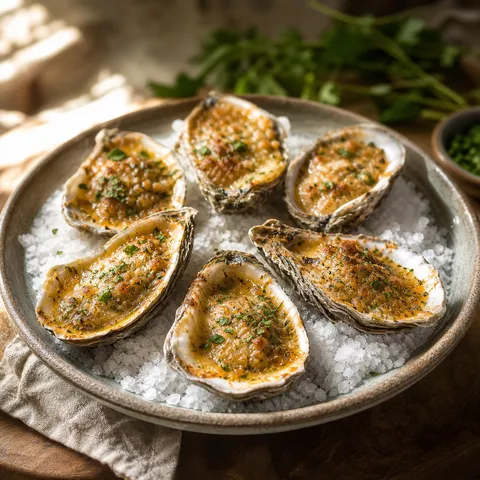 Cajun & Creole Lens Verified Images are for illustrative purposes only, may be inaccurate, and do not guarantee the presence or absence of specific ingredients.
 Oysters Bienville
A classic New Orleans baked oyster dish crowned with a rich shrimp-and-mushroom cream sauce, browned to perfection on the half shell.
 Cajun & Creole Lens Verified Images are for illustrative purposes only, may be inaccurate, and do not guarantee the presence or absence of specific ingredients.
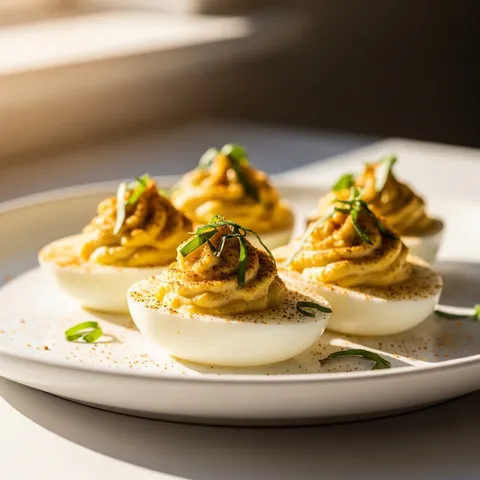
 Cajun Deviled Eggs
Classic deviled eggs with a Louisiana twist — creamy yolk filling spiked with hot sauce, Creole mustard, and cayenne, topped with a sprinkle of smoked paprika.
 Cajun & Creole Lens Verified Images are for illustrative purposes only, may be inaccurate, and do not guarantee the presence or absence of specific ingredients.
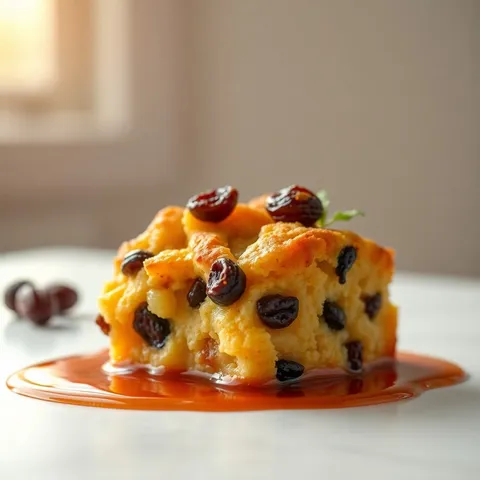
 Creole Bread Pudding
Day-old French bread soaked in a rich custard of cream, eggs, and vanilla, baked golden, then drowned in a warm bourbon-laced whiskey sauce.