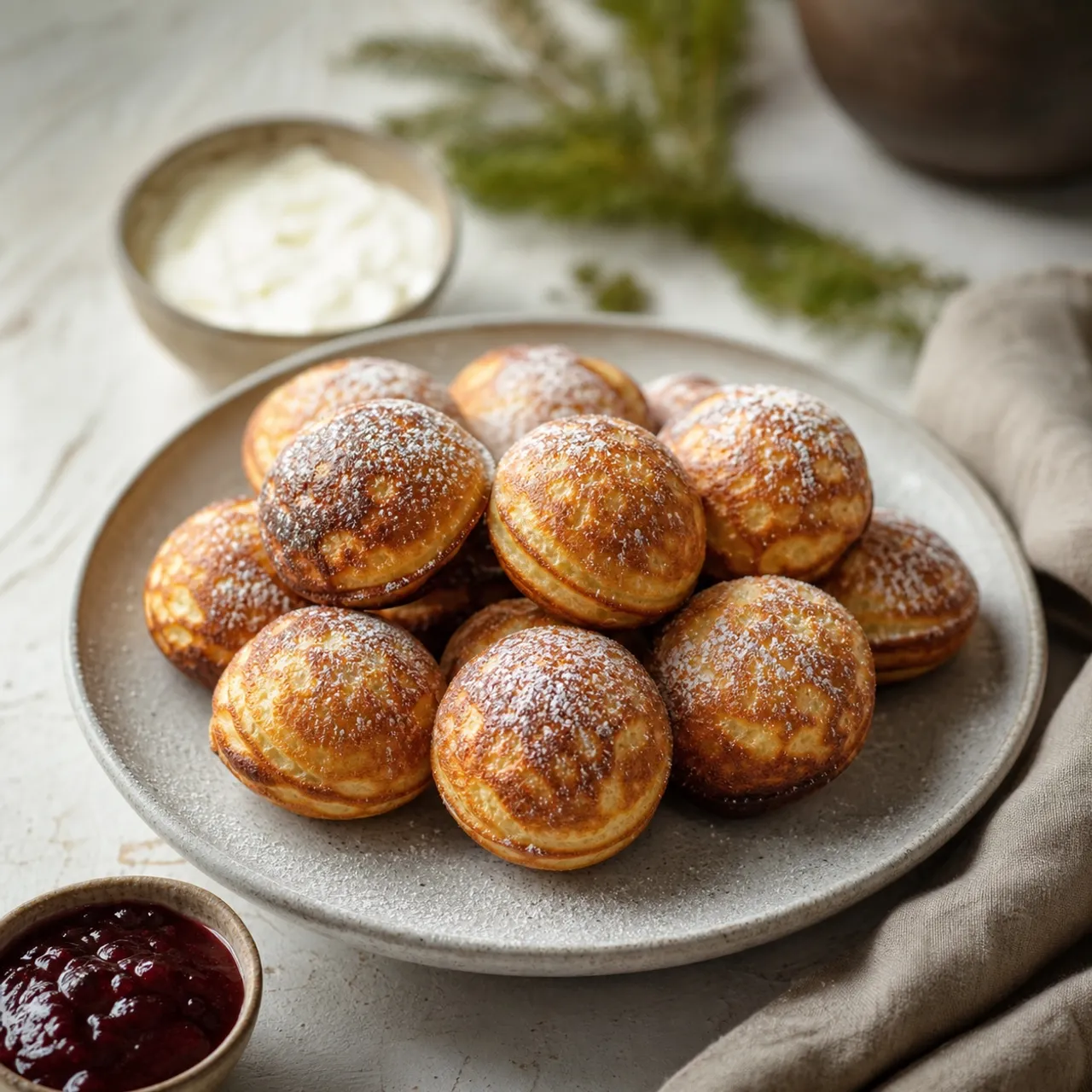
 Nordic Images are for illustrative purposes only, may be inaccurate, and do not guarantee the presence or absence of specific ingredients.
 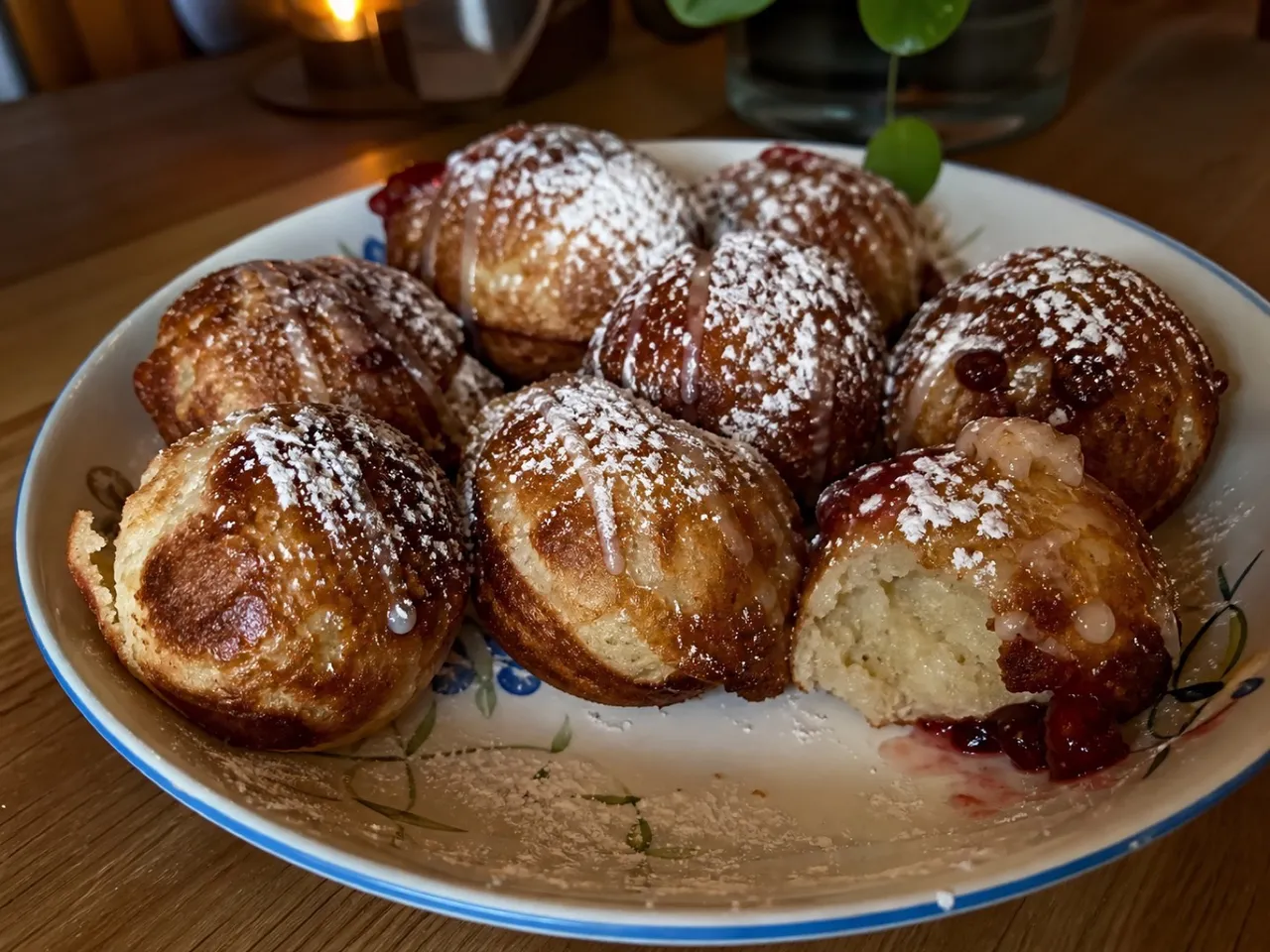 Serving Images are for illustrative purposes only, may be inaccurate, and do not guarantee the presence or absence of specific ingredients.
 Æbleskiver
Fluffy, spherical Danish pancake puffs — golden outside, pillowy within — served dusted with powdered sugar and lingonberry jam for a festive weekend breakfast.
Contains common allergens
In the app, Listahan checks these against your household automatically.
Instructions
6 steps- 1
In a large bowl, whisk together the flour, baking soda, baking powder, salt, and sugar.
- 2
In a separate bowl, whisk the egg yolks, buttermilk, and melted butter. Pour the wet ingredients into the dry ingredients and stir just until combined (lumps are fine).
- 3
In a clean bowl, beat the egg whites until stiff peaks form. Gently fold the egg whites into the batter in three additions to keep it light and airy.
- 4
Heat an Æbleskiver pan over medium heat. Place a small piece of butter into each well.
- 5
Fill each well completely to the top with batter. Once the edges begin to set and bubble (about 2-3 minutes), use a knitting needle or wooden skewer to turn them 90 degrees.
- 6
Let the batter spill out into the well to form the other half of the sphere. Turn again until they are completely round and golden brown all over. Serve dusted with powdered sugar and raspberry jam.
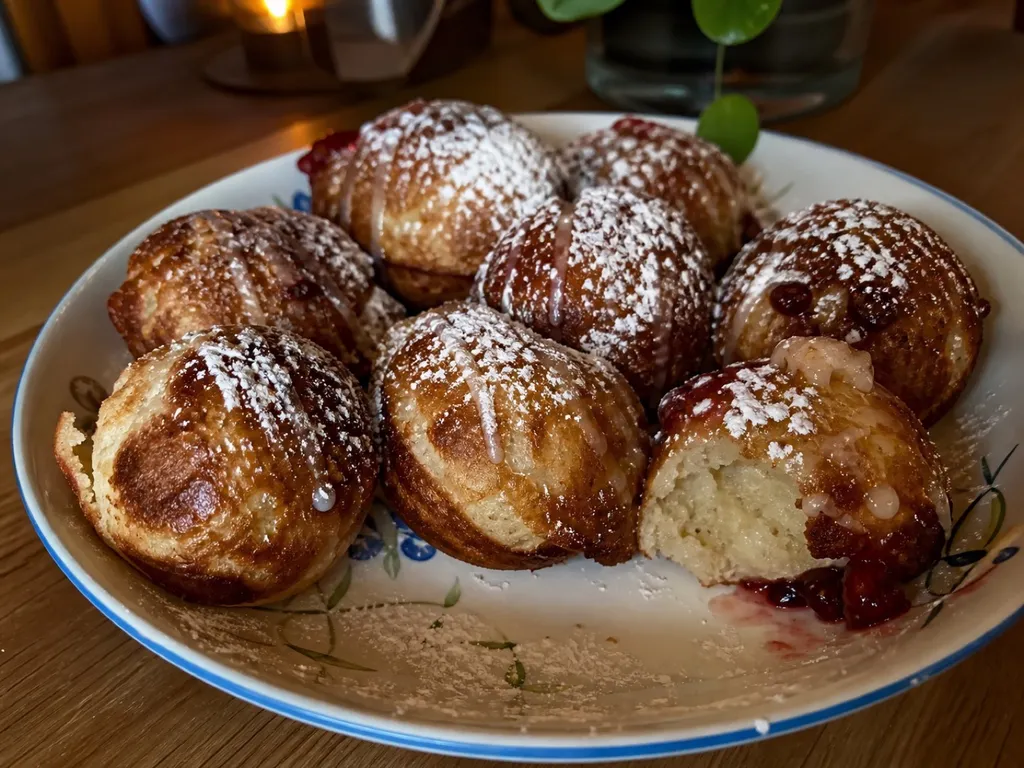 Images are for illustrative purposes only, may be inaccurate, and do not guarantee the presence or absence of specific ingredients.
 Listahan Family Score™
66/100
Works for many families
Score reflects how well this recipe fits a typical busy household. In the app, your Family Score is personalized to your household's allergens, kids, and pantry.
Nutrition
per serving895
Calories
29 g
Protein
119 g
Carbs
33 g
Fat
Estimated per serving. Actual values depend on the brands and portions you use.
Listahan cooking guide
Chef notes & practical guide
Technique notes, ingredient swaps, serve-alongside ideas, storage guidance, and equipment for this recipe.
Cultural context
Æbleskiver — literally 'apple slices' — are spherical Danish pancakes that have been a Christmas staple since at least the 17th century, when they were cooked in the lard rendered while frying goose for the Christmas feast. The spherical shape comes from the æbleskiver pan (a cast iron pan with hemispherical wells), and while modern versions rarely contain actual apple, the name persists. They are inseparable from Danish jul (Christmas), typically served with powdered sugar and lingonberry or raspberry jam, and the specialized pan is often a cherished family heirloom.
Listahan note
This version folds beaten egg whites into the batter separately, which is the traditional Danish technique; it gives æbleskiver their characteristic lightness — hollow in the center and airy throughout rather than dense and bread-like.
Technique cues
- Beating the egg whites to stiff peaks and folding them gently into the yolk-and-buttermilk batter immediately before cooking is what distinguishes authentic æbleskiver from ordinary pancake balls — the air incorporated into the whites expands in the pan and creates the hollow, soufflé-like interior.
- The turning technique is the skill the dish demands: when the bottom half is set and slightly golden, insert a knitting needle, thin skewer, or the tip of a fork into the edge of each sphere and rotate it 90 degrees; repeat once more when the newly exposed side is set, closing the sphere and finishing the top — this three-turn method produces a uniformly round, evenly cooked ball.
- Buttermilk and baking soda interact to produce carbon dioxide bubbles that lighten the batter further; do not let the batter sit more than 5 minutes after mixing or the leavening will be spent before the batter hits the pan.
Kitchen flow
- Parallel prep
- Beat the egg whites while the pan heats up and the yolk batter rests; fold them in just before you pour the first batch so the batter is used at peak aeration.
- Make-ahead
- The yolk-and-flour batter base can be made up to 2 hours ahead and refrigerated; beat and fold in the egg whites only at cooking time.
- Leftover move
- Cooked æbleskiver reheat surprisingly well in a 180°C (350°F) oven for 8 minutes; they lose some lightness but retain their shape and golden exterior.
- Cleanup rhythm
- Rinse the æbleskiver pan immediately after cooking with hot water and a stiff brush — do not use soap on cast iron; dry thoroughly and rub with a thin coat of oil before storing.
Ingredient brief
Role, handling, and swap guidance for each key ingredient.
3 large eggs, yolks and whites separated
structure and aeration
Purpose: Separating the eggs allows the whites to be beaten independently into stiff peaks; this is the single technique that makes æbleskiver light rather than dense.
Handling: Ensure the bowl for the whites is completely free of fat — even a trace of yolk will prevent the whites from whipping to full volume.
Adaptation: No effective substitute exists for the separated-egg technique if you want the authentic texture; using whole eggs produces a denser, more pancake-like result.
400ml (1.75 cups) buttermilk
liquid, acid, and tenderness agent
Purpose: Buttermilk's acidity activates the baking soda, producing the lift that keeps the batter light, and its fat content contributes to a tender crumb.
Handling: Use cold buttermilk straight from the refrigerator — cold liquid prevents the baking soda from activating too early.
Adaptation: Add 1.5 tablespoons of white vinegar or lemon juice to 400ml of whole milk and let sit for 5 minutes to make a quick buttermilk substitute.
250g (2 cups) all-purpose flour
structural base
Purpose: Flour provides the minimal structure needed to hold the spherical shape without making the interior dense or bready.
Handling: Whisk the flour with the dry leavening ingredients before adding liquids to ensure even distribution.
Adaptation: A 50/50 blend of all-purpose flour and fine whole wheat flour adds a subtle nutty note without compromising the light texture.
4 tbsp butter, melted (plus extra for the pan)
fat for flavor, browning, and pan release
Purpose: Butter brushed into each well before each batch prevents sticking and promotes the golden exterior color that is the visual hallmark of well-made æbleskiver.
Handling: Keep the additional butter in a small dish beside the stove and use a pastry brush or a small piece of paper towel to coat the wells before every pour.
Adaptation: Clarified butter (ghee) withstands higher heat without burning and is ideal if the æbleskiver pan runs hot.
Technique notes
- Fill each well only three-quarters full — overfilling makes the turning maneuver impossible and produces misshapen blobs rather than spheres.
- A medium-low heat setting is almost always correct for æbleskiver; high heat browns the outside before the batter inside has time to set, making the turning step difficult.
- Serve immediately as they come off the pan — æbleskiver deflate slightly and lose their crispness within minutes; a warming oven set to 80°C (175°F) can hold them for up to 15 minutes in a pinch.
Ingredient swaps
- Gluten-free direction
- A 1:1 gluten-free flour blend works well here because the egg whites and buttermilk do most of the structural work; the texture is very close to the original.
- Dairy-free option
- Use oat milk curdled with 1.5 tablespoons of apple cider vinegar in place of buttermilk, and coconut oil in place of butter; the flavor is lighter but the texture holds.
- Filled version
- Drop a small cube of apple or a teaspoon of jam into each well before the second turn to make filled æbleskiver, which is how many Danish families serve them.
Serve alongside
- lingonberry jam or raspberry preserves for dipping
- powdered sugar dusted generously at the table
- simple green salad if serving as a brunch main
- hot coffee with cream, the classic Danish pairing
- warm glogg (mulled wine) during the Christmas season
- apple cider, warm or cold
Serving suggestions only — check pairings for your household's allergens.
Storage & reheating
- Cool completely on a wire rack before storing; place in a single layer in an airtight container at room temperature for up to 1 day.
- Reheat in a 180°C (350°F) oven for 8 to 10 minutes — microwave reheating makes them soggy.
- Freeze cooked æbleskiver in a single layer, then transfer to a bag; reheat from frozen in the oven at 180°C for 12 to 15 minutes.
Equipment
- æbleskiver pan (cast iron pan with hemispherical wells)
- electric hand mixer or stand mixer for egg whites
- thin skewer, knitting needle, or chopstick for turning
- pastry brush for buttering the wells
Make this household-aware
Listahan Pro checks this recipe against your household's allergens, finds pantry-aware swaps, builds the shopping list, and helps you plan the week around it.
Plan it in Listahan
Add Æbleskiver to your week, check it against your household's allergens, and build the shopping list automatically.
More Nordic recipes
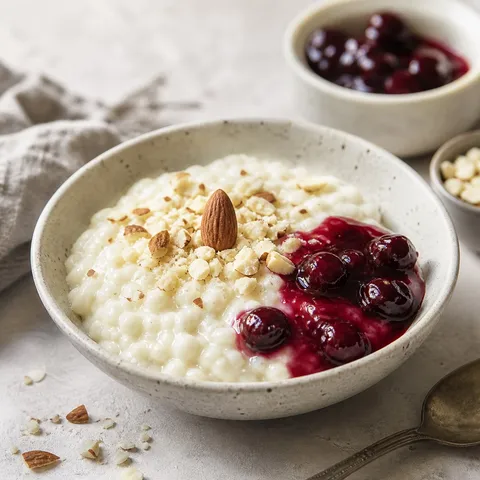 Nordic Lens Verified Images are for illustrative purposes only, may be inaccurate, and do not guarantee the presence or absence of specific ingredients.
 Risalamande
A creamy Danish cold rice pudding folded with whipped cream and chopped almonds, served with a glossy warm cherry sauce on Christmas Eve.
 Nordic Lens Verified Images are for illustrative purposes only, may be inaccurate, and do not guarantee the presence or absence of specific ingredients.
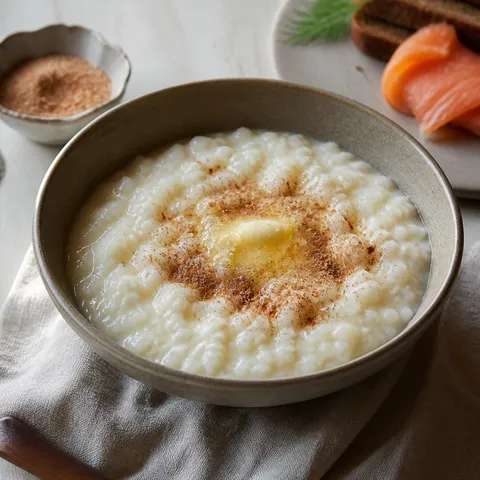
 Risgrynsgröt
Creamy Nordic rice porridge, slow-cooked until thick and comforting, scented with cinnamon and served with a pat of melting butter — Christmas morning in a bowl.
 Nordic Lens Verified Images are for illustrative purposes only, may be inaccurate, and do not guarantee the presence or absence of specific ingredients.
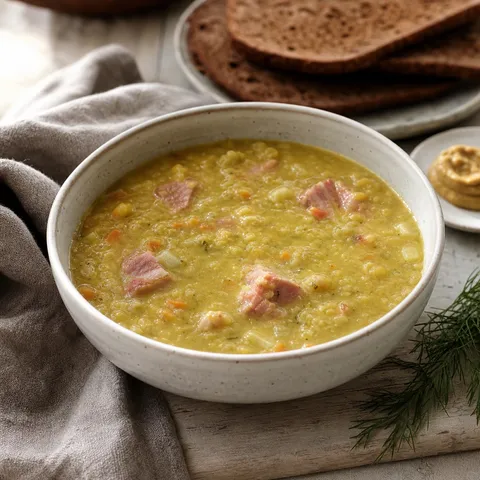
 Hernekeitto
Finland's beloved Thursday pea soup — yellow split peas simmered with smoky ham until thick and hearty, traditionally served with a shot of Finnish mustard and pancakes.