 Nordic Images are for illustrative purposes only, may be inaccurate, and do not guarantee the presence or absence of specific ingredients.
  Serving Images are for illustrative purposes only, may be inaccurate, and do not guarantee the presence or absence of specific ingredients.
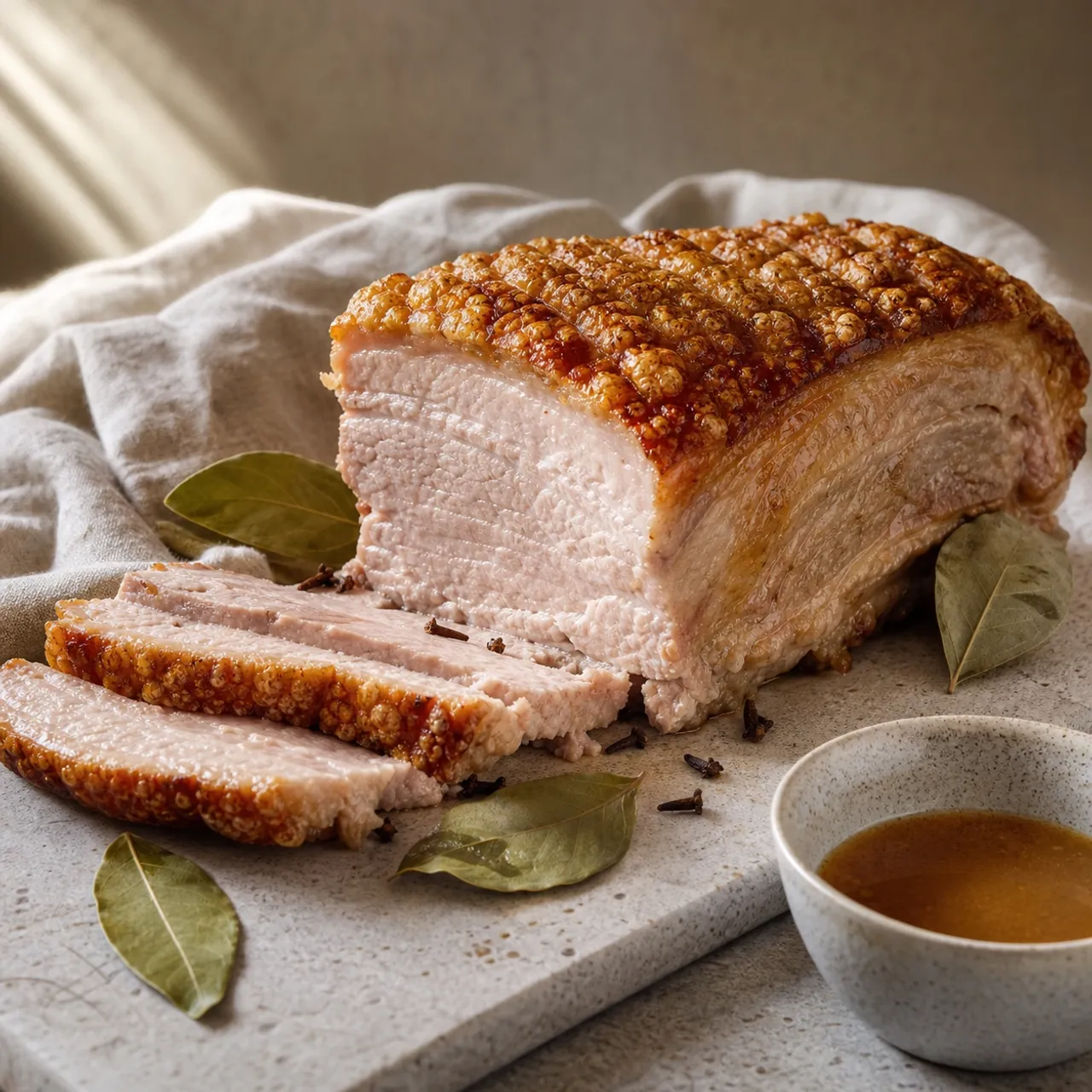
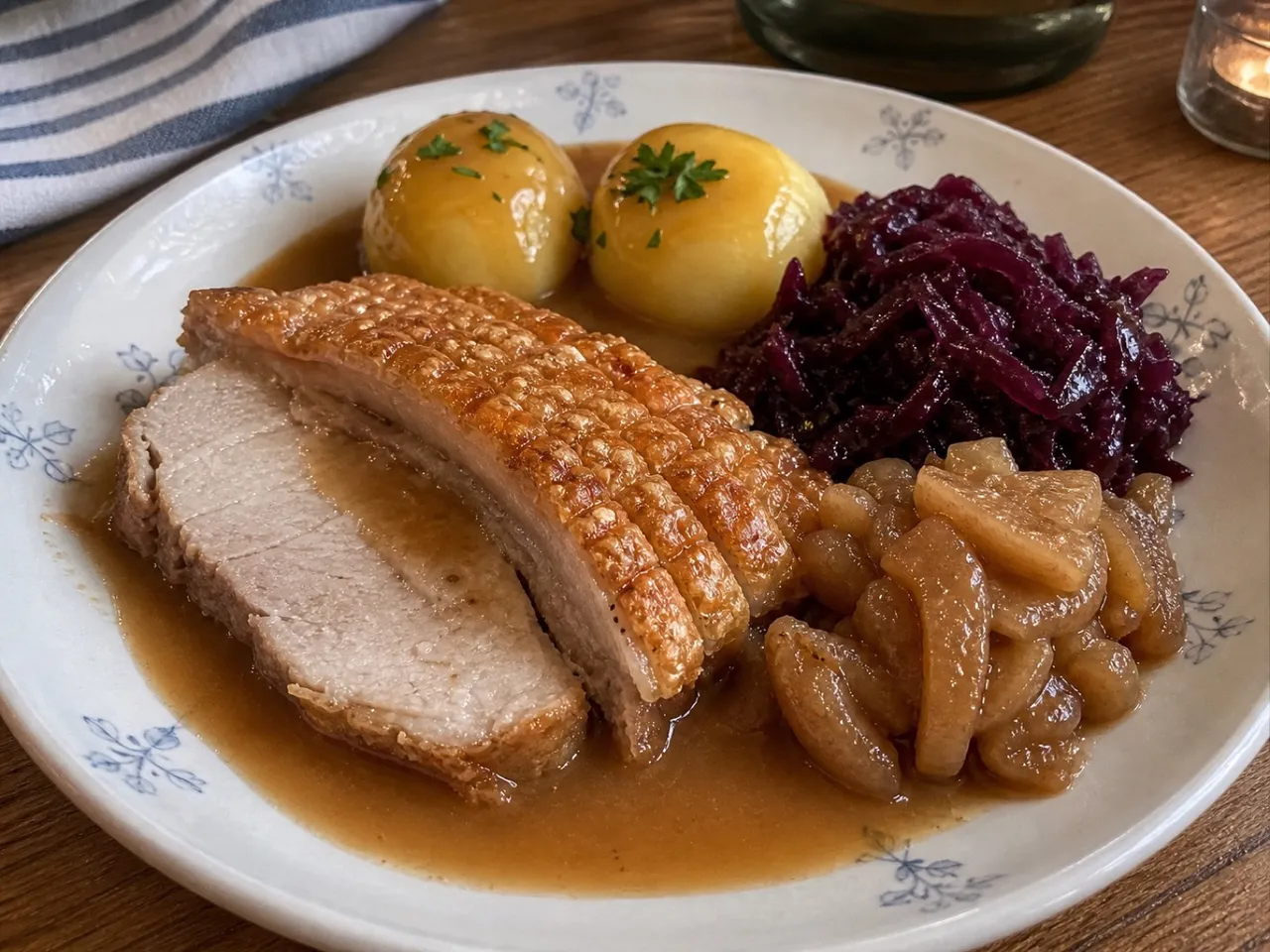
 Flæskesteg
Denmark's showstopping roast pork — slow-roasted until the skin erupts into shattering, golden crackling over juicy, herb-seasoned meat; the centerpiece of every Danish Christmas.
Contains common allergens
In the app, Listahan checks these against your household automatically.
Good to know
- Crispy
Matched from this dish's own ingredients and timing. Browse more: crispy recipes
Instructions
7 steps- 1
Pat the pork skin completely dry, then score it in a tight diamond pattern using a very sharp knife, cutting through the skin and into the fat but not into the meat.
- 2
Rub coarse salt deep into the scored lines, working it into every cut, then tuck a bay leaf into some of the diamond scores.
- 3
Season the meat side with pepper and let the roast sit uncovered in the refrigerator for at least 2 hours, or overnight, to dry the skin further, this is key to good crackling.
- 4
Roast at 350 F, skin side up, for about 1 1/2 hours, until the meat is cooked through.
- 5
Increase the oven temperature to 475 F for the final 15 to 20 minutes, watching closely, until the skin blisters and crackles into golden shattering shards across its whole surface.
- 6
Rest the roast for 15 minutes before carving, then break the crackling into pieces along the scored lines.
- 7
Skim the pan drippings, whisk in the flour, then gradually add the stock, simmering until smooth, and serve the gravy alongside the sliced pork and crackling.
 Images are for illustrative purposes only, may be inaccurate, and do not guarantee the presence or absence of specific ingredients.
 Listahan Family Score™
70/100
Good fit for most families
Score reflects how well this recipe fits a typical busy household. In the app, your Family Score is personalized to your household's allergens, kids, and pantry.
Nutrition
per serving910
Calories
101 g
Protein
0 g
Carbs
53 g
Fat
Estimated per serving. Actual values depend on the brands and portions you use.
Listahan cooking guide
Chef notes & practical guide
Technique notes, ingredient swaps, serve-alongside ideas, storage guidance, and equipment for this recipe.
Cultural context
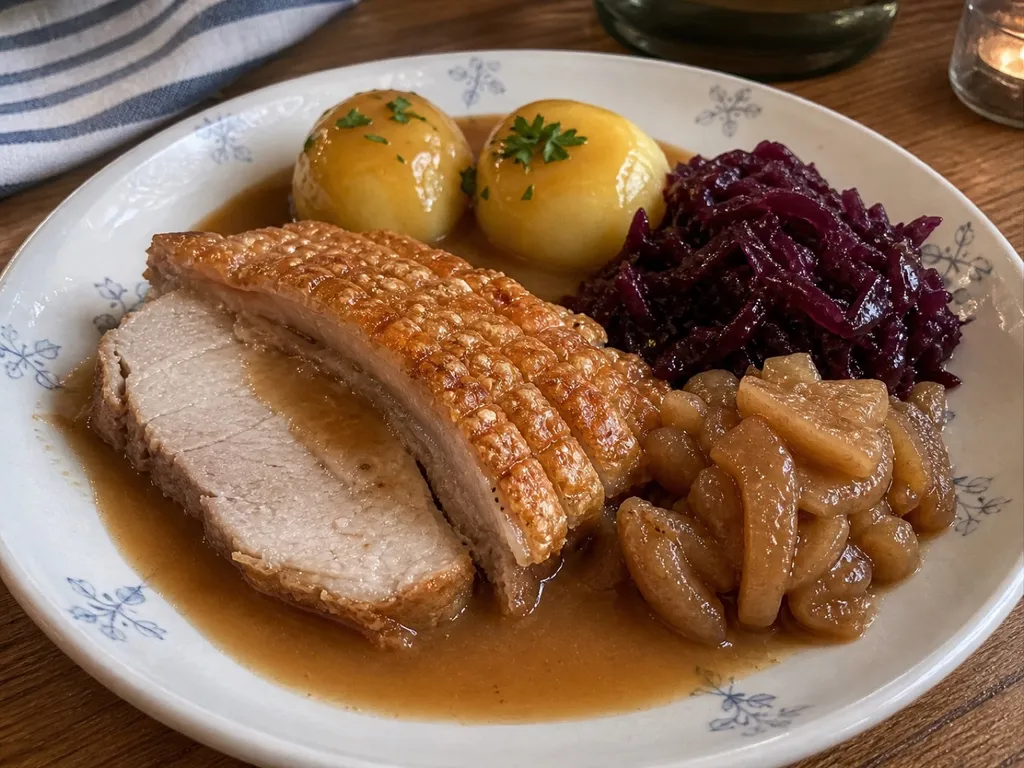
Flæskesteg is one of Denmark's classic roast-pork centerpieces, especially at Christmas, where the crackling is not a garnish but part of the point. The usual table around it is plain boiled or caramelized potatoes, red cabbage, and gravy made from the roasting juices, so the salty rind and mild pork have something soft, sweet, and tangy beside them.
Listahan note
This version keeps the seasoning spare and puts the work into the skin: close scoring, salt in the cuts, an uncovered rest, and a hot finish. The water in the pan is there to support the roast and drippings, not to soften the crackling.
Technique cues
- Score through the skin and fat, but stop before the meat. Cutting into the meat lets juices climb into the rind and makes crisp crackling harder to get.
- Level the roast before it goes in the oven. If one side sits lower, fat collects there and that patch of skin can stay chewy while the higher side over-browns.
- The final high-heat blast needs attention. Once the rind starts blistering, it can move from golden to scorched quickly.
Kitchen flow
- Parallel prep
- Start potatoes and red cabbage while the pork is in its lower-temperature roast; keep the last 15 minutes clear for watching the crackling.
- Make-ahead
- Score and salt the pork a few hours ahead, then refrigerate it uncovered so the skin dries before roasting.
- Leftover move
- Slice leftover pork thinly for open-faced rye sandwiches with red cabbage or pickles, adding crackling pieces just before eating.
- Cleanup rhythm
- Pour off useful drippings before they cool, then soak the roasting pan while the roast rests so the browned bits loosen.
Ingredient brief
Role, handling, and swap guidance for each key ingredient.
Boneless pork loin or belly, with skin on
Main roast
Purpose: The skin is essential because flæskesteg is judged by the crackling as much as the meat.
Handling: Dry the surface well, score in tight parallel lines, and prop the roast level in the pan.
Adaptation: Pork loin gives neater slices and leaner meat; pork belly gives richer slices and more forgiving texture.
Coarse sea salt
Crackling seasoning
Purpose: Coarse salt seasons the pork and helps draw moisture from the scored rind.
Handling: Work it down into the cuts rather than leaving it only on the surface.
Adaptation: Kosher salt works similarly; fine table salt can make the surface taste harsher if used with the same volume.
Fresh bay leaves
Herbal aroma
Purpose: Bay leaves perfume the fat and pan juices without competing with the pork.
Handling: Tuck leaves into a few scored lines so their aroma sits close to the rind and drippings.
Adaptation: Dried bay leaves can be used in smaller amounts, but remove them before carving if they become brittle.
Whole cloves (optional)
Holiday spice note
Purpose: Cloves give the roast a distinctly Christmas-leaning warmth that is traditional in many Danish homes.
Handling: Press them sparingly into the scored rind so they scent the fat instead of dominating the meat.
Adaptation: Skip them for a cleaner pork-and-bay profile, especially if serving with strongly seasoned cabbage or gravy.
Technique notes
- Use the sharpest knife you have for scoring. Ragged cuts tear the rind and make uneven crackling.
- Do not cover the roast during resting. Steam trapped over the top will soften the skin you just worked to crisp.
- Carve with the crackling side up and use decisive strokes. A serrated knife can help get through the rind without pulling it away from the meat.
Ingredient swaps
- Leaner roast path
- Use skin-on pork loin and watch the internal temperature closely; it slices cleanly but has less fat cushion than belly.
- Richer roast path
- Use skin-on pork belly and give it enough time for the fat to render before the high-heat finish.
- No-clove version
- Leave out the cloves and lean on bay leaves and salt for a simpler roast that works well outside a Christmas menu.
Serve alongside
- Boiled new potatoes
- Caramelized Danish potatoes
- Braised red cabbage
- Pan gravy with roasting juices
- Danish pilsner
- Dry hard cider
- Sparkling lingonberry water
Serving suggestions only — check pairings for your household's allergens.
Storage & reheating
- Refrigerate sliced pork and any drippings in a sealed container after the meal.
- Reheat slices gently in a low oven, then refresh crackling separately in a hot oven or dry skillet.
- Freeze sliced pork without the crackling when possible; thaw overnight and crisp any rind just before serving.
Equipment
- Very sharp knife
- Roasting pan with rack or foil support
- Instant-read thermometer
- Tongs for turning and lifting
Make this household-aware
Listahan Pro checks this recipe against your household's allergens, finds pantry-aware swaps, builds the shopping list, and helps you plan the week around it.
Plan it in Listahan
Add Flæskesteg to your week, check it against your household's allergens, and build the shopping list automatically.
More Nordic recipes
 Nordic Lens Verified Images are for illustrative purposes only, may be inaccurate, and do not guarantee the presence or absence of specific ingredients.
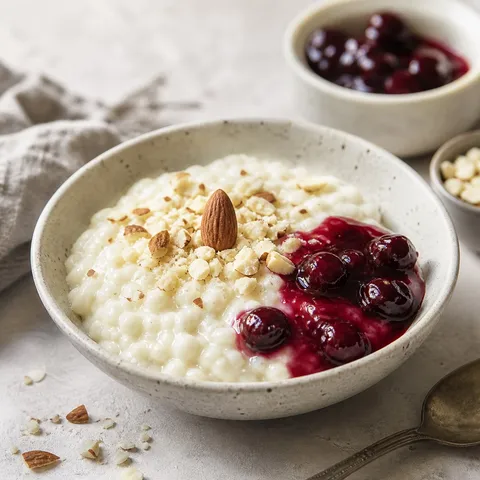
 Risalamande
A creamy Danish cold rice pudding folded with whipped cream and chopped almonds, served with a glossy warm cherry sauce on Christmas Eve.
 Nordic Lens Verified Images are for illustrative purposes only, may be inaccurate, and do not guarantee the presence or absence of specific ingredients.
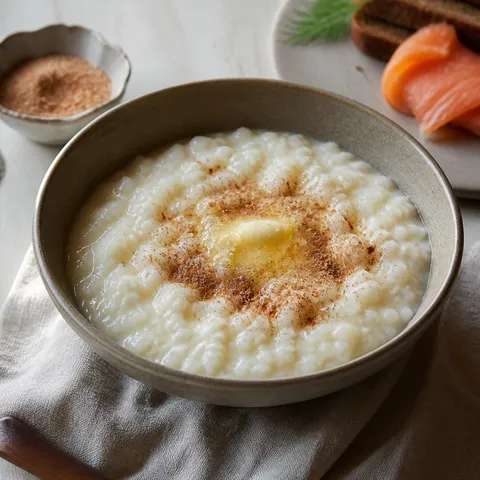
 Risgrynsgröt
Creamy Nordic rice porridge, slow-cooked until thick and comforting, scented with cinnamon and served with a pat of melting butter — Christmas morning in a bowl.
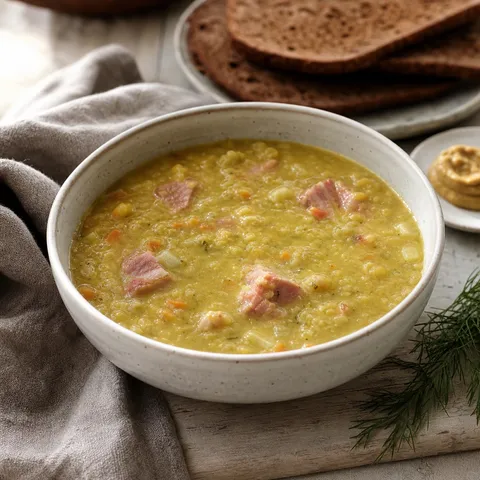 Nordic Lens Verified Images are for illustrative purposes only, may be inaccurate, and do not guarantee the presence or absence of specific ingredients.
 Hernekeitto
Finland's beloved Thursday pea soup — yellow split peas simmered with smoky ham until thick and hearty, traditionally served with a shot of Finnish mustard and pancakes.