 Nordic Images are for illustrative purposes only, may be inaccurate, and do not guarantee the presence or absence of specific ingredients.
  Serving Images are for illustrative purposes only, may be inaccurate, and do not guarantee the presence or absence of specific ingredients.
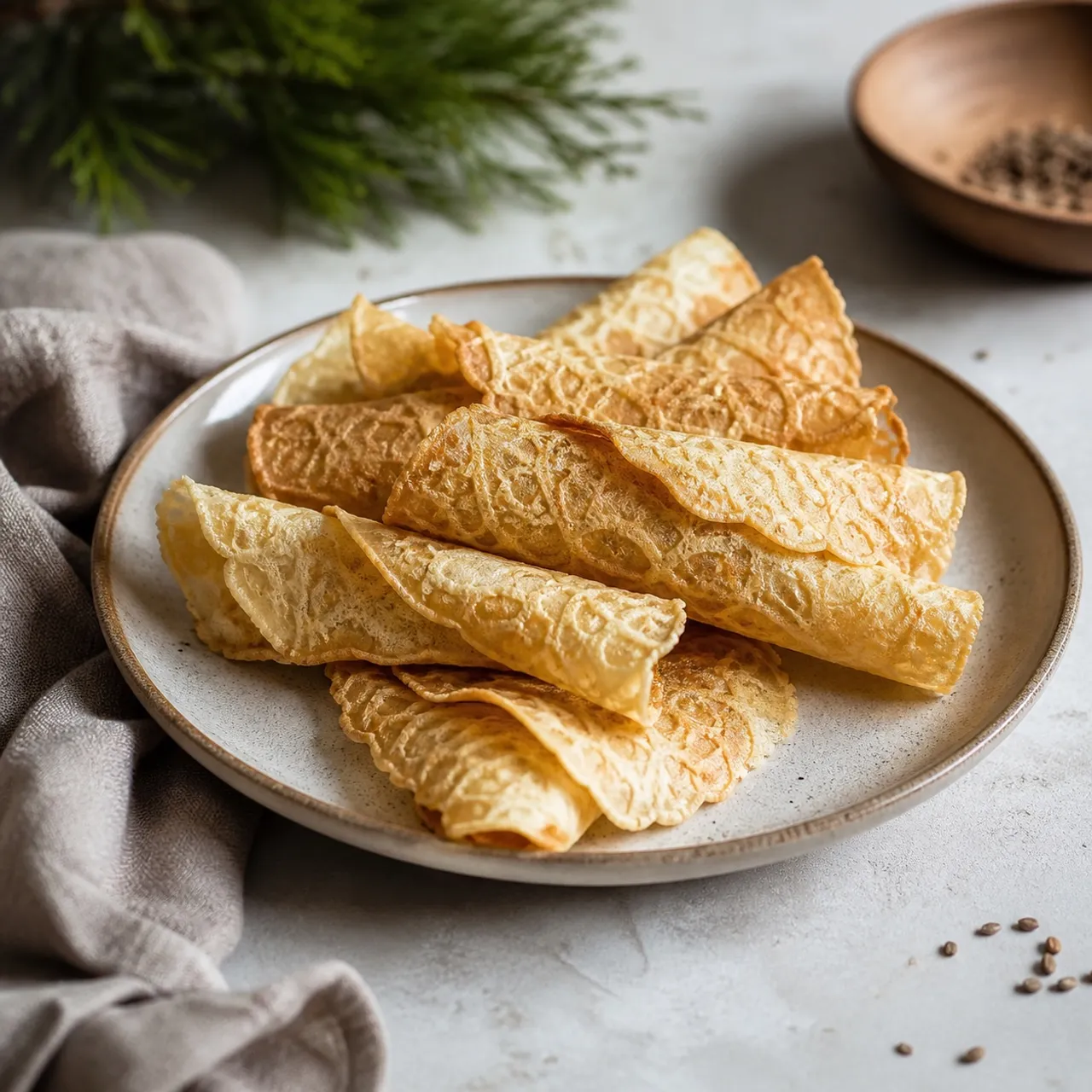
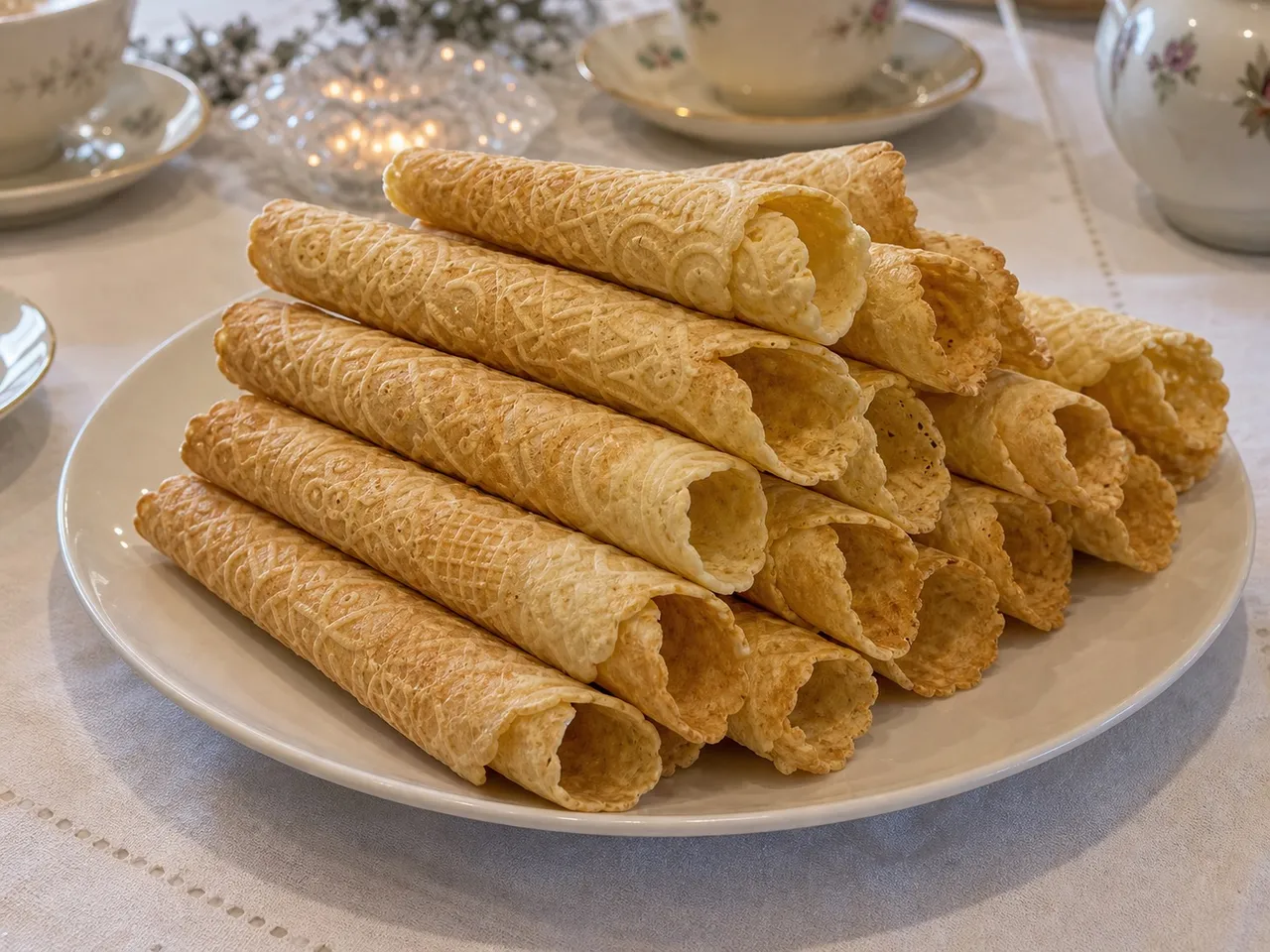
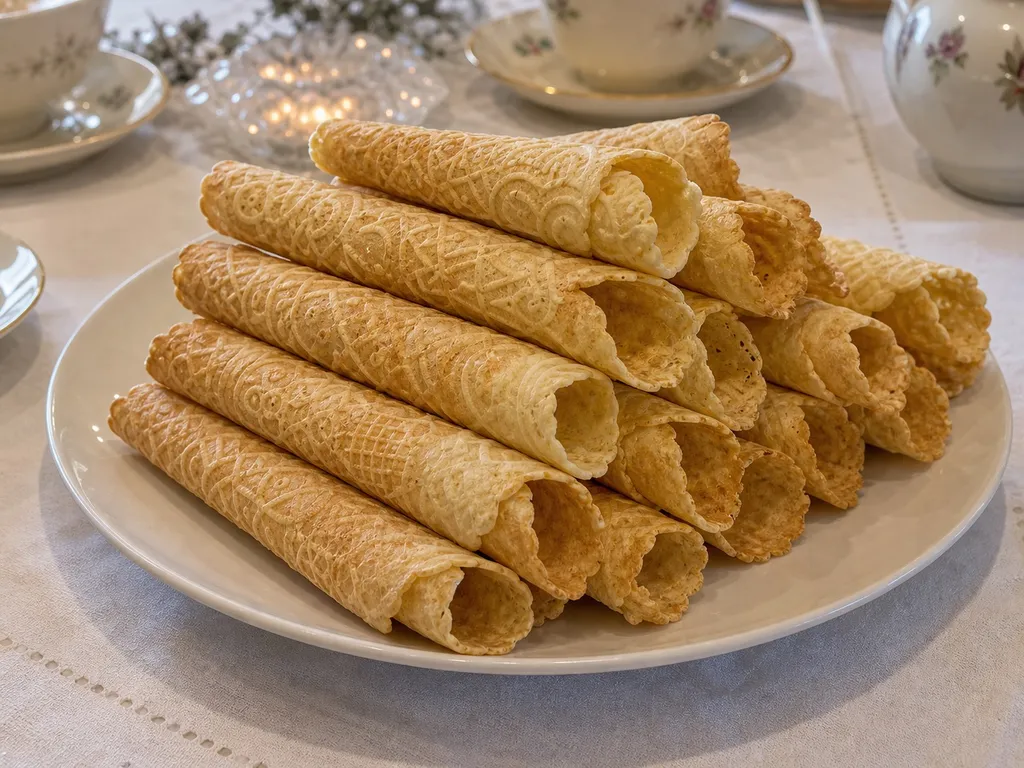
 Krumkake
Delicate Norwegian waffle cookies pressed into intricate patterns on a hot iron, then rolled into crisp cones — perfect filled with whipped cream and berries.
Contains common allergens
In the app, Listahan checks these against your household automatically.
Good to know
- Crispy
Matched from this dish's own ingredients and timing. Browse more: crispy recipes
Instructions
6 steps- 1
In a medium bowl, whisk the eggs and sugar vigorously until the mixture becomes pale and light.
- 2
Slowly stream in the melted, cooled butter and the milk while whisking continuously. Add the cardamom.
- 3
Gently fold in the all-purpose flour until a smooth, thin batter forms. Let the batter rest for 15 minutes.
- 4
Heat a Krumkake iron on the stove over medium heat (or use an electric iron). Lightly grease it with butter for the first cookie.
- 5
Spoon about 1 tablespoon of batter into the center of the iron. Close the lid tightly and cook for 30-45 seconds per side until lightly golden with a crisp, embossed pattern.
- 6
Immediately remove the hot cookie with a spatula and rapidly roll it around a wooden Krumkake cone before it cools and hardens. Slide it off and cool on a wire rack.
 Images are for illustrative purposes only, may be inaccurate, and do not guarantee the presence or absence of specific ingredients.
 Listahan Family Score™
69/100
Works for many families
Score reflects how well this recipe fits a typical busy household. In the app, your Family Score is personalized to your household's allergens, kids, and pantry.
Nutrition
per serving1905
Calories
30 g
Protein
199 g
Carbs
112 g
Fat
Estimated per serving. Actual values depend on the brands and portions you use.
Listahan cooking guide
Chef notes & practical guide
Technique notes, ingredient swaps, serve-alongside ideas, storage guidance, and equipment for this recipe.
Cultural context
Krumkake are thin, embossed Norwegian wafer cookies that have been made since at least the 18th century, traditionally baked for Christmas (Jul) on a decorative patterned iron. The name means 'curved cake' and refers to the essential rolling step — the wafer must be shaped while piping hot, a communal kitchen ritual that made krumkake-making a social event during the holiday season. Norwegian immigrants to the American Midwest brought the tradition with them, and krumkake irons remain a standard wedding and graduation gift in Norwegian-American households.
Listahan note
This version uses cardamom as the primary flavoring, which is the most traditional choice; it gives the cookies an aromatic warmth that butter alone cannot provide, and is the flavor that Norwegian home cooks associate with the holidays.
Technique cues
- The batter must rest for at least 30 minutes after mixing — this allows the flour to fully hydrate and the gluten to relax, which produces a thinner, more even spread across the iron surface and prevents thick edges.
- Temperature control on the krumkake iron is the single most important variable: too hot and the edges burn before the center is done; too cool and the wafer sticks rather than releasing cleanly — test with the first cookie and adjust before committing the batch.
- Rolling the hot wafer around the wooden cone within 5 seconds of lifting from the iron is the critical window; the cookie cools and crisps almost instantly, and once it hardens in a flat shape it cannot be re-rolled without cracking.
Kitchen flow
- Parallel prep
- Set up the rolling cone and a wire rack beside the iron before you start — you will have less than 5 seconds per cookie to roll before it hardens and you cannot stop mid-batch to look for equipment.
- Make-ahead
- The batter can be made up to 24 hours ahead and refrigerated; bring to room temperature and stir well before cooking as the butter will have settled.
- Leftover move
- Fill cooled cones with lightly sweetened whipped cream and fresh berries for an instant dessert; or crumble flat-failed wafers over vanilla ice cream as a topping.
- Cleanup rhythm
- Wipe the iron surfaces with a dry cloth after each batch while still warm — do not use water on a cast iron krumkake iron; any residual batter brushes off easily when hot.
Ingredient brief
Role, handling, and swap guidance for each key ingredient.
120g (1/2 cup) unsalted butter, melted and cooled
fat for richness and browning
Purpose: Butter provides the fat that makes the wafer brown evenly on both sides and gives krumkake its characteristic rich flavor and delicate crispness.
Handling: Melt and cool to room temperature before adding to the batter — hot butter will partially cook the eggs and create an uneven texture.
Adaptation: Brown butter (beurre noisette) adds a nuttier depth and works beautifully; use in the same quantity.
100g (1/2 cup) granulated sugar
sweetness and caramelization
Purpose: Sugar caramelizes on contact with the hot iron, contributing to the golden color and slight crunch that defines a well-made krumkake.
Handling: Whisk directly into the eggs until dissolved before adding the other ingredients.
Adaptation: Caster sugar dissolves more easily and produces a slightly smoother batter; avoid brown sugar which adds moisture and changes the texture.
1/2 tsp cardamom extract or 1 tsp ground cardamom
signature aromatic flavoring
Purpose: Cardamom is the most traditional krumkake flavoring, tying the cookies to Norway's broader tradition of cardamom-scented baked goods from julekake to skillingsboller.
Handling: If using ground cardamom, add it to the flour before incorporating — dry spices distribute more evenly when mixed with other dry ingredients.
Adaptation: A combination of 1/2 tsp ground cardamom and 1/4 tsp vanilla extract is a common household variation; pure vanilla extract alone makes a more neutral cookie.
120g (1 cup) all-purpose flour
structure and batter body
Purpose: Flour provides the thin structure that holds the wafer together as it sets on the iron and maintains its shape after rolling.
Handling: Sift or whisk before measuring to avoid packed flour, which produces a thicker, stodgier batter that does not spread thinly across the iron.
Adaptation: A 50/50 blend of all-purpose flour and rice flour creates a noticeably crispier cookie with a more delicate snap.
Technique notes
- Brush the iron very lightly with butter for only the first cookie — the natural fat content of the batter seasons the iron as you cook and subsequent cookies need no added fat to release cleanly.
- If a wafer tears during rolling, press it gently back into a cone shape and it will hold as it cools — the structure is fragile but forgiving when still warm.
- Store finished krumkake in a tin, not a plastic bag or airtight container; trapped humidity is the enemy of crispness and will soften them within hours.
Ingredient swaps
- Gluten-free direction
- Replace the all-purpose flour with a 1:1 gluten-free baking blend; the cookies will be slightly more fragile but roll and crisp normally.
- Dairy-free option
- Substitute refined coconut oil (melted and cooled) for the butter in equal quantity; the flavor is more neutral but the wafer crisps well.
- No krumkake iron
- A standard waffle iron on its lowest setting produces flat, embossed wafers that can be folded into cones or stacked flat as crisp sandwich cookies.
Serve alongside
- lightly sweetened whipped cream with fresh lingonberries
- cloudberry jam thinned to a sauce
- vanilla custard (vanilla sauce) for dipping
- hot coffee or strong filter coffee, as is traditional at fika
- warm mulled wine (glogg) during the Christmas season
- cold whole milk
Serving suggestions only — check pairings for your household's allergens.
Storage & reheating
- Store in a dry tin at room temperature for up to 1 week; avoid plastic containers or bags which trap humidity and cause the cookies to soften.
- Do not refrigerate — the moisture will make them limp within hours.
- Krumkake do not freeze well once rolled; the batter (uncooked) freezes for up to 1 month.
Equipment
- krumkake iron (electric or stovetop cast iron)
- wooden rolling cone or dowel
- wire cooling rack
- small ladle or tablespoon measure for portioning batter
Make this household-aware
Listahan Pro checks this recipe against your household's allergens, finds pantry-aware swaps, builds the shopping list, and helps you plan the week around it.
Plan it in Listahan
Add Krumkake to your week, check it against your household's allergens, and build the shopping list automatically.
More Nordic recipes
 Nordic Lens Verified Images are for illustrative purposes only, may be inaccurate, and do not guarantee the presence or absence of specific ingredients.
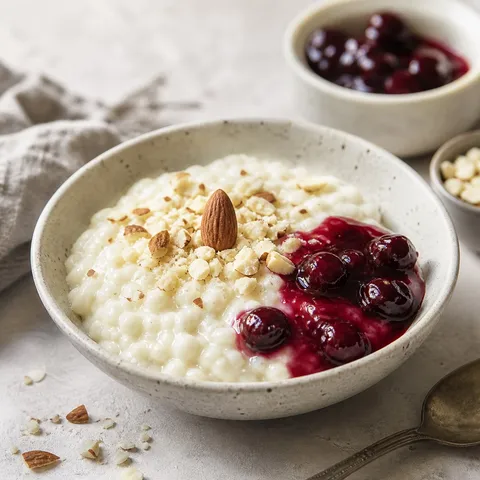
 Risalamande
A creamy Danish cold rice pudding folded with whipped cream and chopped almonds, served with a glossy warm cherry sauce on Christmas Eve.
 Nordic Lens Verified Images are for illustrative purposes only, may be inaccurate, and do not guarantee the presence or absence of specific ingredients.
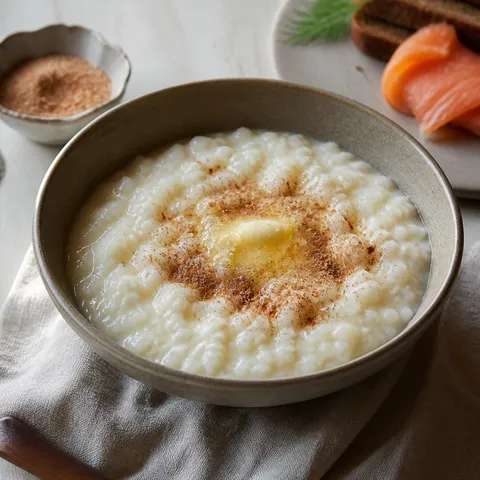
 Risgrynsgröt
Creamy Nordic rice porridge, slow-cooked until thick and comforting, scented with cinnamon and served with a pat of melting butter — Christmas morning in a bowl.
 Nordic Lens Verified Images are for illustrative purposes only, may be inaccurate, and do not guarantee the presence or absence of specific ingredients.
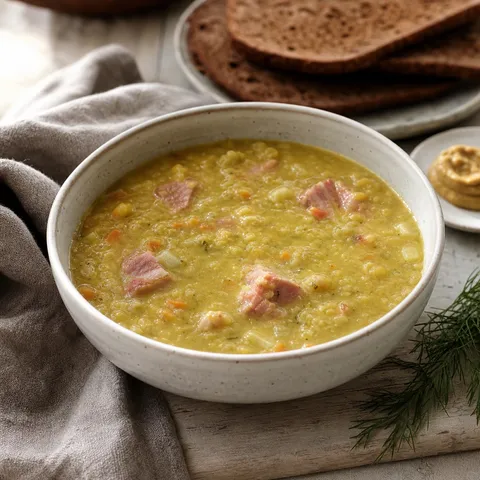
 Hernekeitto
Finland's beloved Thursday pea soup — yellow split peas simmered with smoky ham until thick and hearty, traditionally served with a shot of Finnish mustard and pancakes.