 Nordic Images are for illustrative purposes only, may be inaccurate, and do not guarantee the presence or absence of specific ingredients.
  Serving Images are for illustrative purposes only, may be inaccurate, and do not guarantee the presence or absence of specific ingredients.
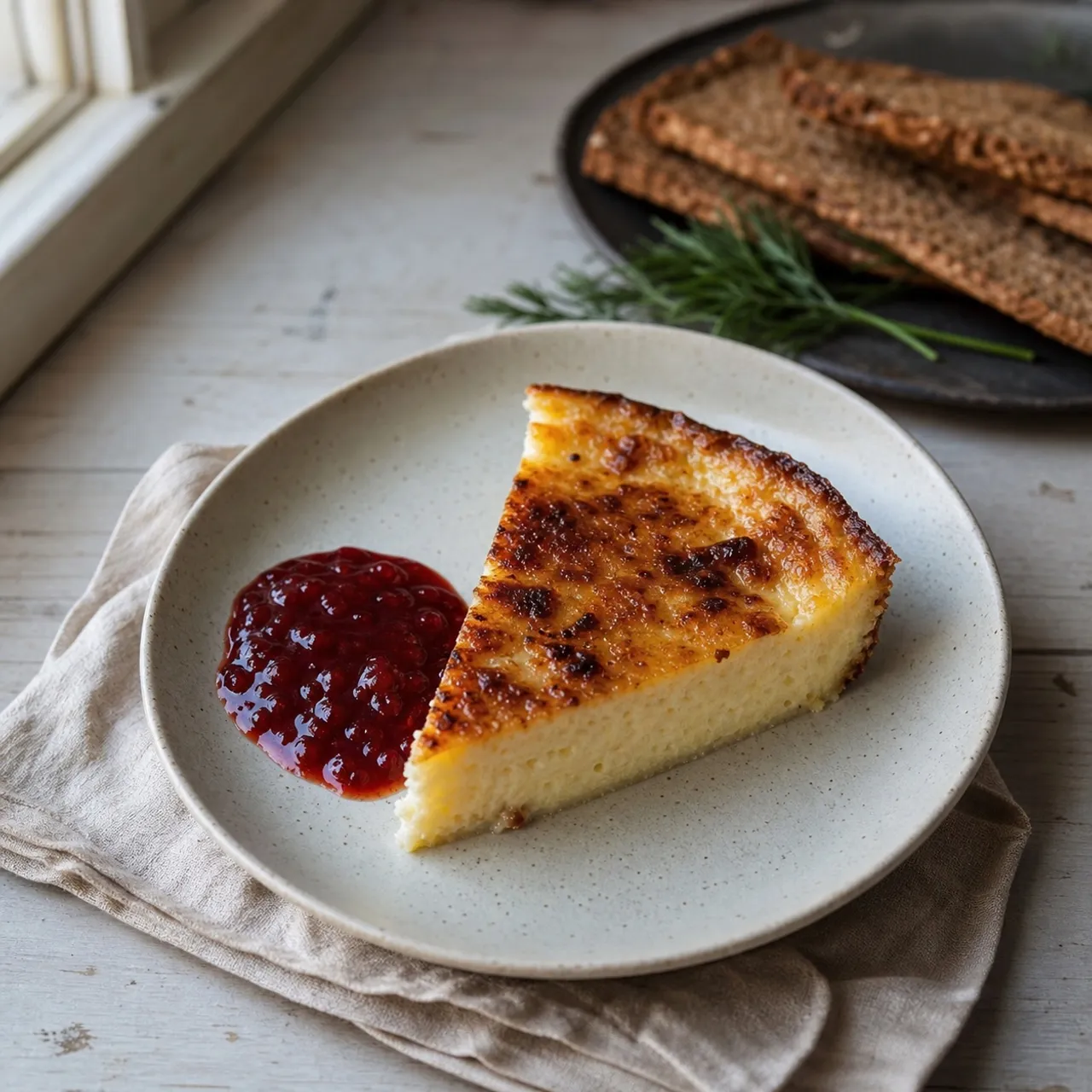
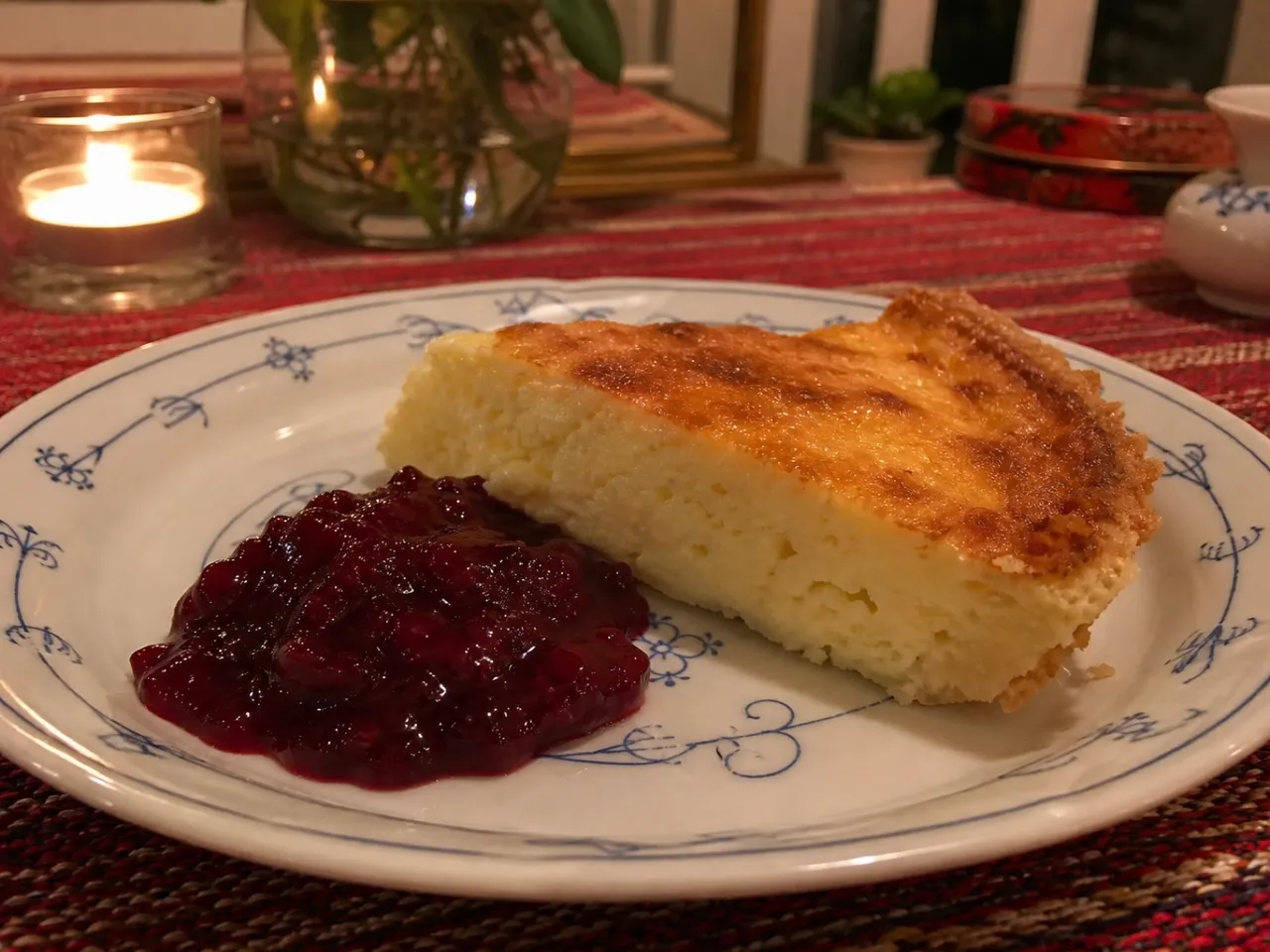
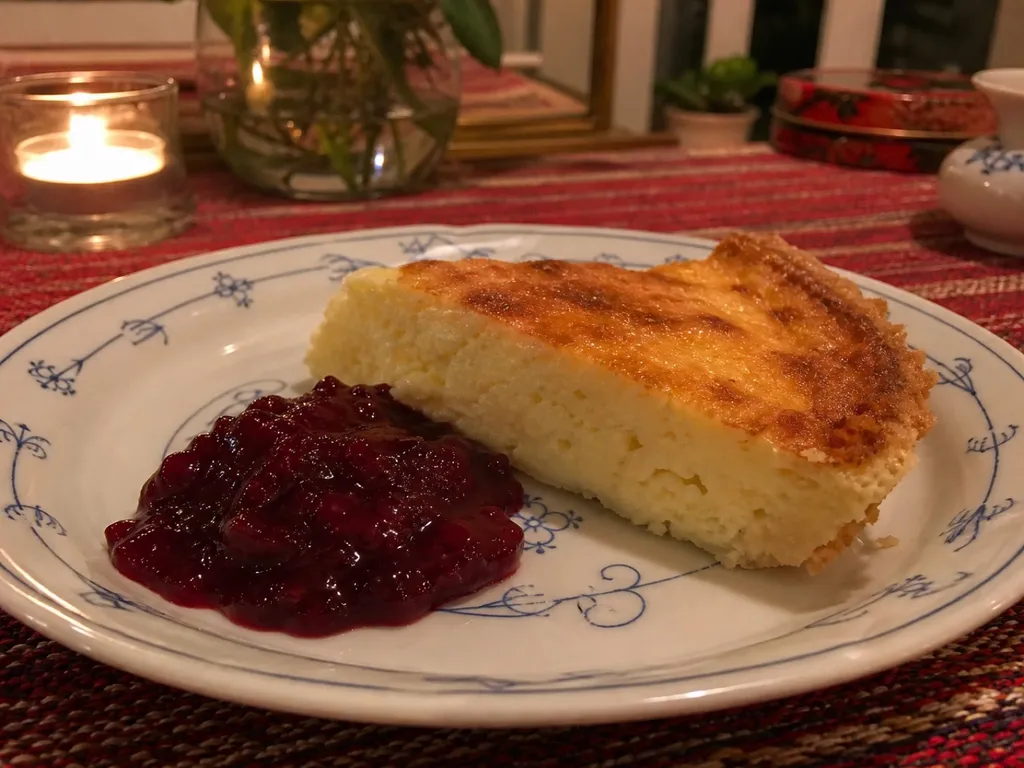
 Ostkaka
Sweden's old-fashioned cheesecake — baked until set and lightly golden, with a soft, curd-like texture that's far less dense than its American cousin; lovely warm with lingonberry jam.
Contains common allergens
In the app, Listahan checks these against your household automatically.
Instructions
7 steps- 1
Warm the milk to about 100 F, remove from heat, and stir in the dissolved rennet.
- 2
Let the milk stand undisturbed for 15 to 20 minutes, until it sets into a soft curd.
- 3
Cut the curd into large chunks and gently drain off some of the excess whey through a sieve, without pressing too hard, you want moist curds, not dry ones.
- 4
Whisk the eggs and sugar together, then whisk in the flour, cream, and almond extract.
- 5
Fold the curds into the egg mixture gently, keeping some curd texture rather than blending it smooth.
- 6
Pour into a buttered baking dish and bake at 350 F for 45 to 55 minutes, until the top is lightly golden and the center is just set with a slight wobble.
- 7
Cool slightly and serve warm or at room temperature with a spoonful of lingonberry jam.
 Images are for illustrative purposes only, may be inaccurate, and do not guarantee the presence or absence of specific ingredients.
 Listahan Family Score™
65/100
Works for many families
Score reflects how well this recipe fits a typical busy household. In the app, your Family Score is personalized to your household's allergens, kids, and pantry.
Nutrition
per serving105
Calories
7 g
Protein
6 g
Carbs
6 g
Fat
Estimated per serving. Actual values depend on the brands and portions you use.
Listahan cooking guide
Chef notes & practical guide
Technique notes, ingredient swaps, serve-alongside ideas, storage guidance, and equipment for this recipe.
Cultural context
Ostkaka, literally 'cheese cake' in Swedish, is a traditional Swedish custard-style dessert originating in the Smaland region of southern Sweden, where it has been made since at least the 15th century. Unlike American cheesecake, it is made by adding rennet to fresh warm milk to form curds, which are then combined with eggs, cream, and ground almonds and baked until just set. It is served warm or at room temperature with cloudberry or lingonberry jam, and in Smaland it is still a mandatory presence at weddings and holidays. The almond flavor comes traditionally from bitter almonds, though most modern versions substitute regular almonds or almond extract for safety.
Listahan note
This version uses rennet tablets dissolved in water to curdle the milk at home, producing the fresh curd base that gives ostkaka its uniquely soft, cloud-like texture that differs from any cream-cheese-based substitute.
Technique cues
- The curdling step requires milk held at approximately 37 C (body temperature); too hot and the rennet denatures before it can work, too cold and curdling takes far longer or fails entirely -- use an instant-read thermometer and be precise.
- After the curds form and are gently broken, the mixture should not be stirred aggressively; the goal is curds that hold together in soft clusters within the egg and cream mixture, giving the baked cake its characteristic pillowy, slightly grainy interior rather than a smooth custard.
- Ostkaka is done when the center has just a slight wobble and an inserted skewer comes out with moist but not wet curd; it continues to set as it cools and should not be tested with a firm-set expectation -- overbaking turns the texture rubbery.
Kitchen flow
- Parallel prep
- Start warming the milk first, then prepare the almond paste and beat the eggs while waiting for the milk to reach temperature and for the curds to set.
- Make-ahead
- Ostkaka can be baked a day ahead and served at room temperature or gently rewarmed in a 150 C oven for 15 minutes; the texture is equally good the next day.
- Leftover move
- Leftover slices are excellent cold with a spoonful of lingonberry jam; in Smaland it is common to eat it for breakfast the day after a celebration.
- Cleanup rhythm
- Rinse the milk pot immediately after transferring the curds; cooked milk protein is much harder to remove once it dries onto the pot.
Ingredient brief
Role, handling, and swap guidance for each key ingredient.
Milk
curd base
Purpose: Whole milk with full fat content produces the softest, most tender curds; lower-fat milk yields tougher, drier curds that affect the final texture.
Handling: Warm slowly to 37 C in a large pot, stirring gently; add rennet only when the temperature is stable.
Adaptation: Fresh whole milk is the only appropriate base; ultra-pasteurized milk will not curdle with rennet.
rennet
curdling agent
Purpose: Rennet causes the milk proteins to form a solid curd mass, producing the fresh cheese base unique to ostkaka.
Handling: Dissolve the tablet in 2 tablespoons of cold water and stir into the warmed milk quickly, then leave undisturbed for 30 to 45 minutes.
Adaptation: Vegetarian rennet (chymosin from microbial fermentation) works identically; lemon juice or vinegar will not produce the same soft curd structure.
bitter almonds
signature flavor accent
Purpose: A small quantity of bitter almond provides the distinctive marzipan-adjacent flavor that defines authentic ostkaka; it is used in very small amounts because it is intensely flavored.
Handling: Blanch and grind to a fine paste; if unavailable, use 1/4 teaspoon of pure almond extract added to the egg mixture.
Adaptation: Pure almond extract is the standard North American substitute; do not use bitter almond oil, which requires precise dosing for safety.
eggs
binder and structure
Purpose: Eggs set the curds into a cohesive, sliceable cake that holds its shape once baked.
Handling: Beat lightly with sugar before folding into the curd mixture.
Adaptation: No reliable egg substitute exists here; the eggs are structurally essential.
Technique notes
- Do not stir the milk after adding the rennet; even small movements during the 30-minute set time can break the curd network and produce a grainy, watery result.
- Bake in a water bath (bain-marie) to ensure the custard-like interior sets gently and evenly without the edges overcooking before the center sets.
- Serve with cloudberry jam if you can find it -- the tartness and slight bitterness of cloudberries is the traditional pairing that balances the sweetness of the cake perfectly; lingonberry jam is the common fallback.
Ingredient swaps
- Allergen note: almonds
- Omit the bitter almonds entirely and add 1 teaspoon of vanilla extract; the flavor profile shifts but the texture and technique remain unchanged.
- Flavor variation
- Add the zest of one lemon to the egg mixture for a brighter, more aromatic version that pairs well with raspberry preserves instead of cloudberry.
Serve alongside
- cloudberry jam spooned directly over the warm cake
- lingonberry preserve as the traditional alternative
- fresh raspberries with a dusting of powdered sugar
- strong Swedish filter coffee
- cold whole milk
Serving suggestions only — check pairings for your household's allergens.
Storage & reheating
- Cover and refrigerate for up to 3 days; the texture firms slightly when cold but softens again at room temperature.
- Reheat individual slices in a 150 C oven for 10 minutes or briefly in a microwave at 50% power.
- Freezing is possible but not ideal; the curd texture becomes slightly grainy after thawing.
Equipment
- large pot for warming milk (at least 3 liters)
- instant-read thermometer
- deep baking dish or springform pan
- roasting pan for water bath
Make this household-aware
Listahan Pro checks this recipe against your household's allergens, finds pantry-aware swaps, builds the shopping list, and helps you plan the week around it.
Plan it in Listahan
Add Ostkaka to your week, check it against your household's allergens, and build the shopping list automatically.
More Nordic recipes
 Nordic Lens Verified Images are for illustrative purposes only, may be inaccurate, and do not guarantee the presence or absence of specific ingredients.
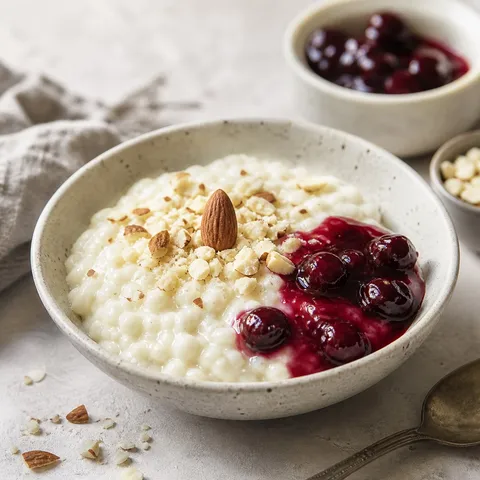
 Risalamande
A creamy Danish cold rice pudding folded with whipped cream and chopped almonds, served with a glossy warm cherry sauce on Christmas Eve.
 Nordic Lens Verified Images are for illustrative purposes only, may be inaccurate, and do not guarantee the presence or absence of specific ingredients.
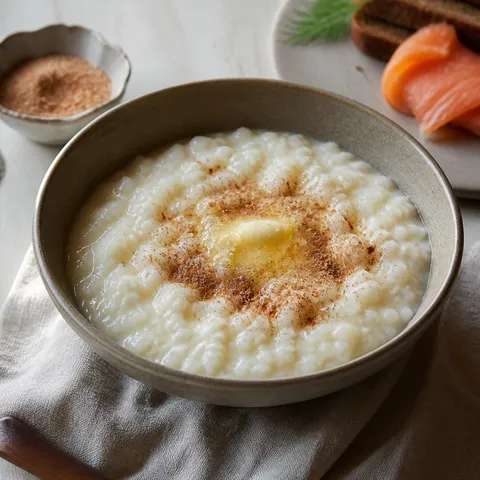
 Risgrynsgröt
Creamy Nordic rice porridge, slow-cooked until thick and comforting, scented with cinnamon and served with a pat of melting butter — Christmas morning in a bowl.
 Nordic Lens Verified Images are for illustrative purposes only, may be inaccurate, and do not guarantee the presence or absence of specific ingredients.
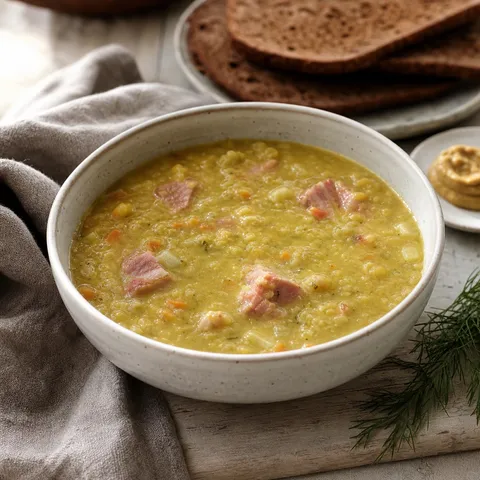
 Hernekeitto
Finland's beloved Thursday pea soup — yellow split peas simmered with smoky ham until thick and hearty, traditionally served with a shot of Finnish mustard and pancakes.