 Sauces & Dressings Images are for illustrative purposes only, may be inaccurate, and do not guarantee the presence or absence of specific ingredients.
  Serving Images are for illustrative purposes only, may be inaccurate, and do not guarantee the presence or absence of specific ingredients.
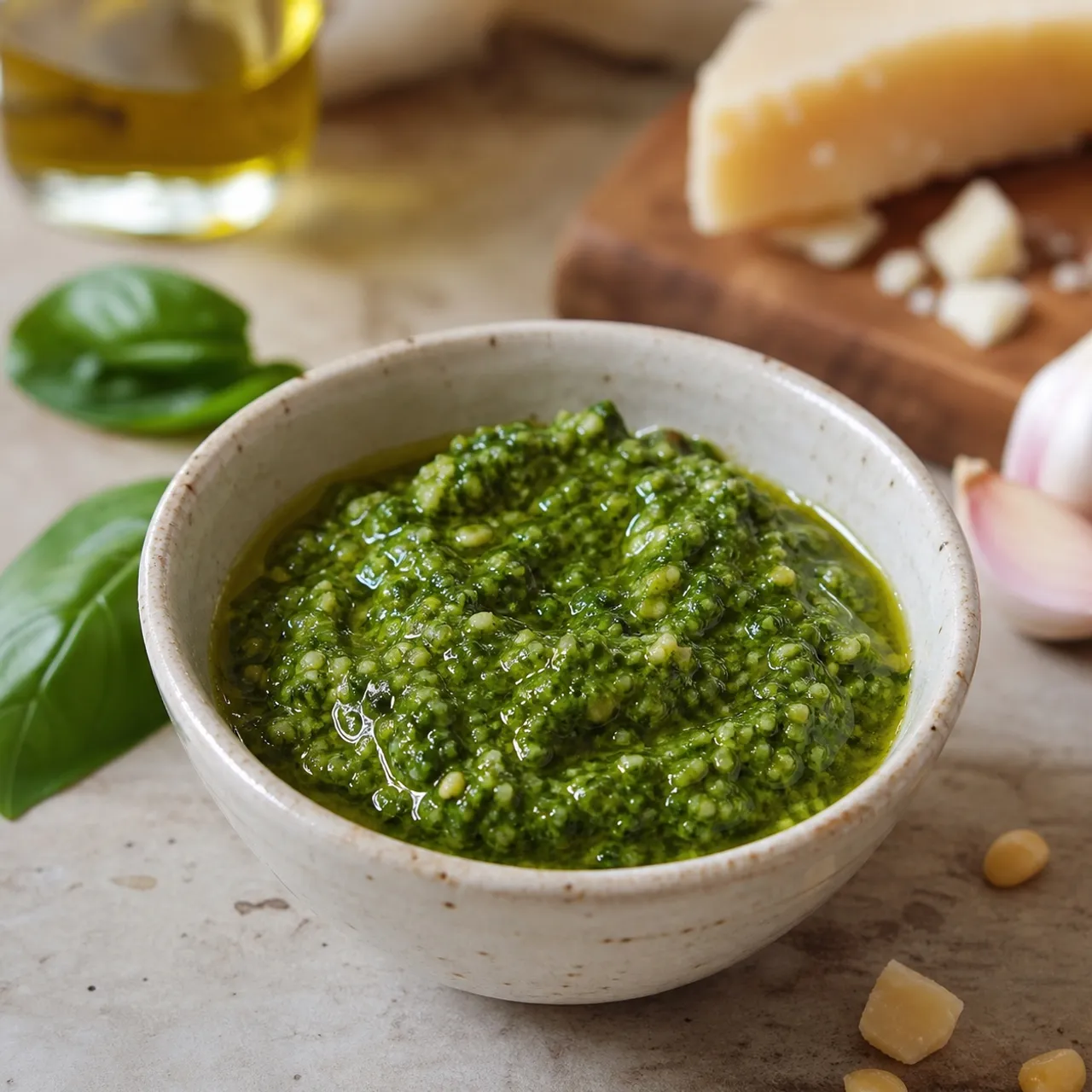
 Basil Pesto
A vibrant Genovese sauce of fresh basil, pine nuts, garlic, Parmesan, and olive oil for tossing with pasta or spreading on bread.
Contains common allergens
In the app, Listahan checks these against your household automatically.
Good to know
- Ready in under 30 minutes
Matched from this dish's own ingredients and timing. Browse more: 30-minute meals
Instructions
5 steps- 1
Toast the pine nuts in a dry skillet over medium heat until lightly golden, then let cool.
- 2
Combine the basil, pine nuts, and garlic in a food processor and pulse to a coarse paste.
- 3
Add the Parmesan and salt, then pulse again to incorporate.
- 4
With the motor running, stream in the olive oil until the pesto is smooth and emulsified.
- 5
Stir in the lemon juice, taste for seasoning, and use immediately or cover tightly.
 Images are for illustrative purposes only, may be inaccurate, and do not guarantee the presence or absence of specific ingredients.
 Listahan Family Score™
75/100
Good fit for most families
Score reflects how well this recipe fits a typical busy household. In the app, your Family Score is personalized to your household's allergens, kids, and pantry.
Nutrition
per serving250
Calories
5 g
Protein
2 g
Carbs
26 g
Fat
Estimated per serving. Actual values depend on the brands and portions you use.
Listahan cooking guide
Chef notes & practical guide
Technique notes, ingredient swaps, serve-alongside ideas, storage guidance, and equipment for this recipe.
Cultural context
Pesto alla Genovese comes from Genoa on the Ligurian coast of Italy, where it was traditionally pounded by hand in a marble mortar. The name comes from pestare, the Italian verb for to crush or pound, which describes the original method long before food processors existed. Authentic versions use the small, sweet basil of Liguria along with Parmigiano, aged pecorino, and the regions own pine nuts.
Listahan note
This version is built for a quick blitz in a food processor while still honoring the classic ratio of basil, nuts, cheese, garlic, and good oil. It keeps the garlic restrained so the basil stays in the lead.
Technique cues
- Blanch the basil for a few seconds and shock it in ice water before blending to lock in the bright green color that otherwise oxidizes to drab brown.
- Pulse rather than run the processor and add the oil last in a stream, because over-processing heats and bruises the basil into a bitter, muddy paste.
- Toast the pine nuts gently until just golden to deepen their flavor, watching closely since their high oil content takes them from toasted to burnt in seconds.
Kitchen flow
- Parallel prep
- Toast the pine nuts and grate the cheese while the basil dries so everything goes into the processor in one round.
- Make-ahead
- Make pesto a day ahead and pour a thin layer of oil over the top to seal out air and hold the green color.
- Leftover move
- Stir leftover pesto into scrambled eggs, swirl it through soup, or spread it on a sandwich instead of mustard.
- Cleanup rhythm
- Scrape the processor bowl with a spatula and use the clingy bits to coat the first handful of pasta before washing.
Ingredient brief
Role, handling, and swap guidance for each key ingredient.
Fresh basil
flavor and color base
Purpose: Basil is the whole identity of the sauce, providing the peppery sweetness and green color that nothing else can replace.
Handling: Pick the leaves from the stems and wash and dry them well so the pesto does not turn watery.
Adaptation: A mix of basil and baby spinach stretches the basil while keeping the color vivid.
Pine nuts
richness and body
Purpose: Pine nuts give the sauce its creamy, buttery body and a subtle resinous sweetness.
Handling: Toast lightly in a dry pan and cool before blending.
Adaptation: Walnuts or toasted sunflower seeds are common, budget-friendly stand-ins, though they shift the flavor slightly.
Parmigiano-Reggiano
savory depth
Purpose: The aged cheese brings salt, umami, and a nutty sharpness that anchors the fresh basil.
Handling: Grate it finely just before blending for the best texture.
Adaptation: A nutritional yeast and salt blend makes a credible dairy-free version.
Garlic
aromatic accent
Purpose: A little raw garlic adds the warm bite that keeps pesto from tasting flat, without overwhelming the herb.
Handling: Use one small clove and add more only after tasting.
Adaptation: Roasted garlic gives a mellower, sweeter background if raw garlic is too sharp for you.
Extra-virgin olive oil
binder
Purpose: Good olive oil carries the flavors and emulsifies the sauce into a pourable, glossy consistency.
Handling: Stream it in at the end rather than blending it hard, which can turn the oil bitter.
Adaptation: A milder oil like avocado oil works if your olive oil is very peppery.
Technique notes
- Finish the pesto by stirring in a spoonful of the starchy pasta cooking water to loosen it into a glossy sauce that clings to noodles.
- Salt the pesto only after the cheese goes in, since aged cheese already brings a lot of salt to the bowl.
- For the truest texture, pound a small batch by hand in a mortar so the basil tears rather than shears.
Ingredient swaps
- Dairy-free option
- Replace the cheese with two tablespoons of nutritional yeast plus a pinch of salt for the same savory depth.
- Nut-free direction
- Swap the pine nuts for toasted sunflower or pumpkin seeds to keep the body without tree nuts.
- Budget-friendly direction
- Use toasted walnuts in place of pine nuts for a richer, far cheaper version that most people enjoy just as much.
Serve alongside
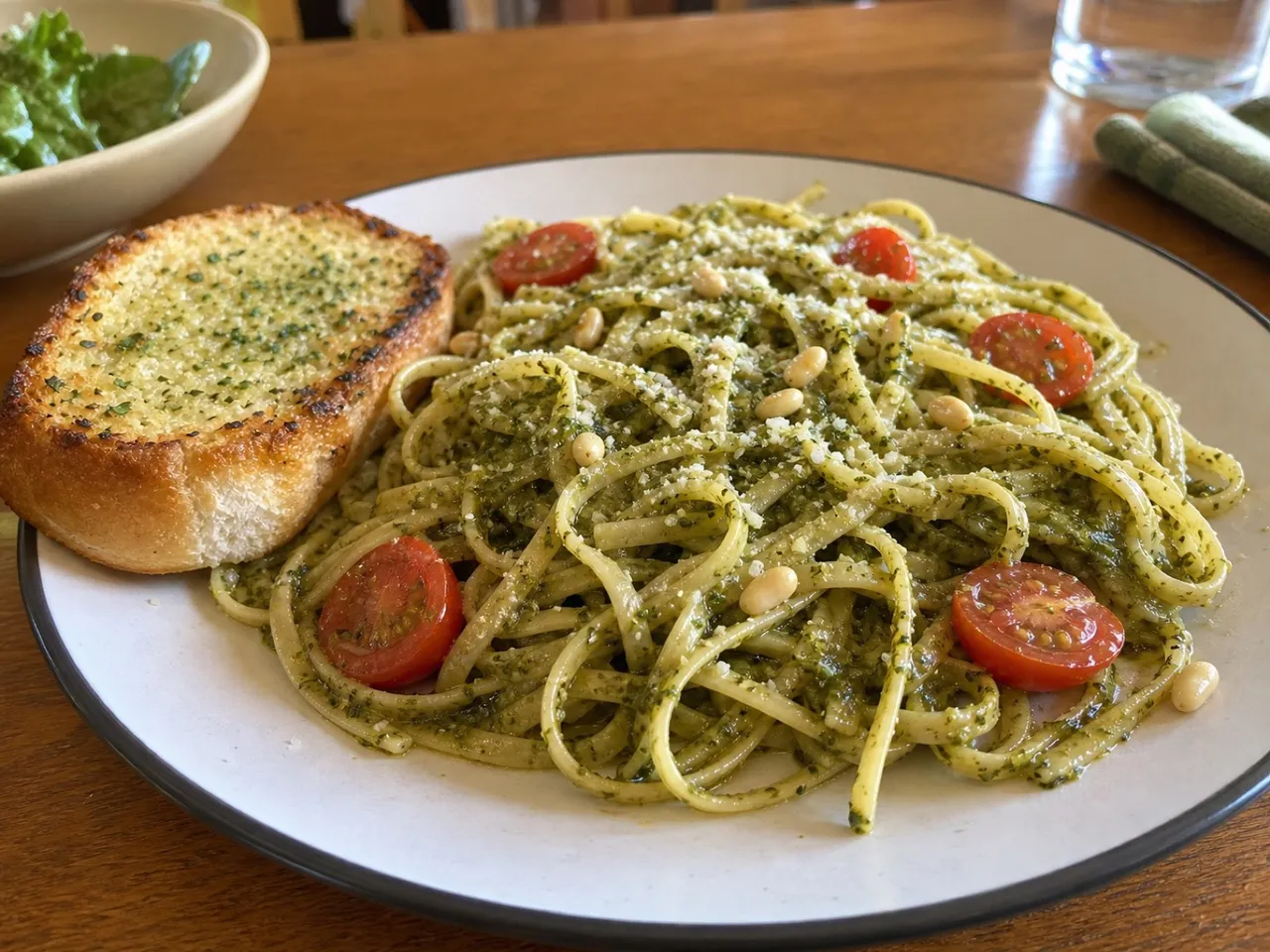
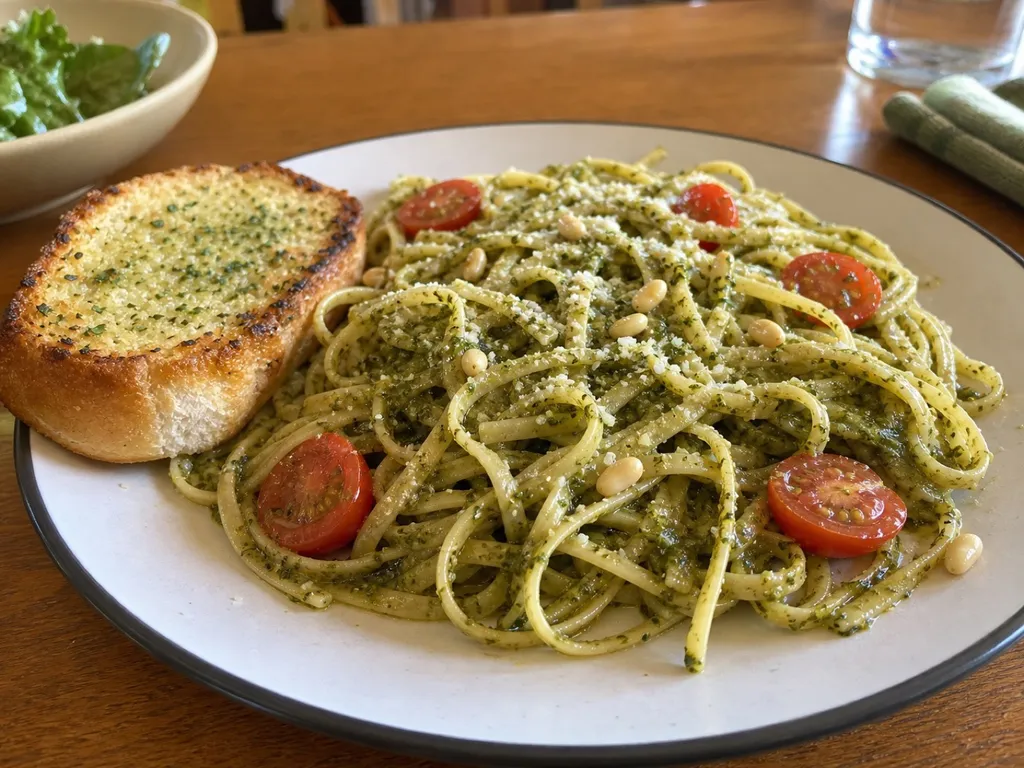
- Trofie pasta with potatoes and green beans
- Caprese salad
- Grilled bruschetta
- Roasted cherry tomatoes
- Vermentino white wine
- Pinot Grigio
- Sparkling water with basil
Serving suggestions only — check pairings for your household's allergens.
Storage & reheating
- Store pesto in a sealed jar in the fridge for up to five days with a film of oil over the surface.
- There is no reheating needed, but let it come to room temperature and stir before using so the oil reblends.
- Freeze it in an ice-cube tray for up to three months and add the cheese fresh after thawing for the best flavor.
Equipment
- Food processor or mortar and pestle
- Microplane or fine grater
- Small dry skillet for toasting
- Glass storage jar
Make this household-aware
Listahan Pro checks this recipe against your household's allergens, finds pantry-aware swaps, builds the shopping list, and helps you plan the week around it.
Plan it in Listahan
Add Basil Pesto to your week, check it against your household's allergens, and build the shopping list automatically.
More Sauces & Dressings recipes
 Sauces & Dressings Lens Verified Images are for illustrative purposes only, may be inaccurate, and do not guarantee the presence or absence of specific ingredients.
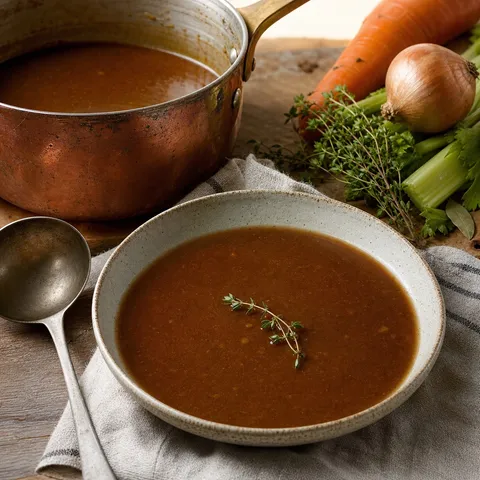
 Espagnole Sauce
A deep brown mother sauce of dark roux, mirepoix, and beef stock that forms the foundation for demi-glace and rich meat sauces.
 Sauces & Dressings Lens Verified Images are for illustrative purposes only, may be inaccurate, and do not guarantee the presence or absence of specific ingredients.
 Hollandaise Sauce
A silky, buttery emulsion brightened with lemon that crowns eggs Benedict, asparagus, and poached fish in golden luxury.
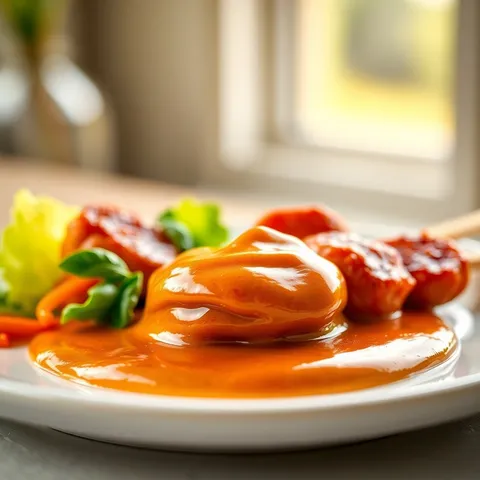 Sauces & Dressings Lens Verified Images are for illustrative purposes only, may be inaccurate, and do not guarantee the presence or absence of specific ingredients.
 Peanut Satay Sauce
A rich, creamy Southeast Asian dipping sauce of peanut butter, coconut milk, and soy with a sweet-spicy lime finish for grilled skewers.