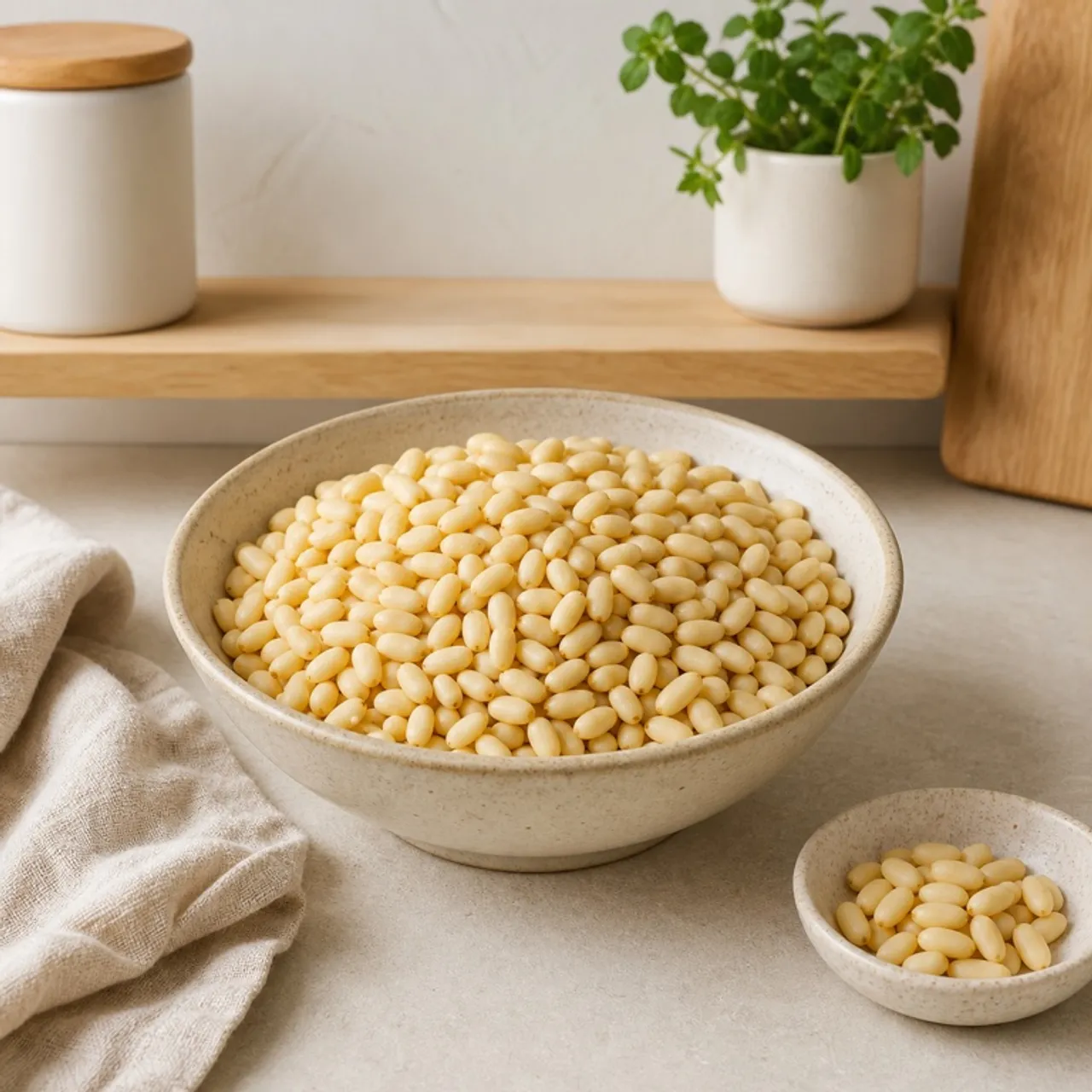
 Food Lens Images are for illustrative purposes only, may be inaccurate, and do not guarantee the presence or absence of specific ingredients.
 Food Lens · Recipe ingredients
Pine Nuts
Rich, buttery, and mildly sweet with a subtle resinous note; soft and creamy when raw, lightly crisp when toasted
Lens VerifiedPine nuts are the small, ivory-colored seeds of stone pines — buttery, delicate, and prized across Mediterranean and Middle Eastern cooking for their rich, slightly resinous flavor.
Where it comes from
Stone pines have dotted the Mediterranean coastline since antiquity, their cones harvested by hand for the labor-intensive seeds inside. Roman soldiers carried them on long marches; medieval Arab cooks folded them into sweets and rice. In North America, the Italian pignoli remains the gold standard for pesto, though Asian varieties fill most bulk bins at a lower price point.
Varieties — European pignoli are elongated and buttery; Asian pine nuts (common in North American bulk bins) are shorter and triangular with a slightly stronger, more resinous flavor.
In Lebanese and Syrian cooking, toasted pine nuts finished in butter are an essential garnish for rice dishes and kibbeh — a small touch that signals care and generosity.
In a modern kitchen — Pine nuts go rancid faster than most nuts — buy small quantities, store in the freezer, and toast them just before using to wake up their flavor.
Buying it
Look for pale ivory-to-cream colored nuts with a clean, sweet aroma. Yellow or gray tones suggest age; a bitter or paint-like smell means rancidity. Buy from stores with high turnover.
Storing it
Store in a sealed container in a cool, dry pantry; their high oil content means they turn rancid faster than most nuts. Refrigerate or freeze for longer freshness — a bitter smell means it's time to toss them.
Keeps about 1 year in the pantry.
Out of pine nuts? Good swaps
- Toasted walnuts — 1:1 by volume; earthier and more tannic — works in pesto, though the flavor shifts noticeably
- Toasted sunflower seeds — 1:1 by volume; milder but similarly tender — a budget-friendly substitute in salads and grain dishes
General cooking guidance — always check the labels on the products you use. Listahan’s allergen checks run automatically when you plan a recipe in the app. Not medical advice.
Recipes that use pine nuts
Common questions about pine nuts
Is pine nuts vegan?
Pine Nuts is generally plant-based and suitable for a vegan diet, but brands differ — confirm on the label.
What can I use instead of pine nuts?
Good swaps include Toasted walnuts, Toasted sunflower seeds. Each behaves a little differently — see the swaps above for notes, and always check labels for allergens.
How do I store pine nuts?
Store in a sealed container in a cool, dry pantry; their high oil content means they turn rancid faster than most nuts. Refrigerate or freeze for longer freshness — a bitter smell means it's time to toss them. It keeps about 1 year in the pantry.
More recipe ingredients
See all


Make pine nuts about your kitchen — with Listahan Pro
Everything above is free, forever. Pro adds the Household Lens — the same food, seen for your family:
-
Checked for each member
Flags pine nuts per person against your household's allergies and school rules — not just a generic "contains" tag.
-
Pantry-aware
Knows whether you already have it, what is running low, and the best swap from what is in your kitchen tonight.
-
What it costs near you
A real price from the Presyo community index, so you can plan the budget — not guess.
-
Your household memory
Who likes it, plus your own private notes — brand, where you keep it, who skips it.
Allergen safety is always free — Pro adds the automation, never the safety.
Cook with pine nuts — safely
Plan a recipe in Listahan and the household allergen check runs automatically — every plan, every swap, every lunchbox. Safety is never paywalled.