 Greek Images are for illustrative purposes only, may be inaccurate, and do not guarantee the presence or absence of specific ingredients.
  Serving Images are for illustrative purposes only, may be inaccurate, and do not guarantee the presence or absence of specific ingredients.
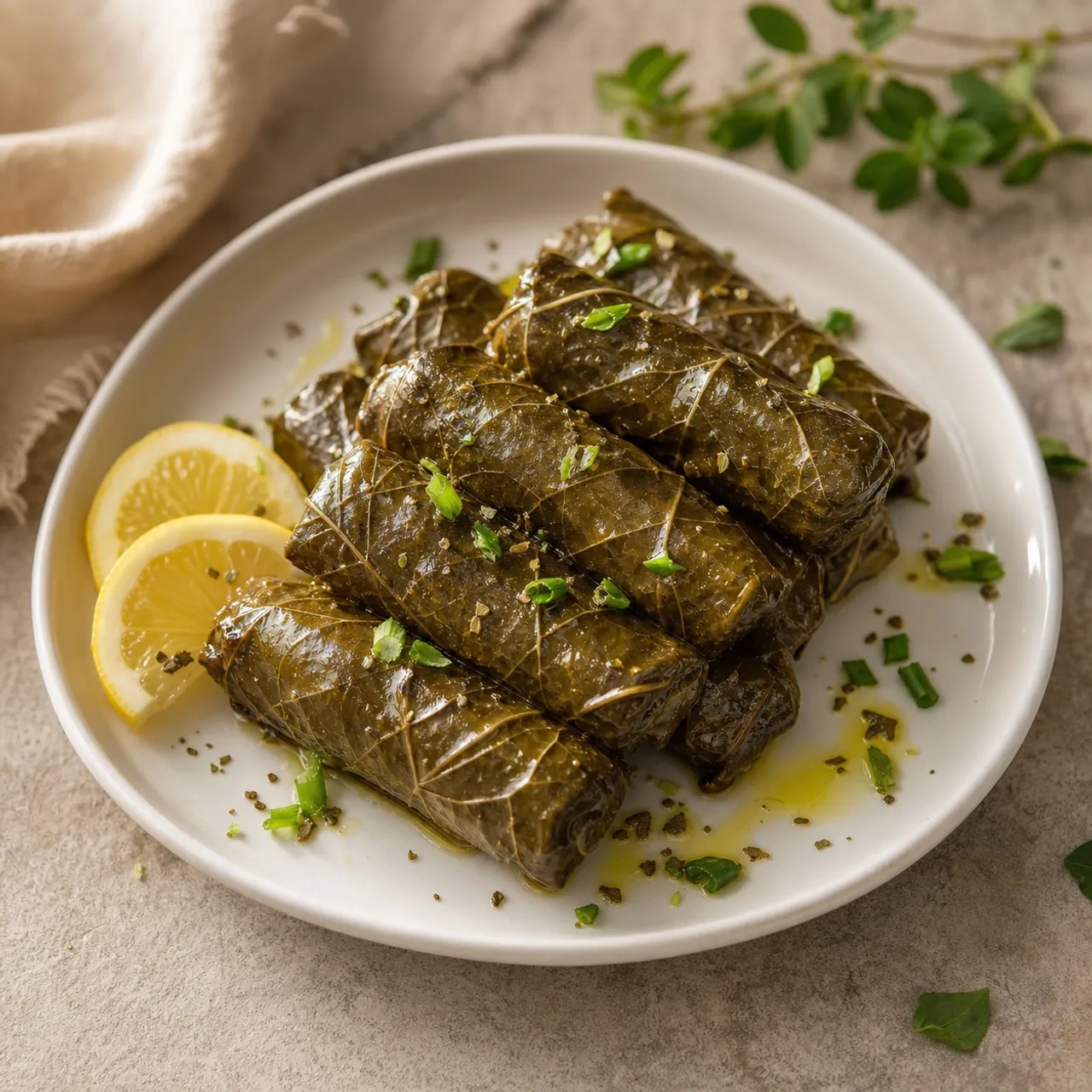
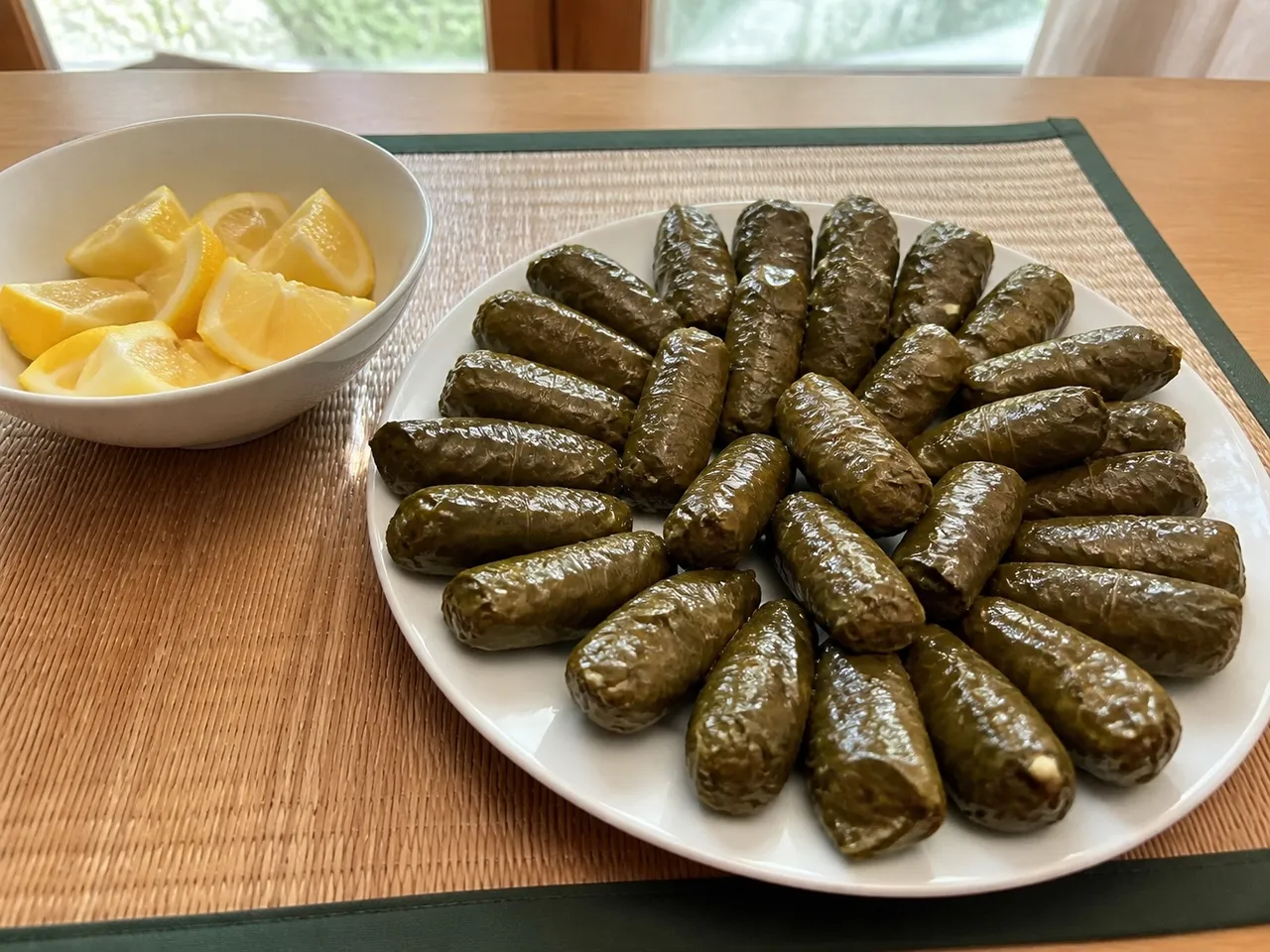
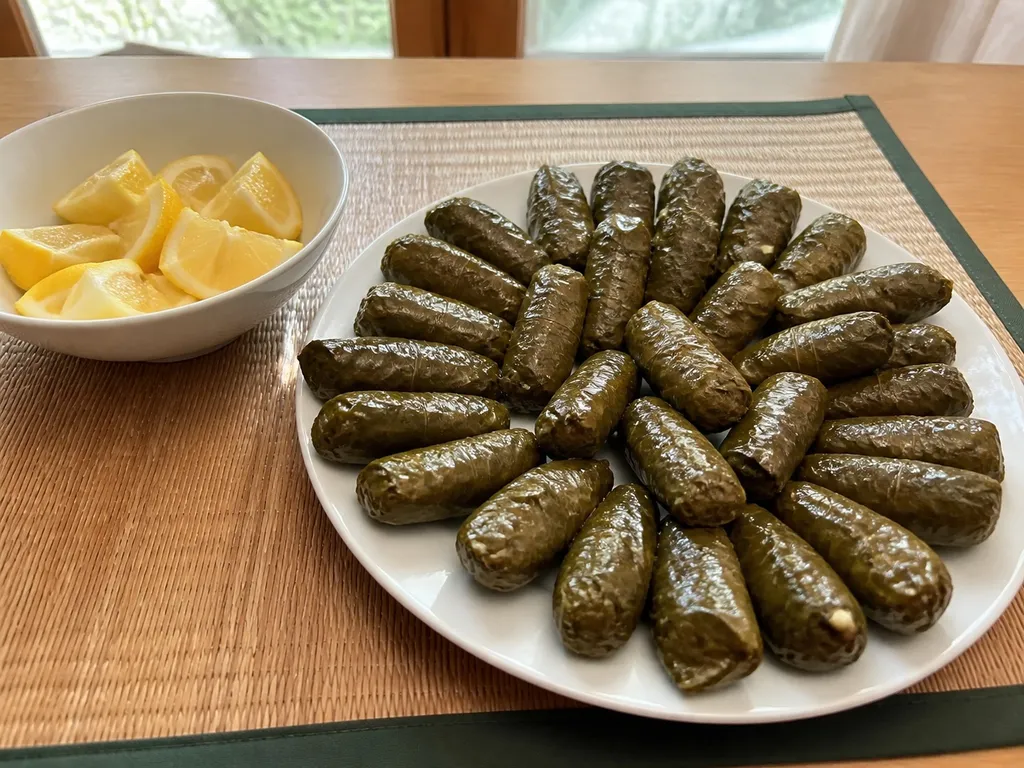
 Dolmades (Stuffed Grape Leaves)
Tender grape leaves rolled around a fragrant rice, herb, and lemon filling, simmered gently until tender and served warm or chilled.
Contains common allergens
In the app, Listahan checks these against your household automatically.
Instructions
6 steps- 1
Heat olive oil in a pan and saute the onion until soft, then add the rice and pine nuts, stirring for 2 minutes to lightly toast.
- 2
Remove from heat and stir in dill, parsley, mint, lemon juice, salt, and pepper.
- 3
Lay a grape leaf shiny-side down on a work surface, place a small spoonful of filling near the stem end, fold in the sides, and roll up tightly into a small cylinder.
- 4
Repeat with the remaining leaves and filling, then arrange the rolls seam-side down snugly in a large pot lined with a few extra grape leaves.
- 5
Pour the vegetable stock and a drizzle of olive oil over the rolls, place a small plate on top to weigh them down, cover, and simmer on low heat for 45-50 minutes.
- 6
Let cool slightly, then serve warm or chilled with extra lemon juice or a side of yogurt.
 Images are for illustrative purposes only, may be inaccurate, and do not guarantee the presence or absence of specific ingredients.
 Listahan Family Score™
66/100
Works for many families
Score reflects how well this recipe fits a typical busy household. In the app, your Family Score is personalized to your household's allergens, kids, and pantry.
Nutrition
per serving245
Calories
4 g
Protein
28 g
Carbs
13 g
Fat
Estimated per serving. Actual values depend on the brands and portions you use.
Listahan cooking guide
Chef notes & practical guide
Technique notes, ingredient swaps, serve-alongside ideas, storage guidance, and equipment for this recipe.
Cultural context
Dolmades trace back to the Ottoman-era tradition of wrapping rice and herbs in leaves across the eastern Mediterranean, and Greek versions split into two camps: meatless, lemon-bright ones like this for Lenten tables, and meat-and-rice versions served warm with avgolemono sauce.
Listahan note
This is the meatless, herb-forward version built for room-temperature serving, with pine nuts toasted into the rice for richness since there's no meat to carry the dish.
Technique cues
- Toasting the rice and pine nuts briefly in the oil before adding liquid coats each grain, which keeps the rolls from turning mushy once they simmer inside the leaves.
- Rolling the leaves snugly but not too tight matters because the rice still needs room to swell as it absorbs stock during cooking.
- Weighing the rolls down with a small plate while they simmer keeps them from unrolling or floating apart in the pot.
Kitchen flow
- Parallel prep
- Rinse and drain the grape leaves while the rice-and-herb filling cools slightly, so both are ready to assemble at the same time.
- Make-ahead
- Dolmades are traditionally made a day ahead; chilling lets the rolls firm up and the flavors settle, and they're meant to be served cold or at room temperature anyway.
- Leftover move
- Store rolled dolmades in their own cooking liquid in the fridge, they stay moister than if drained and stored dry.
- Cleanup rhythm
- Line the workspace with a damp towel while rolling, sticky rice grains wipe off fingers and counters far more easily while still warm.
Ingredient brief
Role, handling, and swap guidance for each key ingredient.
grape leaves
the wrapper
Purpose: brined grape leaves are sturdy enough to hold a simmered filling for 45 minutes without tearing, unlike fresh lettuce or cabbage
Handling: rinse jarred leaves well to wash off excess brine, which otherwise makes the finished dolmades too salty
Adaptation: fresh grape leaves blanched briefly in boiling water work if you have access to an unsprayed vine, but they need more careful trimming of the tough center stem
short-grain rice
filling body
Purpose: short-grain rice releases starch as it cooks, which helps bind the herb filling together inside each roll
Handling: toast it in the oil with the pine nuts for about 2 minutes before adding any liquid, this keeps individual grains distinct rather than gluey
Adaptation: medium-grain rice works similarly; avoid long-grain basmati, which stays too separate and won't hold the filling's shape
pine nuts
richness and texture
Purpose: they add a buttery crunch to what is otherwise a fairly lean, herb-heavy filling
Handling: toast alongside the rice in the same pan so they pick up a little color without burning
Adaptation: toasted slivered almonds are a common, budget-friendly substitute with a similar textural role
fresh dill, parsley, and mint
the herb backbone
Purpose: this trio is what makes Greek dolmades taste distinctly different from Turkish or Lebanese versions, which lean more on parsley alone
Handling: chop all three finely and stir in off the heat so their flavor stays fresh rather than cooking flat
Adaptation: if mint isn't on hand, increase the dill slightly, but don't drop all three herbs at once or the filling turns one-dimensional
lemon juice
brightness
Purpose: it's added both into the filling and again at serving, which is what keeps dolmades tasting bright rather than starchy
Handling: stir into the warm filling before rolling, then serve extra wedges on the side
Adaptation: none needed, lemon is essential here; a splash of white wine vinegar is the only reasonable stand-in in a pinch
Technique notes
- Line the bottom of the pot with a few spare or torn grape leaves before adding the rolls, this keeps the rolls from scorching or sticking directly to the hot pot.
- Simmer the dolmades at a bare simmer, not a rolling boil, a hard boil can shake the rolls apart before the rice fully cooks.
- Resist the urge to overfill each leaf, a slightly under-filled roll leaves room for the rice to expand and prevents splitting.
Ingredient swaps
- Nut-free direction
- Omit the pine nuts entirely or replace with finely diced toasted sunflower seeds for a similar crunch without tree nuts.
- Vegan direction
- Already vegan as written; just skip the optional yogurt sometimes served alongside.
- Lower-sodium direction
- Rinse the grape leaves extra thoroughly and season the filling itself more assertively with lemon and herbs rather than relying on the leaves' brine.
Serve alongside
- tzatziki
- Greek salad
- crusty bread
- grilled halloumi
- chilled white wine
- sparkling water with lemon
- a light rose
Serving suggestions only — check pairings for your household's allergens.
Storage & reheating
- Keeps refrigerated in its cooking liquid for up to 5 days.
- Serve cold or at cool room temperature rather than reheating, which can make the rice mushy.
- Freezes well for up to 2 months; thaw overnight in the fridge before serving.
Equipment
- large heavy pot with lid
- small heatproof plate (for weighing down the rolls)
- sharp paring knife
Make this household-aware
Listahan Pro checks this recipe against your household's allergens, finds pantry-aware swaps, builds the shopping list, and helps you plan the week around it.
Plan it in Listahan
Add Dolmades (Stuffed Grape Leaves) to your week, check it against your household's allergens, and build the shopping list automatically.
More Greek recipes
 Greek Lens Verified Images are for illustrative purposes only, may be inaccurate, and do not guarantee the presence or absence of specific ingredients.
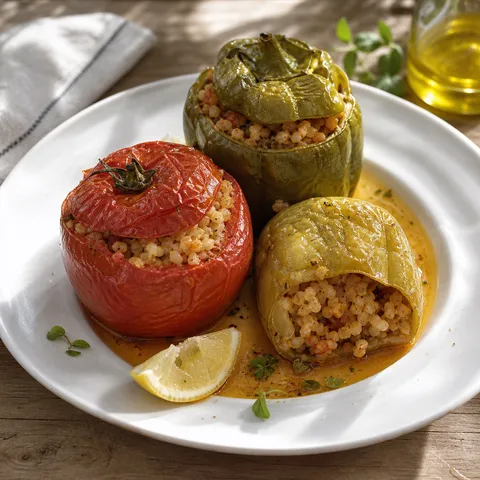
 Gemista (Stuffed Tomatoes and Peppers with Rice)
Ripe tomatoes and bell peppers hollowed out and stuffed with a savory herbed rice filling, then baked until tender and caramelized.
 Greek Lens Verified Images are for illustrative purposes only, may be inaccurate, and do not guarantee the presence or absence of specific ingredients.
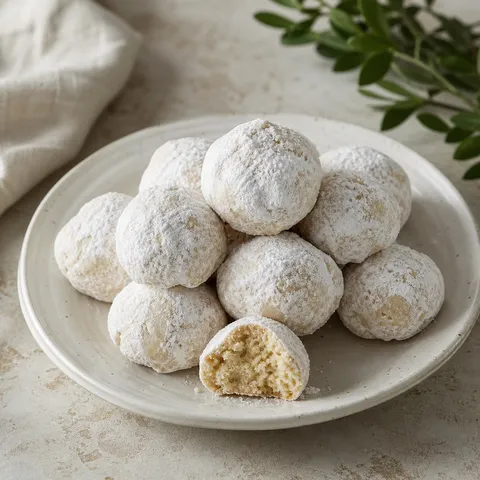
 Kourabiedes (Greek Almond Butter Cookies)
Buttery, crumbly shortbread cookies studded with toasted almonds and generously dusted with powdered sugar.
 Greek Lens Verified Images are for illustrative purposes only, may be inaccurate, and do not guarantee the presence or absence of specific ingredients.
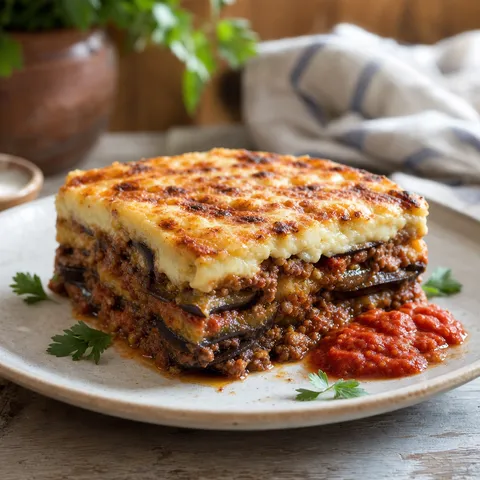
 Classic Moussaka
A rich, layered Greek casserole featuring roasted eggplant, a hearty spiced meat sauce, and a thick, creamy béchamel topping.