 Vegan Images are for illustrative purposes only, may be inaccurate, and do not guarantee the presence or absence of specific ingredients.
  Serving Images are for illustrative purposes only, may be inaccurate, and do not guarantee the presence or absence of specific ingredients.
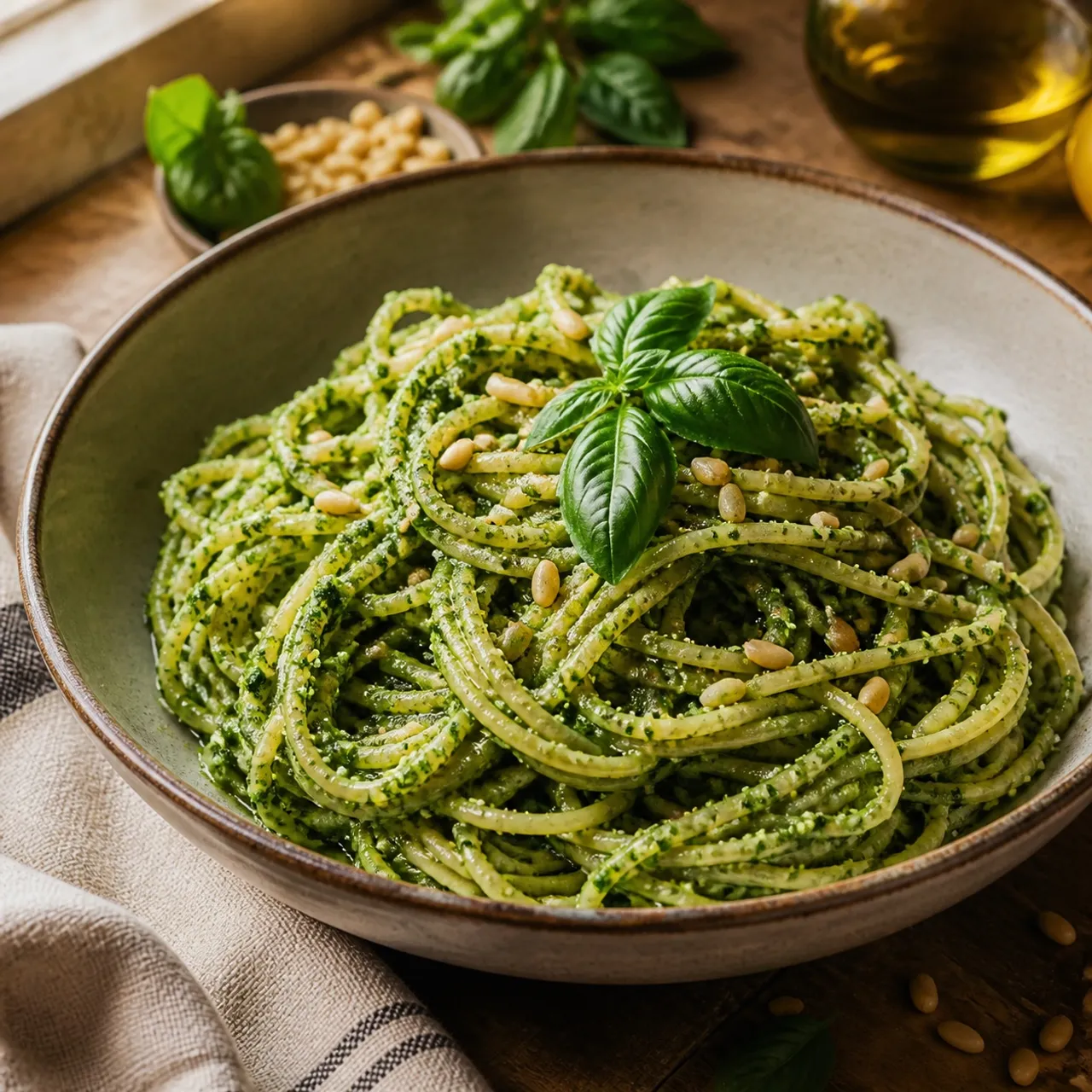
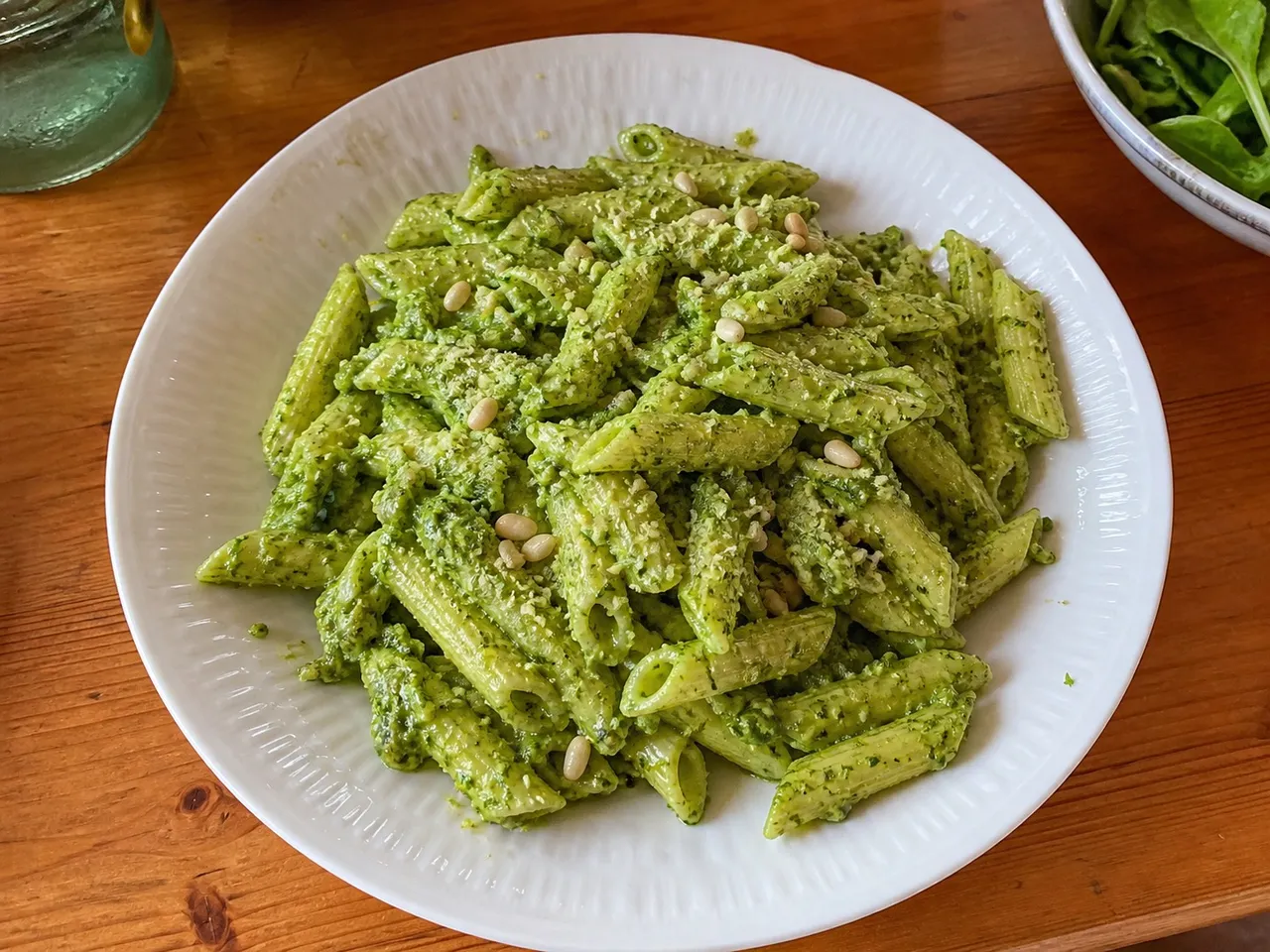
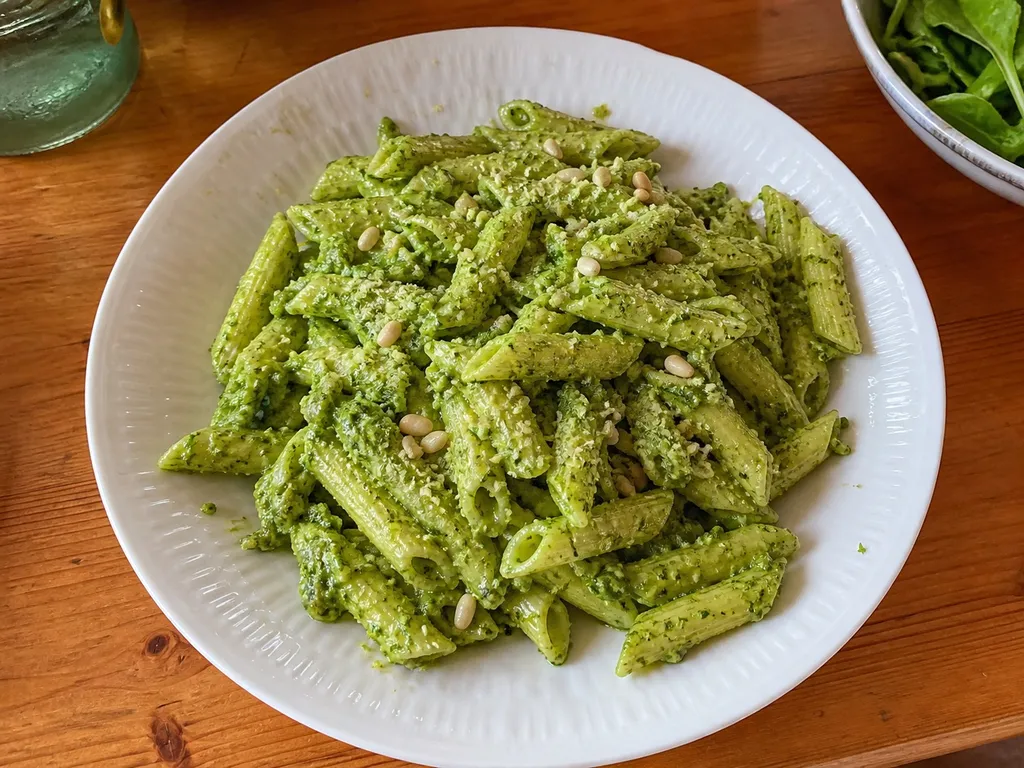
 Vegan Pesto Pasta
Delight in perfectly cooked pasta twirled in a vibrant basil pesto packed with toasted pine nuts and rich olive oil. It's a fresh, herbaceous dish that brings a taste of Italy to your table!
Contains common allergens
In the app, Listahan checks these against your household automatically.
Good to know
- Ready in under 30 minutes
Matched from this dish's own ingredients and timing. Browse more: 30-minute meals
Instructions
6 steps- 1
Bring a large pot of salted water to a boil and cook the pasta according to package directions until al dente, reserving 1 cup of the pasta water before draining.
- 2
While the pasta cooks, toast the pine nuts in a dry skillet over medium heat for 2 to 3 minutes, shaking the pan often, until golden and fragrant.
- 3
In a food processor, combine the basil, toasted pine nuts, garlic, nutritional yeast, and lemon juice and pulse until finely chopped.
- 4
With the processor running, slowly stream in the olive oil until the pesto is smooth and emulsified, then season with salt and pepper.
- 5
Toss the drained hot pasta with the pesto, adding splashes of the reserved pasta water until the sauce coats the noodles glossy and loose.
- 6
Divide among bowls and top with halved cherry tomatoes.
 Images are for illustrative purposes only, may be inaccurate, and do not guarantee the presence or absence of specific ingredients.
 Listahan Family Score™
75/100
Good fit for most families
Score reflects how well this recipe fits a typical busy household. In the app, your Family Score is personalized to your household's allergens, kids, and pantry.
Nutrition
per serving725
Calories
16 g
Protein
78 g
Carbs
40 g
Fat
Estimated per serving. Actual values depend on the brands and portions you use.
Listahan cooking guide
Chef notes & practical guide
Technique notes, ingredient swaps, serve-alongside ideas, storage guidance, and equipment for this recipe.
Cultural context
Pesto alla Genovese comes from Liguria in northern Italy, where it was traditionally pounded in a marble mortar from basil, pine nuts, garlic, olive oil, and aged cheese. The vegan version drops the Parmesan and Pecorino and rebuilds the savory, salty note with nutritional yeast and sometimes a little miso. Because pesto was always more about fragrant basil and good oil than about cheese, this plant-based version stays remarkably true to the original.
Listahan note
This version leans on nutritional yeast and a pinch of salt to replace the umami the cheese used to carry, so the sauce tastes savory rather than just green. It tosses the pesto with a splash of pasta water to turn it into a clinging sauce instead of an oily paste.
Technique cues
- Blanch the basil for a few seconds and shock it in ice water if you want a vivid green pesto that does not brown, though raw is fine for immediate eating.
- Reserve a full cup of starchy pasta water and add it a splash at a time, because the starch is what turns thick pesto into a glossy sauce that coats every noodle.
- Toss the pasta with pesto off the heat, since cooking the basil sauce dulls its bright color and fresh flavor.
Kitchen flow
- Parallel prep
- Blend the pesto while the pasta water comes to a boil, so the sauce is ready the moment the noodles drain.
- Make-ahead
- Pesto keeps three days refrigerated with a film of oil on top, or freeze it in an ice-cube tray for single-portion sauce on demand.
- Leftover move
- Spread leftover pesto on toast, swirl it into soup, or use it as a sandwich spread the next day.
- Cleanup rhythm
- Rinse the blender right after pouring out the pesto, since the oily basil residue wipes away easily before it sets.
Ingredient brief
Role, handling, and swap guidance for each key ingredient.
fresh basil
the soul of the sauce
Purpose: Basil's sweet, peppery aroma is the entire identity of pesto.
Handling: Use the leaves only and keep them dry; bruised wet basil turns dark.
Adaptation: Spinach or arugula can extend or replace basil for a milder, more affordable sauce.
pine nuts
rich body
Purpose: Pine nuts give the sauce its buttery richness and creamy texture when blended.
Handling: Toast lightly to deepen their flavor before blending.
Adaptation: Walnuts, cashews, or sunflower seeds work; use seeds for a nut-free version.
nutritional yeast
savory cheese note
Purpose: It replaces the Parmesan's salty, umami depth so the sauce tastes complete.
Handling: Blend in with the basil and oil.
Adaptation: A teaspoon of white miso adds a similar savory backbone.
garlic
pungent edge
Purpose: Raw garlic gives pesto its signature sharp bite.
Handling: Use one small clove and taste, since raw garlic intensifies as the sauce sits.
Adaptation: Roasted garlic gives a mellower, sweeter version for sensitive palates.
extra-virgin olive oil
binding fat
Purpose: Good olive oil carries the flavors and gives the sauce its silky, pourable body.
Handling: Drizzle in while blending to emulsify into a smooth sauce.
Adaptation: A neutral oil works if you want the basil flavor to dominate.
Technique notes
- Add the pasta to the pesto in the warm pot, not the other way around, and loosen with pasta water for a sauce that clings rather than slides.
- A squeeze of lemon juice brightens the pesto and helps preserve its green color if you are making it ahead.
- Reserve a spoonful of whole toasted nuts to scatter on top for texture, since blending makes them disappear.
Ingredient swaps
- Nut-free option
- Use toasted sunflower or pumpkin seeds in place of pine nuts for a sauce made without tree nuts.
- Gluten-free direction
- Toss the pesto with a good gluten-free pasta, saving extra cooking water since gluten-free noodles release less starch.
- Lower-fat direction
- Replace some of the oil with reserved pasta water or a spoonful of white beans for a lighter, creamier sauce.
Serve alongside
- Garlic bread
- Cherry tomato and arugula salad
- Roasted asparagus
- Marinated artichoke hearts
- Crisp white wine
- Sparkling water with basil
- Iced lemon-mint tea
Serving suggestions only — check pairings for your household's allergens.
Storage & reheating
- Store dressed pasta in an airtight container for up to three days; the pesto darkens slightly but stays good. Reheat gently or eat at room temperature, loosening with a splash of water or oil. Pesto alone freezes for three months in portioned cubes.
Equipment
- Food processor or blender
- Large pot for pasta
- Colander
- Microplane for garlic and lemon
Make this household-aware
Listahan Pro checks this recipe against your household's allergens, finds pantry-aware swaps, builds the shopping list, and helps you plan the week around it.
Plan it in Listahan
Add Vegan Pesto Pasta to your week, check it against your household's allergens, and build the shopping list automatically.
More Vegan recipes
 Vegan Lens Verified Images are for illustrative purposes only, may be inaccurate, and do not guarantee the presence or absence of specific ingredients.
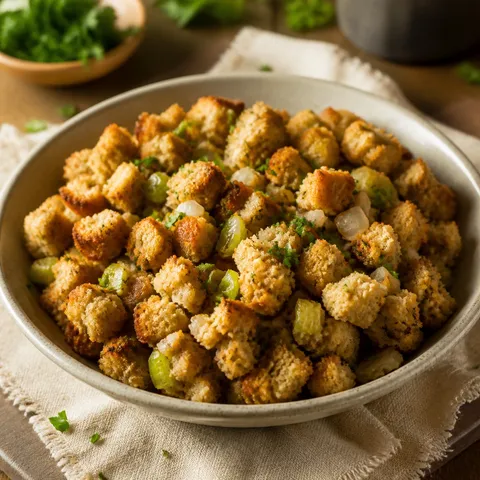
 Vegan Stuffing
A classic holiday side dish made with vegetable broth and herbs.
 Vegan Lens Verified Images are for illustrative purposes only, may be inaccurate, and do not guarantee the presence or absence of specific ingredients.
 Vegan Pancakes
Wake up to these incredibly fluffy and golden vegan pancakes, kissed with vanilla and ready to soak up your favorite maple syrup. A perfect weekend breakfast treat made entirely from plant-based ingredients!
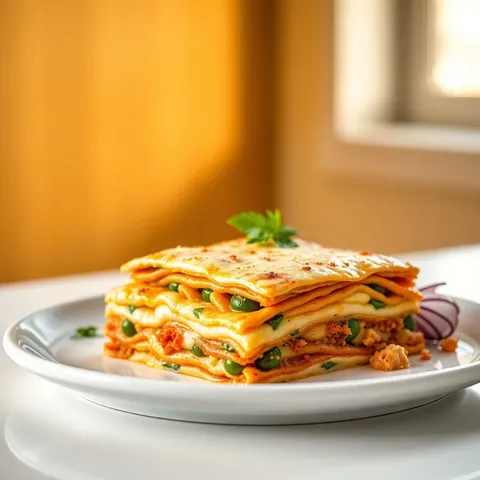 Vegan Lens Verified Images are for illustrative purposes only, may be inaccurate, and do not guarantee the presence or absence of specific ingredients.
 Vegan Lasagna
Indulge in generous layers of tender pasta, robust marinara, and a remarkably creamy tofu ricotta. This show-stopping baked lasagna is the ultimate crowd-pleasing centerpiece!