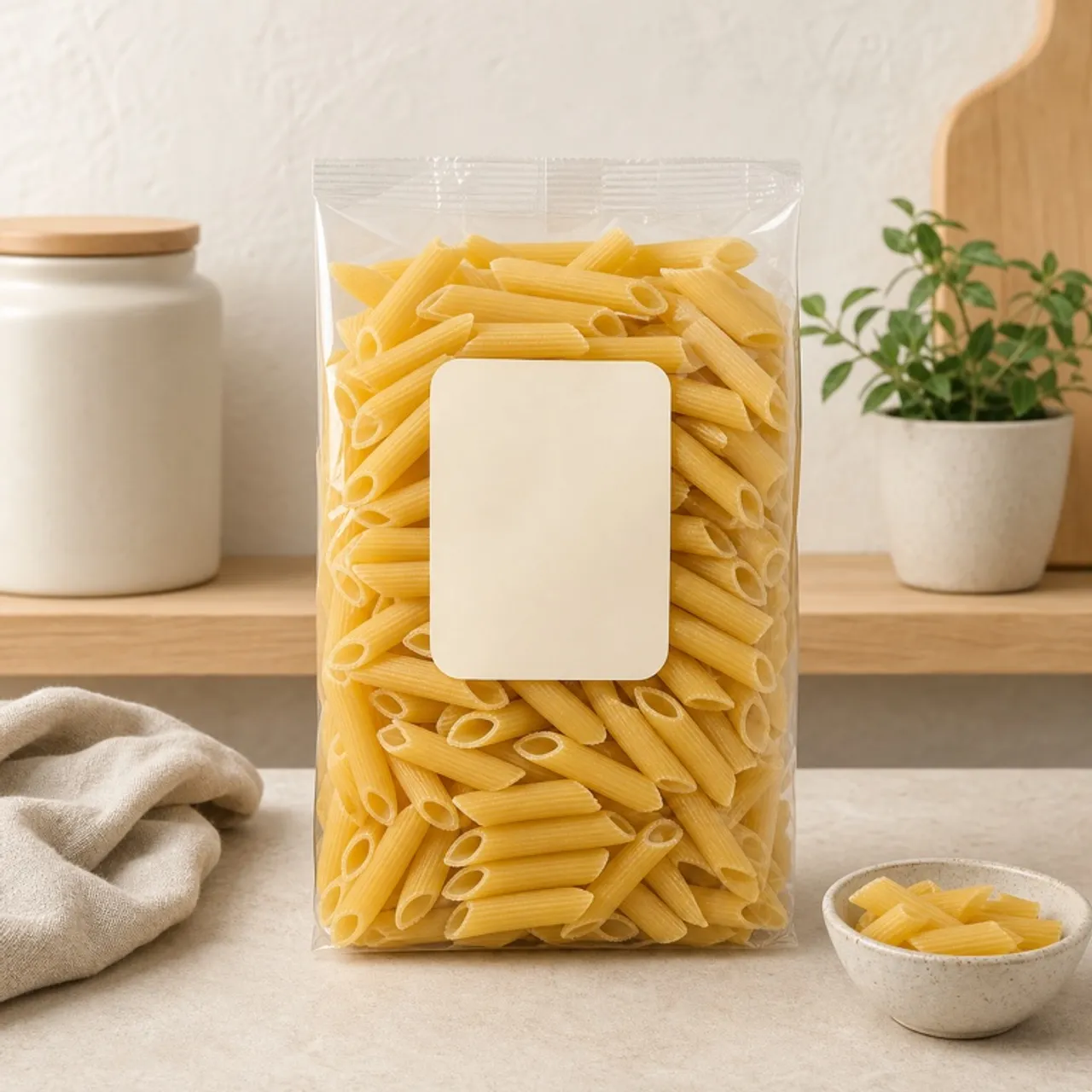
 Food Lens Images are for illustrative purposes only, may be inaccurate, and do not guarantee the presence or absence of specific ingredients.
 Food Lens · Pantry
Pasta
Clean, wheaty, slightly nutty flavor; pleasantly chewy when cooked al dente, with a firm bite at the center.
Lens VerifiedPasta is the broad family of dried durum-wheat shapes — spaghetti, penne, fettuccine, and dozens more — that form the backbone of Italian cooking and one of the most versatile pantry staples worldwide.
Where it comes from
Dried durum wheat pasta emerged as a trade commodity in medieval Sicily and Genoa, where the combination of hard wheat and Mediterranean winds made large-scale drying possible. Italian immigrants brought pasta culture to North America in the late 19th and early 20th centuries, and it quickly naturalized into the mainstream. Most dried pasta sold in North America today is produced from semolina (coarsely ground durum wheat) and water, with no eggs — making it suitable for plant-based diets.
Varieties — Hundreds of shapes exist: long strands (spaghetti, linguine), tubes (penne, rigatoni), ribbons (fettuccine, pappardelle), small shapes (farfalle, fusilli). Each shape pairs best with specific sauce textures.
The center of Italian cucina, from Bolognese to cacio e pepe; also deeply embedded in North American comfort cooking, Italian-American cuisine, and quick weeknight meals.
In a modern kitchen — Reserve at least a cup of starchy pasta cooking water before draining — adding a splash to the sauce pan emulsifies fat and makes any sauce silkier.
Buying it
Look for pasta made from 100% durum wheat semolina for the best texture and cook. Bronze-die extruded pasta (often labeled 'trafilata al bronzo') has a rougher surface that grips sauce better. Standard 12 oz and 1 lb boxes are most common.
Storing it
Store dried pasta in a sealed container or its original packaging in a cool, dry spot. It keeps well for a long time as long as moisture and pests stay out.
Keeps about 2 years in the pantry.
Out of pasta? Good swaps
- Rice noodles — 1:1 by weight cooked; rice-flour based, different texture, cook in hot water rather than boiling
- Soba noodles — 1:1 by weight cooked; buckwheat flavor, works well cold or in broth-based dishes
General cooking guidance — always check the labels on the products you use. Listahan’s allergen checks run automatically when you plan a recipe in the app. Not medical advice.
Recipes that use pasta
Common questions about pasta
Is pasta vegan?
Pasta is generally plant-based and suitable for a vegan diet, but brands differ — confirm on the label.
What can I use instead of pasta?
Good swaps include Rice noodles, Soba noodles. Each behaves a little differently — see the swaps above for notes, and always check labels for allergens.
How do I store pasta?
Store dried pasta in a sealed container or its original packaging in a cool, dry spot. It keeps well for a long time as long as moisture and pests stay out. It keeps about 2 years in the pantry.
More pantry
See all


Make pasta about your kitchen — with Listahan Pro
Everything above is free, forever. Pro adds the Household Lens — the same food, seen for your family:
-
Checked for each member
Flags pasta per person against your household's allergies and school rules — not just a generic "contains" tag.
-
Pantry-aware
Knows whether you already have it, what is running low, and the best swap from what is in your kitchen tonight.
-
What it costs near you
A real price from the Presyo community index, so you can plan the budget — not guess.
-
Your household memory
Who likes it, plus your own private notes — brand, where you keep it, who skips it.
Allergen safety is always free — Pro adds the automation, never the safety.
Cook with pasta — safely
Plan a recipe in Listahan and the household allergen check runs automatically — every plan, every swap, every lunchbox. Safety is never paywalled.