 Food Lens Images are for illustrative purposes only, may be inaccurate, and do not guarantee the presence or absence of specific ingredients.
 Food Lens · Produce
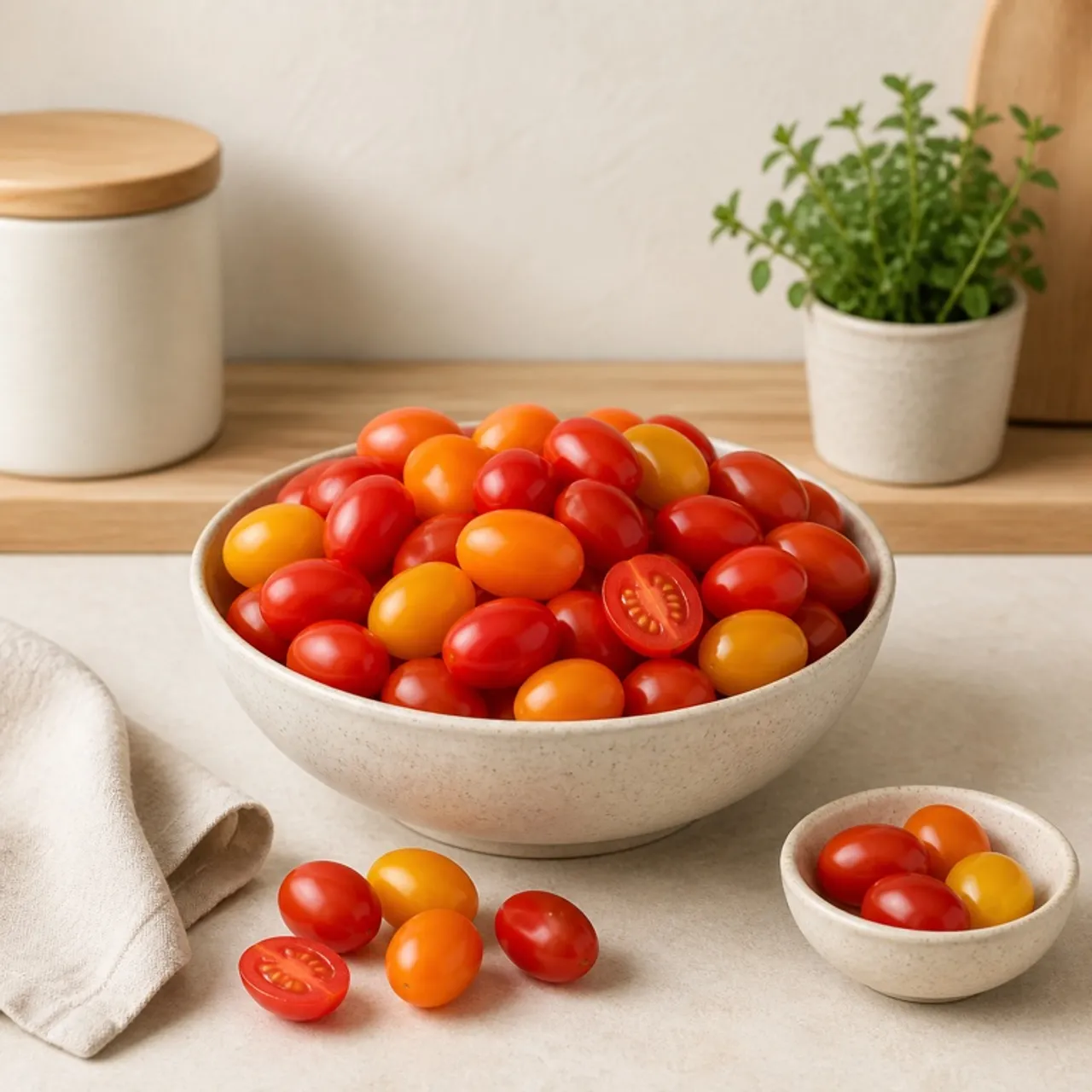
Grape tomatoes
Sweet, mildly tangy, and juicy with a firm bite and thin skin.
Lens VerifiedGrape tomatoes are small, oblong tomatoes with firm, thick skin and a sweet, balanced flavor. They hold their shape well whether roasted, sautéed, or eaten raw, making them a go-to for quick weeknight cooking.
Where it comes from
Grape tomatoes emerged as a commercial produce category in the late 20th century, bred for durability and sweetness. They became standard in North American supermarkets because they ship and store better than cherry tomatoes while offering a similarly bright, sweet flavor.
Varieties — Grape tomatoes are smaller and more oblong than cherry tomatoes; varieties come in red, yellow, and orange, each with slightly different sweetness levels.
A staple in North American kitchens for quick weeknight cooking, they also appear in Mediterranean-style salads and pasta dishes.
In a modern kitchen — To blister grape tomatoes quickly, cook them in a very hot dry pan until the skins pop, then season — this gives better browning than oiling them first.
Buying it
Look for firm tomatoes with taut, uncracked skins in a bright, deep color. Avoid packages with shriveled, moldy, or very soft tomatoes. Use within a few days of purchase for best flavor.
Storing it
Refrigerate in their original container or a vented bag to keep skins from splitting. Let them sit at room temperature before eating for the best flavor; wrinkled or leaking skins mean they're overripe.
Keeps about 7 days in the fridge.
In season
Peak season is June–September, though it's available year-round.
Local field-grown supplies are strongest in summer; greenhouse and imported grape tomatoes keep them available year-round.
Out of grape tomatoes? Good swaps
- Cherry tomatoes — Rounder and slightly softer — interchangeable in most recipes.
- Roma tomatoes, quartered — Meatier and less sweet; better for sauces than raw preparations.
- Sun-dried tomatoes (rehydrated) — Concentrated flavor; use in cooked dishes where freshness is less critical.
General cooking guidance — always check the labels on the products you use. Listahan’s allergen checks run automatically when you plan a recipe in the app. Not medical advice.
Recipes that use grape tomatoes
Common questions about grape tomatoes
Is grape tomatoes vegan?
Grape tomatoes is generally plant-based and suitable for a vegan diet, but brands differ — confirm on the label.
What can I use instead of grape tomatoes?
Good swaps include Cherry tomatoes, Roma tomatoes, quartered, Sun-dried tomatoes (rehydrated). Each behaves a little differently — see the swaps above for notes, and always check labels for allergens.
How do I store grape tomatoes?
Refrigerate in their original container or a vented bag to keep skins from splitting. Let them sit at room temperature before eating for the best flavor; wrinkled or leaking skins mean they're overripe. It keeps about 7 days in the fridge.
More produce
See all


Make grape tomatoes about your kitchen — with Listahan Pro
Everything above is free, forever. Pro adds the Household Lens — the same food, seen for your family:
-
Checked for each member
Flags grape tomatoes per person against your household's allergies and school rules — not just a generic "contains" tag.
-
Pantry-aware
Knows whether you already have it, what is running low, and the best swap from what is in your kitchen tonight.
-
What it costs near you
A real price from the Presyo community index, so you can plan the budget — not guess.
-
Your household memory
Who likes it, plus your own private notes — brand, where you keep it, who skips it.
Allergen safety is always free — Pro adds the automation, never the safety.
Cook with grape tomatoes — safely
Plan a recipe in Listahan and the household allergen check runs automatically — every plan, every swap, every lunchbox. Safety is never paywalled.