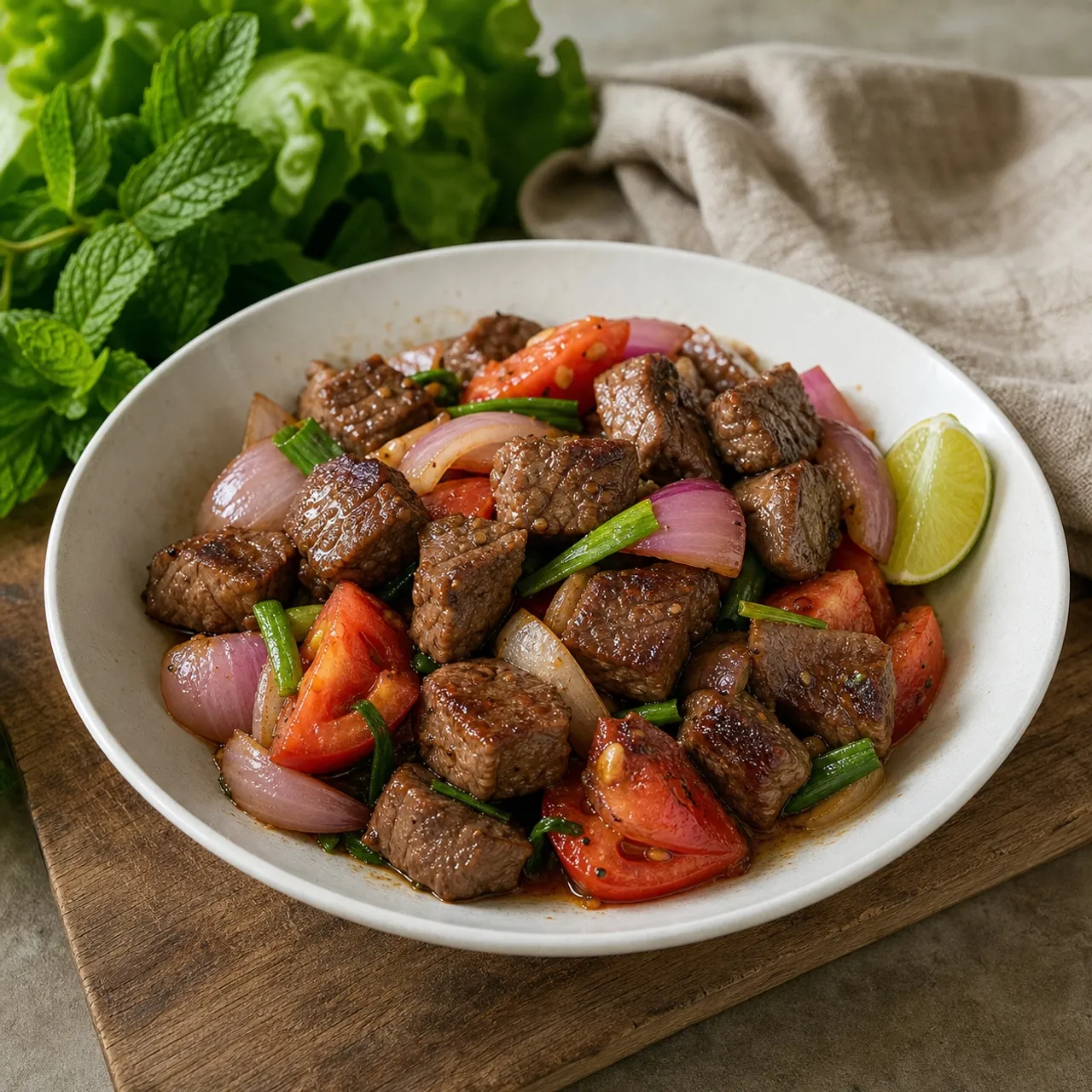
 Vietnamese Images are for illustrative purposes only, may be inaccurate, and do not guarantee the presence or absence of specific ingredients.
 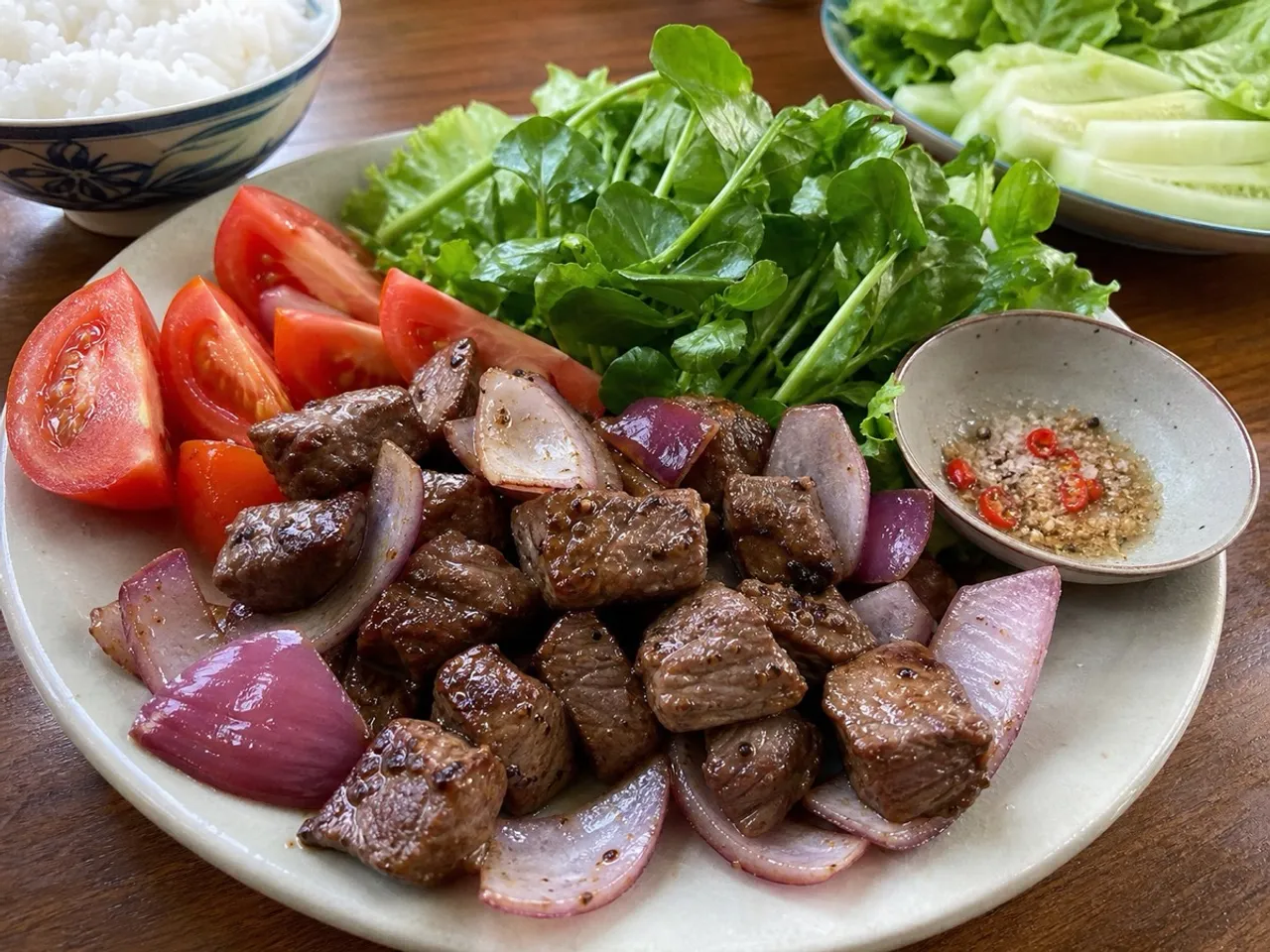 Serving Images are for illustrative purposes only, may be inaccurate, and do not guarantee the presence or absence of specific ingredients.
 Bò Lúc Lắc (Shaking Beef)
Cubed beef sautéed with cucumber, tomatoes, red onion, pepper, and soy sauce.
Contains common allergens
In the app, Listahan checks these against your household automatically.
Good to know
- Ready in under 30 minutes
Matched from this dish's own ingredients and timing. Browse more: 30-minute meals
Instructions
6 steps- 1
Marinate Beef: Toss the beef cubes with the oyster sauce, soy sauce, sugar, black pepper, and cornstarch. Marinate at room temperature for 15-20 minutes.
- 2
Prepare Salad Bed: Arrange the butter lettuce leaves and tomato wedges on a large serving platter to act as a bed for the hot beef.
- 3
Sear Beef: Heat a wok or large heavy skillet over high heat until smoking. Add 2 tbsp of high-temperature oil. Add the beef in a single layer and let it sear undisturbed for 1.5 minutes to develop a dark crust.
- 4
Shake the Wok: Toss or "shake" the wok vigorously. Add the garlic and red onions. Toss constantly for another 1-2 minutes until the beef is medium-rare and onions are slightly softened.
- 5
Plate: Immediately pour the sizzling beef, onions, and all pan juices directly over the prepared lettuce and tomatoes.
- 6
Serve: Serve immediately with steamed tomato rice (cơm đỏ) and a small dipping bowl of the lime-salt-pepper mixture.
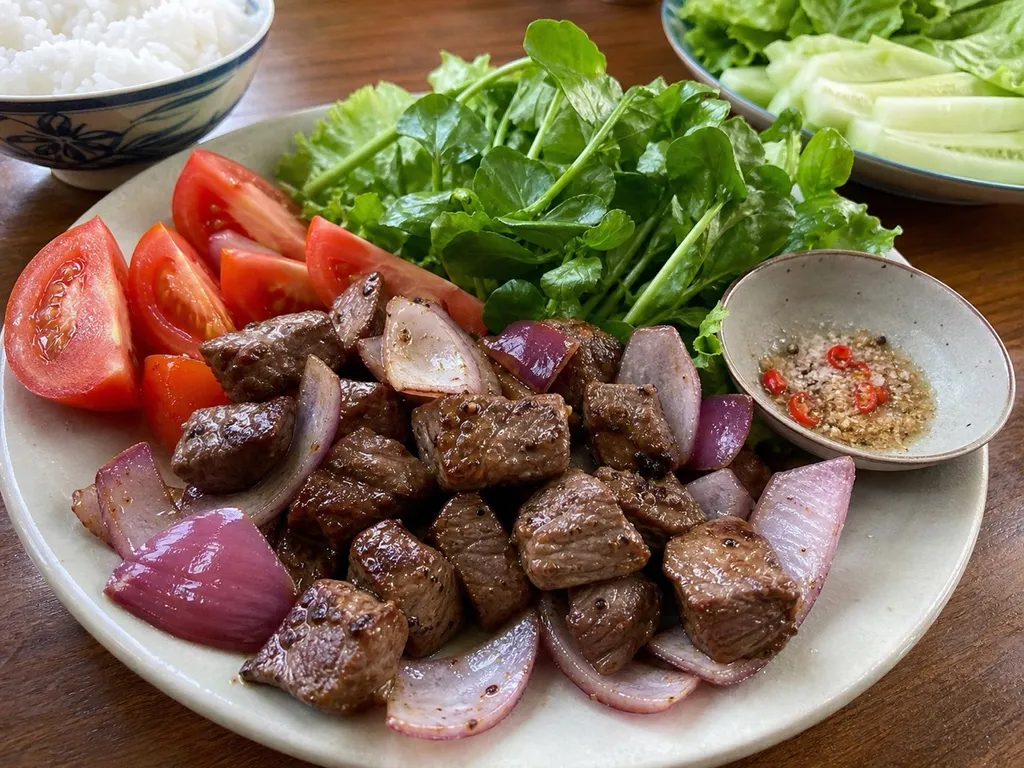 Images are for illustrative purposes only, may be inaccurate, and do not guarantee the presence or absence of specific ingredients.
 Listahan Family Score™
60/100
Works for many families
Score reflects how well this recipe fits a typical busy household. In the app, your Family Score is personalized to your household's allergens, kids, and pantry.
Nutrition
per serving405
Calories
40 g
Protein
6 g
Carbs
23 g
Fat
Estimated per serving. Actual values depend on the brands and portions you use.
Listahan cooking guide
Chef notes & practical guide
Technique notes, ingredient swaps, serve-alongside ideas, storage guidance, and equipment for this recipe.
Cultural context
Bò lúc lắc is a Vietnamese beef dish whose name points to the cooking motion: the cubes of beef are shaken or tossed quickly in a very hot pan. It is often associated with French-influenced Vietnamese cooking, where beef became a special-occasion ingredient rather than an everyday staple. The hot beef landing on cool lettuce and tomatoes is part of the pleasure, not just a garnish.
Listahan note
This version leans into the weeknight strength of the dish: a short marinade, a hard sear, and a bright lime-salt-pepper dip that cuts through the rich beef. The salad bed is kept simple so the pan juices can dress it naturally.
Technique cues
- Use a heavy skillet or wok and let it get properly hot before the beef goes in; the dish depends on fast browning, not a long saute.
- Do not move the beef during the first sear. That quiet minute and a half is what gives the cubes their dark edges before the quick toss.
- Plate immediately over the lettuce and tomatoes so the vegetables soften slightly under the hot juices while still keeping some crunch.
Kitchen flow
- Parallel prep
- Arrange the lettuce, tomatoes, and dipping sauce while the beef marinates so the platter is ready before the pan gets hot.
- Make-ahead
- Cut the vegetables and mix the marinade earlier in the day, then marinate and sear the beef right before serving.
- Leftover move
- Slice leftover beef thin and tuck it into a rice bowl with tomato, lettuce, and a spoonful of the lime-pepper dip.
- Cleanup rhythm
- Wipe the skillet once it cools slightly, then soak any sticky marinade spots before they harden.
Ingredient brief
Role, handling, and swap guidance for each key ingredient.
Beef tenderloin or ribeye
Main protein
Purpose: Tenderloin gives a lean, soft bite, while ribeye brings more marbling and a richer pan juice.
Handling: Cut into even 1-inch cubes so the pieces brown at the same pace.
Adaptation: Sirloin can work for a less expensive version, but slice away tough seams and avoid overcooking it.
Oyster sauce
Savory marinade base
Purpose: It gives the beef a glossy, deeply savory coating that browns quickly in the hot pan.
Handling: Mix it thoroughly with the soy sauce, sugar, black pepper, and cornstarch before tossing with the beef.
Adaptation: Hoisin sauce makes the dish sweeter and thicker, so use less sugar if you go that route.
Cornstarch
Browning helper
Purpose: A small amount helps the marinade cling to the beef and encourages a lacquered crust.
Handling: Stir until no dry patches remain before the beef rests in the marinade.
Adaptation: Potato starch gives a similar glossy finish, though it can brown a little faster.
Red onion
Sweet aromatic
Purpose: Thick petals soften at the edges while staying distinct enough to eat with the beef.
Handling: Cut the onion into wide pieces so it does not disappear during the final toss.
Adaptation: Shallots give a sweeter, softer result and cook very quickly.
Butter lettuce
Cool serving bed
Purpose: The soft leaves catch the hot pan juices without competing with the beef.
Handling: Wash and dry the leaves before plating so the sauce does not get diluted.
Adaptation: Green leaf lettuce gives more crunch, while watercress adds a peppery bite.
Lime juice, salt, and black pepper
Dipping sauce
Purpose: The sharp, salty dip brightens each bite and keeps the rich beef from feeling heavy.
Handling: Stir it just before serving so the lime tastes fresh and the pepper stays fragrant.
Adaptation: Lemon juice is a workable backup, though it tastes less distinctly Vietnamese than lime.
Technique notes
- Cook the beef in one uncrowded layer; if the pan is packed, the cubes release liquid and lose the crust that defines the dish.
- Add the garlic after the first sear, not at the beginning, so it perfumes the beef without scorching in the hot oil.
- Stop cooking while the beef still has some spring. The carryover heat and hot pan juices will keep it moving after it leaves the skillet.
Ingredient swaps
- Cut choice
- Use tenderloin for the softest bite or ribeye for more richness; sirloin works when cut evenly and cooked quickly.
- Sauce adjustment
- Use a little less sugar if your oyster sauce tastes noticeably sweet, then balance at the table with the lime-salt-pepper dip.
- Vegetable base
- Serve over watercress instead of butter lettuce for a sharper, restaurant-style contrast.
- Rice pairing path
- Serve with steamed tomato rice for the classic color and tang, or plain jasmine rice if you want the pan juices to stand out.
Serve alongside
- Steamed tomato rice
- Garlic fried rice
- Pickled carrot and daikon
- Cucumber herb salad
- Iced jasmine tea
- Lime soda water
- Crisp lager
Serving suggestions only — check pairings for your household's allergens.
Storage & reheating
- Refrigerate leftover beef and vegetables separately when possible so the lettuce does not collapse completely.
- Reheat the beef quickly in a hot skillet with a small splash of water or pan juices, then add fresh lettuce and tomatoes for serving.
- Freeze the cooked beef without the salad bed; thaw overnight and reheat gently so the cubes do not toughen.
Equipment
- Large wok or heavy skillet
- Tongs or wok spatula
- Large serving platter
- Small bowl for dipping sauce
Make this household-aware
Listahan Pro checks this recipe against your household's allergens, finds pantry-aware swaps, builds the shopping list, and helps you plan the week around it.
Plan it in Listahan
Add Bò Lúc Lắc (Shaking Beef) to your week, check it against your household's allergens, and build the shopping list automatically.
More Vietnamese recipes
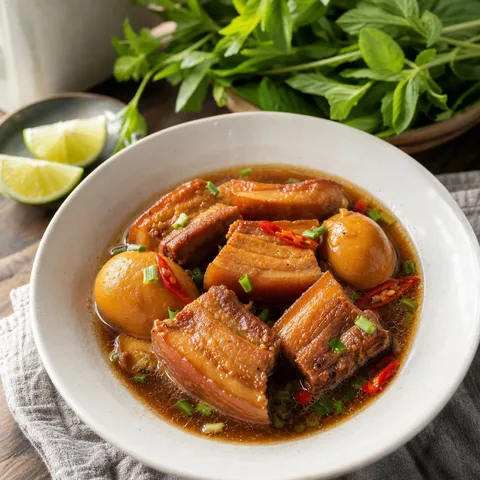 Vietnamese Lens Verified Images are for illustrative purposes only, may be inaccurate, and do not guarantee the presence or absence of specific ingredients.
 Thịt Kho Tàu (Caramelized Pork and Eggs)
Meltingly tender pork belly and hard-boiled eggs braised in a rich, sweet, and savory coconut juice caramel, perfect over steamed rice.
 Vietnamese Lens Verified Images are for illustrative purposes only, may be inaccurate, and do not guarantee the presence or absence of specific ingredients.
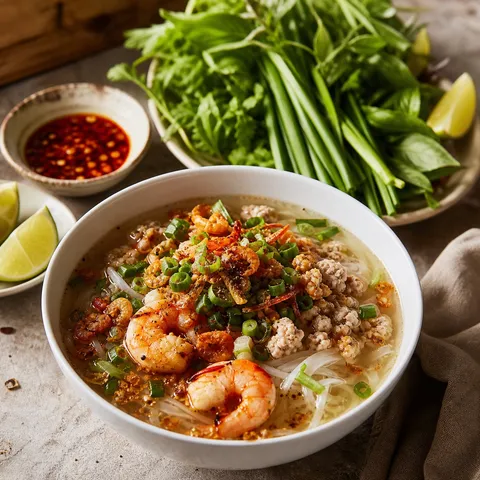
 Hủ Tiếu (Pork and Seafood Noodle Soup)
A Vietnamese pork-bone broth noodle soup loaded with ground pork, shrimp, and dried shrimp over chewy tapioca noodles, finished with garlic chives and fried garlic.
 Vietnamese Lens Verified Images are for illustrative purposes only, may be inaccurate, and do not guarantee the presence or absence of specific ingredients.
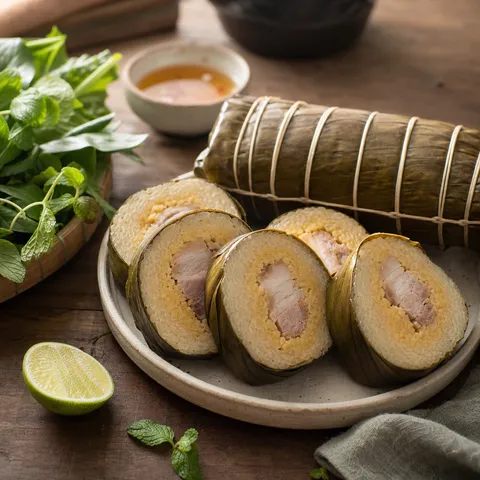
 Bánh Tét (Cylindrical Sticky Rice Cake)
The Southern equivalent of Bánh Chưng, rolled into a cylinder.